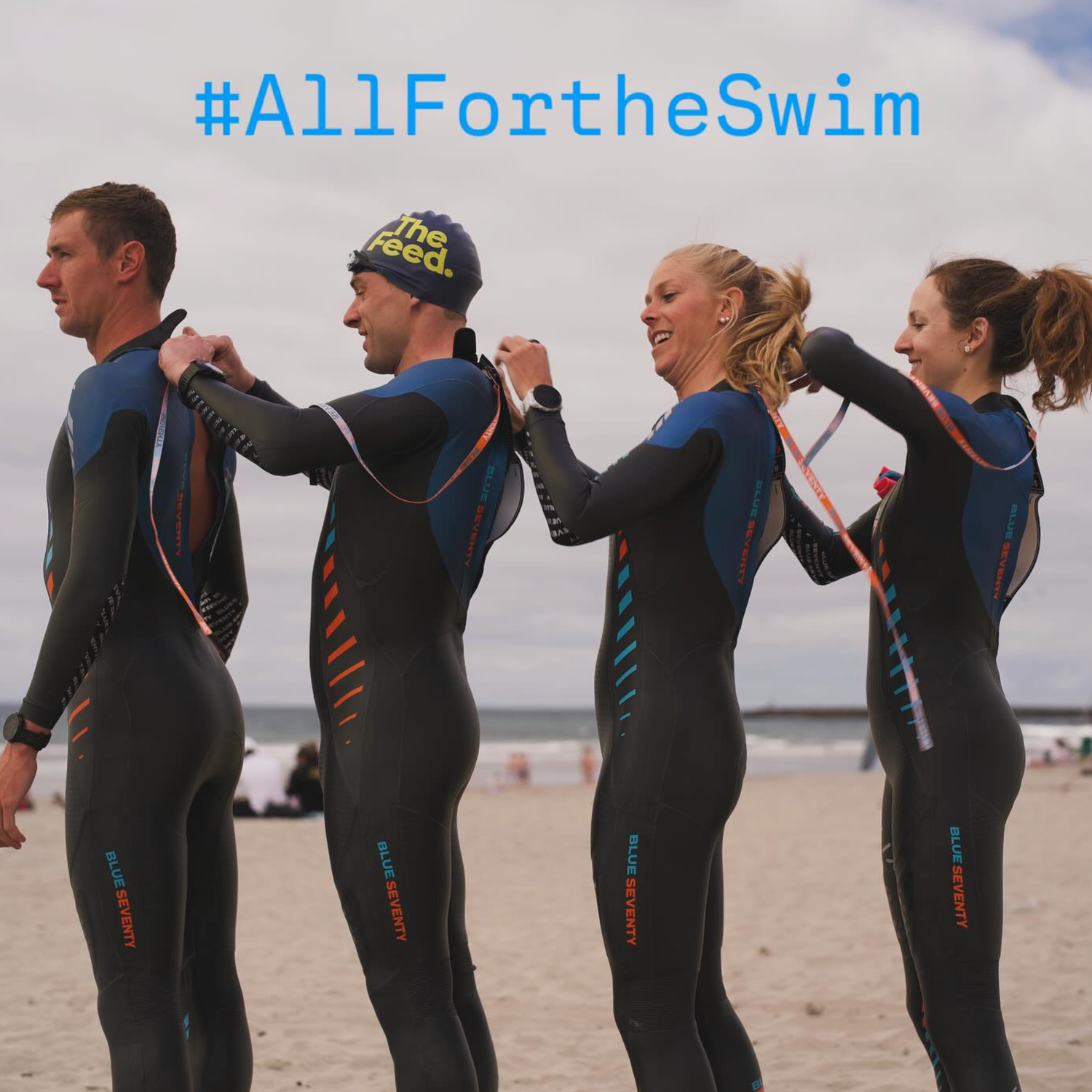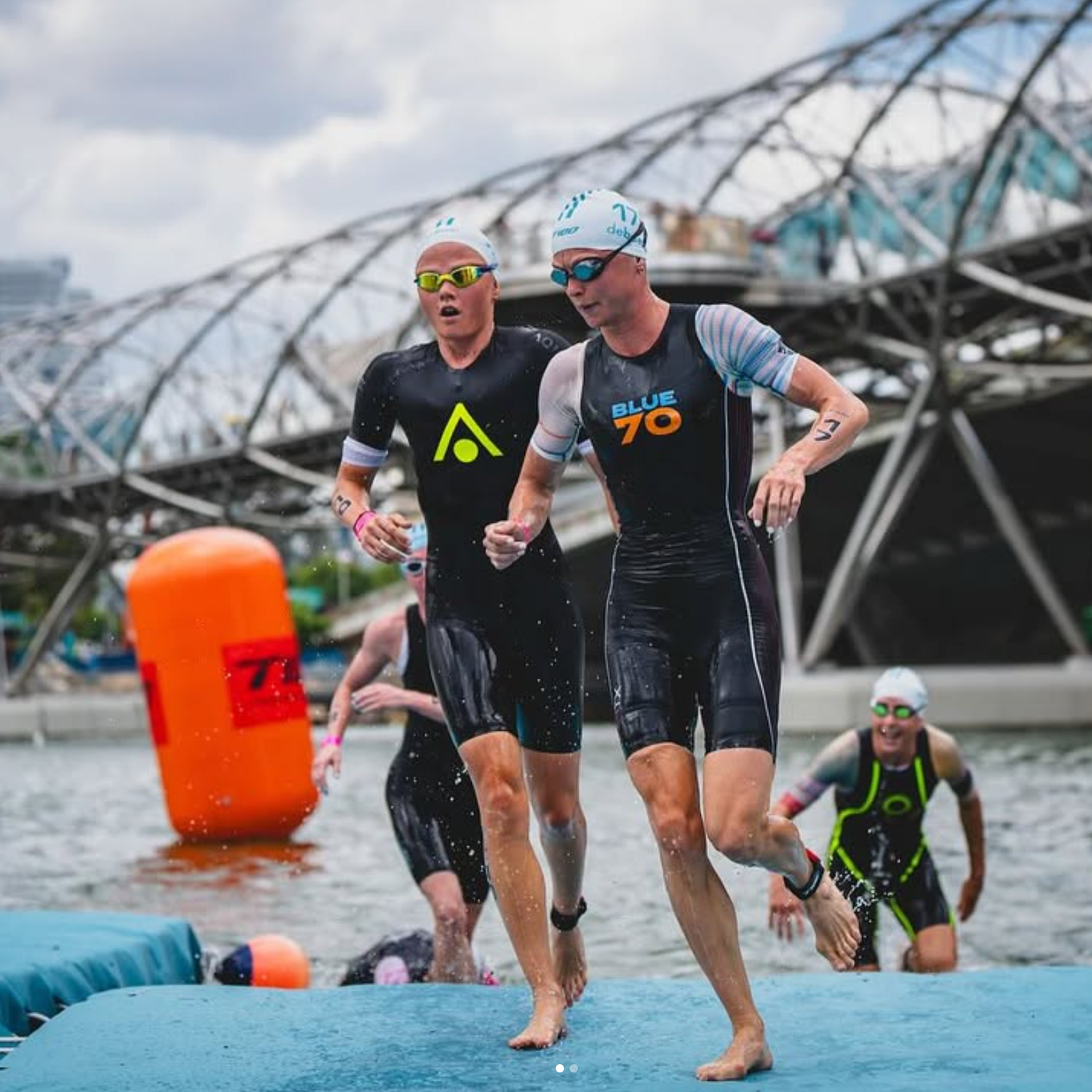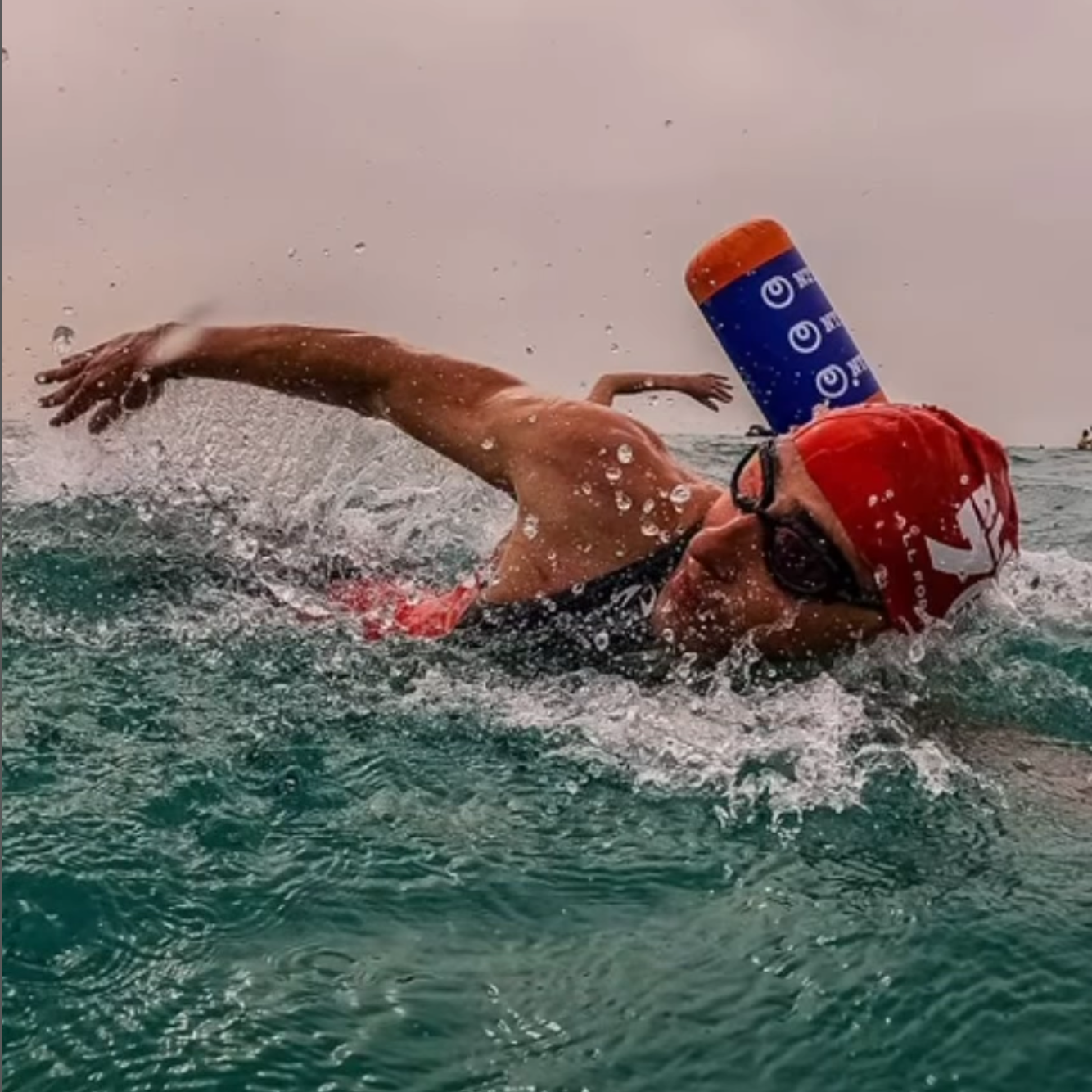



Material questions get a lot of attention in wetsuit buying conversations. Swimmers feel something else first. They feel shoulder tension, body position, neck comfort, and warmth once the swim settles in. That is why a swim-specific view matters more than a material label on its own.
A wetsuit is a working system. Panel layout, neoprene grade, seam placement, lining, neckline shape, and buoyancy placement all affect what happens in open water. For triathletes and open-water swimmers, the useful question is simple: does the suit help you hold a better position in the water and swim your normal stroke with less wasted energy?
Why material alone does not answer the performance question
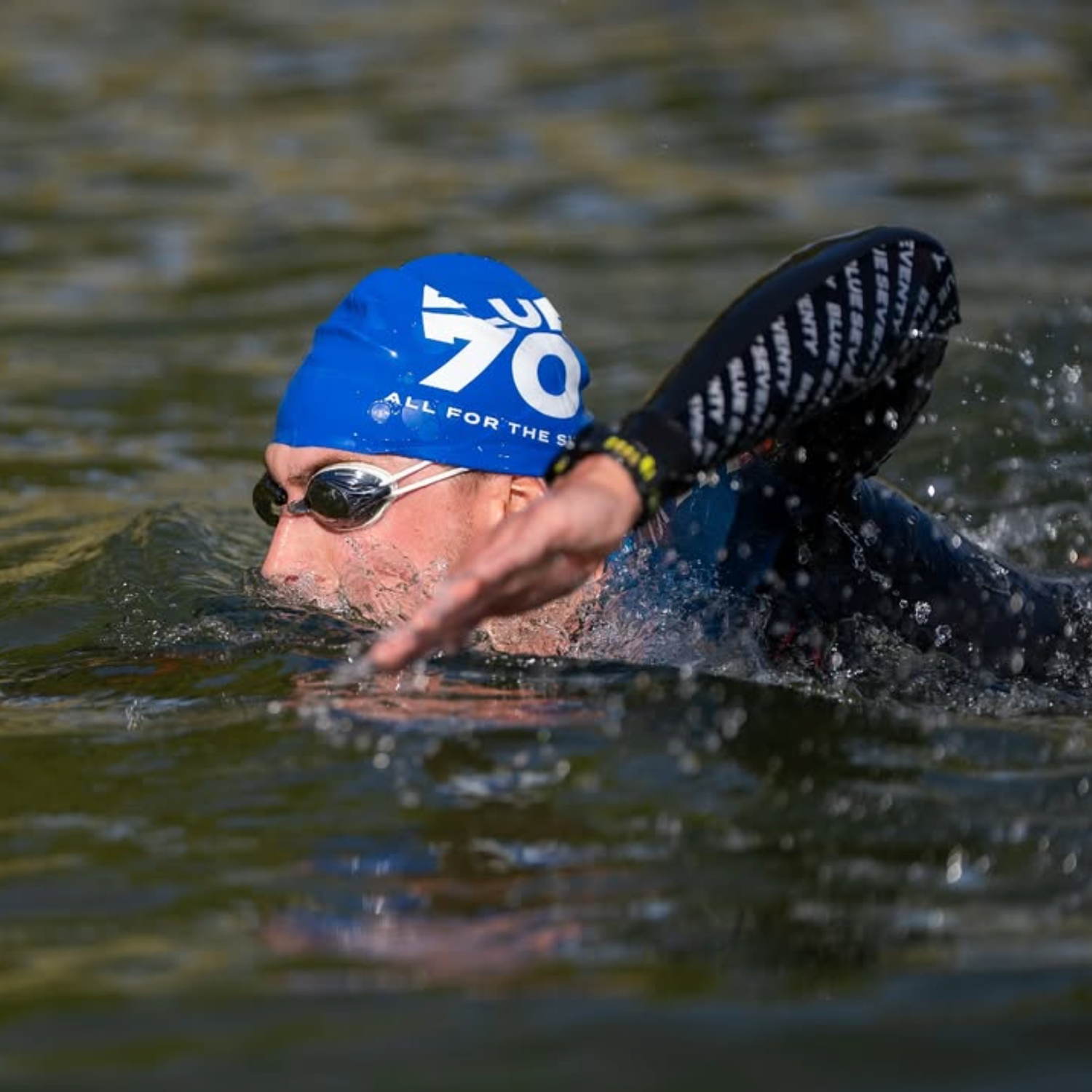
Most athletes do not experience a wetsuit as a raw material sample. They experience it stroke by stroke. If the shoulders feel loaded after ten minutes, if the hips still ride low, or if the neckline starts rubbing every time they sight, the swim tells the truth quickly.
That is why the better way to evaluate any wetsuit is to start with the demands of freestyle. A strong open-water suit needs to preserve range of motion through the shoulders, support a cleaner body line, provide added thermal protection for the conditions, and stay comfortable long enough for the swimmer to keep good form.
Fit still decides most of the result. A well-designed suit that is not pulled fully into the hips and shoulders will feel restrictive. A flexible suit with poor buoyancy placement can still leave a swimmer fighting low legs. Material matters, but only inside the full design.
What swimmers should care about first
When athletes ask about wetsuit materials, I usually bring the conversation back to a short list of performance checks. These are the things that show up in training and on race morning.
- Shoulder freedom: Can you recover and extend without fighting the suit?
- Buoyancy placement: Does the suit lift your hips and legs into a better line?
- Neck comfort: Can you breathe and sight without pressure at the throat?
- Thermal match: Does the suit provide the right level of insulation for the water temperature and swim length?
- Stability in motion: Does the fit stay settled once you are actually swimming?
Those points matter because they affect drag, fatigue, and rhythm. A swimmer who feels free in the shoulders usually keeps better timing. A swimmer whose legs ride higher often saves energy across the whole swim. A swimmer who is not distracted by neck rub or overheating can focus on pacing, sighting, and clean turns around buoys.
The part many athletes miss: panel behavior in the water
One area that gets overlooked is how different parts of a wetsuit behave under load. A swimmer is rotating, reaching, catching, breathing, and sighting. The shoulders need one kind of stretch. The hips need a different kind of support. The chest has to allow breathing without feeling restrictive. The neckline has to seal without becoming abrasive over time.
That is why panel design matters so much in a swim-specific suit. The right material in the wrong place still produces a poor swim. Good wetsuit design is less about broad claims and more about placing the right thickness, stretch, and lining where the swimmer will feel the difference.
How swim-specific wetsuits evolved
The history of triathlon wetsuits helps explain why this conversation has changed over time. Earlier wetsuit design centered heavily on coverage and flotation. As the sport matured, swimmers demanded more than that. They needed suits that worked with freestyle mechanics, not against them.
Blue70’s own history reflects that shift. The company began in 1993 as Direct Innovations and developed one of the world’s first triathlon wetsuits. In 2005, Blue70 introduced the Helix as its flagship race suit. In 2010, the Helix added a permeable catch panel to preserve feel for the water. In 2018, Blue70 added LIFT buoyancy panels to the Helix. In 2021, the Fusion was redesigned with a lower-sitting neckline for comfort while maintaining the seal. Cold-water development followed the same swim-first path, leading to purpose-built thermal suits and the Thermal Reaction with full Zirconium jersey lining for added warmth in cold conditions.
That progression says a lot. Serious swimmers do not judge a suit only by what it is made from. They judge it by how it supports movement, warmth, and position over the full swim.
How Blue70 approaches the problem
Blue70 builds swim-specific wetsuits around real use cases, not one-size-fits-all claims. The line uses Yamamoto neoprene in 38, 39, and 40 cell, with higher cell numbers corresponding to more flexibility. That matters most in the arms and shoulders, where restriction costs energy and alters stroke mechanics.
The design logic changes by model because swimmers have different needs.
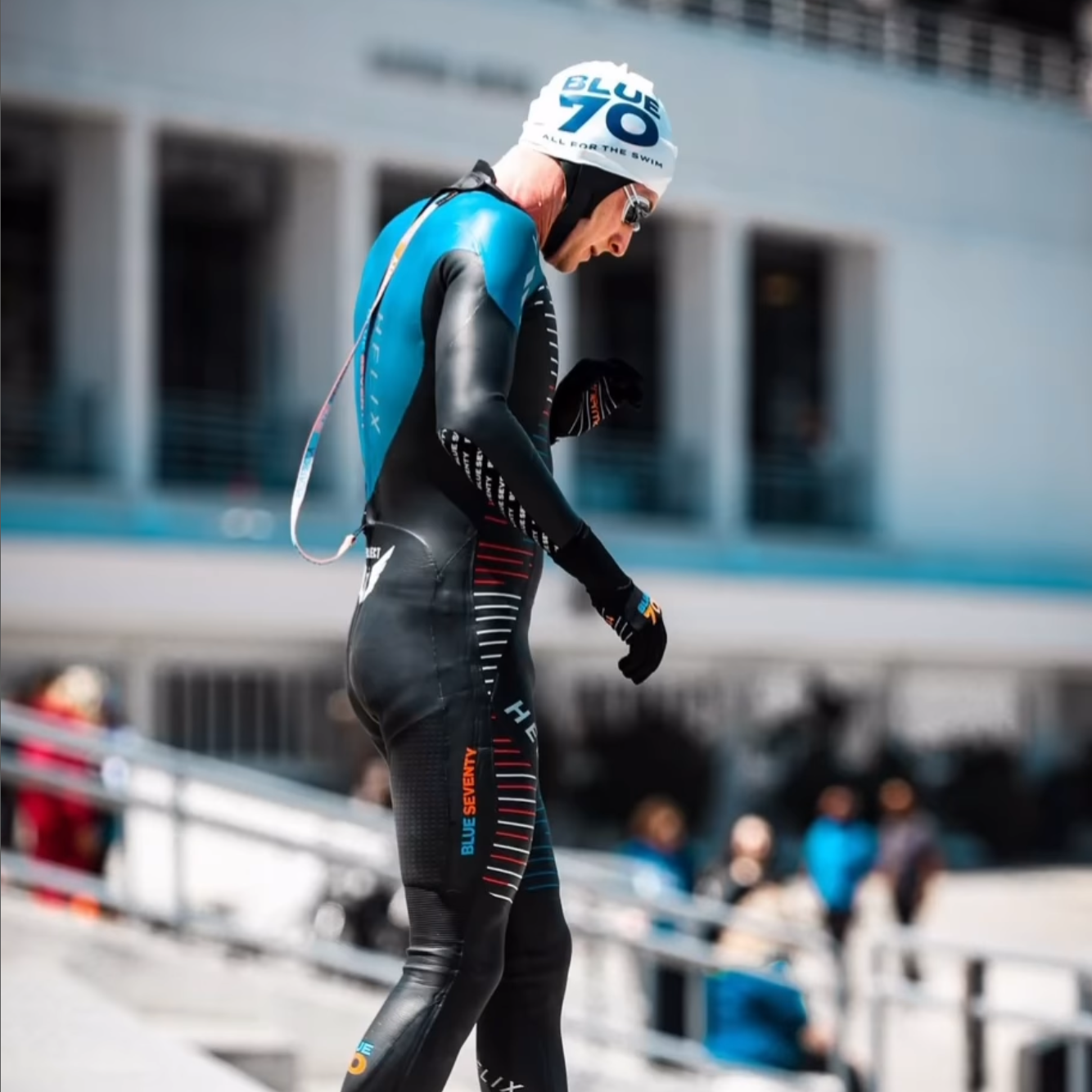
- Helix: Built for race-day performance, with very thin, highly flexible neoprene in the arms and shoulders, a permeable catch panel, and LIFT buoyancy panels.
- Reaction: Suited to frequent use and longer swims, with a strong balance of performance and durability.
- Fusion: A popular mid-range option, redesigned in 2021 with a lower neckline for comfort without losing the seal.
- Thermal Reaction: Fully lined with Zirconium jersey for added warmth in cold water.
- Sleeveless options: Useful in warmer water or for swimmers who want a less restrictive shoulder feel.
This kind of model separation is useful because it matches the suit to the athlete. Someone racing a handful of times a year does not always need the same construction as someone swimming open water every week. Blue70 has always been candid about that trade-off. The most flexible race suits feel great in the water, but delicate neoprene is not always the best answer for heavy training use.
Women’s fit changes the equation
One of the most practical parts of wetsuit design has nothing to do with material headlines. It has to do with patterning. For women, poor fit often starts with a suit that was never shaped properly through the bust, torso, wrists, ankles, and hips.
Blue70’s Femme Fit addresses those areas directly. The pattern includes a lowered neckline for comfort and reduced chafing, along with an extended zipper length that makes entry easier and accommodates wider hips. Those changes matter in the water because they affect shoulder placement, neck comfort, and how naturally the suit moves with the swimmer.
How to judge a wetsuit in practice
Most of the important answers come from a short fitting session and a real swim. Do not rely only on how a suit feels on the hanger or in the mirror.
On land
- Pull the suit fully into the legs, hips, and underarms.
- Check overhead reach and shoulder tension.
- Make sure the chest feels snug but not compressed.
- Check that the neckline sits securely without pressing hard at the throat.
- Look for clean placement at the wrists and ankles.
In the water
- Notice your stroke rhythm in the first few hundred meters.
- Pay attention to breathing comfort while sighting.
- Check whether your catch still feels connected.
- Notice whether your hips and legs ride higher.
- Watch for neck friction or overheating as the swim continues.
A short swim usually reveals more than a long product description. Blue70’s Take a Test Swim program is built around that idea. You can swim in the wetsuit and still return or exchange it, provided it comes back clean, dry, unmodified, and includes the original tags and accessories.
Water temperature still matters
Thermal protection is part of performance. No wetsuit keeps you dry. Wetsuits allow a thin layer of water inside, and your body warms that layer. The useful question is whether the suit provides the right amount of added thermal protection for the swim you are doing.
Blue70’s guidance is clear on this point. Below about 56 to 58°F, a purpose-built thermal suit adds meaningful warmth. Above about 70 to 72°F, a full suit can feel too warm for longer swims, and a sleeveless suit or swimskin may be the better tool depending on the session and race rules. If race legality is part of the decision, check the current rulebook from the sanctioning body rather than relying on general temperature talk.
The most useful takeaway
Material choice belongs inside a larger swim-performance framework. For triathletes and open-water swimmers, the right questions stay practical.
- Does the suit preserve your stroke?
- Does it improve body position?
- Does it match the water temperature?
- Does it fit your training schedule?
- Does it stay comfortable long enough for you to swim well?
That is how swimmers should think about a wetsuit. A material label can start the conversation. Stroke quality, buoyancy, thermal comfort, and fit finish it.
If you want help finding the right swim-specific fit, use the size charts or visit Blue70’s fitting guide before your next open-water session or race.