


Most wetsuit damage happens after the swim. A suit comes out of a lake or ocean, gets rolled damp, and sits in a sealed bag for hours while you drive to the airport, wait for check-in, or ride a cramped shuttle to the race hotel. By the time you unpack, the lining smells like a locker room and creases have set in the shoulders. At blueseventy, we see the same travel damage show up in warranty returns: fingernail punctures from a hurried grab, heel tears from pulling against a stuck foot, zipper teeth forced past the lining. The travel bag you choose is part of the care system.
Blueseventy started in 1993 as Direct Innovations and developed one of the world's first triathlon wetsuits. In that era, athletes often packed a damp neoprene suit into the same duffel as bike shoes and a helmet. The design challenge has not changed. Neoprene needs protection from hard edges and air to dry. A structured, breathable bag works better than a sealed barrel.
A Sealed Bag Traps Water Against the Suit
A wetsuit is not waterproof. It is designed to let a thin layer of water in, which your body warms. When you seal a damp wetsuit inside a roll-top dry bag, that thin layer of water stays trapped against the neoprene and lining for hours. Pool chlorine and saltwater sit on the seams and glue longer than they should. Mildew gets a warm, dark home. The lining stiffens over repeated trips, and the suit can take on an odor that does not wash out with a quick rinse.
A travel bag should let moisture escape. It should not turn your suit into a portable steam room.
What a Travel Bag Needs
A good wetsuit travel bag does a few jobs. It separates the suit from bike shoes, pedals, and tools. It gives the suit a flat space so it does not get crushed under heavy gear. It lets air move through at least one panel. And it opens wide enough that you can set the suit in without forcing the shoulders.
Look for these details:
- A separate wetsuit compartment or a large mesh panel
- A flat or lightly padded base that lets the suit lie folded once
- Enough length for a full suit without bunching the arms
- A place to isolate wet gear from dry gear
- Handles or a shoulder strap that keep the bag off the floor
The suit should not share a crowded compartment with a run belt buckle or a bike pump. A hard edge will cut or scratch neoprene every time.
Fold Once at the Waist
Packing order matters more than the bag brand. Follow this sequence after your last swim:
- Rinse the suit in fresh water. If no fresh water is available, shake out the worst of the lake or ocean water.
- Roll the suit in a clean towel and press. Do not wring. Wringing stresses the seams in the arms and shoulders.
- Fold the suit once at the waist. Keep the zipper on the outside of the fold so the teeth do not catch the lining.
- Lay the suit flat in the wetsuit compartment, on top of a dry towel.
- Put the heaviest items below or beside the suit, never on top of it.
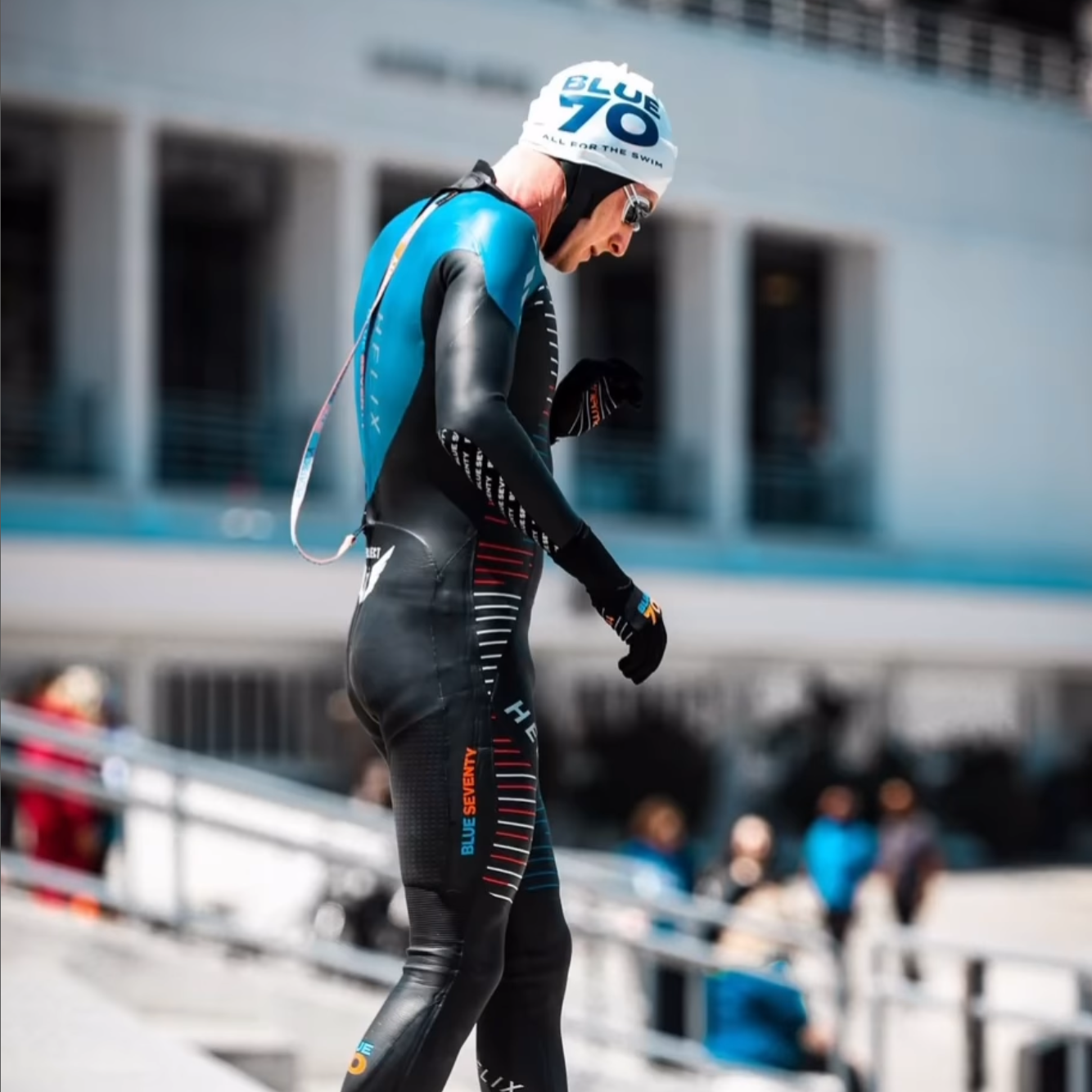
A wetsuit folded once at the waist travels better than a suit rolled into a cylinder and jammed into a side pocket. Rolling puts uneven pressure along the shoulders, the part of the suit with the thinnest neoprene on models built for range of motion. The Helix uses thin, flexible neoprene in the arms and shoulders and a permeable catch panel, so it deserves a flat fold more than a tight roll. Reaction and Fusion suits have more durable neoprene for frequent training, but they benefit from the same flat treatment. All blueseventy wetsuits use Yamamoto neoprene in 38, 39, and 40 cell. Higher cell numbers mean more flexibility, and that flexibility is exactly what a careless roll can crease.
Heat, Cargo Holds, and the Bag You Already Own
Cold in a cargo hold does not damage a wetsuit. Heat causes more damage. Leaving a wetsuit bag in a hot car or in direct sun breaks down neoprene and glue over time. If you travel to a warm race, keep the bag in the shade and do not store it in a trunk for hours before check-in. A breathable bag reduces moisture buildup, but it will not protect a suit from a hot car interior.
If your current bag does not have a wetsuit compartment, a large mesh laundry bag works as a liner inside any carry-on or checked bag. It keeps the suit separate from hard items and lets air move. It also gives you a wet bag for the trip home. At the hotel, open the wetsuit compartment and drape the suit over a towel bar or the shower rod. Do not hang it by the shoulders on a thin hanger; the weight can stretch the neoprene.
A Repair Kit That Lives in the Bag
Pack a small repair kit in the same travel bag: a tube of neoprene cement, a spare goggle strap, a latex cap, and a plastic bag for wet gear. Blueseventy carries Aquaseal neoprene cement in the wetsuit care collection. A fingernail puncture at a race venue is easy to patch if you have cement within reach. Our warranty covers manufacturing and material defects for one year under a repair-only remedy, but it does not cover fingernail punctures, heel tears, zipper damage from force, heat damage, chlorine damage, or general wear and tear from travel. The travel bag doubles as a first aid kit for the suit.
Before you pack, confirm the suit fits the same way it did at home. A wetsuit should feel snug on dry land and more comfortable in the water. Travel does not need a waterproof vault. It needs a bag that breathes, a single waist fold, and a repair kit within reach. If you are between sizes or packing for your first race, use our fit guide and size charts. Happy swimming.