


Swimmers read a wetsuit's millimeter numbers like a thermostat. They want to know if 3mm arms and 5mm chest will keep them warm in a 62°F lake. The honest answer is that thickness alone won't tell you. A swim-specific wetsuit places panels where the body needs lift and trims them where the shoulders need to rotate.
Water moves inside every wetsuit. Your skin warms that thin layer. The neoprene slows the heat escaping into the lake or ocean. Water temperature, how long you stay in, and your own cold tolerance all shape the experience. That is why a single thickness number cannot predict comfort.
Thickness Follows the Stroke
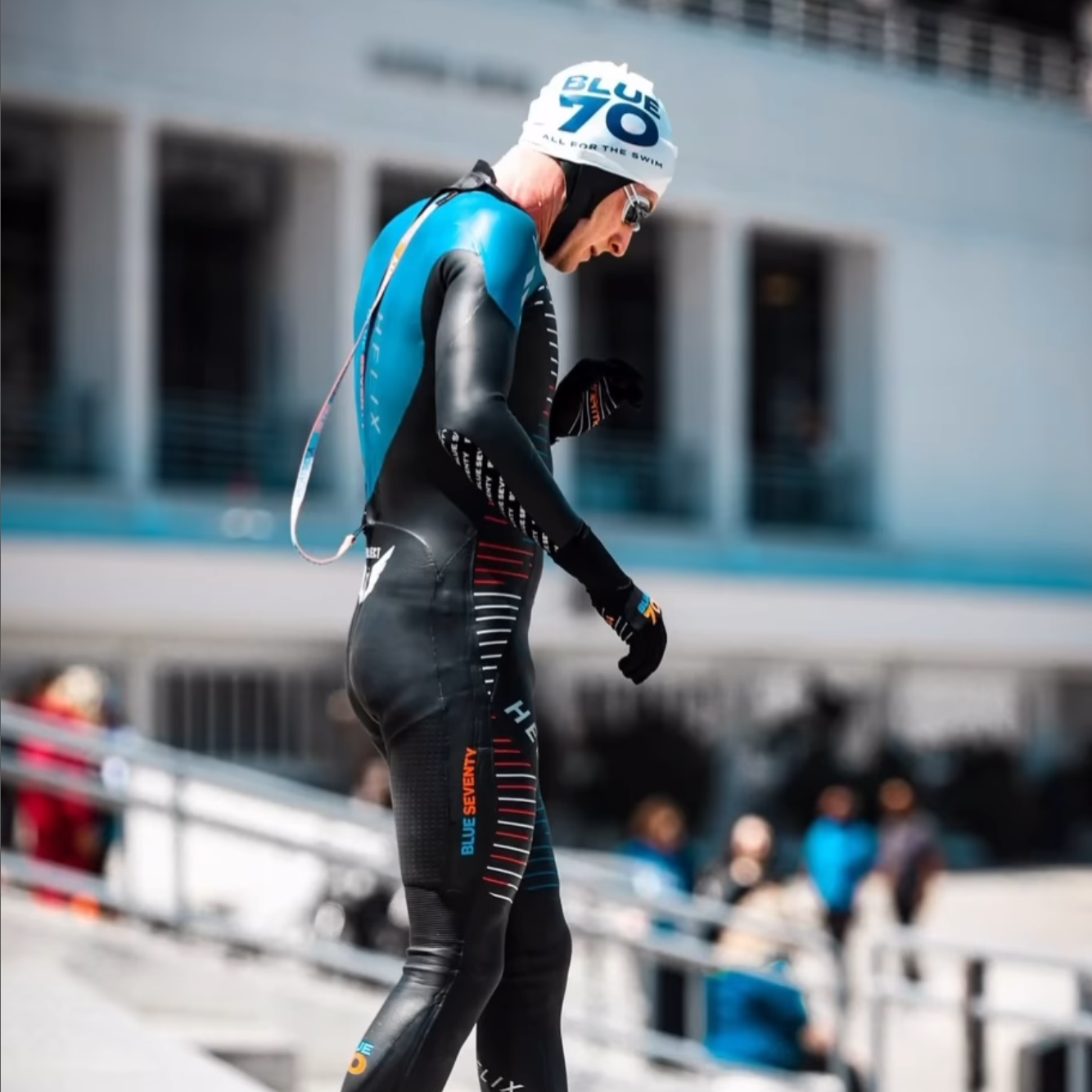
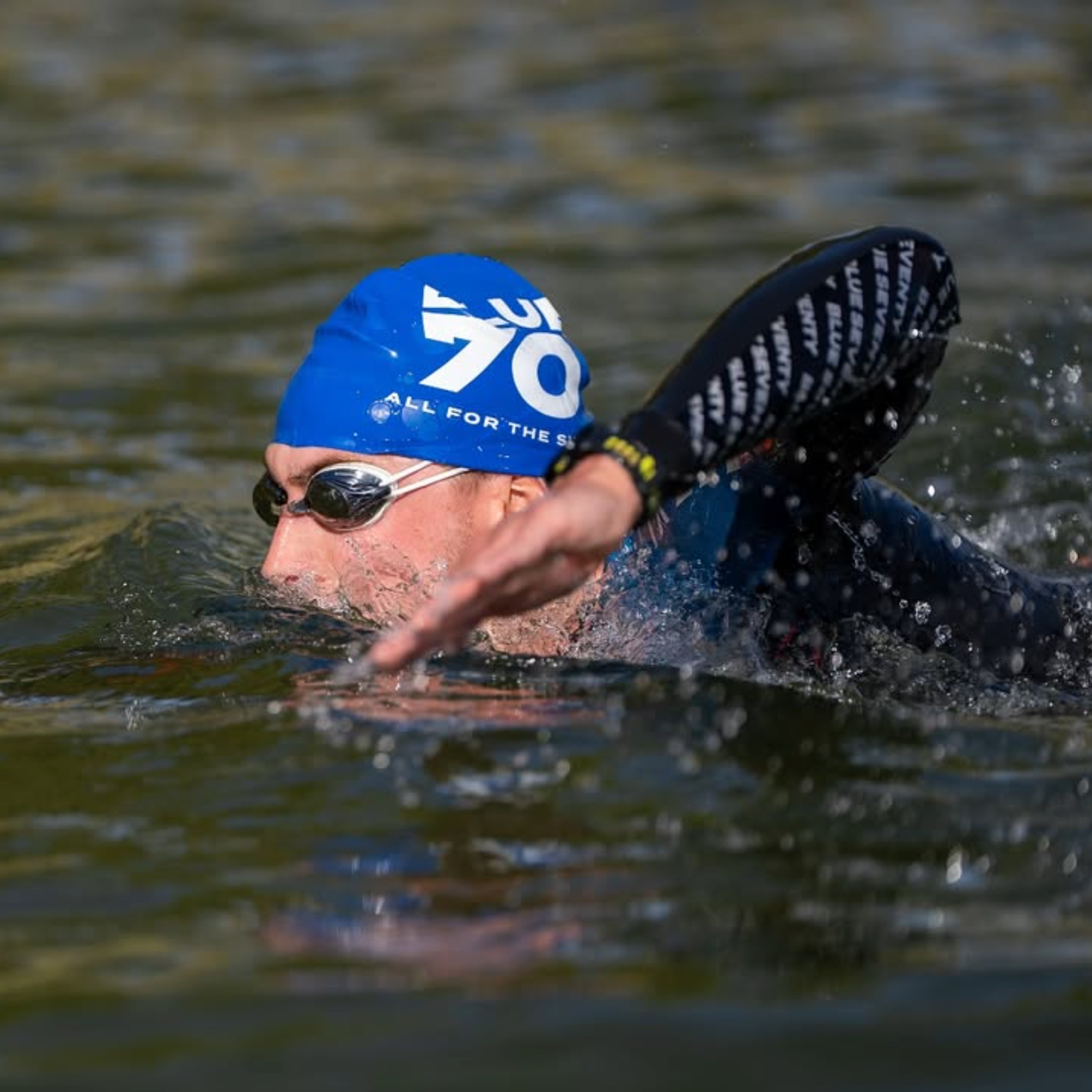
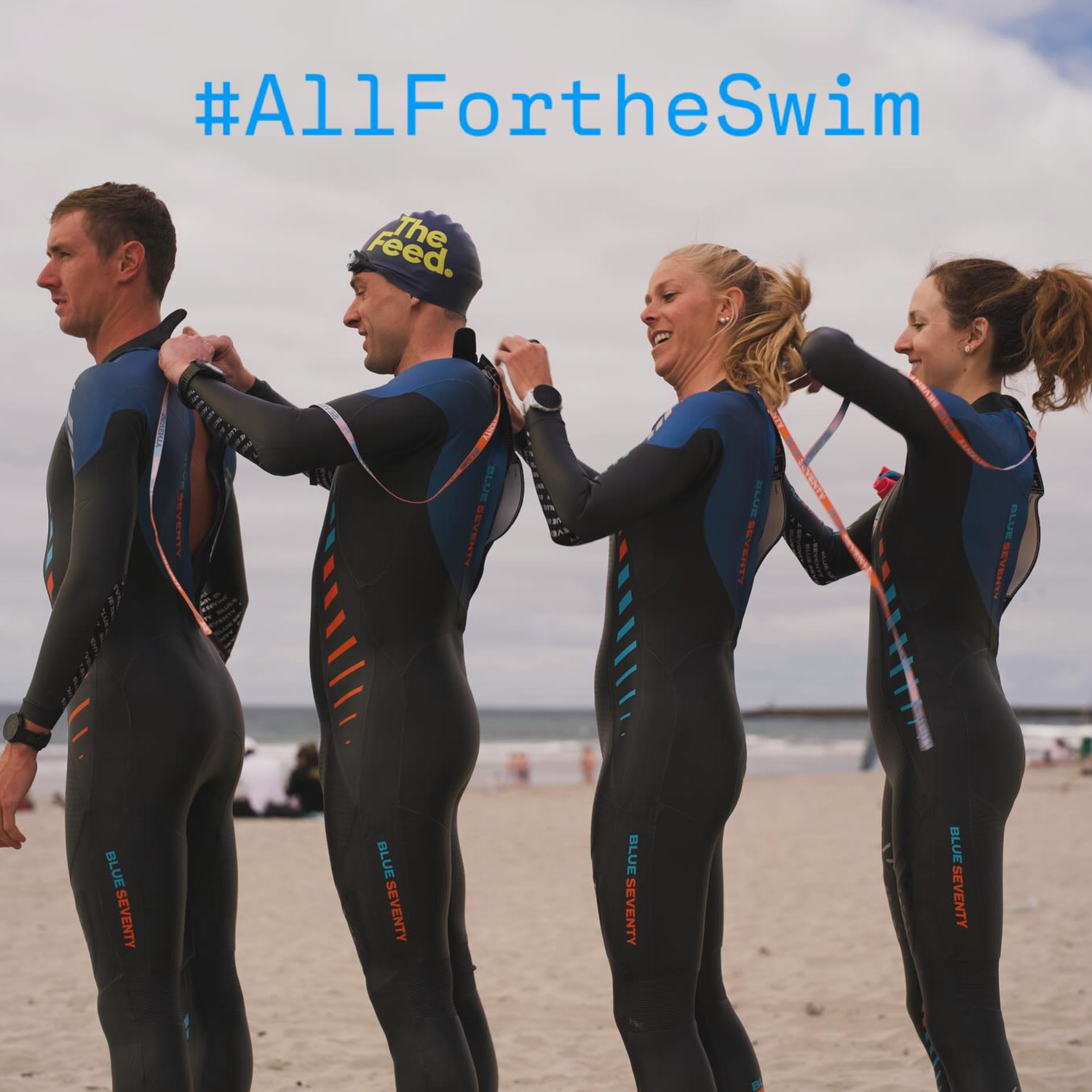
Blueseventy builds wetsuits around swimming, not surfing or diving. The chest and hip panels carry more neoprene because lift in those zones keeps your legs and hips near the surface. That is what "buoyancy equals speed" means in practice. A low hip position adds drag and costs energy. Thin shoulder panels allow the catch, pull, and recovery to happen without fighting the suit.
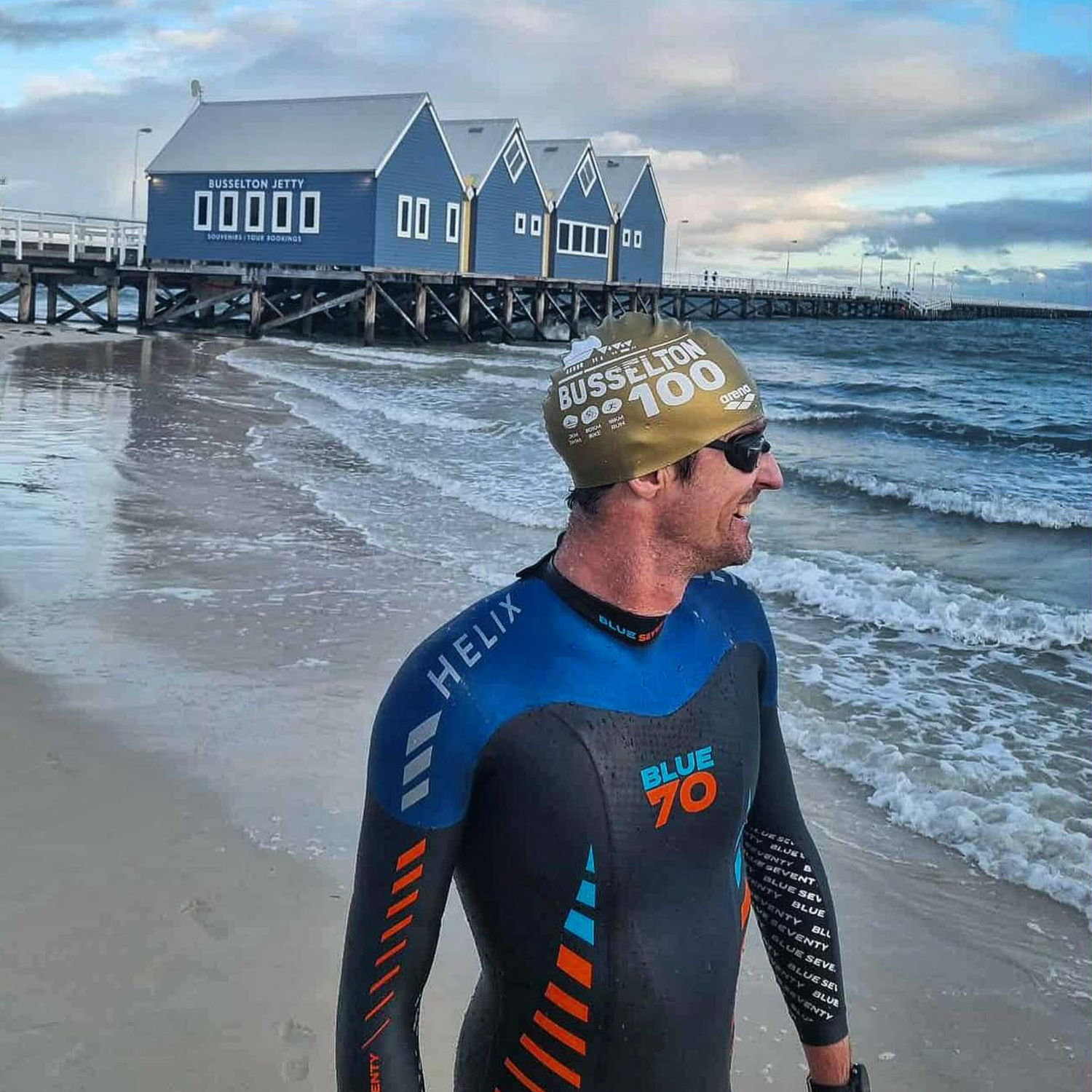
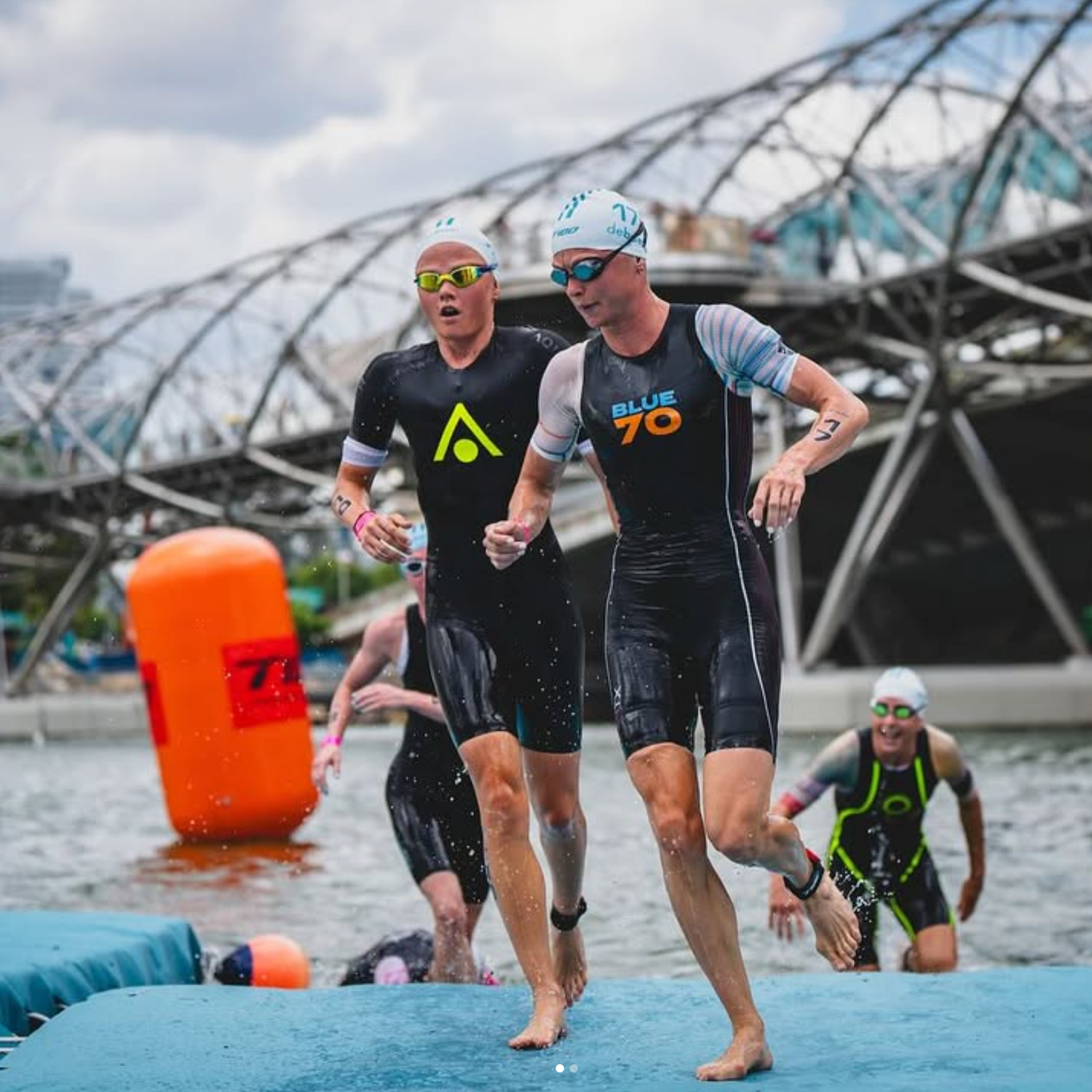
Neoprene grade matters as much as thickness. Blueseventy uses Yamamoto 38, 39, and 40 cell rubber. A higher cell count flexes more at the same thickness. On the Helix, the race suit, the arms and shoulders use thin, flexible panels and a permeable catch panel to preserve feel for the water. That thin material can break down faster than training-focused suits if you swim in it every week. For frequent swimmers, the Reaction and Fusion hold up better.
Cold Water: The Lining and Seals Do the Work
Below roughly 56 to 58°F, a thermal-specific suit helps. The Thermal Reaction is fully lined with Zirconium jersey, a synthetic wool that holds a warmed layer and reduces water movement inside the suit. Adding another millimeter of neoprene will not fix a suit that flushes cold water at the neck, wrists, or ankles.
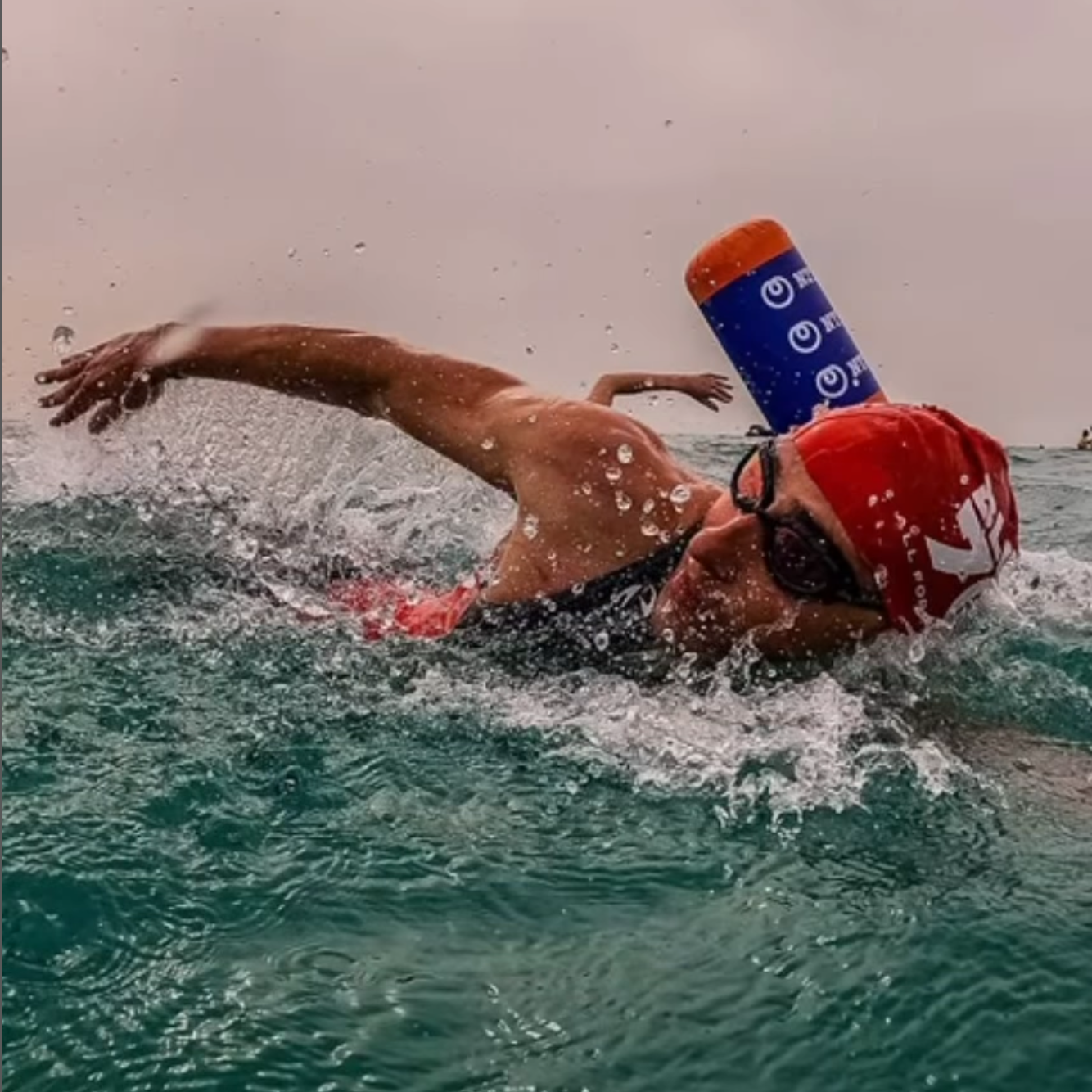
No wetsuit keeps you warm in any water temperature. Cold water demands gradual acclimatization, a visible tow float, a swim buddy, and a plan to get dry quickly after you exit. If you shiver or lose feeling, get out.
Warm Water: Less Coverage, More Comfort
Above roughly 70 to 72°F, a full wetsuit can feel overheated on longer swims. The suit traps warmed water against your skin. A Reaction Sleeveless keeps hip and torso lift while letting your arms breathe. Swimskins are a separate category. They add very little thermal protection and work as race-day covers for warm, clear water.
A Simple Temperature Map
Use this starting point, then adjust for your own cold tolerance, body mass, and swim duration:
- Below 56°F: Thermal Reaction, short sessions, full safety plan.
- 58 to 70°F: Reaction or Fusion. Reaction uses higher-grade neoprene for longer, frequent swims. Fusion suits shorter sessions and has a lower-sitting neckline for comfort.
- Above 70°F: Reaction Sleeveless or a swimskin.
Beginners often gain more body position from a wetsuit than advanced swimmers because lift corrects a larger starting deficit. Two swimmers in the same 60°F lake can feel completely different. The thickness label is a starting point, not a personal recommendation.
Fit Decides Whether Thickness Works
A suit that gaps at the neck, wrists, or ankles lets fresh water move in and out. That flushes the warm layer and adds drag. A suit that is too tight through the shoulders restricts your stroke and causes early fatigue. On land, a swim wetsuit should feel snug. In water, it should feel less restrictive.
Take your time putting it on. Pull the legs up first, work the torso, then settle the shoulders last. Grab the neoprene with flat fingers, not fingertips or nails.
Blueseventy's Femme Fit patterns address the bust, torso, wrist, and ankle areas on women's suits. That changes where the seals sit. A suit cut for a different body shape can fit through the hips and still gape at the neck.
Before you choose based on thickness, check your measurements against the size charts. Take a Test Swim. You can swim in the suit and still return it within 30 days if it comes back clean, dry, and unmodified.
Water temperature guides the category. Thickness guides the panel map. Fit decides whether either one works. Happy swimming.