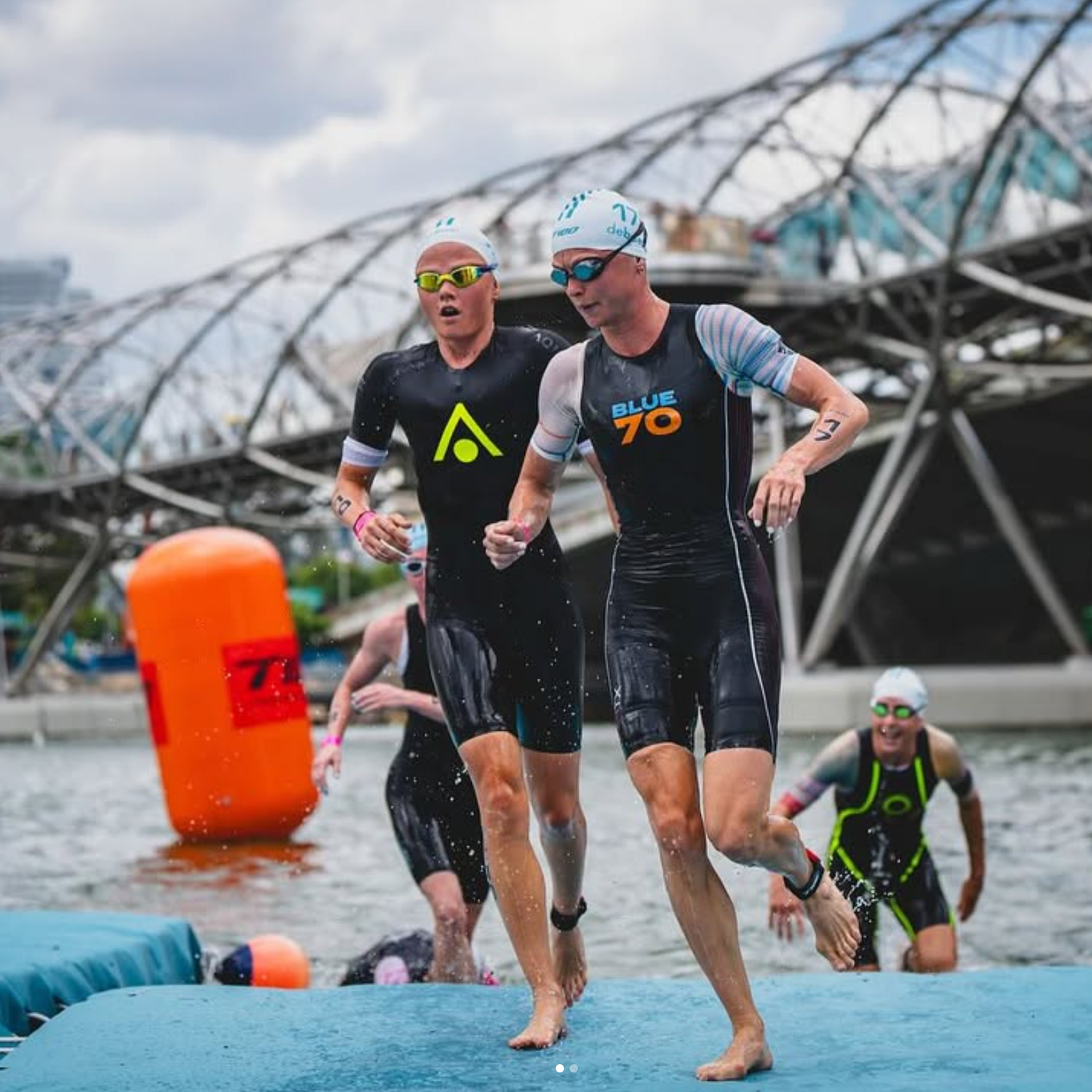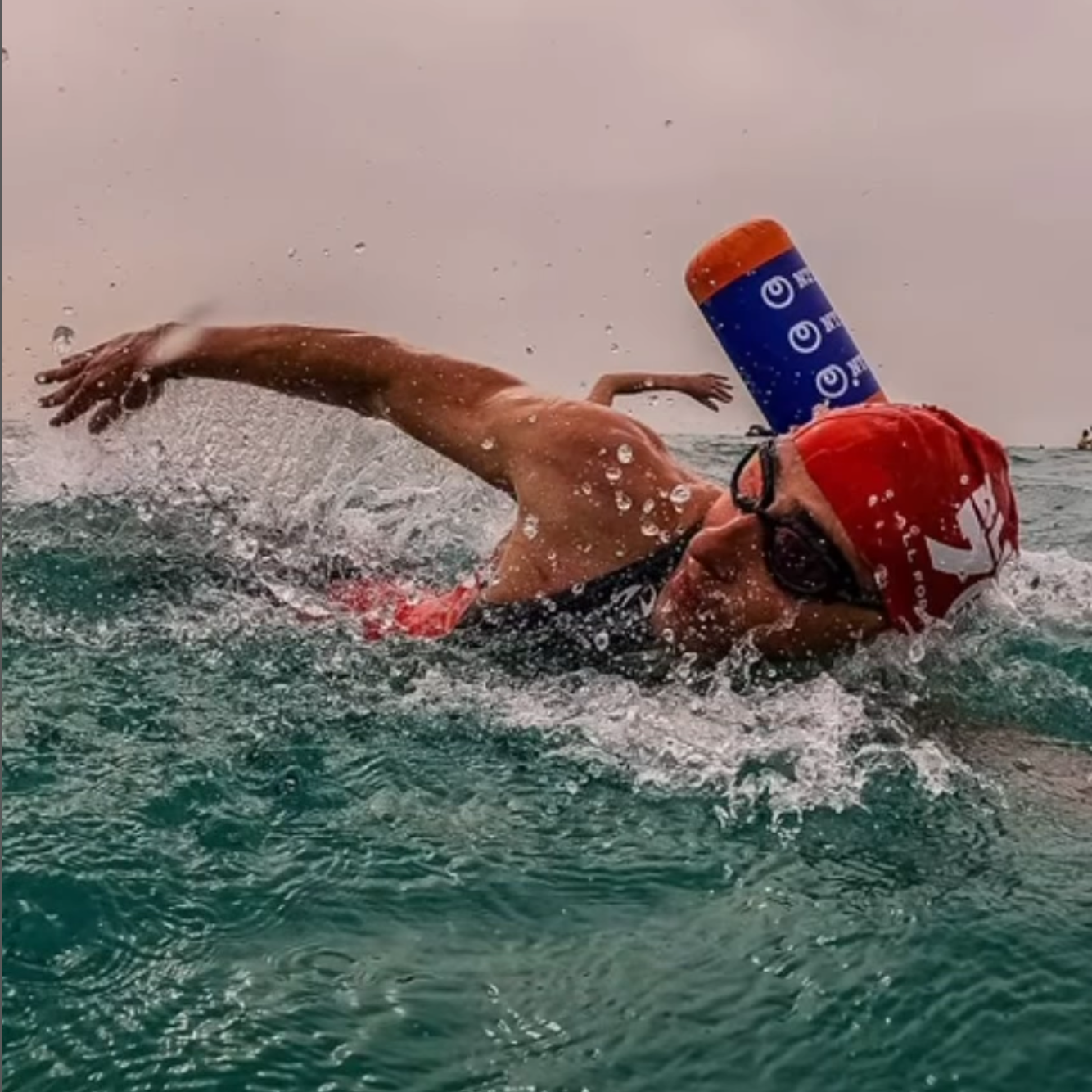



Most swimmers ask how to stretch a wetsuit after a dry-land try-on leaves them squeezed across the chest and shoulders. The more useful answer is usually to stop trying to stretch the suit. blueseventy designs its swim-specific wetsuits to feel snug before you get wet. They seal, support body position, and allow a thin layer of water inside to warm against your skin. On land, without that water layer, the suit feels tighter than it will during a swim. Pulling on it by hand creates new problems instead of solving the fit.
Why the Suit Feels Tighter on Land
blueseventy suits use Yamamoto neoprene in 38, 39, and 40 cell. Higher cell numbers mean more flexibility, but no closed-cell neoprene drapes loosely. The material acts as a close-fitting layer because the suit has to stay in place during thousands of catch and pull cycles. The outer lining limits how far each panel can elongate before the fabric and foam begin to work against each other. That restriction is intentional. It gives the suit structure.
The habit of stretching a wetsuit comes from an older era of triathlon suits, when thicker neoprene made shoulder restriction a real problem. Modern swim-specific suits use thinner, more flexible Yamamoto neoprene in the arms and shoulders. The limiting factor is usually fit or donning, not material stiffness.
On land, you are missing two things that change the feel: the water layer and the buoyancy that lifts your hips and legs. In the water, the suit moves with you. On land, gravity pulls the suit down and the material has no water film to help it slide. A suit that feels too short in the shoulders in a changing room can feel normal after a few hundred meters. You changed the fit conditions. The suit's permanent size stayed the same.
What Pulling on a Panel Does
Manual stretching does not add a size. Neoprene can elongate under load, but it returns to its original shape unless you overheat it or tear it. The seams are less elastic than the foam. When you grab the neckline and yank upward, the force concentrates at the stitching. You can pop stitches, distort the collar, or stress the zipper base. On a suit like the Helix, the arm and shoulder panels are thin on purpose to reduce restriction during the stroke. Pulling those panels by hand can create thin spots and split seams.
Stretching attempts often cause damage you cannot see right away: a panel that no longer lies flat. Pulling a leg or torso panel off-axis can introduce wrinkles that trap water and add drag. A suit that fit correctly before the pull can start to feel loose in one spot and too tight in another because the panel shifted under the seam line. That is why zipper failures and split seams sometimes appear on suits that were never misused in the water. They were pulled too hard while dry.
Check the Size Chart Before You Stretch
Before you try to change the suit, check whether the suit is the right size. blueseventy's size chart uses height and weight ranges, not t-shirt size or pants size. If you are between sizes, consider your torso length and shoulder width. A suit that is too small will never feel right, no matter how carefully you put it on. A suit that is too large will flush water and slide down, which can make the shoulders feel tight because the suit is pulling from the wrong anchor points.
Women's fits add another set of variables. blueseventy's Femme Fit adjusts the pattern in the bust, torso, wrists, and ankles, and it lowers the neckline. If a suit has always pinched at the shoulders or neck, the answer is often a women's cut rather than a larger size. The goal is full arm rotation without loose folds across the torso.
blueseventy offers a 30-day return and exchange window, and the Test Swim policy lets you swim in the suit and still return it if it is clean, dry, and unmodified. You need to swim in the suit to know how it fits.
A Donning Sequence That Prevents the Fight
Most donning battles happen before the suit is seated correctly. The material needs to move up in stages, not in one pull. Use your fingertips and the pads of your fingers, not your nails. Fingernails cause small punctures, and those punctures are not covered under warranty.
- If the ankle or calf is tight, place a plastic grocery bag over your foot before sliding it through the leg opening. The slippery surface helps the neoprene pass over the heel without catching. Remove the bag once the foot is through.
- Pull the lower leg section up gradually. Pinch small folds of fabric from the inside, lift, and release. Do not grab one fistful and pull.
- Work the suit up over the knees and thighs, then settle the crotch. A suit that hangs low in the crotch will pull down on the shoulders and make the upper body feel tight.
- For long-sleeved suits, put one arm in at a time. Use the opposite hand inside the sleeve to guide the wrist, then draw the material up the forearm and bicep.
- Settle the shoulders last. Bend forward slightly, lift the front and back panels, and slide the suit up so the armpit sits snug but not pinched. Reach both arms overhead and rotate through a slow catch. If the suit pulls the neck down or restricts the armpit, check the size before you blame the donning.
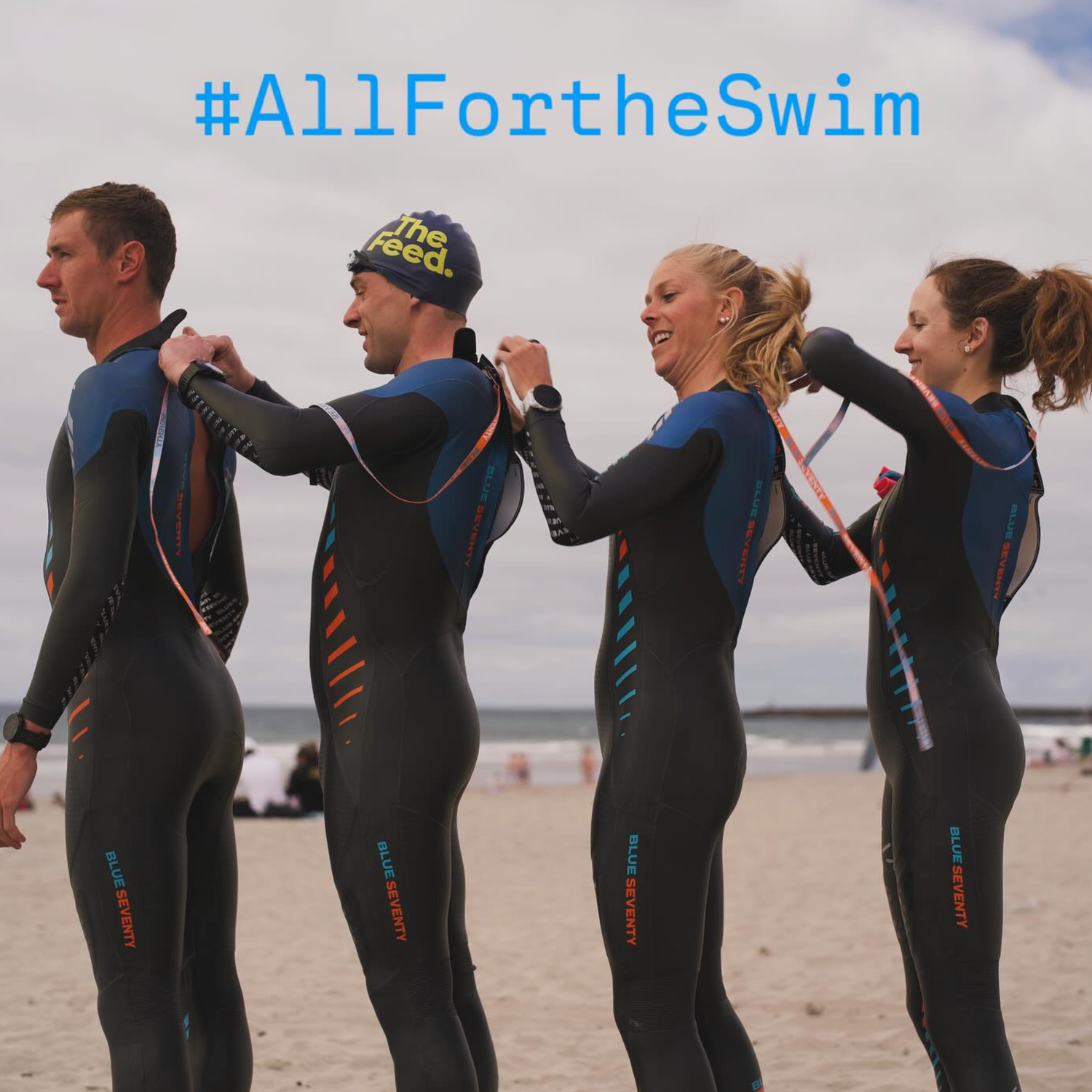
- Close the zipper last. If it is a back zip, have someone close it while you stand upright. Do not force the zipper if the two sides do not meet. That usually means the suit is not pulled up enough or it is too small.
When One Area Still Feels Wrong
Use a stroke-specific test. Put the suit on correctly, then extend one arm overhead and rotate through a full catch. The suit should allow the motion without pulling the neck down or cutting into the armpit. If the shoulders feel like resistance bands, the suit is too small, the cut is wrong for your proportions, or the material is not seated.
Neck pressure often gets blamed on the collar. On a suit with a lower-sitting neckline, like the Fusion, the solution is sometimes a different model rather than pulling the collar. If the neck seal leaves deep red lines or makes breathing uncomfortable on dry land, try a size up or a women's cut. A wetsuit collar should seal without pressing on the throat.
Wrist and ankle seals that feel too tight often loosen slightly in the water, but they should not cut off circulation. If you cannot slide two fingers under a wrist seal after the suit is on, the size may be wrong. Do not trim the seals. blueseventy designs the suit around those openings.
Care Habits That Distort a Suit
Heat is the main way people accidentally stretch or misshape a wetsuit. Three habits distort a suit faster than any swim session:
- Leaving it in a hot car.
- Rinsing it in hot water.
- Putting it in the dryer.
Rinse in cool fresh water after each swim. Dry it in the shade or indoors, not in direct sun. Storage also matters. Hanging a wet suit by the neck on a narrow hanger can stretch the shoulders and create a permanent distortion in the collar. Store the suit flat or fold it loosely across a wide hanger or padded bar. If you travel, roll it instead of cramming it into a tight ball.
Test Swim Before You Stretch
If you want to know whether a suit fits, swim in it. The suit will feel different after the first few hundred meters because the water layer forms and the neoprene warms slightly. It will not become a full size larger, but the restrictions you felt on land usually fade. Instead of pulling on the panels on dry land, put the suit on correctly, get in the water, and let the suit do its job. If it still feels wrong after a swim, treat it as a sizing question. Check the size chart, try a different model, or use the Test Swim policy. That is how you find a wetsuit that fits.
Happy swimming.