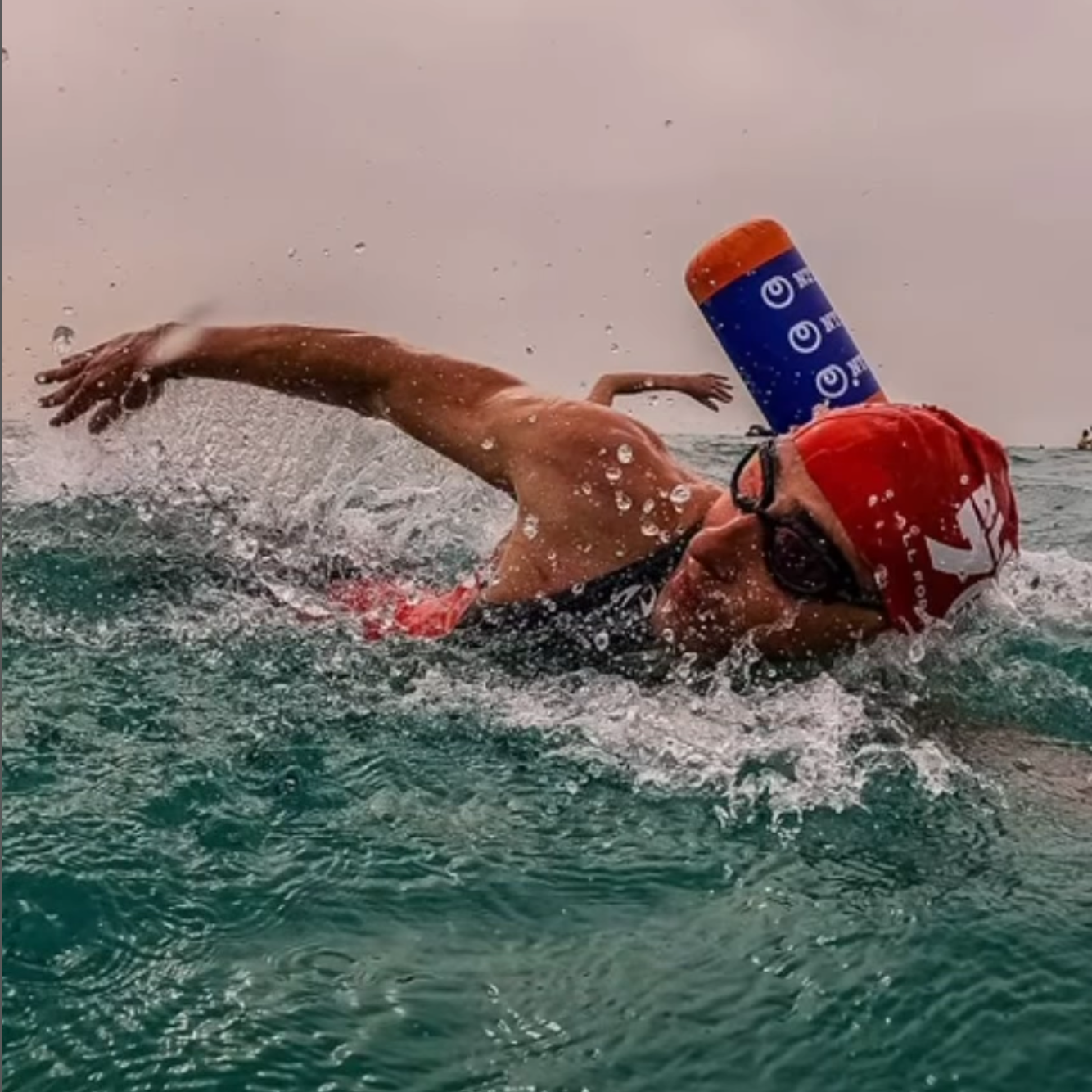



Ask a triathlete about their training and you'll get numbers all day long - pace splits, heart rate zones, watts down to the decimal. Ask that same person what happens to their wetsuit between swims, and you'll usually get a shrug. Maybe a quick hose-down. Maybe nothing at all. Wetsuit care sits somewhere below "which socks for T2" on most people's priority lists, right up until the day the suit starts smelling like a gym bag or the zipper snags halfway up their back.
By then, the damage is already done.
This isn't about a frantic pre-race clean-up. It's about understanding what's actually happening to your wetsuit between sessions, and why the products you use - or don't - have a real, measurable effect on how long that suit performs the way it did the day you unboxed it.
Neoprene Is Only Half the Story
When most swimmers think about wetsuit longevity, they picture the neoprene: that closed-cell foam responsible for flexibility and warmth. Fair enough. But neoprene is only half of what you're actually caring for. The other half is the lining, the seam bonding, and the zipper - and each of those reacts differently to whatever's touching it after a swim.
Three things do most of the damage:
- Chlorine is an oxidizer. Over time, it breaks down the neoprene's cell structure and gradually steals the elasticity that makes a good wetsuit feel like a second skin.
- Salt water dries into fine crystalline residue if you don't rinse it out properly. Left inside the seams and lining, that residue acts like sandpaper every time you rotate a shoulder or extend into a stroke.
- Body oils, sunscreen, and sweat leave behind organic residue - exactly what bacteria need to set up shop, which is where that unmistakable "old wetsuit" smell comes from.
A quick rinse under a garden hose handles maybe one of these three problems, and not particularly well. It does little for salt embedded deep in the lining, nothing for oxidative breakdown, and almost nothing for the organic buildup inside the open-cell interior - that soft, plush layer against your skin, as opposed to the smooth exterior "skin" side of the suit.
Why Regular Soap Doesn't Quite Cut It
Here's a shortcut a lot of swimmers take: a squirt of dish soap, or whatever's sitting in the shower, tossed into the rinse bucket. It'll lift some surface grime, sure. But household detergents are built for skin and cotton, not for neoprene and bonded seam tape.
Two problems tend to show up over time:
Surfactant strength. Most household soaps are formulated to strip oils aggressively - great for a dinner plate, not so great for the rubber compounds and lining fibers that depend on retained flexibility to do their job.
pH mismatch. Household soaps, especially anything with bleach or heavy fragrance, tend to run more alkaline than neoprene and seam-bonding agents are built to handle. One wash isn't going to ruin your suit. Dozens of washes across a season, though, start to compound - the same underlying reason surfers and open water swimmers who neglect proper care see premature cracking around high-flex zones like the shoulders and underarms.
Wetsuit-specific shampoo is formulated to sit at a neutral pH and skip the harsh surfactants that speed up neoprene breakdown, while still lifting salt, chlorine, and skin oils effectively. Wetsuit conditioner - used less often, but worth having on hand - is designed to help restore some of the suppleness that any repeated washing tends to remove from the lining and seams.
The Part Most Swimmers Never Think About
Here's the angle that rarely comes up: the interior lining of your wetsuit isn't just there for comfort. It's the interface between your skin and the thin layer of water your body warms for insulation - the whole mechanism behind why a wetsuit provides added thermal protection in the first place.
When that lining is stiff, caked with dried salt, or coated in layers of old sunscreen and skin oil, it changes how water moves against your skin and how efficiently the suit flexes with every stroke. A degraded lining doesn't just feel worse. It behaves differently in the water.
Physically, this often shows up as a subtle shoulder fatigue that creeps in over the course of a season. It's tempting to blame training load or a rough open water session, but sometimes it's simpler than that - the neoprene isn't snapping back into shape as efficiently after each stretch because it's lost some of its suppleness. You end up quietly fighting your own wetsuit, stroke after stroke, without realizing it.
This is exactly why flexibility engineering matters so much at the design stage. Blue70 uses higher cell-count Yamamoto neoprene - 38, 39, and 40-cell grades - specifically through the shoulders and arms, where flexibility has the biggest impact on stroke mechanics and fatigue. A higher cell count means more built-in flexibility. But that engineering only holds up over time if the material is actually cared for. Skip the aftercare, and you're working against the very design intent the suit was built around.
A Care Routine That Fits Real Life
None of this requires an elaborate ritual. It just requires consistency.
After every swim - pool, lake, or ocean
- Rinse thoroughly inside and out with cool, fresh water. Warm or hot water can affect neoprene bonding over time, so keep it cool.
- Turn the suit inside out periodically to rinse the lining directly, not just the smooth exterior "skin" side.
Every 3-5 swims, or after any race
- Hand-wash with a wetsuit-specific shampoo, working it gently into the lining. Skip the washing machine entirely - agitation and spin cycles are rough on seams, zippers, and bonded panels.
- Rinse thoroughly. Leftover soap residue in the neoprene attracts more grime over time, which defeats the whole point of washing it.
Periodically, especially with frequent use
- Apply a wetsuit conditioner to the lining, paying attention to high-flex zones - shoulders, underarms, behind the knees.
- Check the zipper track for grit or buildup. Zipper failure from mechanical wear is one of the more common, and most avoidable, reasons a wetsuit gets retired early.
Drying
- Dry inside-out first, then outside-out, using a wide hanger - never a wire one, which can crease and stress the neoprene at the shoulders.
- Keep the suit out of direct sunlight. UV exposure breaks down neoprene and lining fibers faster than almost anything else you can actually control.
Why This Matters Even More If You Train in Your Suit Weekly
If your wetsuit only comes out once or twice a year for race day, care still matters - but the stakes are relatively low. If you're training in it every week, the picture changes. This is part of why frequent swimmers tend to gravitate toward more durable models like the Reaction or Fusion, rather than the Helix, whose intentionally thin, race-day neoprene is optimized for maximum flexibility rather than heavy training use.
For a suit that's seeing weekly use, the compounding effect of consistent aftercare becomes significant. A suit rinsed and washed properly after every session, versus one hosed off occasionally and left to dry in a garage corner, simply doesn't age the same way - even if they started out as identical suits off the rack.
There's a practical money angle here too, and it's a simple one. A season's worth of wetsuit shampoo and conditioner costs very little. Replacing a suit a year or two early because the lining broke down or a zipper gave out costs a lot more. Treating aftercare as part of the investment in the suit, rather than an optional extra, is one of the cheapest ways to protect that investment.
The Bottom Line
Wetsuit care isn't about babying your gear. It's about understanding the materials well enough to work with them instead of against them. Chlorine oxidizes. Salt abrades. Skin oils and bacteria accumulate. And generic household soap is a poor match for the pH balance and structure of neoprene and lining fabric. A proper wetsuit shampoo and conditioner routine deals with all three problems at once, while preserving the flexibility and feel your suit was engineered with in the first place.
It's a small habit with an outsized payoff - a suit that still feels the way it did on your first swim in it, season after season, instead of one that's quietly stiffening up one wash at a time.
Have questions about caring for your specific Blue70 wetsuit, or wondering whether a suit showing some wear is a repair situation or a replace situation? Our Expert Support team can help you build a care routine that actually fits how and where you swim.