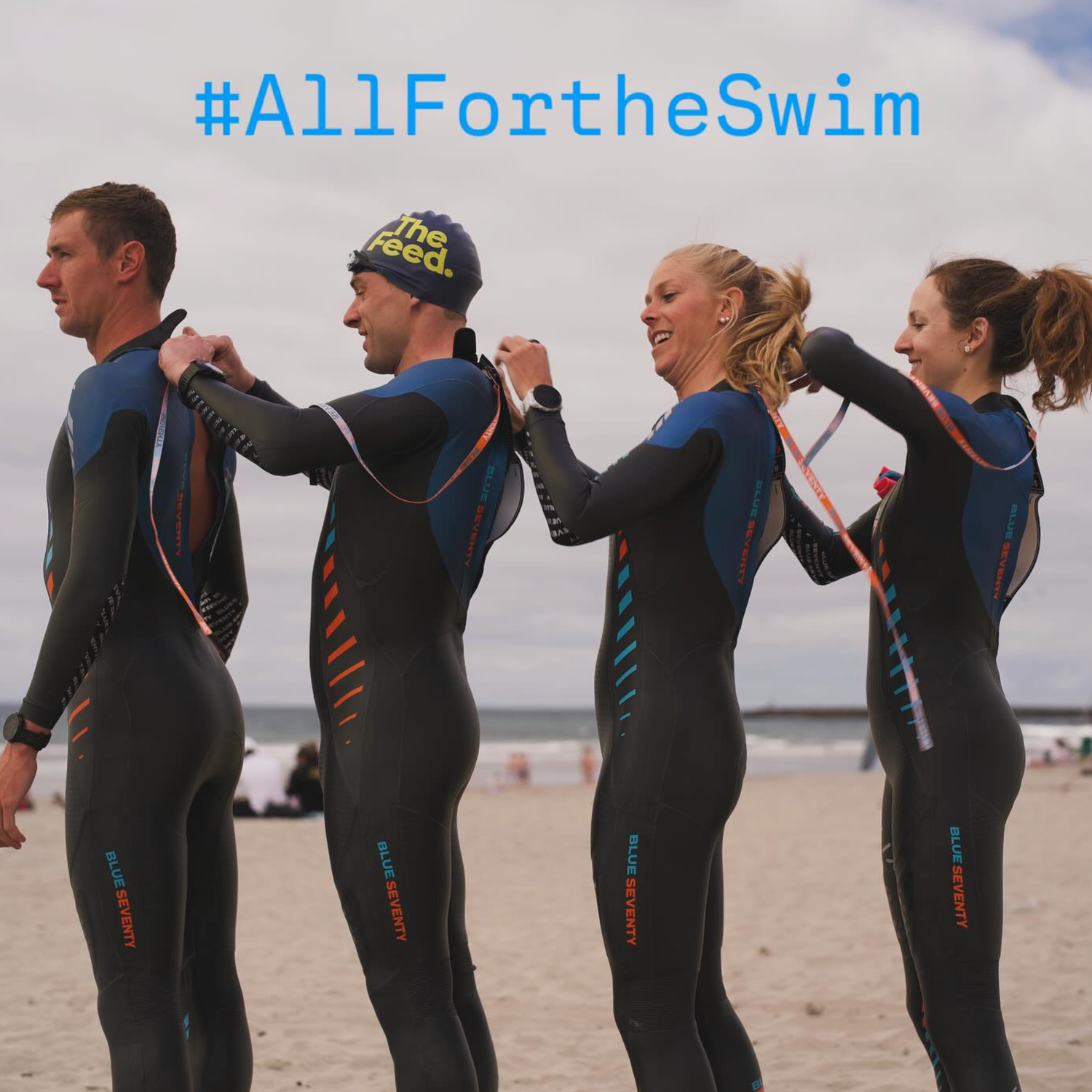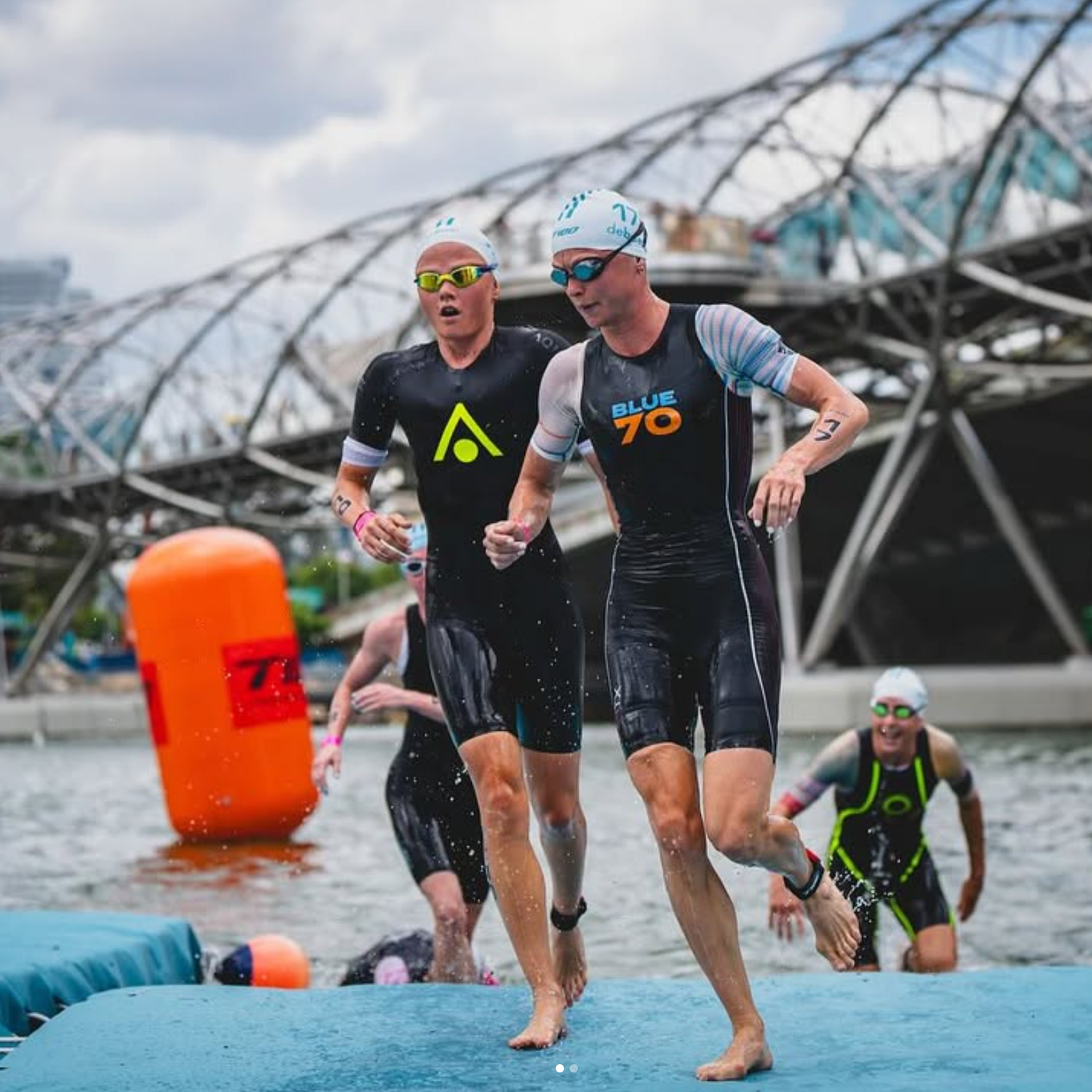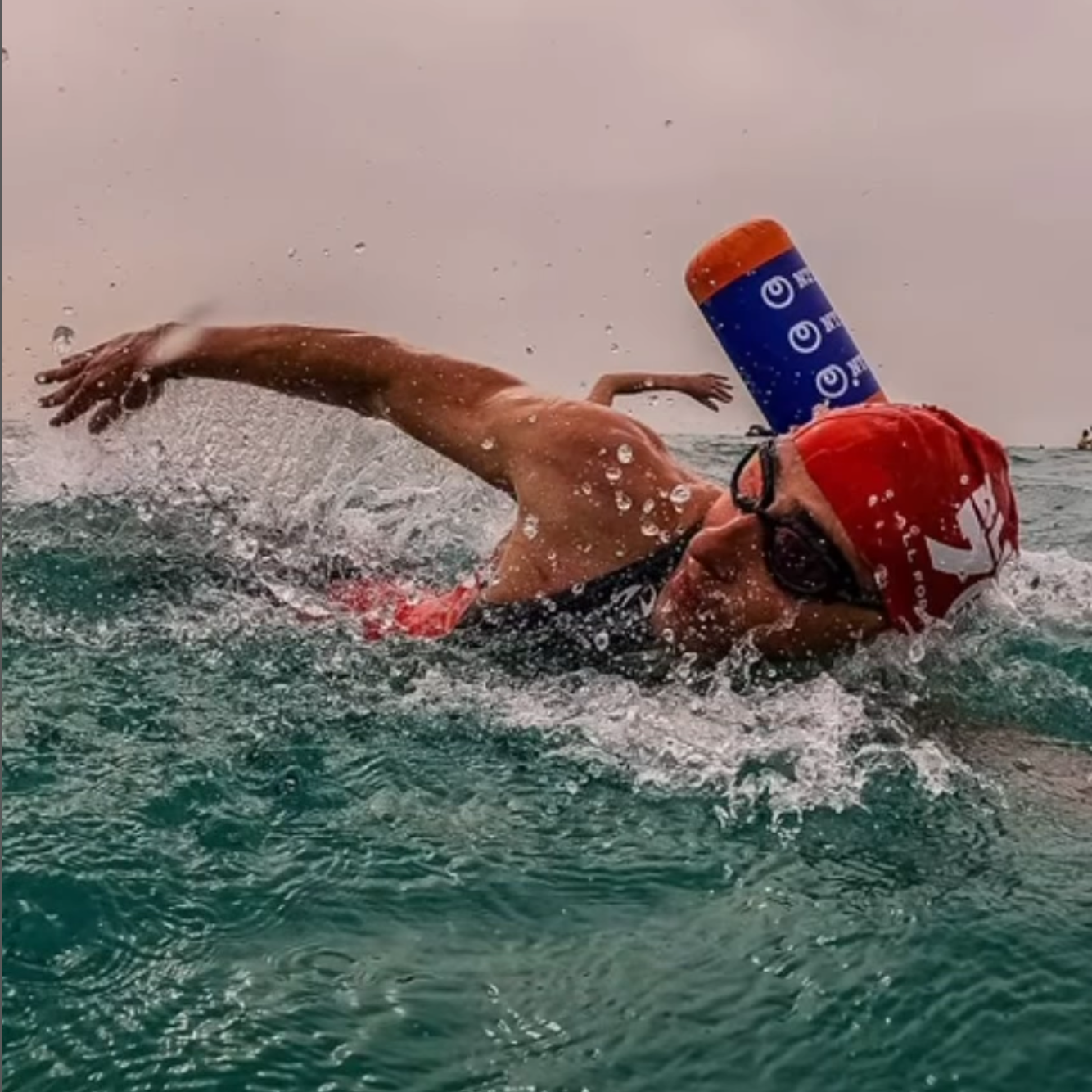



A thermometer reads 62°F. Two swimmers stand on the same shore. One plans a 30 minute loop and gets out comfortable. The other plans 90 minutes and comes out shivering. Same water, same suit, different sessions.
That split is why a Fahrenheit wetsuit guide built on one number falls apart on the beach. Blueseventy takes its name from the 70 percent of the planet covered in water. The company has built swim-specific wetsuits since 1993, starting with one of the first triathlon wetsuits ever made. In 2015, blueseventy launched its first purpose-built cold water wetsuit, and the current Thermal Reaction carries that cold water role forward with a full Zirconium jersey lining. The thermometer reads the same as it did in 1993. The suits and the thinking about temperature have changed.
Open water swimmers in the U.S. read local reports in degrees Fahrenheit. Water temperature is one item in a thermal budget. The suit you choose should match the session length and the conditions, not just the number on a dock sign.
Two Fahrenheit Ranges Anchor the Guide
Water below roughly 56-58°F calls for a thermal suit and a shorter session. Water above roughly 70-72°F can make a full suit too warm over sustained effort. Between those ranges sits the full suit window where most triathlon and open water training happens.
Use those ranges as starting points. Race-day water temperature cutoffs vary by sanctioning body and change over time. Check the current rulebook for any event you enter.
Water Temperature Is One Item in Your Thermal Budget
Water temperature sets the baseline rate of heat loss, but it does not set the total. Wind strips heat from exposed skin. Sun adds heat to your shoulders and upper back. Air temperature changes how you feel between intervals and during breaks. Duration multiplies everything: each extra minute adds heat loss, even after you stop noticing it. Effort produces heat but also pushes more water across your skin.
Acclimatization shifts your starting point. A swimmer who has built cold water sessions across a season carries more tolerance than someone stepping into the same 58°F lake for the first time.
Think of it as a budget. Water temperature is the biggest item. Duration multiplies it. Wind and cloud add cost. Sun and hard effort add heat back. A shaded cove can sit several degrees colder than a sunlit shoreline, so a local, same-day reading beats a seasonal forecast.
A swim wetsuit is not waterproof. It admits a thin layer of water, and your body warms that layer. A snug neck and wrist seal keep the layer from flushing out. Fit is a thermal feature. A suit with gaps at the collar surrenders the warmed layer every few strokes, and a loose wrist or ankle seal lets the layer flush out. That means you spend your session reheating water you already heated.
Suit Selection by Fahrenheit Range and Session Length
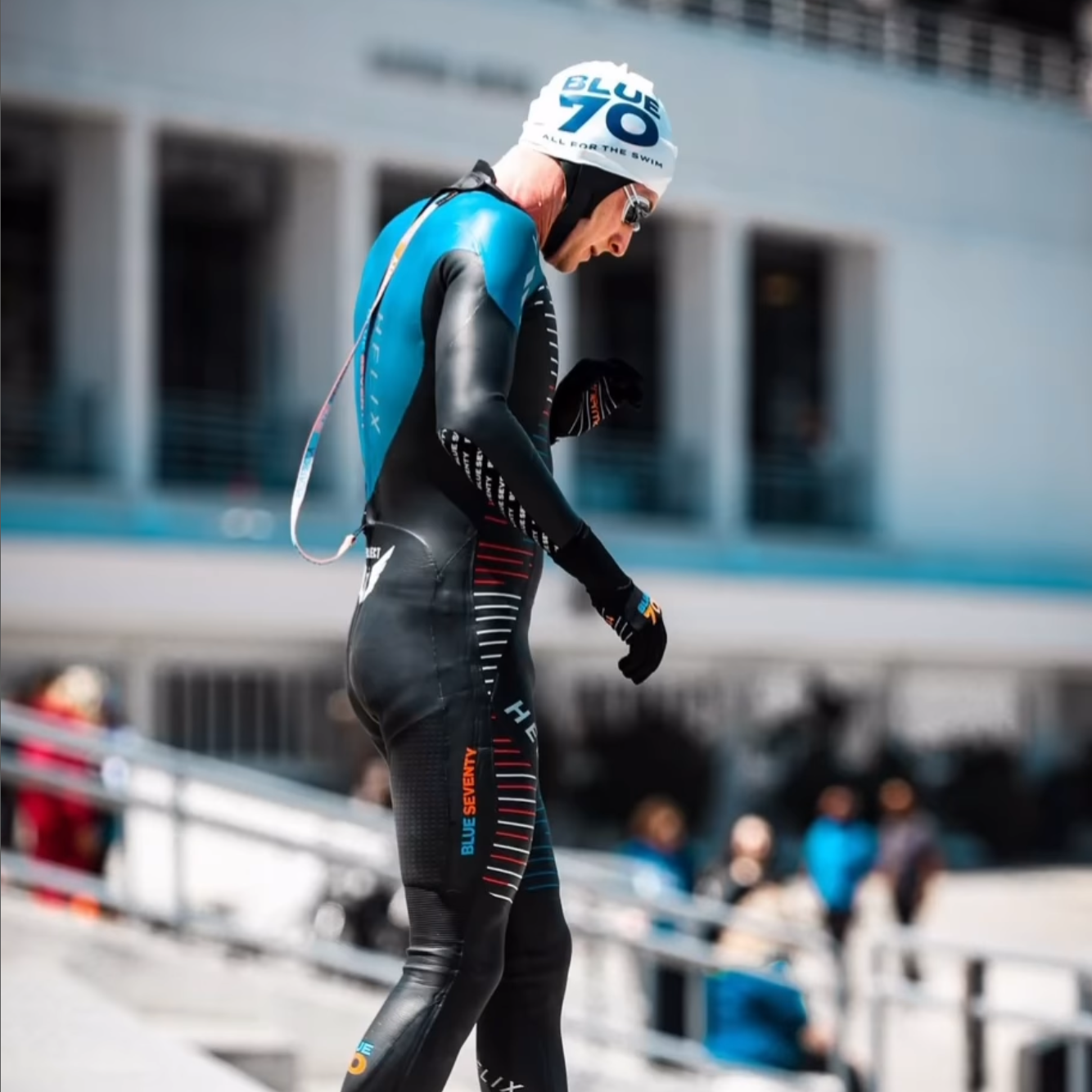
Blueseventy uses Yamamoto 38, 39, and 40 cell neoprene. A higher cell number means more flexibility, which is why the Helix feels noticeably softer through the shoulders and arms.
- Below 56-58°F: choose the Thermal Reaction, a neoprene cap, gloves, and booties. Keep the session short. The Thermal Reaction uses a fully lined Zirconium jersey designed for cold water swimming. It provides added thermal protection, but no wetsuit makes cold water risk free.
- Between 56-58°F and 70-72°F: the full suit window. The Reaction is built for frequent, longer swims with higher grade neoprene. The Fusion suits shorter, regular swims; a 2021 redesign lowered the neckline for comfort without losing the watertight seal. The Helix is the flagship race suit with thin, flexible neoprene in the arms and shoulders, best reserved for race day rather than daily training. The Sprint is the entry level option for a first wetsuit.
- Above 70-72°F: a full suit can become too warm during longer efforts. The Reaction Sleeveless and Glide Short John release heat through exposed arms and legs. Swimskins are another warm water race option, built for hydrodynamics with little insulation.
A well fitting wetsuit also improves body position. Buoyancy equals speed, and beginners gain proportionally more from that lift than advanced swimmers.
Women's suits mirror this range with Femme Fit. The pattern refines the bust, torso, wrist, and ankle areas, lowers the neckline, and extends the zipper for easier entry and faster transitions.
Below 56°F: Shorten the Session
Cold water below the mid 50s Fahrenheit shifts the conversation away from suit model and toward exposure time. The body still loses heat faster than it makes it during long swims, even with thermal protection. Shivering, confusion, slurred speech, and weakness are exit signals. Get dry and warm.
New cold water swimmers should start with a few minutes at a time and build tolerance over weeks. Swim with a group and plan your exit before you get in. A thermal wetsuit adds protection, but it is not a personal flotation device.
Above 72°F: Managing Overheating
Cold gets the attention in wetsuit discussions. Above roughly 70-72°F, overheating becomes the more common problem on longer swims. A full suit traps a warmed water layer, and hard effort in direct sun keeps adding heat. Sluggishness or flushing after 20 or 30 minutes signals that the suit is holding too much heat. When that happens, unzip the suit, move to shade, or get out.
Sleeveless suits release heat through the arms, which makes the Reaction Sleeveless and Glide Short John more sustainable for long warm water training sessions.
A Fahrenheit Wetsuit Checklist
- Take a local, same day water temperature reading.
- Estimate planned swim time and effort before choosing a suit.
- Factor in wind, cloud, sun, and air temperature.
- Below 56-58°F: thermal suit, cap and gloves, shorter session, group swim.
- Between 56-58°F and 70-72°F: full suit matched to durability and distance.
- Above 70-72°F: sleeveless or swimskin, and watch for overheating.
- Check race rulebooks for wetsuit legal temperatures.
- Make sure the neck and wrist seals fit snugly enough to hold the warmed water layer.
If you are deciding between sizes or unsure which model fits your training week, use the blueseventy sizing tool. Take a test swim. A clean, dry, unmodified suit returned with tags attached still qualifies for a refund.
Happy Swimming.