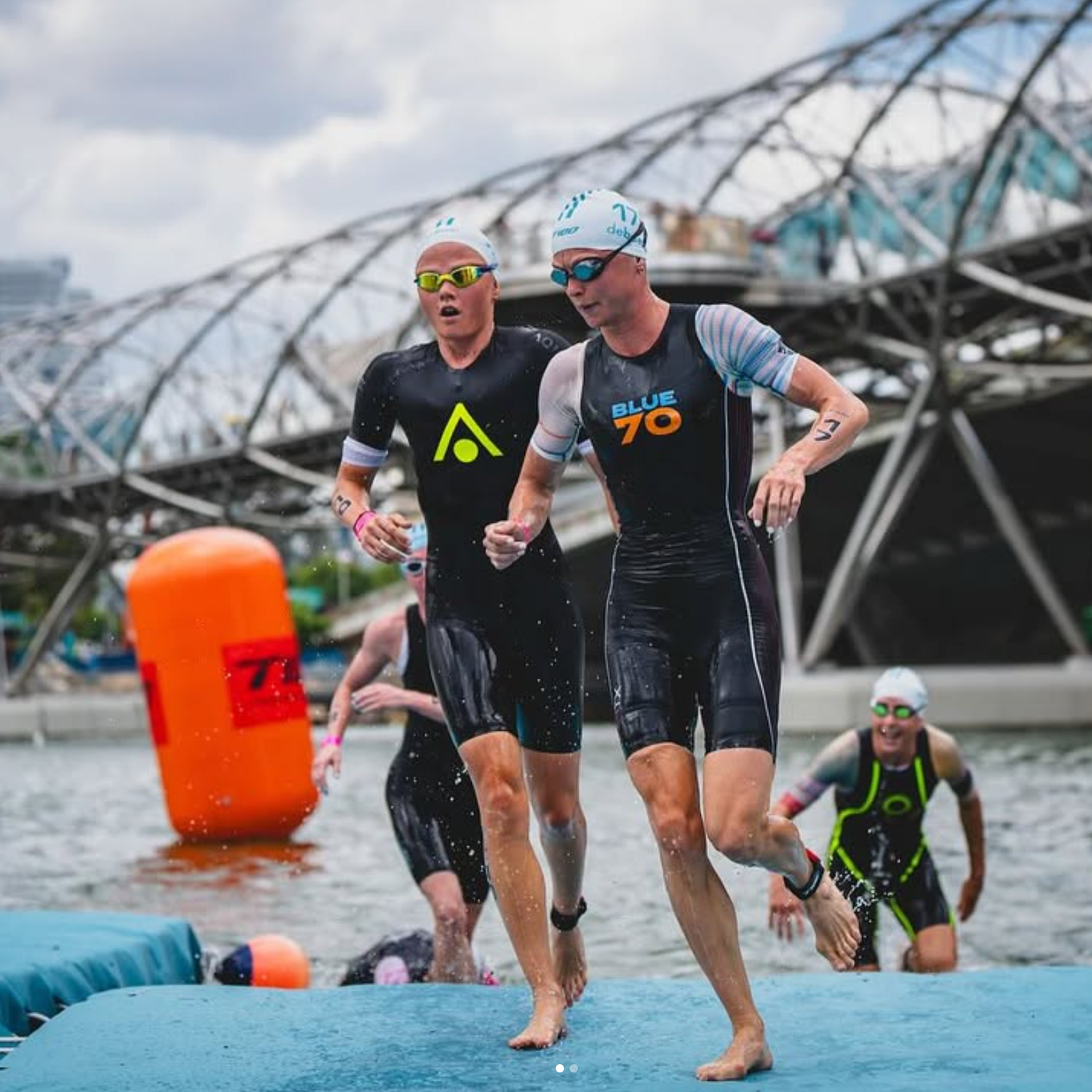



You spend months on swim fitness, then lose time wrestling neoprene at a bike rack. It happens often enough that transition clinics now treat wetsuit removal as a separate motor skill, not as an afterthought attached to the swim. A clean T1 exit depends on the suit you chose, the fit you verified, and a short sequence you can perform without thinking.
Design Changes That Changed T1
Early triathlon wetsuits were built for body position and warmth, not for quick removal. The first purpose-built triathlon wetsuit arrived in 1993, and for years after that, transition meant a slow fight with thick rubber. Swim-specific design has since removed one friction point after another.
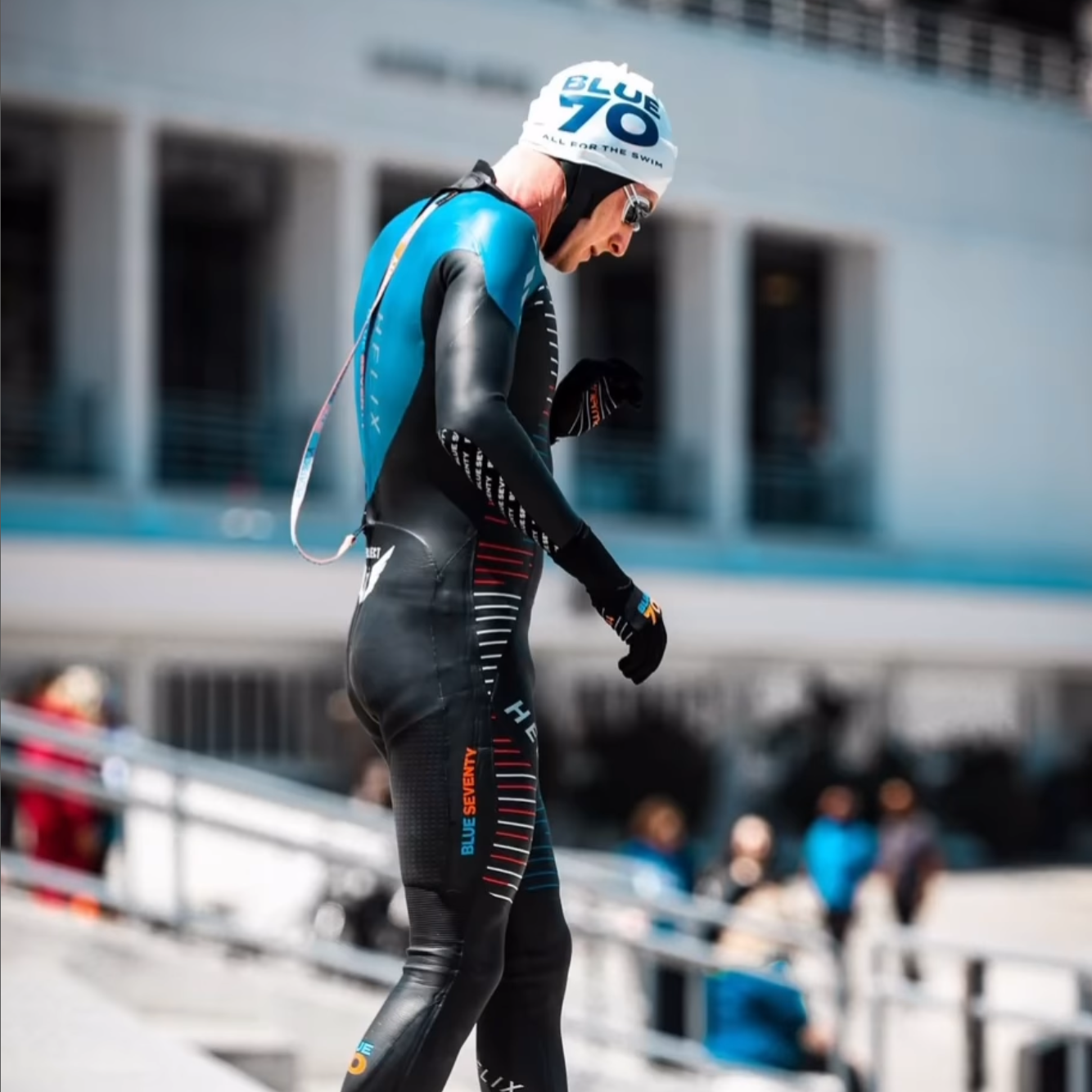
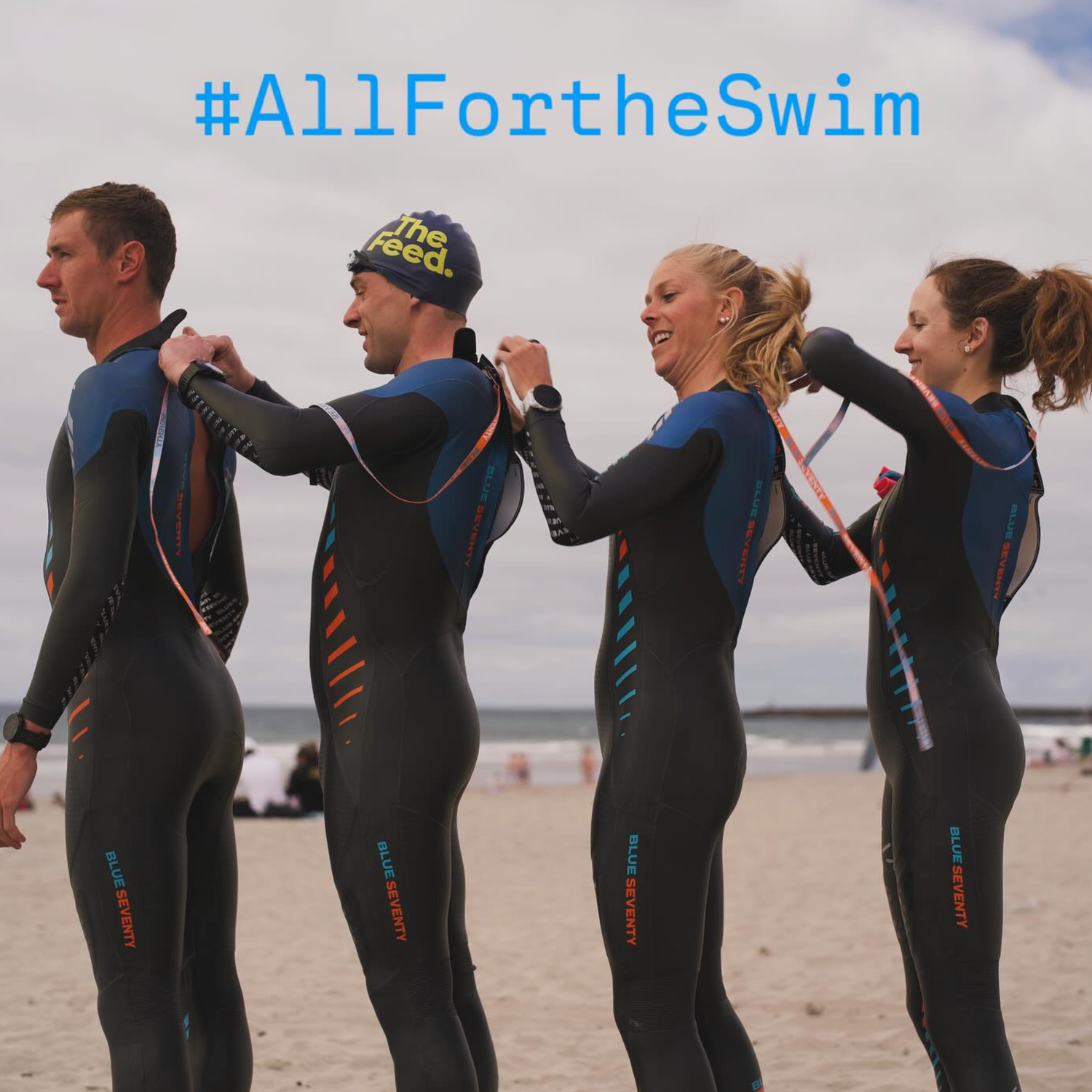
blueseventy wetsuits use Yamamoto neoprene in 38, 39, and 40 cell. A higher cell number means more flexibility. In the arms and shoulders, that flexibility lets the suit release from a wet body with less force. The 2021 Fusion redesign added a lower-sitting neckline for comfort without losing the watertight seal, which also means less rubber to clear over your head in transition. Femme Fit suits use an extended zipper length for easier entry and faster transitions. Each of those details removes a stall point that used to cost age groupers seconds.
Practice It Wet, Practice It Tired
A skill transfers best when practice conditions match performance conditions. Dry neoprene clings and resists. Wet neoprene slides and flexes. If you rehearse T1 only on a dry floor, you train your hands to solve the wrong problem.
Add race-like fatigue to the work. Walk or jog for ten minutes before a T1 repetition so your fingers make the same mistakes they will make after a swim. Use the suit you race in, not an old training suit with different cuff dimensions and zipper length. The sequence should become automatic enough that you can unzip, free your arms, and clear your legs while breathing hard and already thinking about your bike mount. One order. Every time.
The Removal Sequence
A repeatable sequence is more valuable than a fast scramble. Work through these steps in the same order every time:
- As you stand in shallow water and begin moving toward shore, pull the zipper down completely. Use one hand to guide the slider and the other to keep the fabric flat. A forced zipper can damage the teeth and is not covered under the one-year warranty.
- Roll the top of the suit down to your waist and free your arms while the water still helps the neoprene slide.
- Run to your rack with the suit around your waist. Keep your strides short so you do not kick the neoprene or trip.
- At the rack, sit or brace against the rack. Work the suit down over your hips one side at a time.
- Pin the lower leg of the suit under the arch of your foot, not your toes, and pull your foot free with a pointed ankle. Grip the neoprene with the pads of your fingers, not your fingernails.
- Hang the suit over the rack or place it flat in your transition towel. Do not stand on it or ball it up.
Fit Makes Removal Predictable
A suit that fits correctly peels in the same direction every time. blueseventy sizing starts with height and weight, but the finer fit points matter more in T1: shoulder width, torso length, hip circumference, wrist circumference, and ankle circumference. If the wrist cuffs are too tight, your hands hang up. If the hips are too tight, the suit stalls at the waist. If the neck is too high, you lose time clearing the collar.
Femme Fit patterns address bust, torso, wrists, and ankles. The extended zipper length helps with entry and exit, and the lowered neckline reduces chafing and transition friction. A suit should feel snug on dry land and more comfortable in the water. A suit that is too loose also slows removal because water can pool inside and make the suit shift unpredictably as you peel it. If T1 feels harder than it should, check the neckline, zipper length, and wrist cuffs before you blame your hand speed.
Practice Without Voiding Your Warranty
T1 practice is hard on suits, especially on rough pavement or pool decks. Use a towel or mat when practicing on land. Fingernail punctures and heel tears are not covered under the one-year warranty, and neither is zipper damage from force. The Helix uses thin, flexible neoprene built for race day, and it will break down more quickly with frequent training use. If you plan to practice T1 weekly, use a more durable suit like the Reaction or Fusion, or keep the repetitions in your race suit gentle and controlled.
The Test Swim policy lets you swim in a suit and still return or exchange it if the suit comes back clean, dry, unmodified, and with tags attached. That means you can test removal in the water without losing the option to adjust your size. A wet test of the exact sequence is more useful than ten dry rehearsals in the wrong suit.
A Different Kind of Speed
Wetsuit design has moved T1 from a wrestling match toward something closer to a well-rehearsed equipment change. Lower necklines, longer zippers, thinner arm panels, and wrist and ankle cuffs shaped for quick release have changed the skill. Transition work now has its own place in training, separate from the swim and the bike.
Faster T1 comes from choosing a suit that fits your joints and practicing the wet, fatigued sequence until it runs on habit. That kind of speed starts before you reach the rack, and it rewards preparation more than panic. Before race day, take a test swim in your chosen size. It won't affect your return if the suit comes back clean and dry, and it will teach you more about your T1 than another dry rehearsal in the driveway.