


Fresh water gets the sand and salt. It does not get the sunscreen, sweat, and oils that sink into the liner and settle along seam tape. A swim-specific wetsuit lives closer to your skin than a surf suit or dive suit, so those residues build faster and do more damage. Wetsuit shampoo is the cleaner made to pull them out without attacking the neoprene or glue.
When you train, sunscreen rubs off your shoulders and into the collar, body oils collect under the arms and across the chest panel, and salt water leaves dissolved sodium that turns into crystals as the suit dries. Those crystals grind the fibers every time you rotate your shoulders. Chlorine keeps working on the nylon and seam glue until you wash it away. A rinse slows all of that. It doesn't stop it.
What a Rinse Leaves Behind
Sunscreen is designed to stay on your skin through sweat and splashing. When it transfers to the liner, it holds there with the same tenacity. Sweat and oils collect around the collar, under the armpits, and inside the chest panel. In salt water, dissolved sodium recrystallizes as the suit dries. Those tiny crystals abrade the liner and seam tape every time the suit flexes through a stroke.
In chlorinated water, the chlorine keeps reacting with the nylon and the seam glue until you wash it out. A freshwater rinse slows that process. It does not stop it. The smell and the slick feeling on the liner are the two signals that tell you when a suit needs more than a rinse.
Why Wetsuit Shampoo Is Different From Detergent
A wetsuit-specific formula is pH neutral and free of bleach, enzymes, and fabric softeners. Laundry detergent often contains enzymes that break down proteins in the seam glue and lining. Dish soap cuts grease but can leave a residue that attracts more grime. Wetsuit shampoo targets sunscreen and body oils, then rinses clean from the fabric.
- Laundry detergent: Enzymes attack glue and liner proteins.
- Dish soap: Residue can attract more dirt and oils.
- Wetsuit shampoo: pH neutral, no enzymes, rinses clean.
The neoprene foam in a wetsuit is closed-cell, but the outer jersey and interior lining are not. Salt, sunscreen, algae, and body oils sit in those fibers and settle along the seams. A dedicated cleaner reaches those surfaces without the harshness that shortens the life of the seam glue.
How Often to Wash by Water Type
- Pool: Wash after every swim. Chlorine is the most aggressive contaminant most swimmers meet.
- Salt water: Wash after every swim or at most every two sessions. Salt crystals abrade the liner as the suit dries.
- Fresh lake or river: Rinse after every swim. Wash when the liner feels slick or the suit holds an odor after drying.
Smell and liner texture are your guides. If the suit still smells like the lake after it has dried, the liner has not released the organic material from that swim.
A Wash Sequence That Protects Seams and Zippers
- Rinse the suit inside and out with cool water from a shower or hose, never a pressure washer.
- Fill a bucket or tub with cool water and add the amount of wetsuit shampoo listed on the bottle.
- Turn the suit inside out and submerge it. Squeeze the fabric gently around the chest and underarms. Do not scrub with a brush.
- Drain the water and rinse with cool water until it runs clear and the liner no longer feels slick.
- Turn the suit right side out and repeat on the outer jersey if sunscreen or lake scum remains.
- Hang the suit folded at the waist over a wide hanger, out of direct sunlight and away from heat. Let it dry fully before storing.
Never put a wetsuit in a washing machine or dryer. The agitation stretches seams, and the heat breaks down neoprene. Wringing can crease the neoprene and stress seam tape. Squeeze water out section by section instead.
Shampoo Cleans. It Does Not Repair.
Wetsuit shampoo removes residue. It cannot fix tears, holes, or delamination. A fingernail puncture at the neck or a heel tear at the ankle needs neoprene cement. Our warranty excludes fingernail punctures, heel tears, zipper damage from force, and damage from heat or chlorine. Those failures come from mechanical stress, not from missed washing.
Shampoo also cannot restore compressed neoprene or bring back buoyancy in an aged suit. If the suit feels thin at the chest or has lost its shape, washing will not bring it back.
Care by Model: Same Routine, Different Handling
All blueseventy wetsuits use Yamamoto neoprene in 38, 39, and 40 cell grades. A higher cell number means more flexibility. The cleaning routine stays the same, but handling shifts slightly.
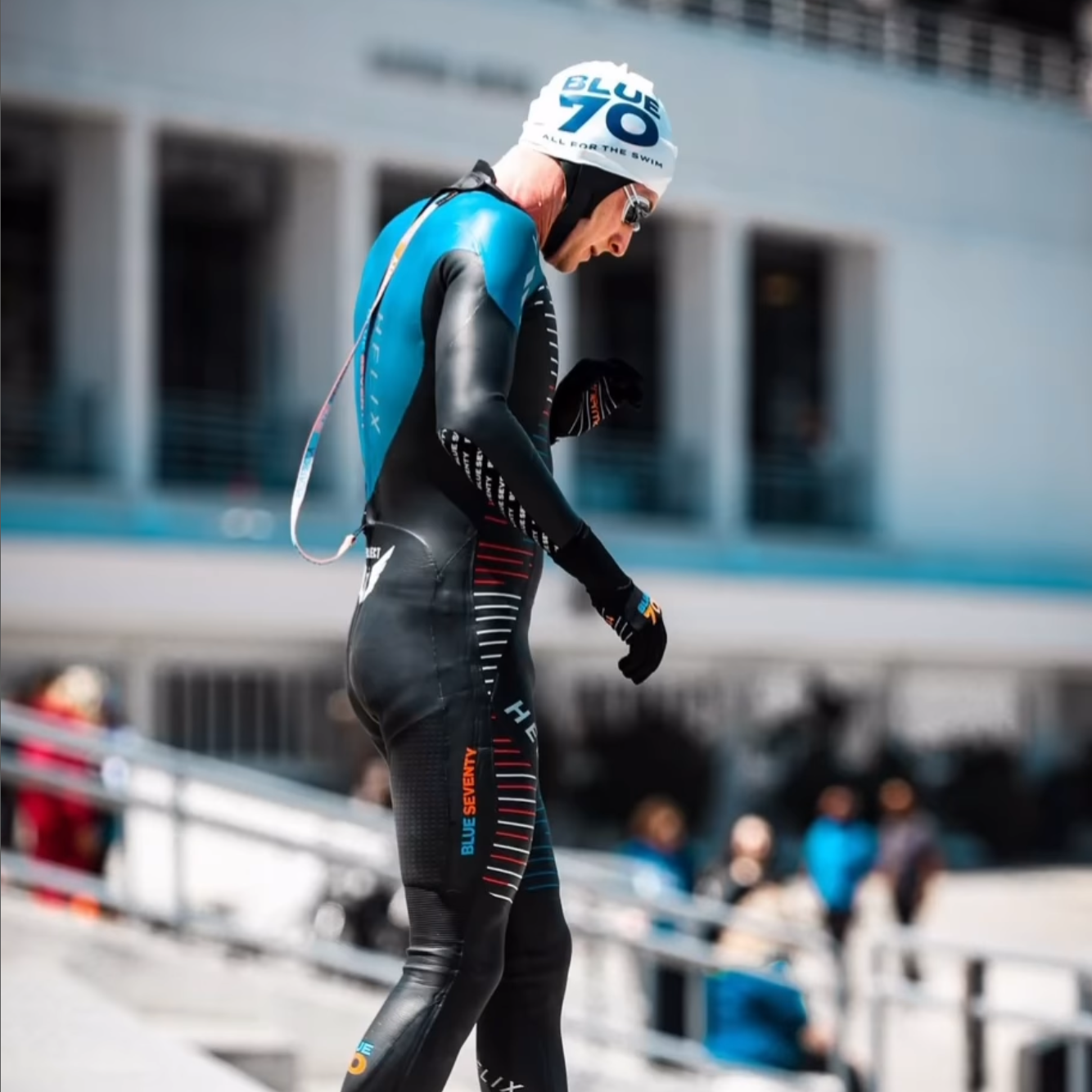
- Helix: Thin, flexible Yamamoto neoprene through the arms and shoulders. Built for race-day range of motion. Wash gently. Never tug the collar to remove the suit.
- Thermal Reaction: Zirconium jersey lining for cold water. That lining holds more water and body oils, so it benefits from a dedicated shampoo after cold swims.
- Reaction and Fusion: Higher-grade neoprene built for frequent training. They tolerate a little more pool deck contact but still need the same rinse and wash cycle.
Washing Is a Habit, Not a Repair
Wetsuit shampoo is a newer category than dish soap and baby shampoo. The shift makes sense: as suits get thinner and more flexible, the liner and seam glue become more sensitive to the wrong cleaners. A dedicated formula protects that construction.
The cleanest suits come from swimmers who treat washing as part of the session. Rinse while the suit is still wet. Wash when the liner feels slick. Hang it folded over a wide hook in the shade. Let it dry fully before the next use. That routine takes a few extra minutes and prevents the stiff, odorous liner that shortens a suit's useful life.
Wetsuit shampoo earns its place in your swim bag because it removes what a rinse cannot. Use it after pool and saltwater sessions, use it when the liner holds a smell, and skip the laundry detergent. If you need help choosing a cleaner or have a suit that needs a repair evaluation, reach out through our contact page. Dive in.