


If you're staring down your first triathlon, the wetsuit question probably sounds something like: "Do I actually need one?" The short answer is almost always yes - either the race requires it because the water is cool, or it'll make the swim leg so much easier that you'd be nuts to skip it. But the real reason to get one early has nothing to do with temperature. It's about body position.
Triathlon wetsuits are built for swimming, pure and simple. Since 1993, we've been designing suits for one environment - the open water - and every wetsuit we make, from the entry-level Sprint to the race-day Helix, is guided by a single idea: buoyancy equals speed. For a beginner, that same idea translates to buoyancy equals confidence. A properly fitted wetsuit lifts your hips and legs until you're floating nearly horizontal, which is exactly how efficient swimmers look after years of practice. Instead of dragging your lower half through the water, you'll feel what it's like to swim on top of it. The suit doesn't just reduce drag; it gives you instant, physical feedback. I've seen it happen so many times that I'll say it plainly: your first wetsuit doubles as a swim coach.
The physics of confidence
Think about what happens when you zip up a triathlon wetsuit. The thicker neoprene on the front of the thighs, hips, and belly adds flotation right where most new swimmers are the densest. Suddenly your legs stop sinking. You can sight a buoy without grabbing a breath through breaststroke. You settle into a rhythm that, on dry land, feels like it shouldn't be possible yet.
This isn't a fancy feature reserved for the pointy end of the pack. Beginners get proportionally more benefit from a wetsuit's lift than experienced swimmers do. The less efficient your body position is without a suit, the bigger the transformation you'll feel once you're in one. Less energy spent fighting the water means you climb onto the bike with fresher legs and a clearer head.
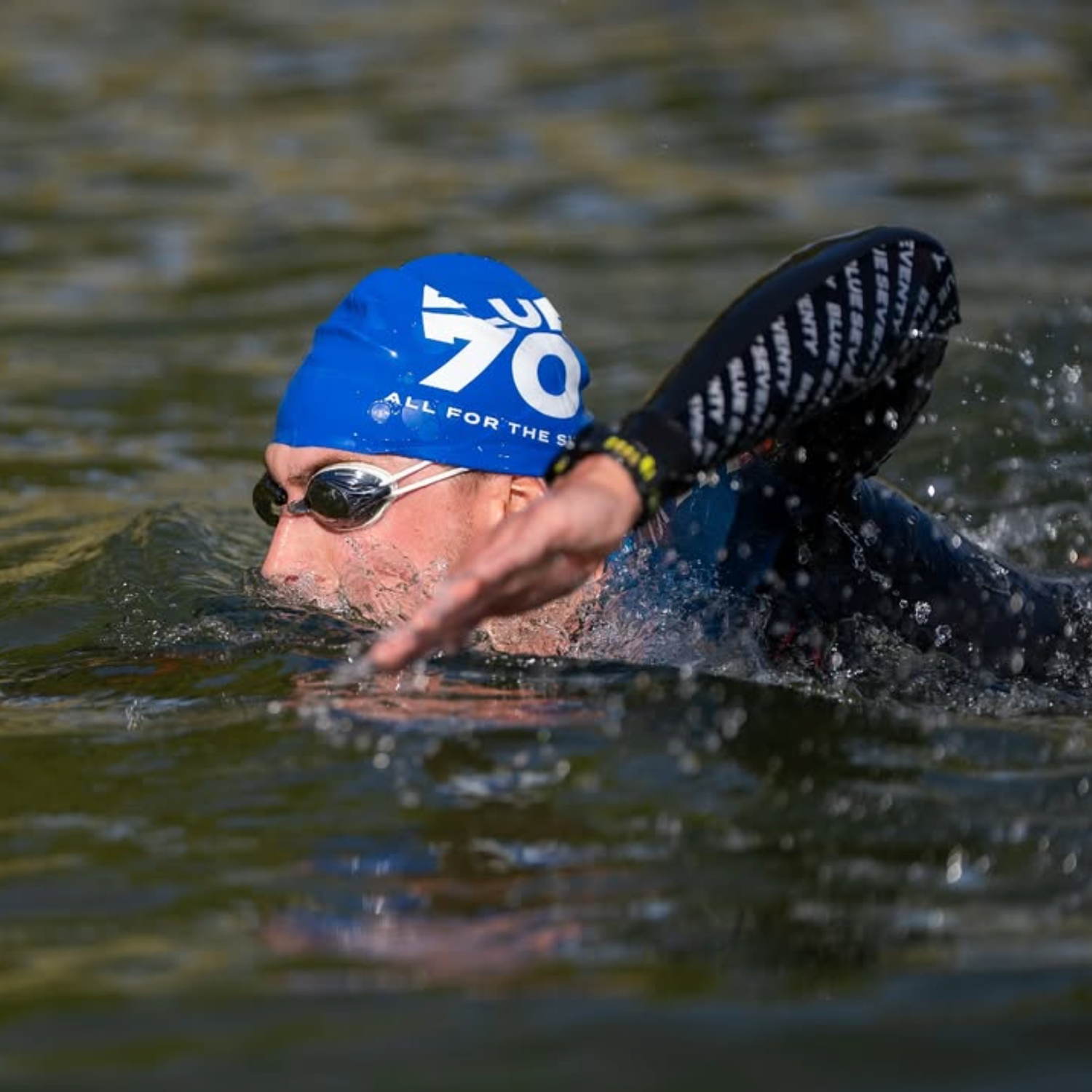
And here's what makes a swim-specific wetsuit actually work: the arms and shoulders use high-cell Yamamoto neoprene - grades 38 to 40 cell - that's incredibly flexible, so you can rotate and reach freely. Meanwhile, the lower body stays buoyant. That combination of lower-body lift and upper-body mobility means you're swimming, not just paddling in an inflatable vest. A thin layer of water seeps in through the front zip and neck seal, warms up against your skin, and stays there to provide insulation without bulk.
Fit is everything, especially for beginners
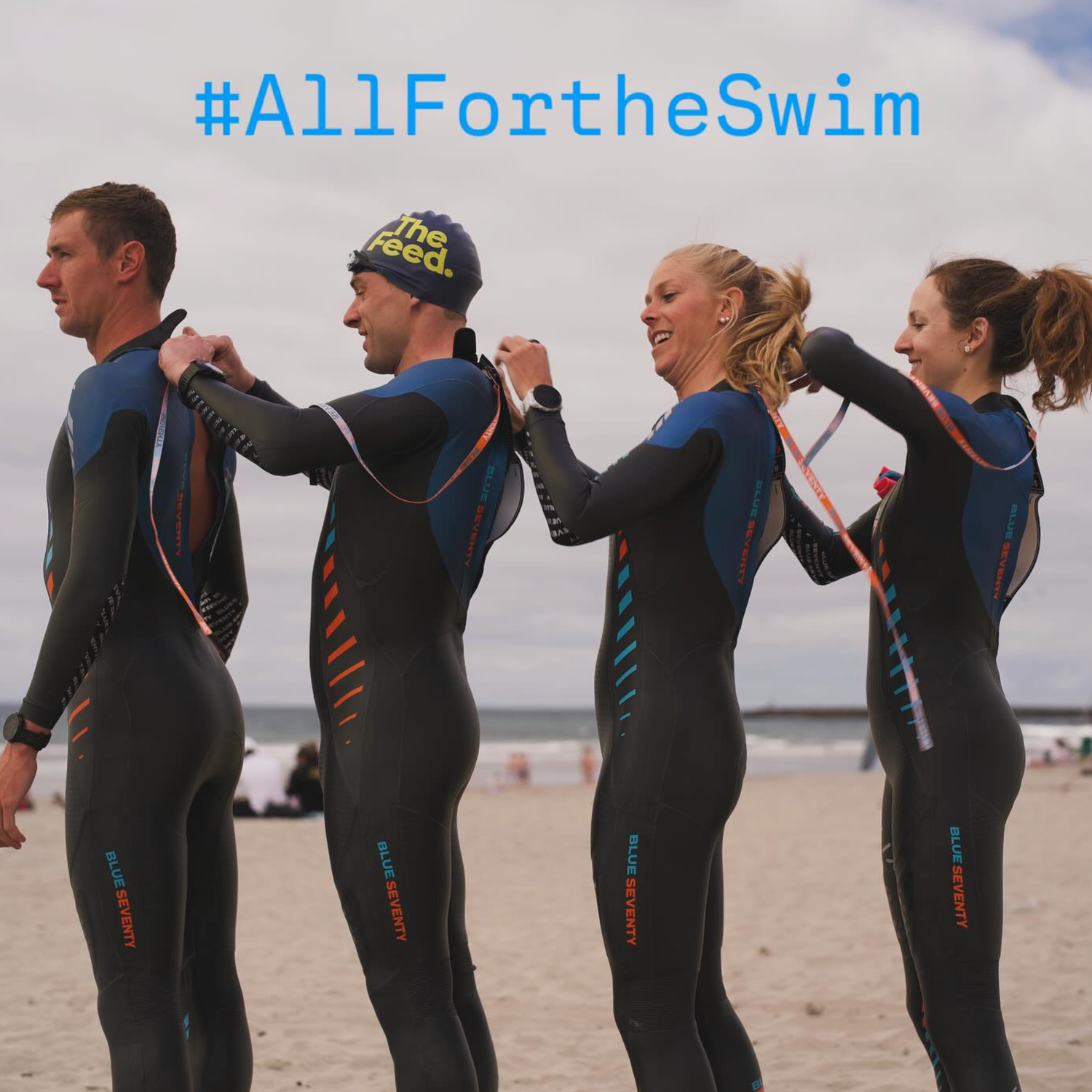
Fit anxiety is the number-one reason first-timers hesitate. You've probably heard that a triathlon wetsuit "should feel snug on land and more comfortable in the water." That's dead on, but let me paint the real picture. In the shop or when you first pull it out of the bag, the suit will feel tight. Your brain will whisper, "This is too small." It's not. Neoprene relaxes as you move, and once you hit the water, the pressure equalizes. A suit that's baggy, on the other hand, flushes cold water with every stroke and steals all the buoyancy you just paid for.
Take a Test Swim and you'll feel it settle - snug, supportive, never restrictive if you've got the right size. And if you're a woman, this step matters twice as much. A wetsuit cut for a man's shape and then simply shrunk will never fit a female athlete correctly. That's why every women's blueseventy suit, from Sprint to Helix, uses Femme Fit - a refined pattern in the bust, torso, wrists, and ankles, with a lower neckline to cut chafing and an extended zipper that makes getting in and out smoother. Starting your triathlon journey in a suit that actually matches your body removes a layer of distraction you didn't even know was there.
Don't guess. Use our sizing tool or the size charts, and then do the smartest thing a beginner can do: swim in the suit before race day. You can return or exchange a clean, dry suit within 30 days, swim and all. The open water is not the place to discover you bought the wrong size.
Which suit matches your season?
I often hear "buy the best you can afford." I'd tweak that: buy the suit that matches the way you'll really train and race this season. We organize our wetsuits around how often you swim, the water temperatures you'll face, and the distances you'll cover. Here's how to sort it out.
- I'm on a budget, doing a sprint or Olympic race. → Sprint ($325). The entry-level workhorse, built with Yamamoto neoprene and a friendly fit that puts comfort and easy entry first. Perfect for one or two races a year plus occasional practice swims.
- I swim outdoors weekly and want a suit that lasts a couple of seasons. → Fusion ($420). Our best-seller, redesigned in 2021 with a lower neckline that kills that slightly choked feeling without breaking the seal. Durable enough for frequent lake sessions, short-course racing, and water from the mid-60s down to the upper 50s. If you're training in cool water - not ice-cold - this is your workhorse.
- I only race in warm water, or I dread wrestling a full suit on. → Glide Short John ($210). A sleeveless short john that's simple to pull on, gives you core warmth and some lift, and leaves your arms fully free. Once water climbs past 70-72°F, a full suit can get uncomfortable; this steps in perfectly.
- My season goes into early spring or late fall, and water falls below about 56-58°F. → Thermal Reaction ($785). A cold-water specialist lined with Zirconium jersey for meaningful thermal protection. For most beginners this is a second-suit purchase, but if you know chilly swims are on the calendar, it's worth planning around.
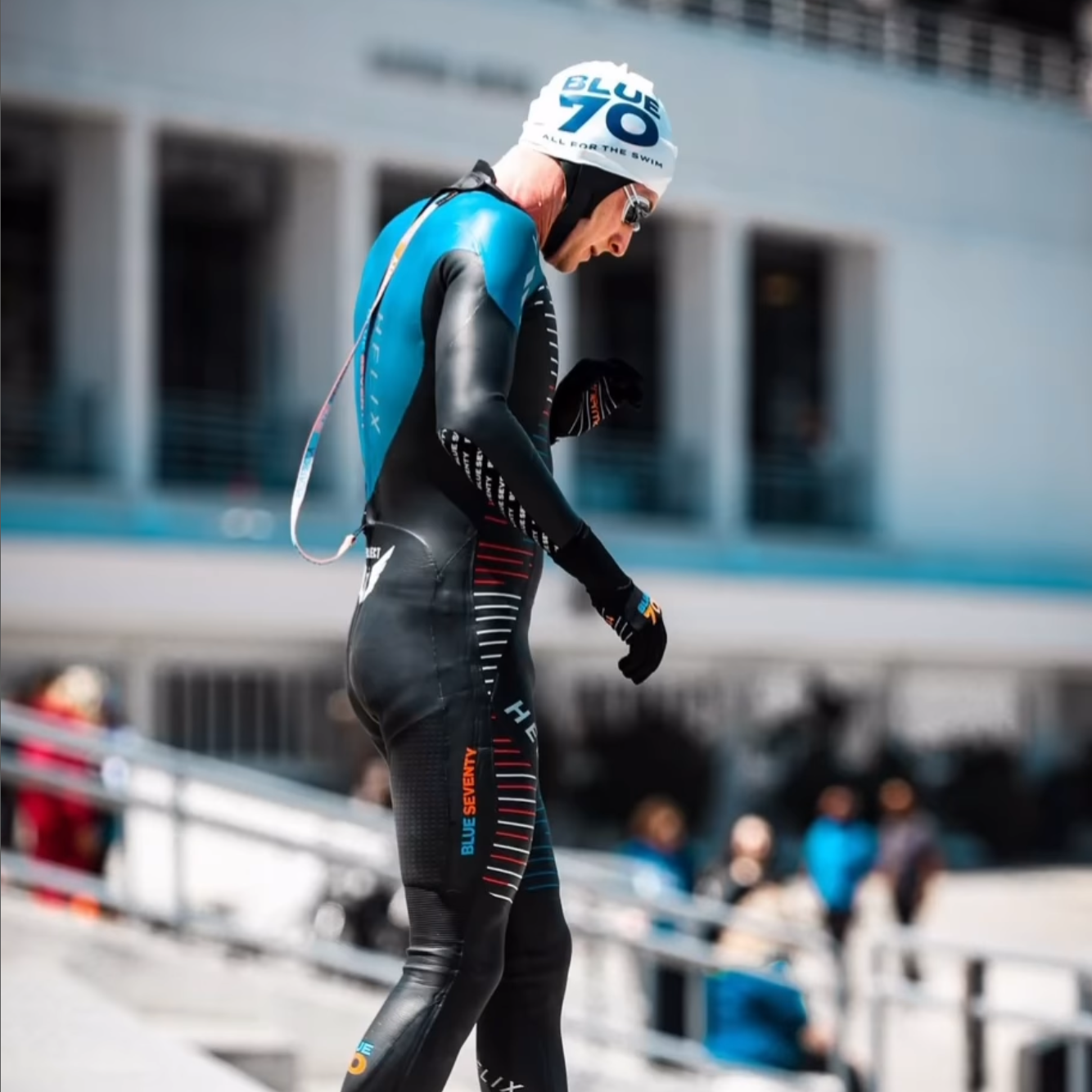
A quick note on the Helix ($995): it's our flagship race suit - thin, fast, and built for race day only. The ultra-flexible neoprene in the arms and the LIFT buoyancy panels in the legs are engineered for maximum hydrodynamic advantage, but that delicate rubber breaks down faster with daily training. A beginner will build better skills and stay happier in a suit built for the calendar, not just the clock.
Your secret weapon in the pool
When newcomers ask me how to improve their triathlon swim outside the wetsuit, I often point to the LIFT buoyancy short ($150). It's not a wetsuit replacement, but it's the simplest tool I know for building muscle memory. The LIFT short uses NBR foam panels to elevate your hips and legs in the pool exactly the way a full suit does in open water. Wear it during lap sessions to practice holding a horizontal line, refine your stroke timing, and strengthen your core, all without fighting sinking legs. Think of it as a bridge between pool training and wetsuit racing. Many athletes pair it with their regular suit, then transition to the full wetsuit for open-water rehearsals - and they arrive on race morning with the sensation already dialed in.
The Test Swim ritual
Nothing wipes away pre-race nerves like a familiar suit. Follow this three-step plan before your first race and you'll be amazed at how calm the swim start feels.
- Put the suit on right. Pull the legs all the way up with dry hands, then inch the neoprene over your hips bit by bit. Slip your arms in last. Never use fingernails - pinch with flat fingertips. (Our video wear guide shows every move.)
- Swim in it twice before race week. First session: just float, feel the lift, let your body learn the suit. Second session: swim a steady 400 to 800 yards, practice sighting, and rehearse a smooth exit. In under an hour, "uncomfortable" turns into "familiar."
- Rinse, dry, store smart. After every swim, rinse with fresh water, hang inside out out of direct sun, and store flat or loosely folded. The most common damage I see - fingernail tears at the collar, heel rips from yanking a suit off too fast - is totally preventable. Treat it like the race hardware it is, and it'll reward you season after season.
Remember, our Test Swim policy lets you swim in the suit and still return or exchange it within 30 days, as long as it comes back clean, dry, and unmodified. No guessing, no gamble. You decide in the element that matters.
The beginner's edge
It's easy to look at a wetsuit as just another piece of gear you have to figure out. Flip that lens, though, and the wetsuit becomes the one piece of equipment that actively teaches you to swim better from your very first stroke. It holds you up, gives you air when you need it, and buys you the brain space to find your rhythm instead of fighting the water.
When you match the suit to your body, your training calendar, and the temperature of your lake, you'll watch the open-water swim turn from the scary part of the day into the part you're most ready for. That's exactly where a beginner triathlete belongs.
Ready to find your first suit? Dive into our size chart or take a Test Swim - it won't affect your return. Happy Swimming!