


Most swimmers treat a changing robe as a car-park curtain, something to hide behind while swapping a wetsuit for dry clothes. That's one job it does. The other job gets ignored almost entirely: the robe is managing your core temperature during the exact window when your body handles heat loss worst, and it's quietly saving your wetsuit from the two most common ways swimmers wreck neoprene.
Why the cold hits harder after you're already out of the water
Ask any open water swimmer about the worst part of a chilly lake session and plenty won't mention the swim itself. They'll mention the five minutes afterward, standing by a bag, shaking harder than they did mid-stroke.
That's not weakness. It's physiology. University of Portsmouth researcher Mike Tipton has documented this for decades under the term afterdrop: core temperature keeps falling after a swimmer exits the water, not just while they're in it. Swimming pulls blood toward your working arms and legs. Stop swimming, and that cooled peripheral blood flows back toward your trunk, dragging your core temperature down with it. A swimmer can look completely fine climbing out of a lake and be shivering within three or four minutes on the bank.
That timing matters because it's exactly when your hands stop working properly. Cold fingers lose fine motor control fast. Zips, gloves, buttons, all of it gets genuinely hard right when speed matters most. A robe sidesteps the problem. One garment. One motion. Coverage from shoulders to knees while your hands are still too numb to be useful for much else.
What "waterproof" actually means on a robe label
Here's where buying decisions get murky. Most changing robes use a water-resistant outer shell, usually polyester or nylon treated with a durable water repellent (DWR) finish, wrapped around an insulating lining like toweling, sherpa fleece, or foam-backed fabric. That build sheds rain, drizzle, and splashes without trouble. It is not the same thing as a fully waterproof shell with taped seams and a hydrostatic head rating high enough to hold back driving rain or standing water.
Worth knowing before you're standing in a downpour expecting to stay bone dry. A water-resistant robe handles a normal changing routine without issue. Soak it in sustained heavy rain long enough and it will eventually wet through.
Your wetsuit works the same way, for a related reason. It isn't waterproof either. It lets in a thin layer of water that your body warms for insulation, rather than keeping water out entirely. Different mechanism, same labeling trap. If a robe claims to be fully waterproof, look for taped seams and an actual hydrostatic rating before you believe it.
The real reason wetsuits get torn at the heel and cuff
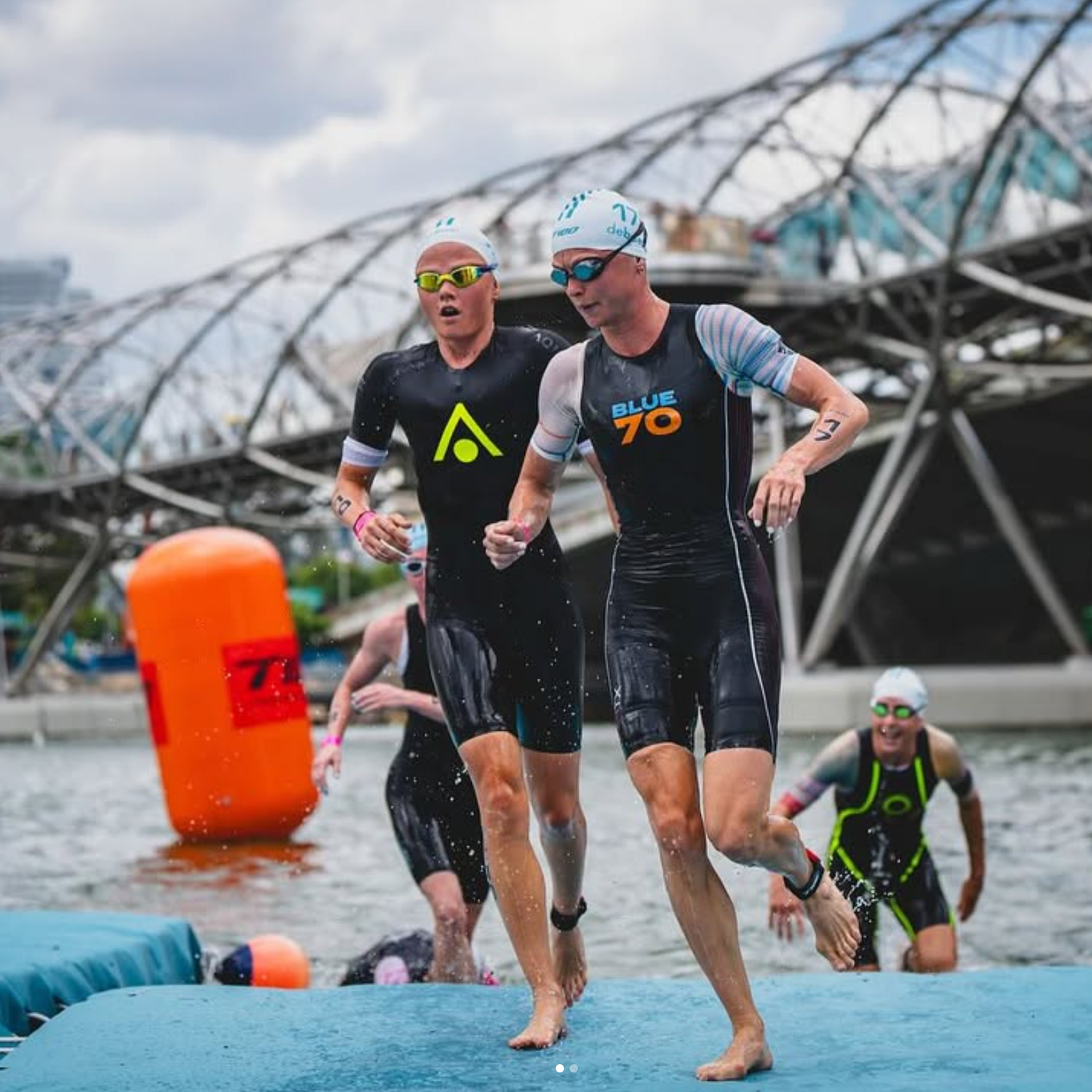
Wetsuit warranties exclude fingernail punctures and heel tears. There's a reason for that specific exclusion: these are the two most common ways swimmers damage their own suits, and almost none of it happens during the swim. It happens during removal.
Picture the usual scene. Hands are cold and clumsy. You're rushing. You're standing on gravel or wet sand with nowhere stable to sit. The instinct is to grab the cuff or ankle opening with your fingertips and yank, which is precisely how a fingernail catches and tears neoprene. Heels snag the same way when someone tries to step out of the leg openings standing up, rather than rolling the material down in a controlled motion while seated.
A robe changes the physical setup of that moment. It gives you a covered, private space to slow down instead of rush. Many designs have a hem wide enough to sit on, which keeps you off bare ground while you work a suit down past your ankles, and gives you a stable base instead of balancing on one leg on uneven terrain. None of this requires gear marketed specifically for wetsuit protection. It's simply a side effect of a well-made robe doing its main job.
Features that actually matter for swim transitions
Not every changing robe is built with swimming in mind. Some separate features that work well for wetsuit removal from the ones made mainly for surf beaches or festivals:
- Length below the knee for full coverage while bending to remove a leg, so you're not holding the robe shut with one hand
- Underarm poppers or a zip opening that lets you move your arms freely to work a wetsuit over your shoulders without losing coverage
- Elasticated or drawcord cuffs and hem to seal in warmth instead of venting it out the bottom
- Absorbent interior lining, toweling or fleece, that pulls moisture off your skin rather than just trapping it against you
- A hood, since heat loss through the head is disproportionate to its surface area
Where this fits into race day and training
Point-to-point triathlons and lake swims with a walk between the water's edge and transition create a longer exposure window than a pool deck ever does. A robe closes that gap. It earns its place again during the pre-race wait, when swimmers stand around in wetsuits or street clothes for twenty or thirty minutes before a wave start in cool morning air, and once more afterward while waiting on results or a ride home.
Training at reservoirs or open water venues without changing facilities is the other obvious case, especially through the shoulder seasons when water temperature drops faster than air temperature. That mismatch, common in early spring and late autumn, is exactly when afterdrop catches people off guard. The day doesn't feel cold enough to justify extra gear until you're already shivering in the car park.
Caring for the robe the way you care for the suit
A robe handling salt water, chlorine, sand, and sweat needs roughly the same treatment as your wetsuit. Rinse it in fresh water after use. Air dry it away from direct sun. Skip the high-heat tumble dryer, since that can break down the DWR coating and flatten a foam-backed lining over time. Store it dry, not balled up damp in a swim bag for a week. That's how mildew sets in, and once that smell takes hold, it's hard to get rid of.
Do you actually need one
If you swim open water year-round, race events with any gap between finish and dry clothes, or train through the colder months when air and water temperature pull apart, a changing robe earns its spot in the bag. If your swimming happens in indoor pools with changing rooms right there, it's one more thing to carry for a problem you don't have.
Either way, it's worth thinking about the robe as part of your wetsuit's care routine, not a separate purchase with nothing to do with the suit itself. The two pieces of gear solve adjacent problems. One keeps your body working while you're in the water. The other protects both you and the suit in the minutes right after you get out.
Happy swimming.