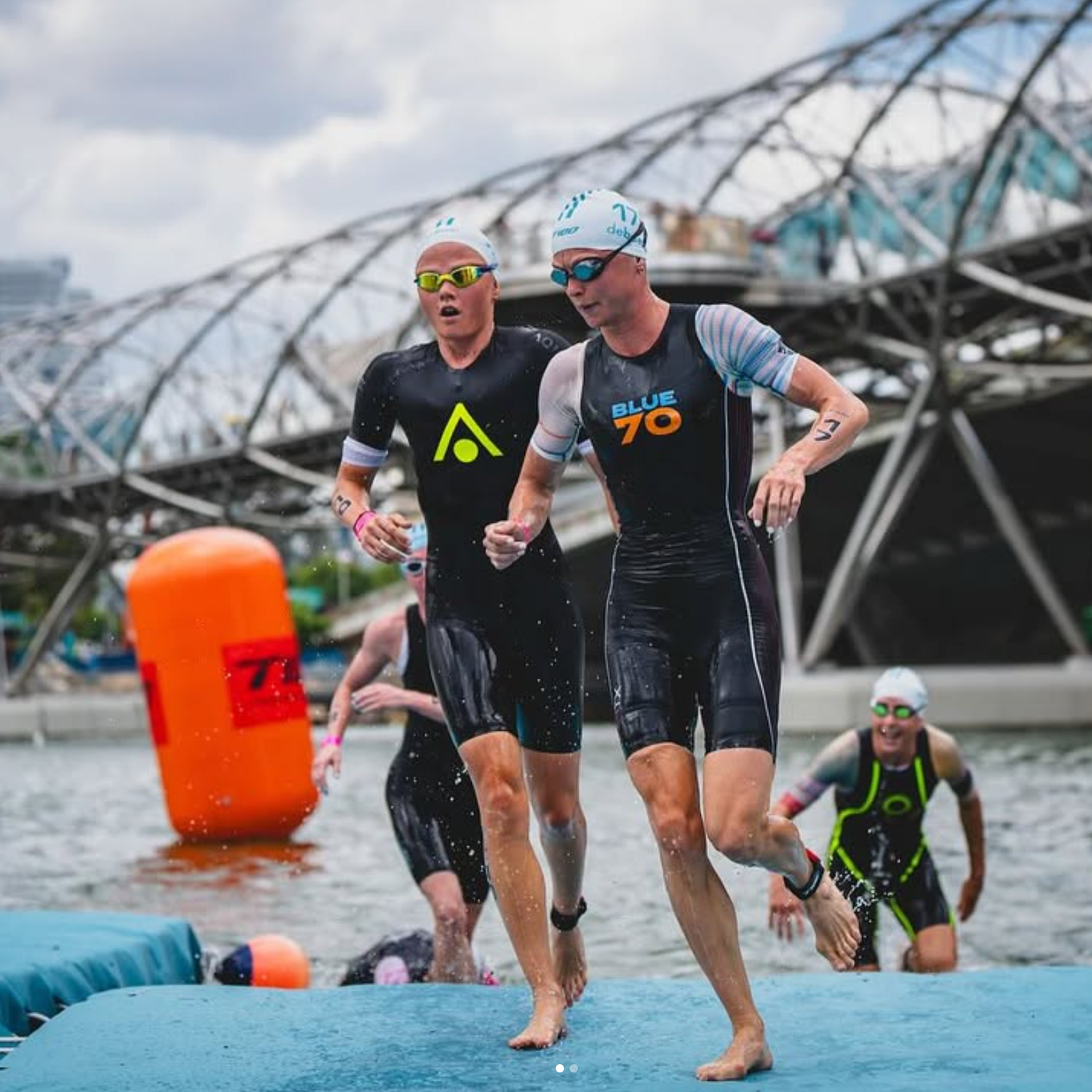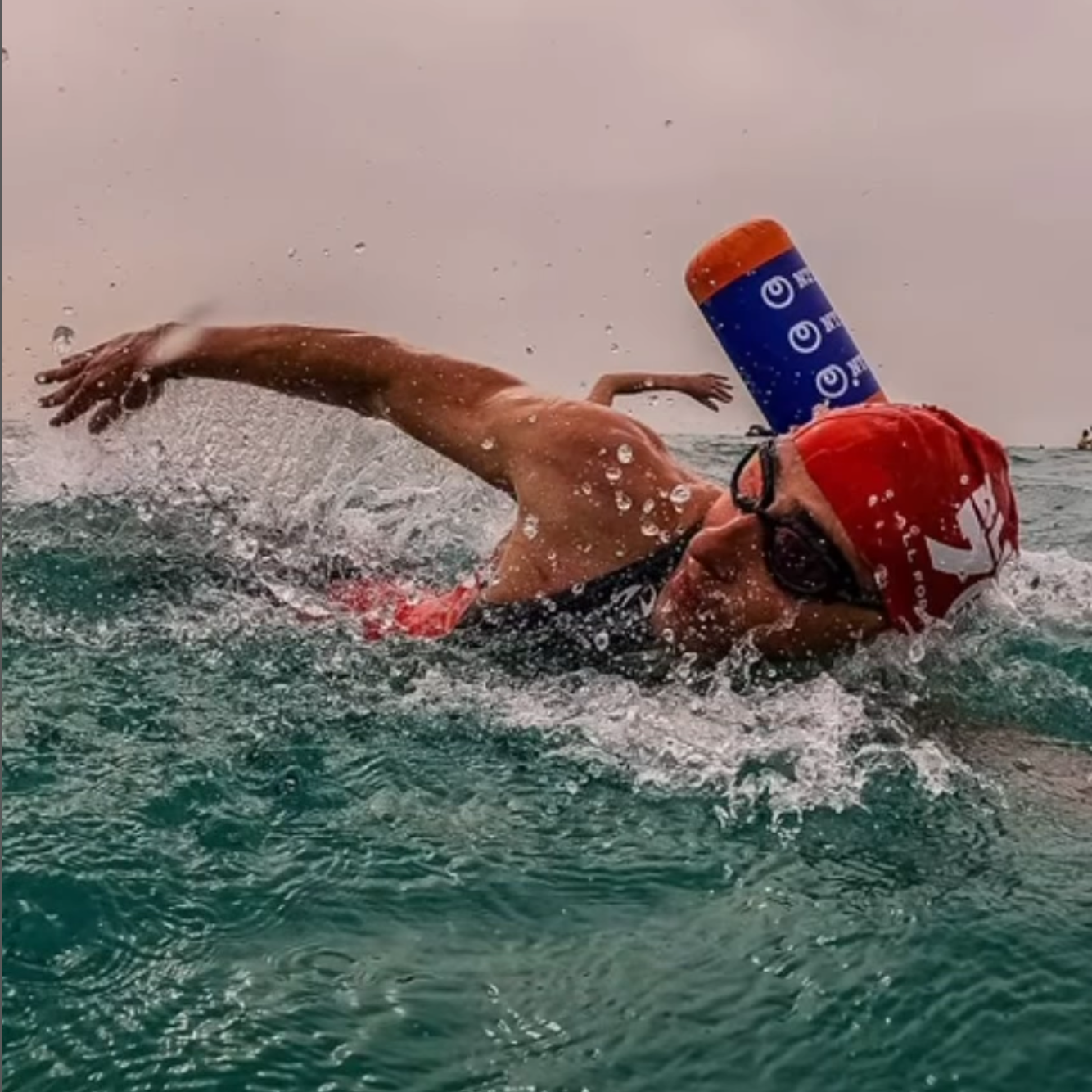



Every season, swimmers and triathletes ask the same question after a long open water session: what do I put on this raw spot so I can swim again tomorrow? The question misses something more useful. A suit that fits well will rarely need a thick coat of lubricant. Before reaching for another stick or balm, look at why the neoprene is sliding across your skin in the first place.
Friction Has Two Levers, and Lube Only Pulls One
The amount of force it takes to drag neoprene across your skin depends on two things. The first is how hard the suit presses into you, which engineers call the normal force. The second is the friction coefficient between your skin and the suit. Anti-chafe products lower the friction coefficient. They do nothing about the normal force.
That distinction matters because most wetsuit chafing starts with excess pressure or excess movement, not with the natural slipperiness of your skin. A neckline that pulls down against your throat applies constant pressure. A loose torso shifts with every stroke. Both create the kind of mechanical irritation that no balm fully solves.
Wet skin makes it worse. Extended water exposure softens the outer skin layer and makes it easier to abrade, which is why a neck rub can feel minor at ten minutes and raw at forty even when the suit and the stroke have not changed. If a rub appears in the first few minutes, the suit is moving or pressing too much. If it shows up later, skin softening is playing a bigger role. Either way, reducing friction at the contact point is only one part of the answer.
Fit Is the First Fix
A wetsuit should feel snug on dry land and more comfortable once you get in the water. Snug means the suit moves with your body instead of shifting as you rotate from one side to the other. That movement, even small amounts, becomes friction over hundreds of strokes.
The neck is the most common chafe point. In many cases the suit is not too tight around the neck itself. It is too short through the torso. When a suit runs short, the neckline pulls down under your chin as you swim. Your body responds by lifting your chin or rolling your shoulders. That changes your body position, adds drag, and creates a pressure point exactly where you feel the rub.
The Overhead Reach Test
You can check this at home before your next swim. Put the suit on properly, pull the legs and arms up fully, then reach both arms overhead like you are starting a stroke. If the neckline digs into the front of your throat, the problem is the length or shoulder fit. Fixing that fit will do more than a thicker layer of any skin product.
For women, a unisex pattern is the cause for many athletes. blueseventy Femme Fit changes the pattern at the bust, torso, wrists, and ankles. It also lowers the neckline to reduce chafing and extends the zipper length for easier entry with less shoulder tension. If you have dealt with neck rub or underarm rub in a suit that otherwise seems close to the right size, a women’s-specific pattern removes the problem completely.
Design Details That Reduce Rub Before You Add Anything
blueseventy wetsuits use Yamamoto neoprene in 38, 39, and 40 cell grades. A higher cell number means more flexibility. More flexible panels in the shoulders and arms let your arm move through the catch without dragging the rest of the suit along. That reduces fabric movement at your neck and underarms.
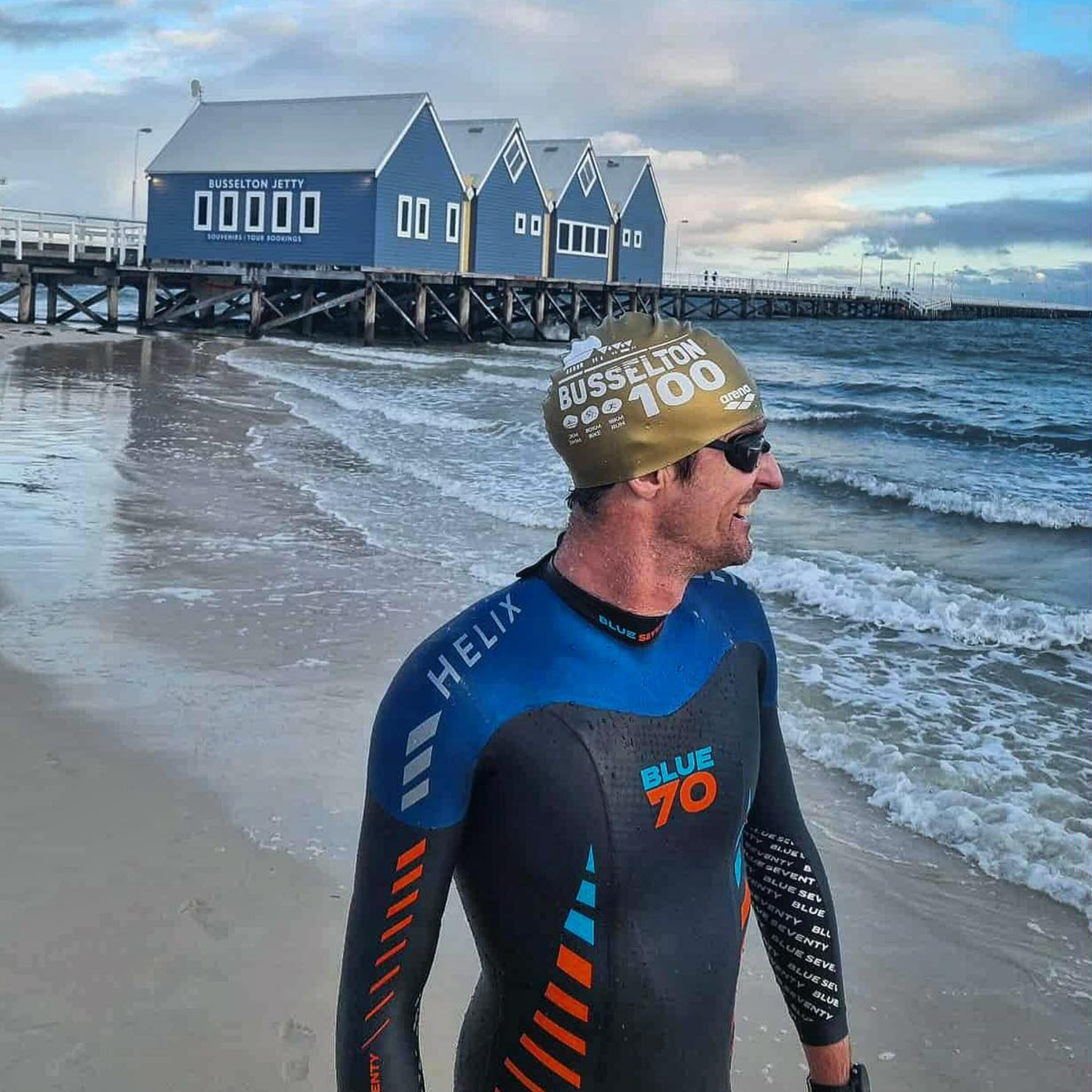
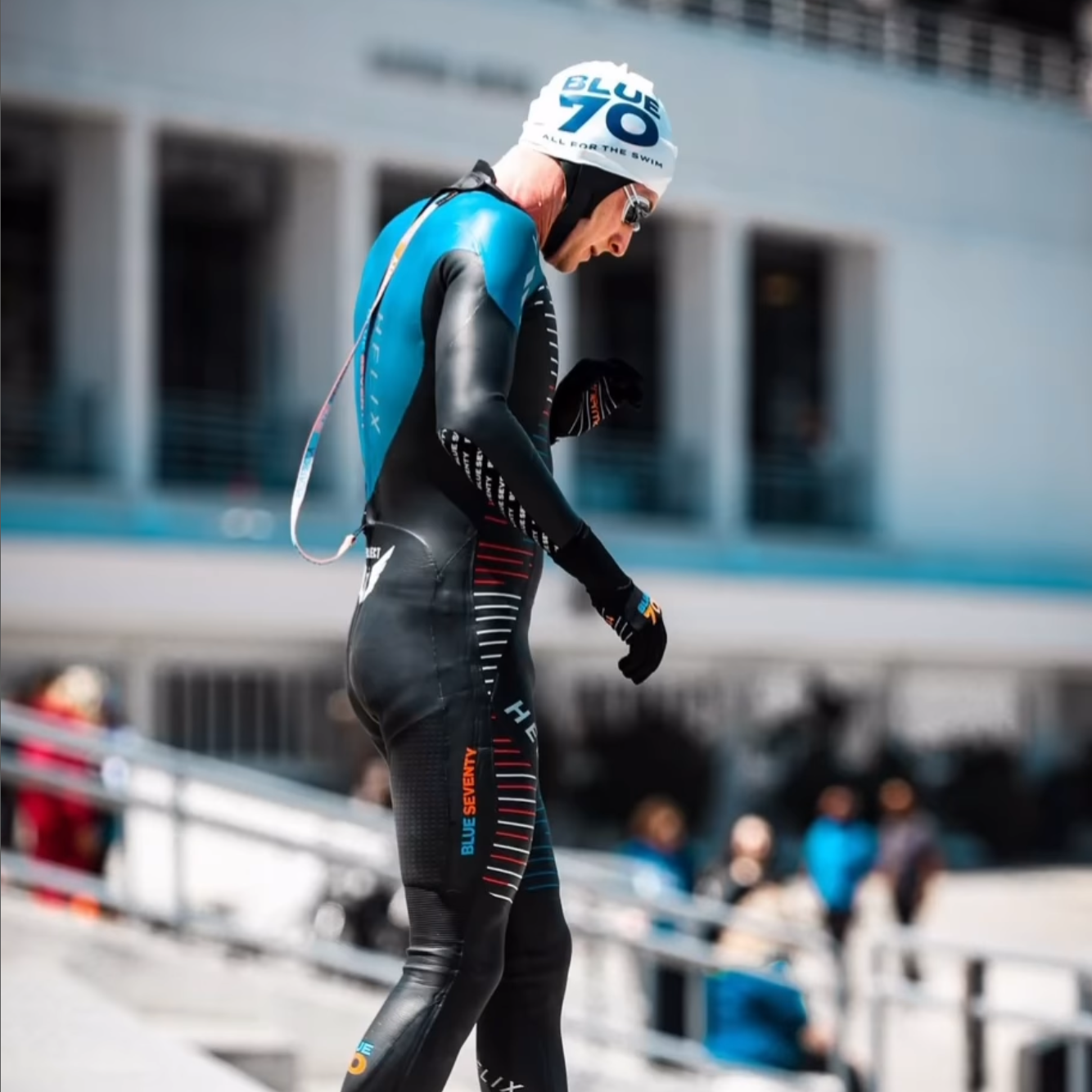
The Helix takes this further with thin, flexible neoprene through the arms and shoulders. It also includes a permeable catch panel that preserves your feel for the water. On longer swims, you will notice less shoulder restriction and less friction at the armhole.
The Fusion redesign in 2021 lowered the neckline specifically to improve comfort without losing the watertight seal. A lower neckline sits below the most sensitive part of your throat, so the edge of the suit is not digging in on every breath.
The Thermal Reaction adds a Zirconium jersey lining, a synthetic wool material that provides warmth in cold water. That liner also feels softer against your skin than bare neoprene, which reduces friction in cold conditions. These details do not replace good fit, but they lower the chafe risk before you apply anything.
Where a Skin Lubricant Helps
Once the suit fits, a skin lubricant still has a role. Use it as a targeted barrier on the spots that move even in a good fit. The usual candidates are:
- The back of the neck where the collar slides as you sight
- The front of the throat where the zipper flap ends
- Under the arms along the armhole seam
- The wrists and ankles where the suit meets skin on entry and exit
Apply a thin layer to dry skin before you put the suit on. Do not apply product to the inside of the neoprene. It can migrate, trap grit, and make the suit harder to clean. A light film on your skin is enough.
Wax-based and silicone-based formulas tend to stay in place longer in water than petroleum jelly. You rarely need to reapply during one swim. For a swim-run event with repeated contact, a small travel stick in transition helps, but it is a backup, not the main strategy.
Keep heavy creams and oils away from the suit. Many lotions and sunscreens contain petroleum or fragrance that break down seams and coatings over time. Read the label. If it is oil-based, keep it off the neoprene.
Comfort Has a History, and It Points Back to Fit
You can trace the decline in wetsuit chafing through blueseventy’s own product history. In 1993, the company that would become blueseventy developed one of the first triathlon wetsuits. Early suits were thicker and less flexible. They fit fewer body types, and shoulder mobility was limited. Chafing was common.
By 2005 the Helix brought more flexible neoprene into the flagship position and raised the baseline for shoulder comfort. In 2014 Femme Fit expanded to 15 women’s sizing options, addressing fit gaps that caused many women to rub at the neck and underarms. The 2021 Fusion redesign lowered the neckline as a direct response to comfort complaints. Each step reduced the need for extra skin product by fixing the fit and the material at the source.
Care for the Raw Spot and the Suit
If you do end up with a raw area, treat both your skin and the suit. Rinse the suit with fresh water after every swim, then wash it with a wetsuit cleaner or mild soap. Dry it inside and out away from direct heat. Do not leave it folded wet in a bag where it can hold salt or chlorine against the lining.
For your skin, rinse with cool water and pat dry. Do not scrub. A simple fragrance-free moisturizer helps once the skin has dried. Avoid anything with alcohol or active acids on broken skin. If the area is open or weeping, cover it and let it heal before your next swim. A raw spot that rubs again too soon risks infection, and that costs you more training time than one skipped session.
Start With Fit, Not Another Layer
If your wetsuit rubs, do the fit check first. Put the suit on properly, pull the legs and arms up, and reach overhead. If the neckline pulls hard, check the size chart and look for a model with a lower neckline or a women’s-specific pattern. A well-fitted suit still benefits from a thin layer of anti-chafe on a known hot spot, but it should never need a thick coat to get through a swim.
If you are not sure about sizing, use the blueseventy Test Swim policy. You can swim in the suit and still return or exchange it if it does not fit, provided it comes back clean, dry, and unmodified. That is a better path than adding more product to a suit that fights you stroke after stroke.