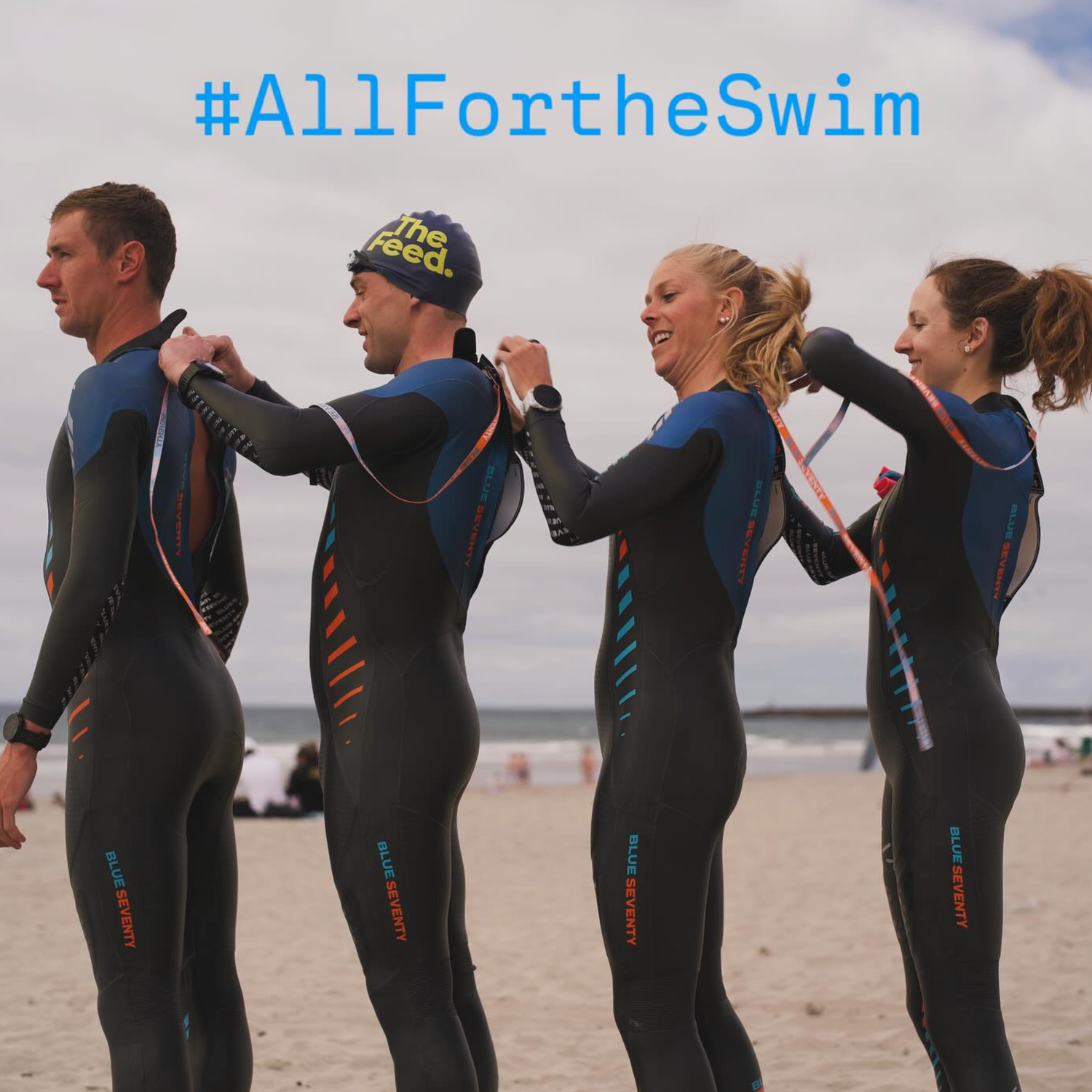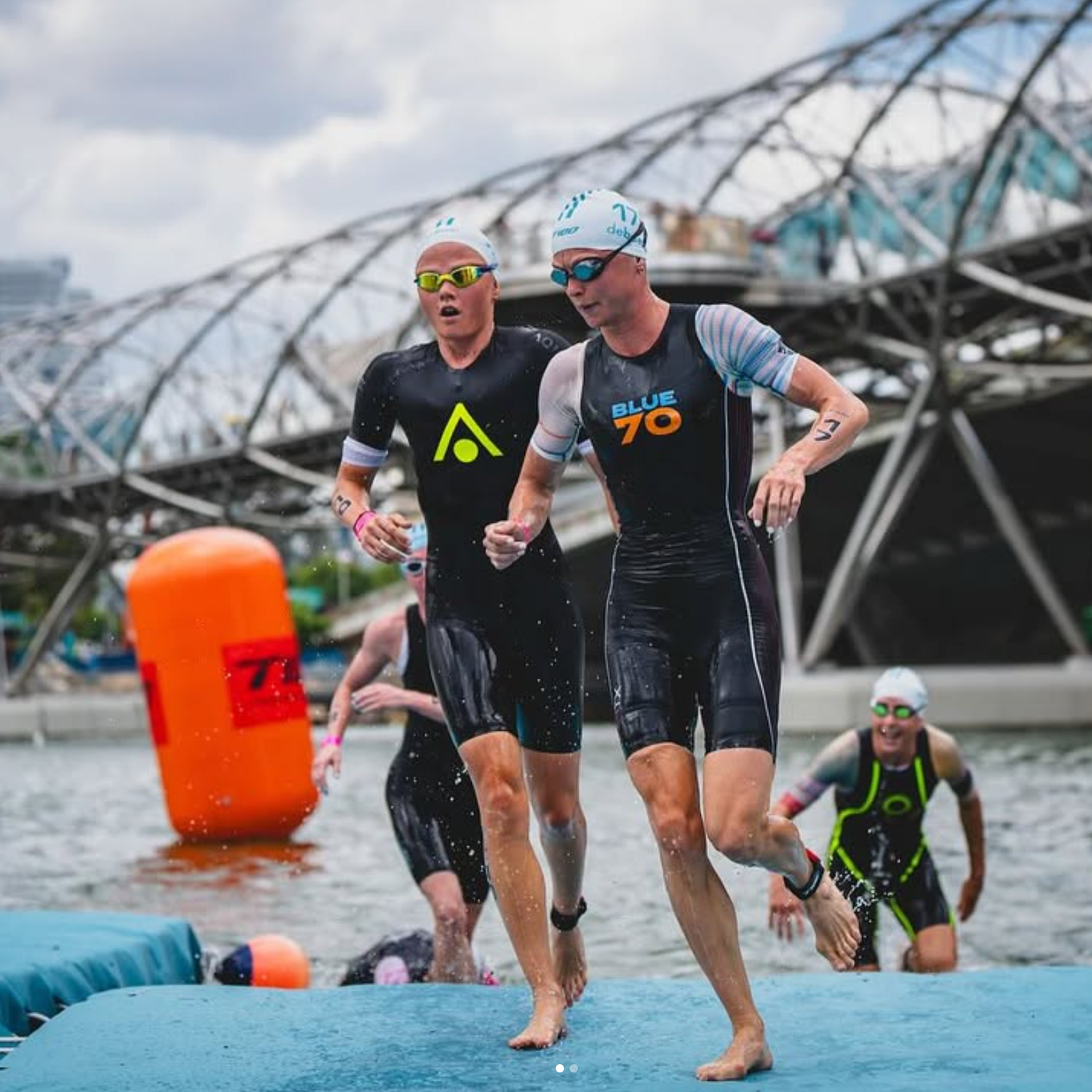



If you only think about ankle zips when you strip the suit in transition, you skip the fit check that happens before the swim. The small zipper at your lower leg is a fit diagnostic before it is an exit tool. It tells you whether the suit matches your calf, Achilles, and heel. It also determines how much neoprene you drag over your foot when the race clock is still running.
Why the ankle zip exists
You need two things from a wetsuit leg, and they pull in opposite directions. The cuff has to sit close enough during the swim to limit water flushing. The same cuff has to open enough to let your heel through when you remove the suit. The ankle zip handles that conflict. It keeps the cuff snug while you swim and expands only when you open it. Leave the ankle zips closed while you swim. An open cuff gaps and lets water move through the leg. The benefit appears the moment you stand up and start peeling the suit down.
The dry-land fit check
Before you worry about exit speed, put the suit on properly, close the ankle zips, and stand normally. The cuff should lie flat against the skin. You should feel compression without a sharp pinch at the Achilles. If the zipper track bulges or the pull tab sits pulled outward, the lower leg is under excess tension.
Run through this short sequence:
- Stand with your weight even and your ankles relaxed.
- Close each ankle zip with steady, normal effort.
- Check the cuff line. It should sit flat with no gapping at the back.
- Flex your foot upward. You should feel a stretch without sharp pain.
If you have to leave a zip open to get comfortable, that is a sizing signal in the calf. The ankle zip speeds removal. It cannot fix a poor lower leg fit. Blue70's fit guidance follows the same idea: a suit should feel snug on dry land and more comfortable once you are in the water.
Women's suits get specific attention here. Blue70's Femme Fit pattern work includes changes at the bust, torso, wrists, and ankles. That refined ankle shaping matters because a lower leg cut that follows the calf closely keeps the zip track in the right position. Blue70 expanded Femme Fit to 15 sizing options in 2014 to handle lower-leg differences like this. Check the size chart before assuming your wetsuit size matches your clothing size.
Removing the suit without fighting it
In T1, athletes lose time when they pull before opening the right closures. Open ankle zips before you peel the leg down. Sit or lean, open both ankle zips, roll the suit down to your waist, then work each leg toward the heel. Use the opposite foot to pin the neoprene while you pull the heel through. This reduces the force needed at the widest part of the foot.
If you try to remove the suit with the ankle cuff still zipped, you create a smaller opening than your heel needs. Wet neoprene grips skin more than dry neoprene. The fight at the ankle becomes the slowest part of your transition. You lose the seconds you saved in the water, one yank at a time.
Ankle zip care
Ankle zips collect sand, salt, and chlorine after almost every open water session. Close the zipper before you rinse the suit so the track does not catch grit. Rinse the track. Store the suit hung from the waist or laid flat, not by the ankles or shoulders. Forcing a stuck zipper or pulling the suit off by the cuff causes small tears at the base of an ankle zip. If the pull tab resists, work it gently back and forth rather than yanking.
Blue70's warranty covers manufacturing and material defects. It does not cover zipper damage from force. The warranty language points to the same conclusion: forced zipper pulls cause the damage it does not cover. Treat the zipper track with the same care you give the shoulder panel.
How suit choice changes ankle zip wear
Your training frequency changes how much ankle zip abuse a suit will see. If you race only a few times a year, a thinner race suit is fine. If you use a suit every weekend in salt water, it needs more durable neoprene and hardware. Blue70 builds the Helix for race-day performance with thin Yamamoto neoprene. Blue70 uses Yamamoto neoprene in 38, 39, and 40 cell grades, and higher cell numbers mean more flexibility. The Helix is not ideal for heavy training use because that neoprene breaks down more quickly. Blue70 builds Reaction and Fusion for more frequent training cycles. If you swim more than once a week, the repeated donning and removal cycles make the more durable options a better match. If you only race a few times a year, the race suit's lower weight and flexibility matter more than long-term ankle zip wear.
Before your next open water swim, run the ankle zip check. Then follow the fitting guide and video for the full donning sequence. The smallest zipper on the suit is a useful fit diagnostic before race morning.