


Most wetsuit conversations start in the wrong place. Athletes often focus on thickness, warmth, or buoyancy first, but a Yamamoto 40 neoprene suit makes the most sense when you look at what happens to your stroke after the first few minutes of a real swim. That is where premium flexibility shows its value.
Blue70 uses Yamamoto neoprene in 38, 39, and 40 cell constructions across its wetsuit range. The higher the cell number, the more flexible the neoprene. In practical terms, Yamamoto 40 matters most in the parts of a swim-specific suit that have to move with you, especially the shoulders and arms. If those panels move well, your stroke stays cleaner for longer. If they do not, fatigue shows up early.
That makes this less of a material story and more of a swimming story. In open water and triathlon, the key question is not whether a suit feels good for thirty seconds on dry land. The key question is whether it lets you keep your normal mechanics when your heart rate is up, the water is moving, and you are several hundred meters into the swim.
Why shoulder flexibility matters so much
A swim-specific wetsuit has a hard job. It needs to improve body position, add thermal protection, and still let you rotate, recover, and set the catch without fighting the material. That balance is where high-flexibility neoprene earns its place.
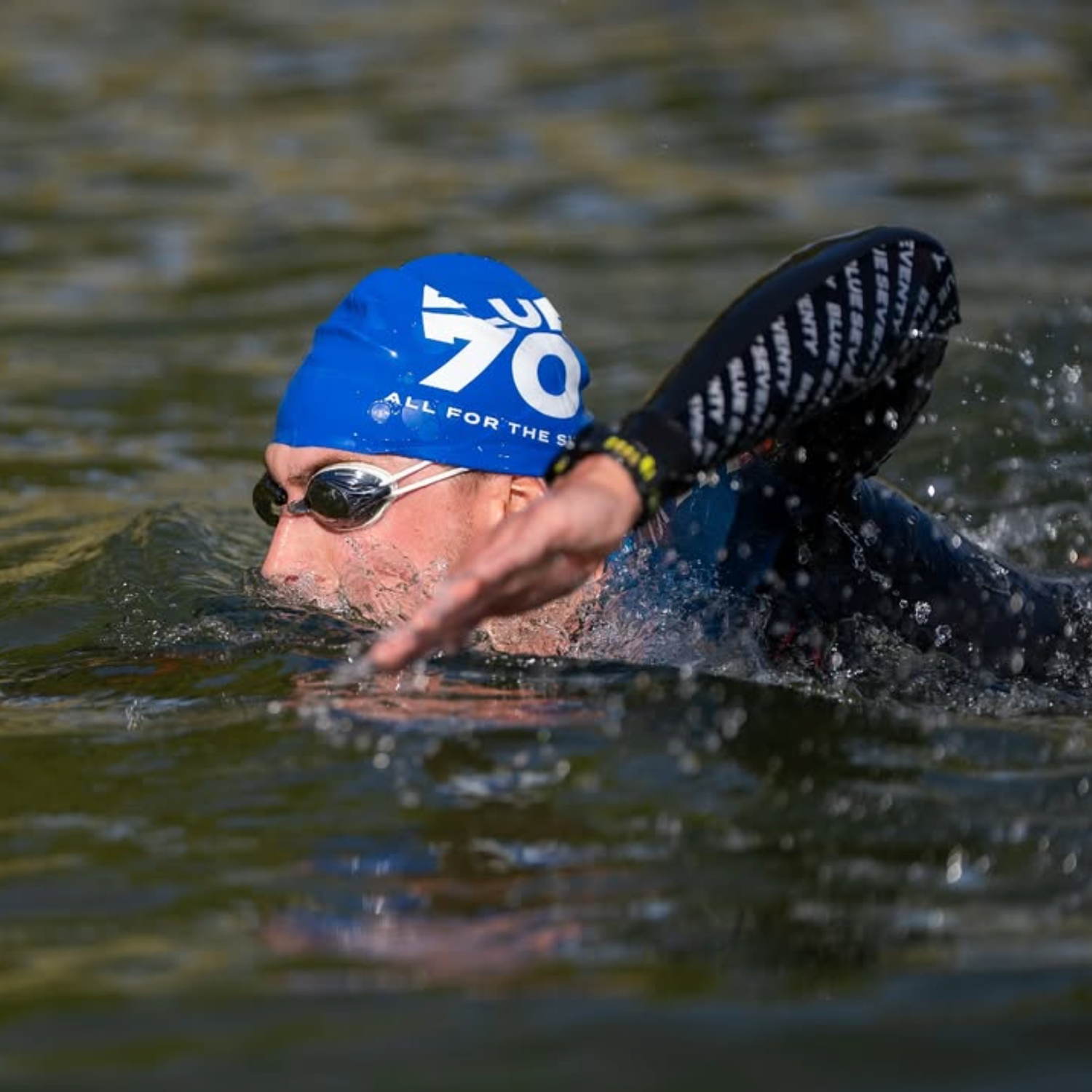
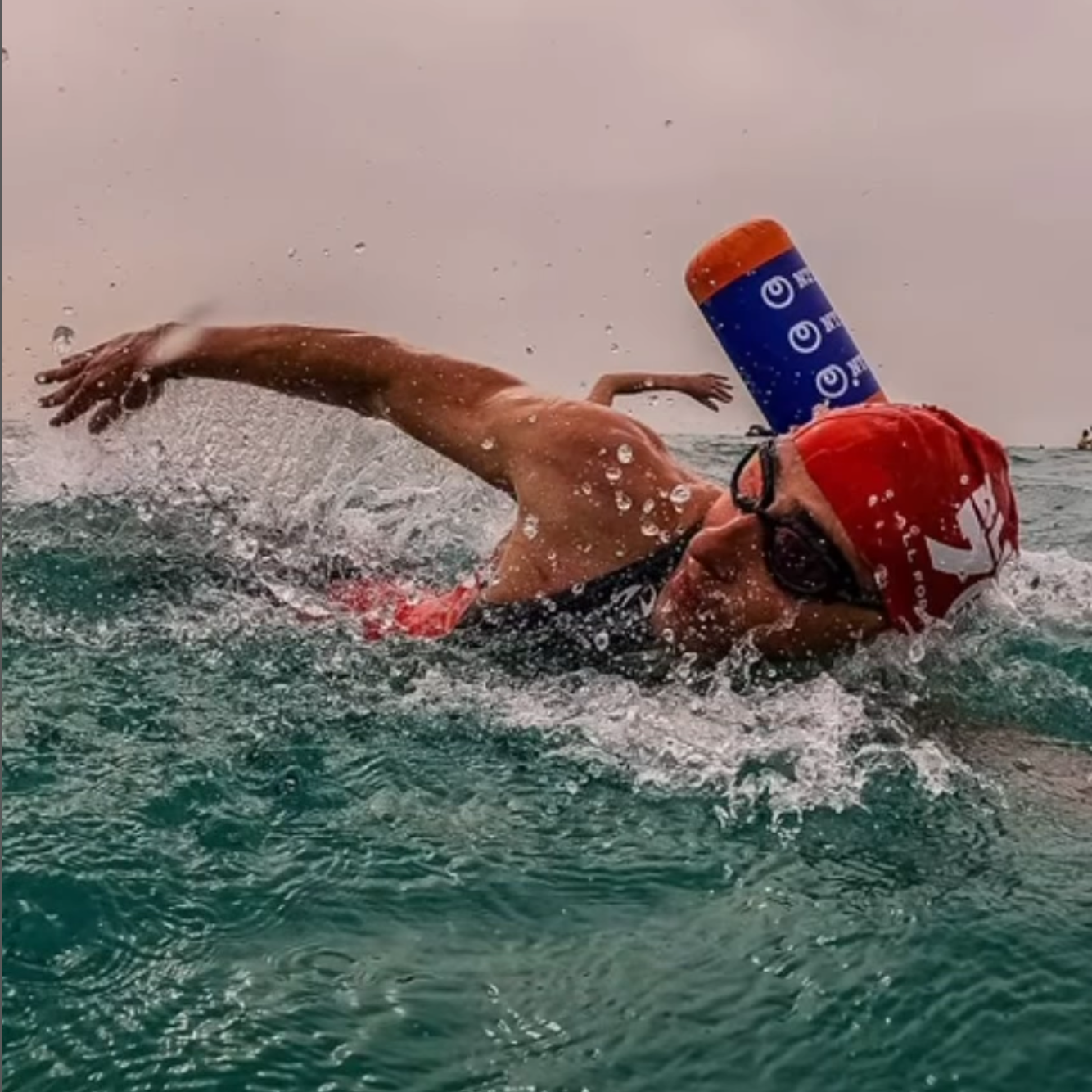
When the shoulders are free, the whole stroke tends to stay more connected. You can reach forward without feeling tugged back. You can rotate for a breath without tightening your neck and upper chest. You can recover the arm without wasting energy working around the suit.
Swimmers usually notice that difference in a few direct ways:
- the recovery feels smoother
- breathing rotation feels less forced
- the catch holds together longer
- the shoulders feel less loaded late in the swim
Those details matter because fatigue in open water rarely arrives as one obvious breakdown. It usually appears as a series of small losses: a shorter reach, a dropped elbow, less torso rotation, a quicker and less effective breath. A flexible shoulder panel helps delay that chain reaction.
Yamamoto 40 is really about preserving form
Many athletes hear premium neoprene and think speed. That is understandable, but speed is only part of the picture. The more useful way to think about a Yamamoto 40 neoprene suit is stroke preservation under fatigue.
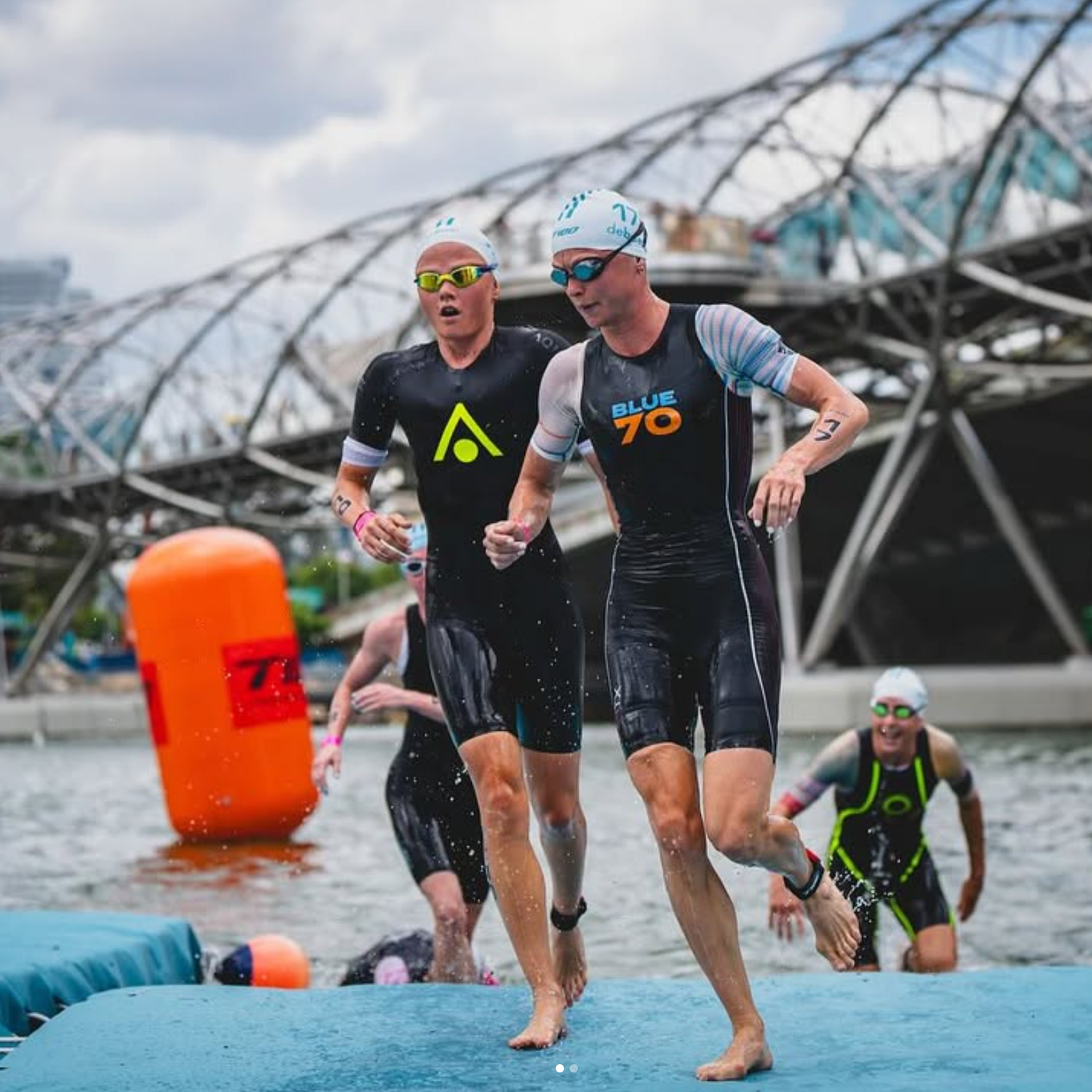
If your shoulders stay freer, your mechanics tend to last longer. That matters in every race distance. In a sprint triathlon, it helps you settle after the opening rush without overloading the upper body. In an Olympic-distance swim, it helps you keep rhythm once the early adrenaline fades. In long-course racing, it can leave you less fatigued when you stand up and head to transition.
That is why flexibility should not be treated as a luxury feature. For many swimmers, it is an energy-management feature. It can reduce the cost of every stroke over the full length of the swim.
How Blue70 applies this in a race-day suit
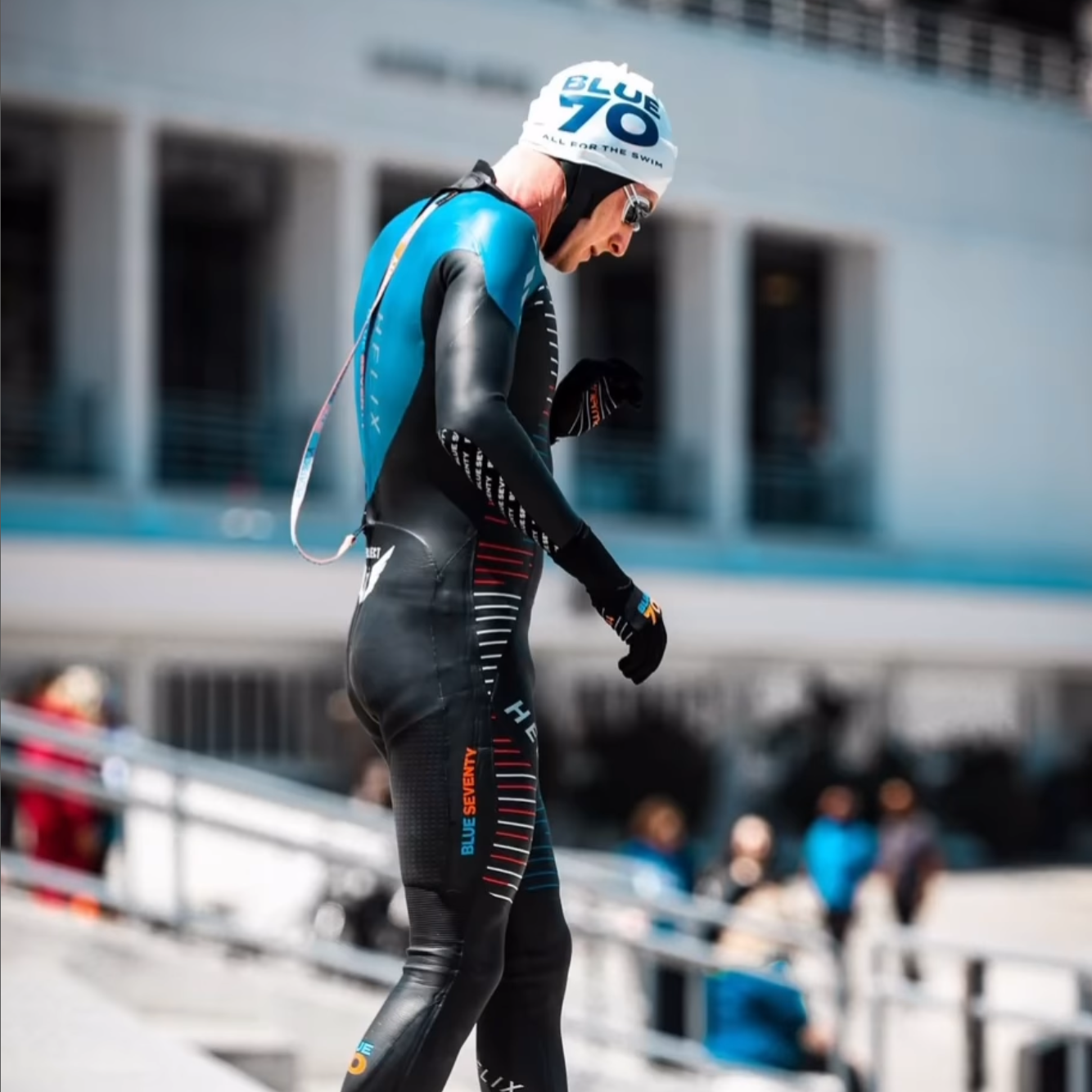
Blue70 builds wetsuits for swimming first. That design approach shows up clearly in the top end of the line. The Helix, priced at $995, is Blue70’s flagship race suit and is built for total race-day performance. It uses very thin, highly flexible neoprene in the arms and shoulders, includes the permeable catch panel introduced in 2010 to preserve feel for the water, and uses LIFT buoyancy panels added in 2018 to support body position.
Those details matter because they reflect a swim-specific design philosophy. The goal is not just to add lift. The goal is to place buoyancy where it helps alignment while keeping the upper body free enough to swim naturally. That is a better lens than asking only how buoyant a suit feels.
The trade-off most buyers need to hear
Top-end flexibility comes with a trade-off, and it is worth stating plainly. Blue70 notes that the Helix’s thin neoprene, which gives the suit its freedom through the shoulders, is not ideal for heavy training use. That is not a weakness. It is a sign that the suit was designed for a specific job.
If you want a race-day suit and you protect it accordingly, that level of flexibility makes a lot of sense. If you swim in a wetsuit regularly through the season, durability has to be part of the decision.
Blue70’s line gives athletes room to match the suit to the job:
- Helix at $995 for top-end race-day performance
- Reaction at $680 for frequent, longer swims
- Fusion at $420 for shorter, frequent use and everyday versatility
- Sprint at $325 for entry-level needs
The Fusion also received a lower-sitting neckline redesign in 2021 for comfort without losing the watertight seal. That kind of update matters because many swimmers feel restriction at the neck before they feel it in the stroke.
How to tell if flexible neoprene is helping you
You do not need a lab test to evaluate a suit. You need to pay attention to a few useful markers in the water.
Shoulder fatigue after ten minutes
The first two minutes can be misleading. Most suits feel acceptable when you are fresh. The better test comes after ten minutes of steady swimming. If your shoulders already feel loaded, the suit may be limiting your natural range of motion.
Breathing to both sides
Restriction often shows up when you rotate to your less comfortable side. A suit that feels fine while swimming straight may start to interfere when you breathe under pressure, especially in open water. If the breath feels rushed or tight, upper-body mobility deserves a closer look.
Front-end feel on the catch
A good wetsuit should let you move your arms, but that is not enough. It should also let you hold pressure on the water. Blue70’s permeable catch panel in the Helix was built to preserve that connection. Swimmers with a strong feel for the water often notice quickly when a suit interrupts it.
Stroke count drift
If your stroke shortens and your turnover climbs for no good reason, the suit may be changing your mechanics. That is useful feedback. Good flexibility should support length and rhythm, not force you into a smaller stroke.
A short look at how wetsuit design evolved
Blue70’s history shows how swim-specific wetsuit design matured over time. The company traces its roots to 1993 and was renamed blueseventy in 2005, when the Helix replaced the Stealth as the flagship. In 2010, the permeable catch panel was introduced. In 2015, the Thermal Helix arrived as a purpose-built cold-water swimming suit. In 2018, LIFT buoyancy panels were added to the Helix.
That timeline shows a clear shift. Wetsuit design moved beyond simple thickness and flotation. The real challenge became more precise: where should buoyancy sit, how should the shoulders move, and how can a suit support body position without taking away feel for the water.
That is the context that makes Yamamoto 40 relevant. It is part of a design approach built around movement quality, not just material prestige.
Fit still decides everything
A premium neoprene panel cannot fix a poor fit. This is where many swimmers go wrong. If the suit sits low through the hips or the shoulders are not fully worked into place, even a highly flexible suit will feel restrictive.
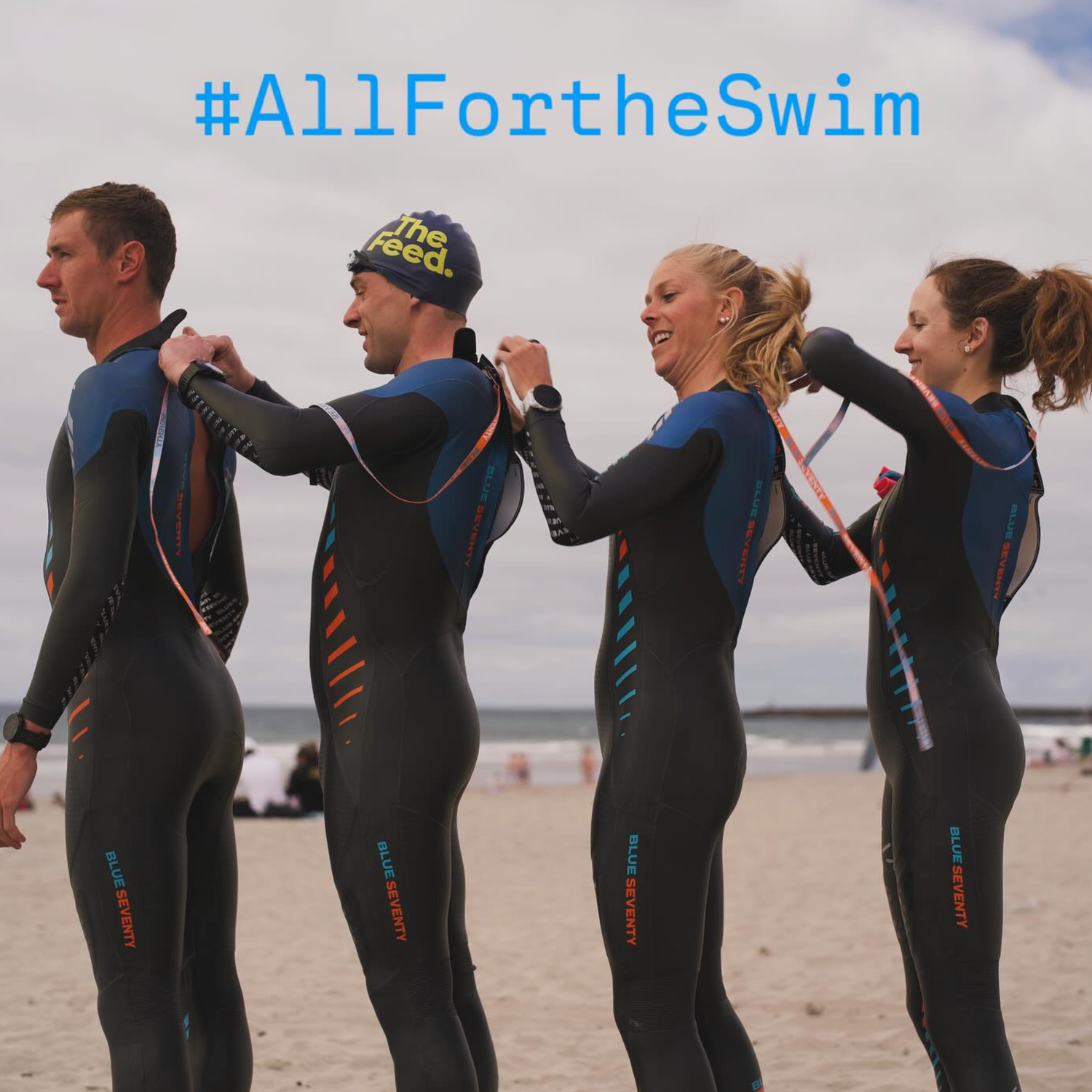
Use this basic process when putting on a full wetsuit:
- Pull the suit up fully from the ankles before adjusting the torso.
- Seat the material high through the hips.
- Move small amounts of neoprene upward section by section.
- Work any extra material toward the shoulders.
- Test your range of motion before zipping all the way.
A swim-specific wetsuit should feel snug on land and more comfortable once you are in the water. That is normal. If the suit feels easy and roomy while dry, it is often too big.
Water temperature still shapes the decision
Material flexibility is only one part of wetsuit choice. Water temperature still matters. Blue70’s guidance is clear: below about 56 to 58°F, a purpose-built thermal suit such as the Thermal Reaction adds meaningful warmth. Above about 70 to 72°F, a full suit can feel too warm over longer swims, and a sleeveless suit or swimskin can become the better option.
That means you should always match the suit to the conditions first. If warmth is the limiting factor, thermal construction may matter more than maximum shoulder suppleness. If the water is warm, unrestricted movement and heat management move up the list.
Who benefits most from this type of suit
Some athletes feel the difference in highly flexible neoprene right away. Competitive age-group triathletes often do because they can sense small disruptions in timing and rotation. Former pool swimmers also notice it quickly because they are sensitive to catch feel and front-end rhythm. Long-course racers benefit because small restrictions accumulate over a long swim.
Beginners also gain a lot from wetsuit use, often because improved body position helps immediately. But that does not mean every newer swimmer needs the most flexible race suit in the line. Many are better served by focusing first on fit, comfort, budget, and training frequency.
The right suit matches the swimmer, not just the spec sheet.
How to test a suit before race day
The only meaningful place to judge a wetsuit is in the water. A quick fitting-room impression does not tell you how the suit behaves when you are swimming at effort.
Use a short test session and look for specific things:
- swim long enough to get past the first easy impression
- breathe to both sides
- build from easy pace to race pace
- notice whether your reach stays long
- check how your shoulders feel when you finish
If you train for triathlon, add one more check. When you stand up and start moving toward transition, do you feel ready to ride, or do your shoulders feel spent? That answer tells you a lot about whether the suit is supporting your swim or taxing it.
Blue70’s Take a Test Swim program makes that process easier. You can swim in a wetsuit and still return or exchange it, provided it comes back clean, dry, and unmodified with tags and accessories.
Race-day habits that help flexible neoprene perform
Once you have the right suit, a few habits will help you get the full benefit from it.
- warm up in the water if possible so the suit settles while you swim
- keep the opening minutes controlled instead of muscling the pace
- protect thin neoprene when putting the suit on and taking it off
- save your top-end race suit for racing rather than heavy weekly training
Blue70’s warranty does not cover fingernail punctures or heel tears, so careful handling matters, especially with thin, flexible race-day neoprene.
The better way to think about Yamamoto 40
A Yamamoto 40 neoprene suit is easy to describe as a premium-material choice. For swimmers and triathletes, that description is incomplete. The more useful way to see it is as a stroke-preservation tool.
When a suit gives your shoulders more freedom, your mechanics tend to hold together longer. Your breathing stays cleaner. Your catch stays more connected. You exit the water in better shape for what comes next.
If you are choosing a Blue70 wetsuit, start with fit, training frequency, and water temperature. Then decide how much shoulder freedom your swim demands. That is where material choice turns into race-day value.
If you want to try the fit in real conditions, take it for a swim with Blue70’s Take a Test Swim option.