


Most athletes who search for World Triathlon wetsuit rules want a single number. They want to know when a wetsuit becomes mandatory, then move on. That number matters, but it is only the start. A mandatory-wetsuit call changes more than your gear choice. It changes your swim plan, your warm-up, your pacing, and the way the field behaves once the horn goes off.
That is the useful way to read the rule. A temperature cutoff is not only an administrative detail in the athlete guide. It is a clue about the kind of swim you are about to face, especially if the water is cold enough that breathing control and early composure will shape the first several minutes of the race.
World Triathlon rules and event procedures can change, and officials apply the current version in force for that race. Athletes should always confirm the current rulebook and the race briefing before relying on a chart copied from an old post or a screenshot passed around in a group chat. [VERIFY: current World Triathlon mandatory wetsuit temperature and category-specific rule details]
The rule gives officials a standard, not athletes a full forecast
A posted water temperature helps race officials make a consistent call. It does not tell you exactly how the swim will feel. Two races can share the same temperature and still produce different experiences because wind, air temperature, chop, current, start procedure, and swim duration all change the stress of the day.
A protected lake start with calm air is one thing. An exposed saltwater course with a long pre-start wait is another. The rulebook still needs a single threshold. Your preparation needs more detail than that.
Cold water affects breathing rate, stroke timing, and how quickly you settle. A wetsuit changes the picture again by improving body position and adding thermal protection. The number matters. The conditions around it matter too.
Why mandatory wetsuit rules exist
Mandatory wetsuit rules exist because race organizers need a practical way to handle colder conditions across an entire field. They need something that can be measured, announced, and applied fairly on race morning. That kind of rule will always be broad. It cannot account for each athlete’s size, experience, cold tolerance, or open-water background.
An athlete who swims in cold water every week brings one set of adaptations. A first-time age-grouper on an international-distance start line brings another. Officials still need one standard. That is why a rule like this should be treated as a framework. Your own planning should add the specifics that the rule cannot provide.
What a wetsuit changes when the race turns cold
A swim-specific wetsuit affects more than warmth. It changes how you sit in the water, how much kick you need to stay level, and how much strain your shoulders carry during the stroke. In triathlon, those changes can save energy, improve rhythm, and support cleaner mechanics if the suit fits correctly and is put on properly.
Blue70 builds swim-specific wetsuits around that mix of buoyancy, shoulder freedom, and feel for the water. Those details matter most when conditions are cold enough that athletes are more likely to rush the start and lose form.
Body position improves
Buoyancy lifts the hips and legs, which reduces drag for many swimmers. That matters most for athletes whose lower body tends to ride low. A cleaner line through the water often means less wasted effort from the first stroke onward.
This is why the phrase buoyancy equals speed has real value in open-water swimming. Better position usually gives the swimmer more for the same effort.
The kick becomes less expensive
In a full suit, many triathletes do not need as much kick to keep the body level. That can preserve the legs for the bike and run. It can also change timing. Athletes who rely on the kick to organize the stroke sometimes need a few minutes to settle into the altered rhythm.
Shoulder setup becomes critical
A well-fitted wetsuit should feel snug on land and better in the water. If the suit sits low through the hips or bunches below the shoulders, the arms start pulling against extra tension. Many complaints about restriction start there.
You usually feel this fast. Sometimes in the first few hundred meters.
Cadence can rise before control does
When athletes feel higher in the water, they often start spinning the arms too early. In cold water, that can happen before breathing has settled. The result is a rushed stroke, poor sighting, and wasted energy right at the most technical point of the swim.
The biggest mistake in mandatory-wetsuit conditions
Many triathletes treat a mandatory-wetsuit swim as a green light to attack from the start. The logic seems reasonable. The suit adds buoyancy, body position improves, and swimming feels easier. Cold water often punishes that approach.
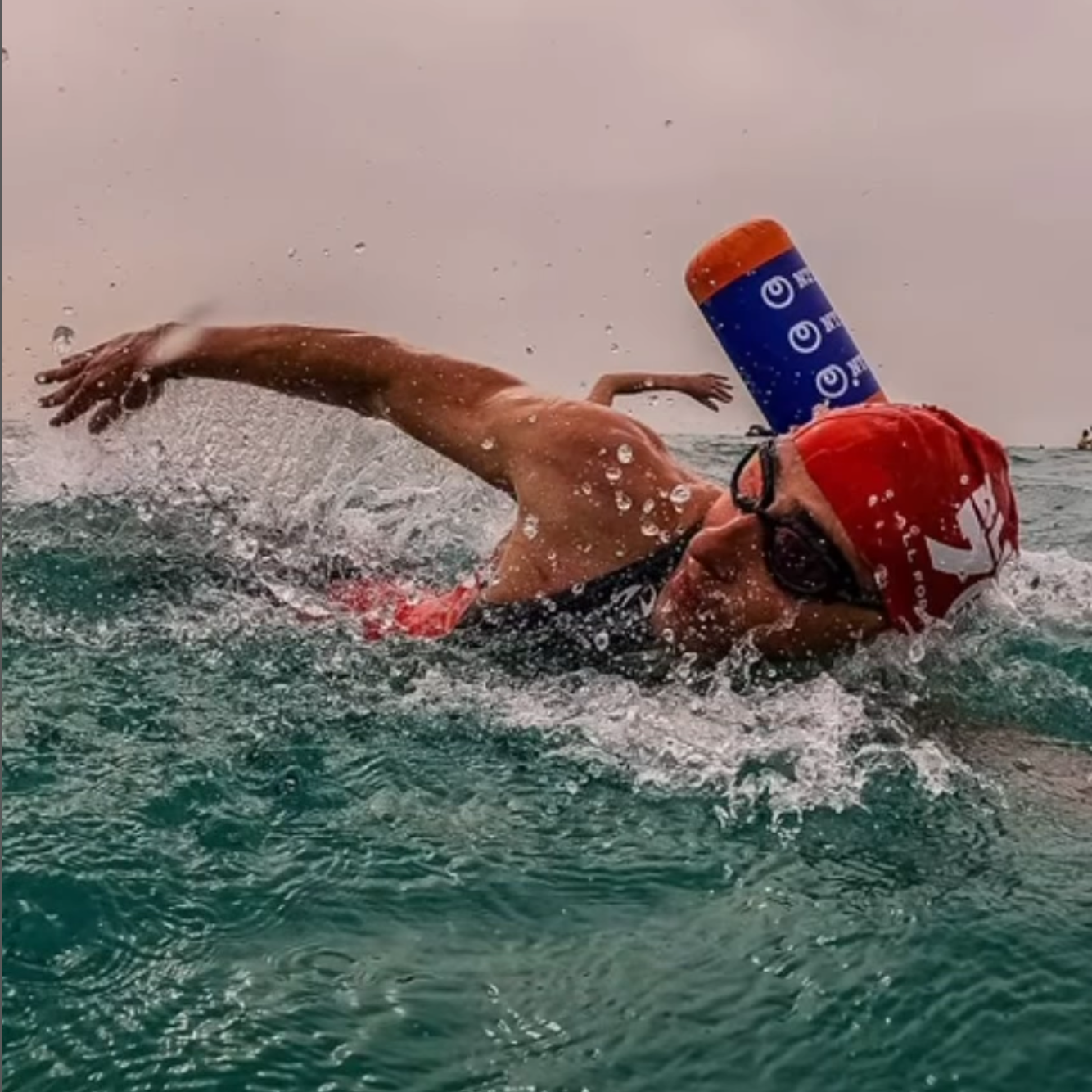
The first minutes of a cold-water swim are often the least settled. Breathing is sharper. Stroke timing is less precise. If you sprint through that phase, you can turn a manageable swim into a fight against your own effort. Stroke length drops. Navigation gets sloppy. The pace starts controlling you instead of the other way around.
A better approach is controlled progression. Settle the breathing first. Establish your line. Hold the front of the stroke. Then build pressure once the rhythm is stable. Fast open-water swimmers do this well because they use the wetsuit to support good mechanics, not to excuse bad decisions.
How to train for races that may require a wetsuit
If your target race often lands near the World Triathlon cutoff, train for that scenario before race week. The goal is not only to own the right suit. The goal is to make the race feel familiar.
Practice the first five minutes
One of the best sessions you can do is a short open-water start set that focuses on the first five minutes of effort. Do not make every swim one long steady loop. Practice entering the water, settling the breath, sighting while the heart rate is high, and finding race rhythm without overcooking the effort.
If you have safe access to colder water, short repeats can be more useful than a single long swim. The key skill is not only endurance. It is early control.
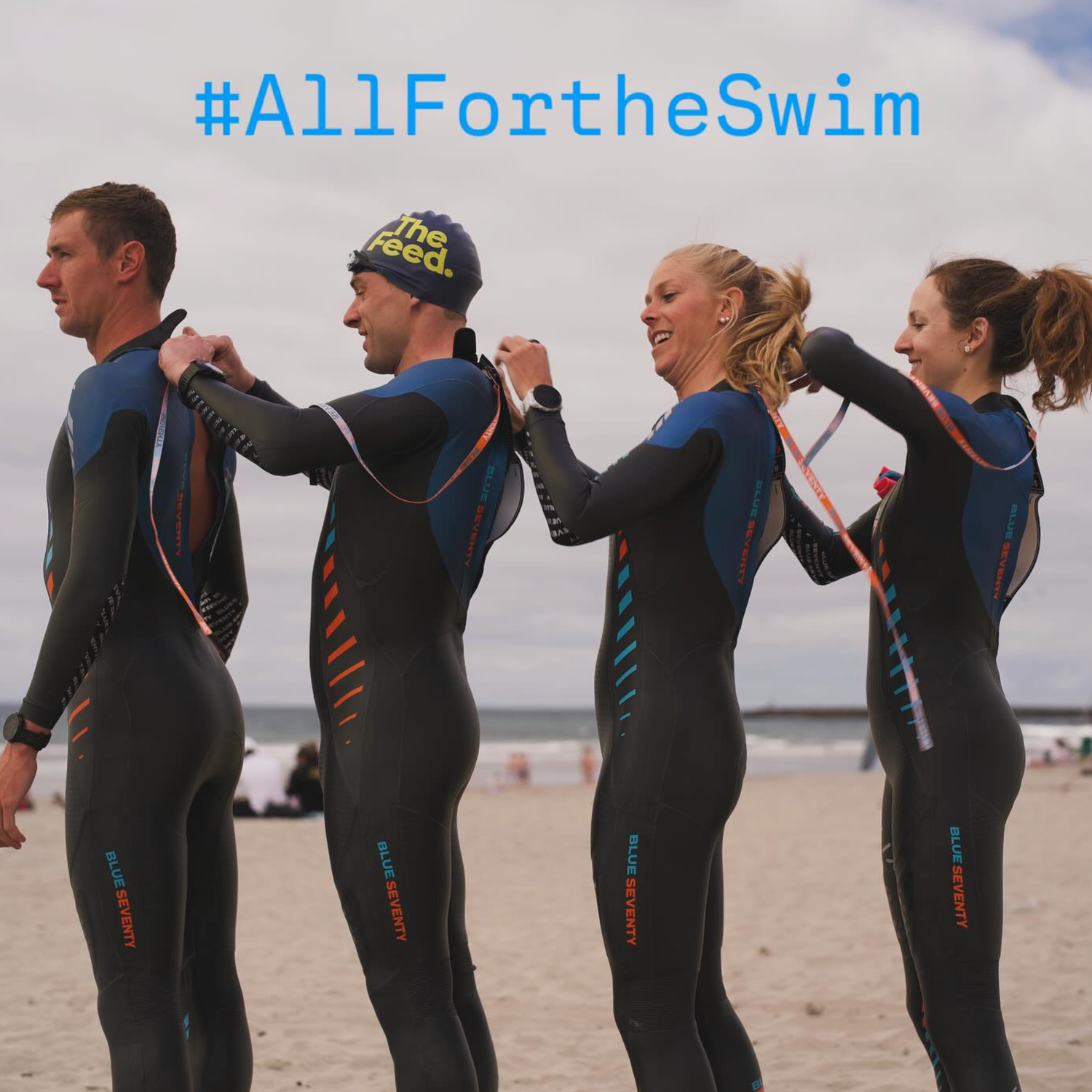
Practice putting the suit on properly
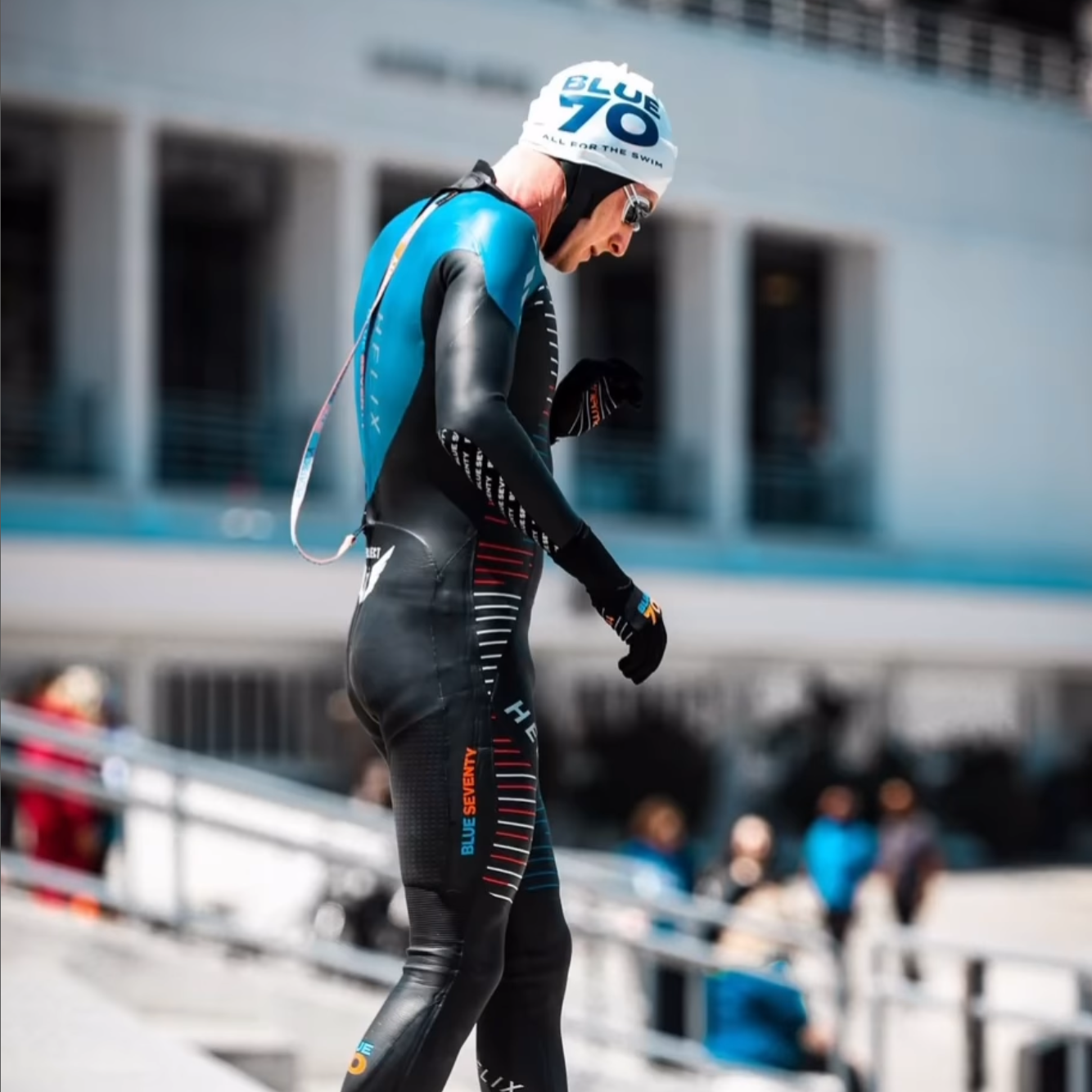
Donning is part of performance. Pull the suit up through the calves and thighs first. Set it high through the hips. Distribute the torso material. Then set the shoulders before you zip fully. A suit that is even slightly out of place can create fatigue that has nothing to do with the suit model and everything to do with setup.
Blue70’s fit guidance stays simple: the suit should feel snug on land and more natural once you are in the water. If the shoulders feel loaded before the swim starts, fix the setup first.
Rehearse your warm-up
If the race allows an in-water warm-up, use it well. Wet your face. Settle your breathing. Take a few strokes at race effort. If there is no in-water warm-up, have a short dry-land plan ready so the race does not begin with your first hard movement of the day.
- Arm circles
- Band pulls if space allows
- A few short build efforts
- Controlled breathing before the start
Cold water rewards athletes who arrive ready to swim. It punishes athletes who plan to warm up after the gun.
Practice T1 with cold hands
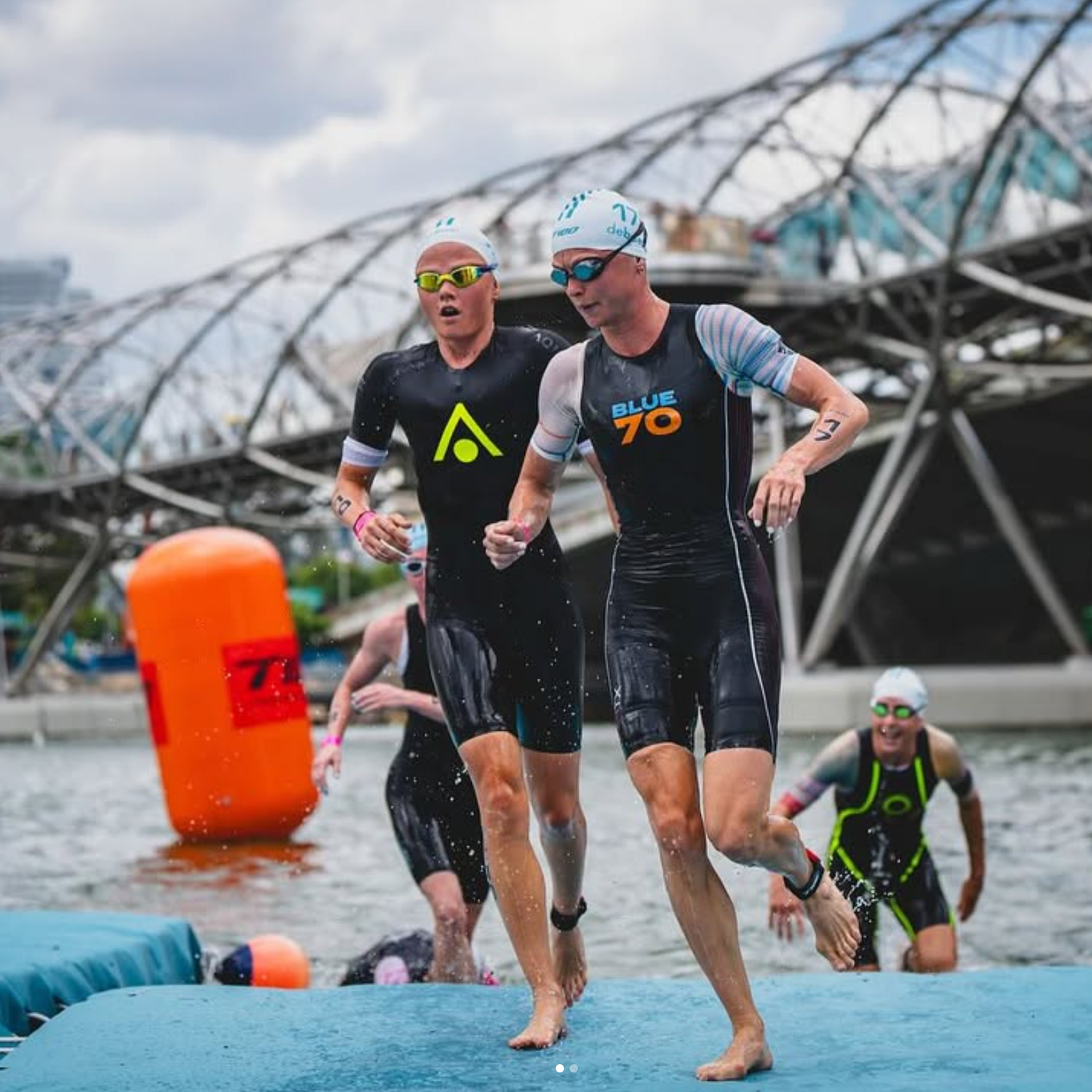
Transition work matters more in cold races. Reduced dexterity can turn a good swim into a clumsy exit. Practice unzipping, peeling the shoulders, and clearing the legs after a harder swim effort, not only when fresh and dry.
Choosing the right Blue70 suit for the conditions
A mandatory-wetsuit call tells you that you need a wetsuit. It does not tell you which suit best fits the day, your swim duration, or your training habits.
The Helix is built for race-day performance, with thin and flexible neoprene through the arms and shoulders, a permeable catch panel that preserves feel for the water, and LIFT buoyancy panels added in 2018. It is a top-end race suit. It is also built with delicate neoprene that Blue70 does not position as the best choice for heavy weekly training.
The Reaction fits athletes who swim frequently and need a suit that balances performance with regular use. The Fusion suits shorter frequent swims and remains a best seller, with a lower-sitting neckline introduced in the 2021 redesign for comfort without losing the seal. The Thermal Reaction is designed for cold-water swimming and uses a full Zirconium jersey lining for added thermal protection.
Water temperature helps narrow the field. Below about 56 to 58°F, a purpose-built thermal suit adds meaningful warmth. Above about 70 to 72°F, a full suit can become too warm over longer swims. Those figures are useful for training and suit selection. They are not race-legality rules, and athletes should still confirm the current event regulations. [VERIFY: current World Triathlon upper and lower temperature rules by race category]
How the same rule affects different athletes
A mandatory-wetsuit swim changes the field in different ways depending on who you are.
For a newer triathlete, buoyancy often produces the largest relative gain because body position improves quickly. For an experienced age-grouper, the bigger gain may come from pacing the opening section more cleanly. For a front-pack swimmer, the key shift may be field compression, where more athletes stay in contact because the suit cleans up weaker positions.
That is why the rule deserves more thought than a simple gear check. It changes how the swim unfolds.
Borderline race days need two plans
If race week points to a temperature near the cutoff, prepare for both outcomes. Pack the legal gear for each scenario. Think through warm-up options. Know how your pacing changes if the swim is colder than expected or if the official call goes the other way.
Experienced racers stay calm on borderline days because they do not wait for the final announcement to start planning. They arrive with both versions of the race already organized.
- Confirm the current World Triathlon regulations. [VERIFY: current rule citation]
- Read the event athlete guide and briefing notes.
- Bring your wetsuit and fit-checked swim kit.
- Pack anti-chafe for the neck and underarms if needed.
- Know your warm-up routine for in-water and dry-land situations.
- Rehearse your T1 sequence before race week.
Use the rule as a race cue
The smartest athletes read a mandatory-wetsuit call as a race cue. If officials require wetsuits, the swim is likely to reward composure, clean mechanics, and good preparation more than bravado.
- Breathing control before aggression
- Body position before turnover
- Correct fit before blaming restriction
- Transition practice before race-morning improvisation
That mindset gets more value out of the suit and usually costs less energy over the rest of the race.
Final thoughts
World Triathlon wetsuit mandatory temperatures matter, but the number alone does not tell the full story. The better question is what that temperature should change in your plan. It should change how you warm up, how you pace the opening minutes, how carefully you check fit, and how seriously you treat transition practice.
A wetsuit can improve body position, reduce drag, and provide added thermal protection. Those benefits work best when the athlete stays controlled enough to use them. That is where good preparation wins.
If you want to sort out fit before race day, start with Blue70’s size charts, the fit guide, or the Take a Test Swim program. A suit that feels right in the water removes one of the biggest variables from race morning.