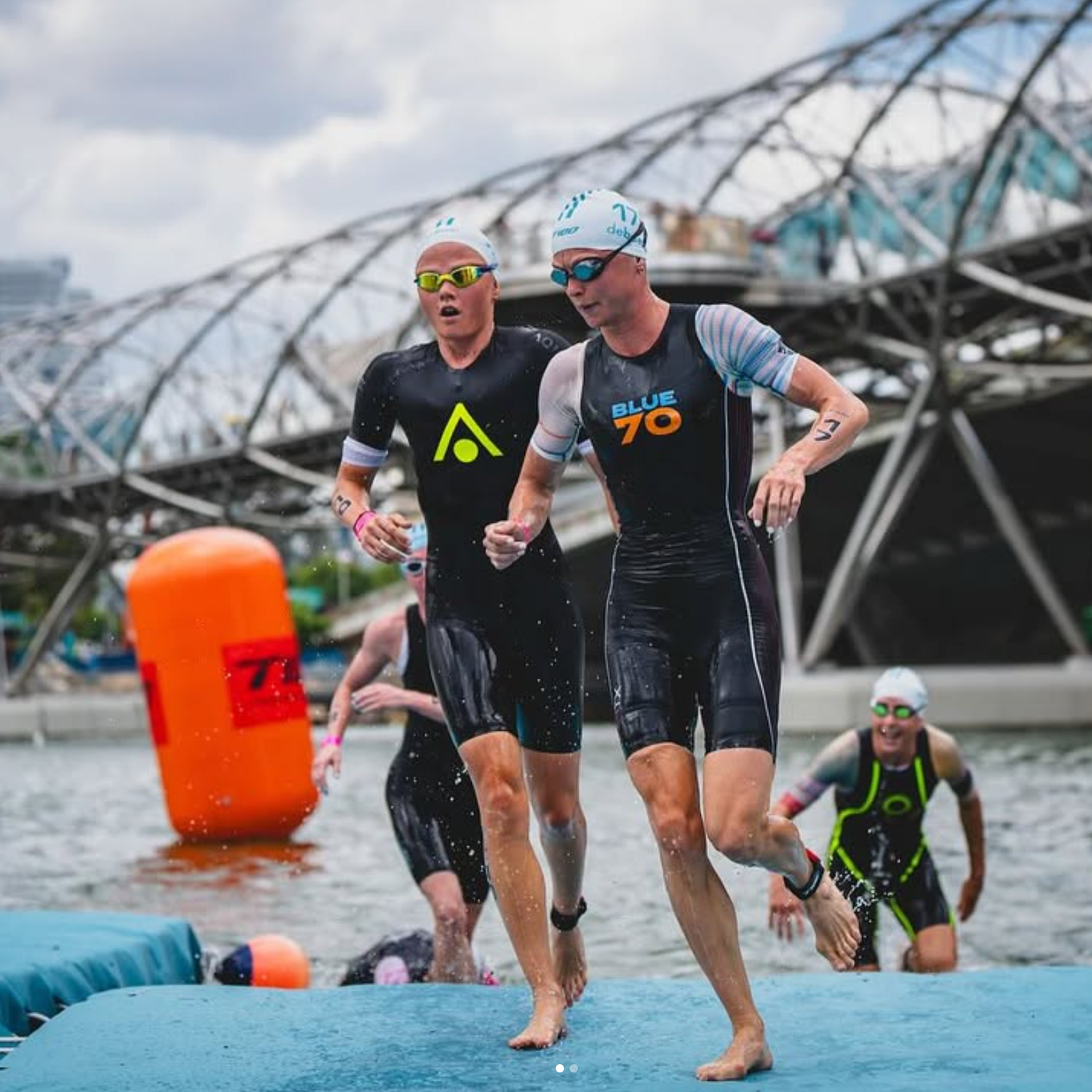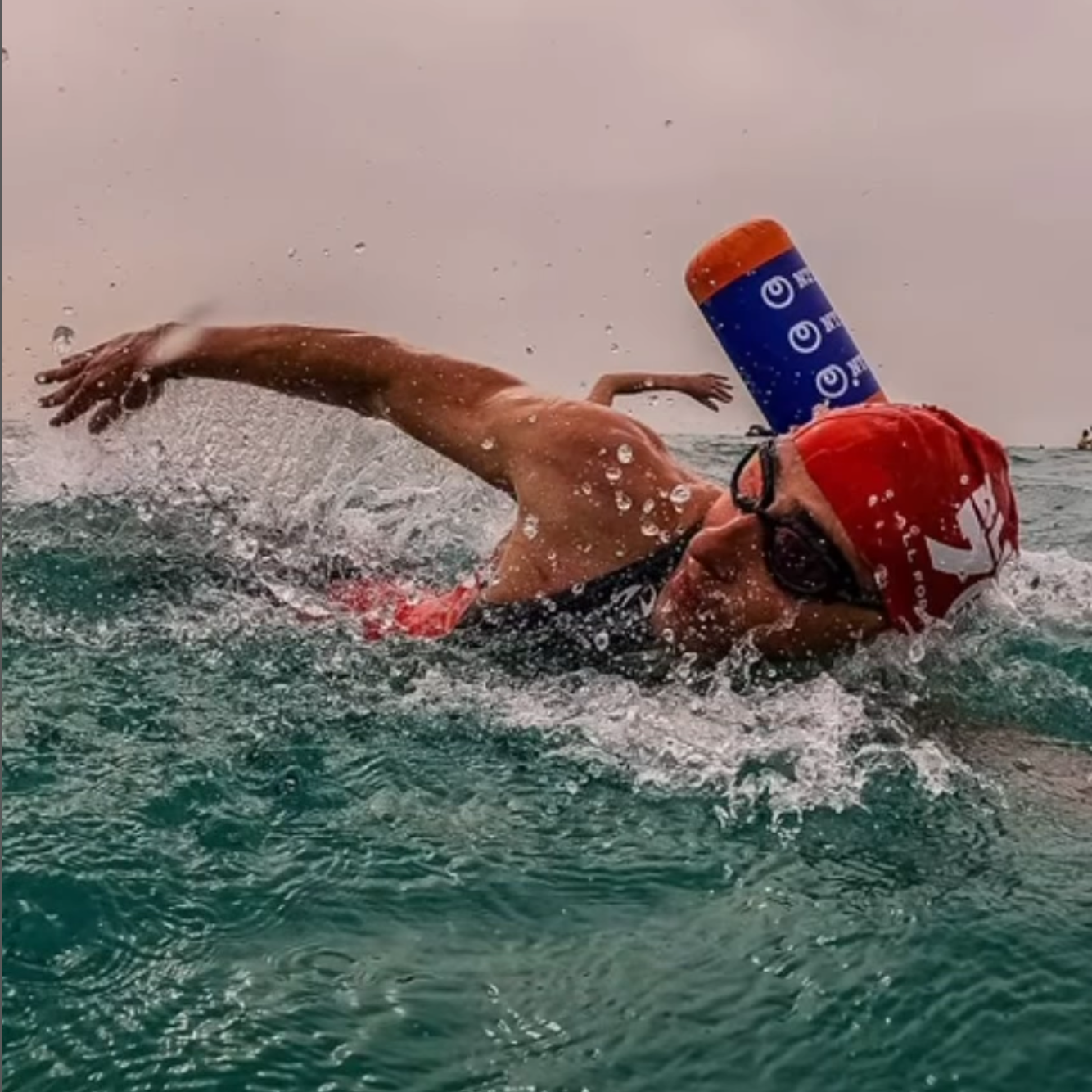



Grab any surf or dive wetsuit off a rack and there's a good chance you'll find the zipper running straight down the chest. Grab a swim wetsuit, though, and the zipper's around back every time. Ever wonder why?
It's not habit. It's not manufacturing convenience. It comes down to what your shoulder actually does 60+ times a minute during freestyle, and what happens when you put hardware in the way of that motion.
Your Chest Is Working Too Hard for a Seam
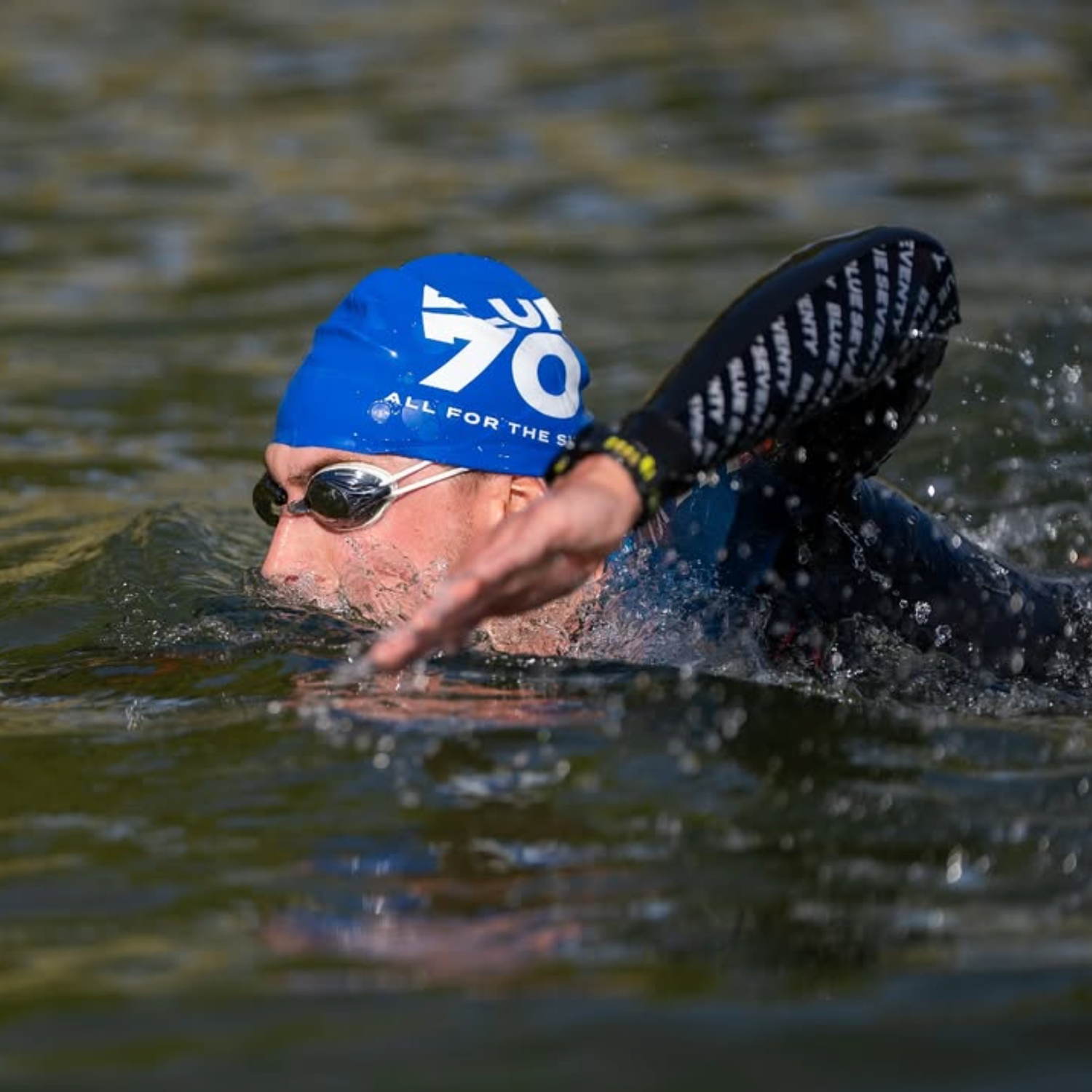
Think about what freestyle asks of your shoulder joint over the course of a race. Your arm rotates internally, then externally, over and over, while your torso rotates with it to extend your reach and set up the catch. That "feel for the water" swimmers chase - the sensitivity that lets you find water and actually hold onto it - depends entirely on the neoprene across your chest and shoulders moving with you, not against you.
A zipper doesn't move like neoprene does. Even a good one needs tape and a reinforced panel to stay watertight, and that hardware is stiffer than the material around it. Put it across your chest - right where your shoulders are doing their most demanding work - and you've added resistance exactly where you can least afford it. Multiply that resistance by a couple thousand strokes and you've got a harder swim, a slower one, or both.
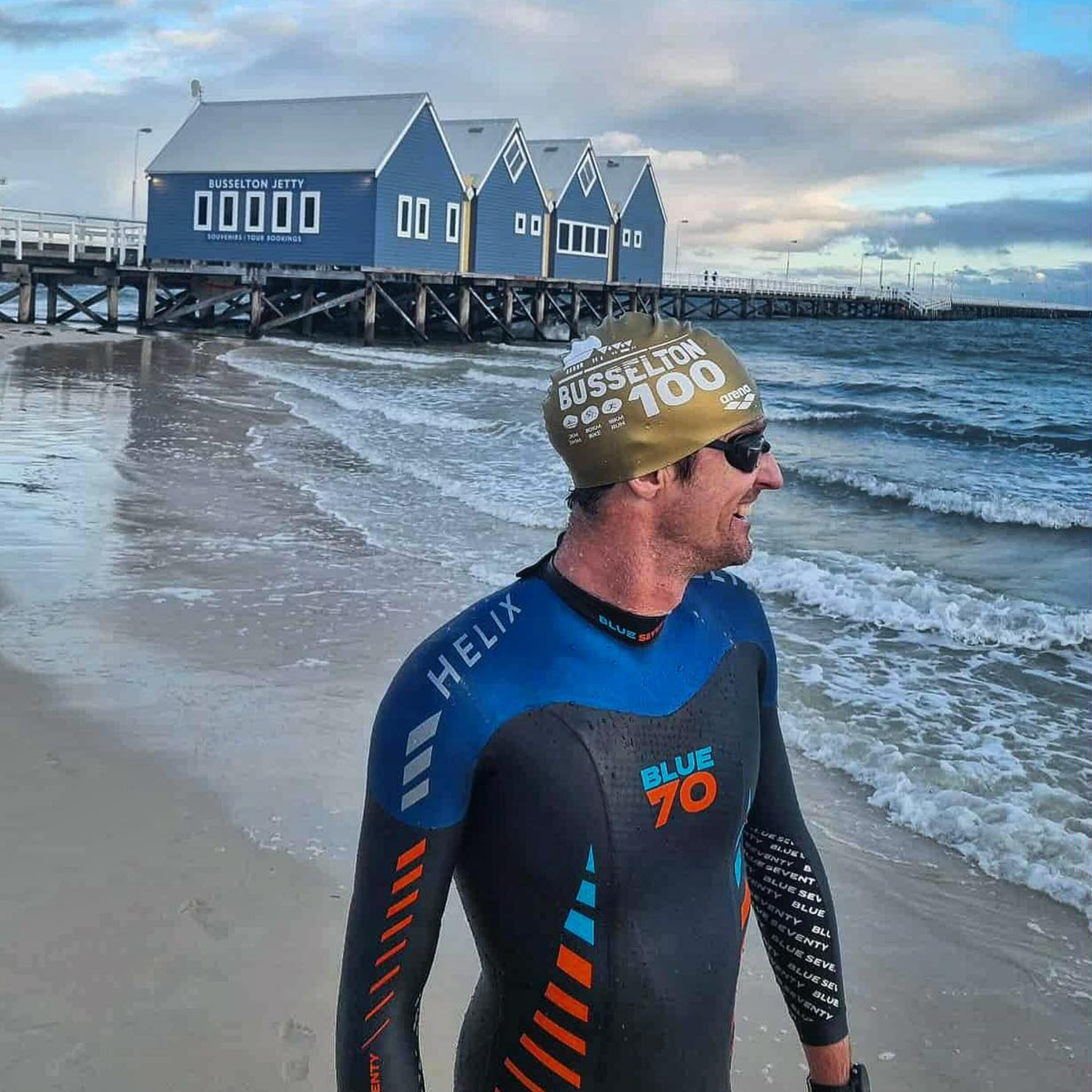
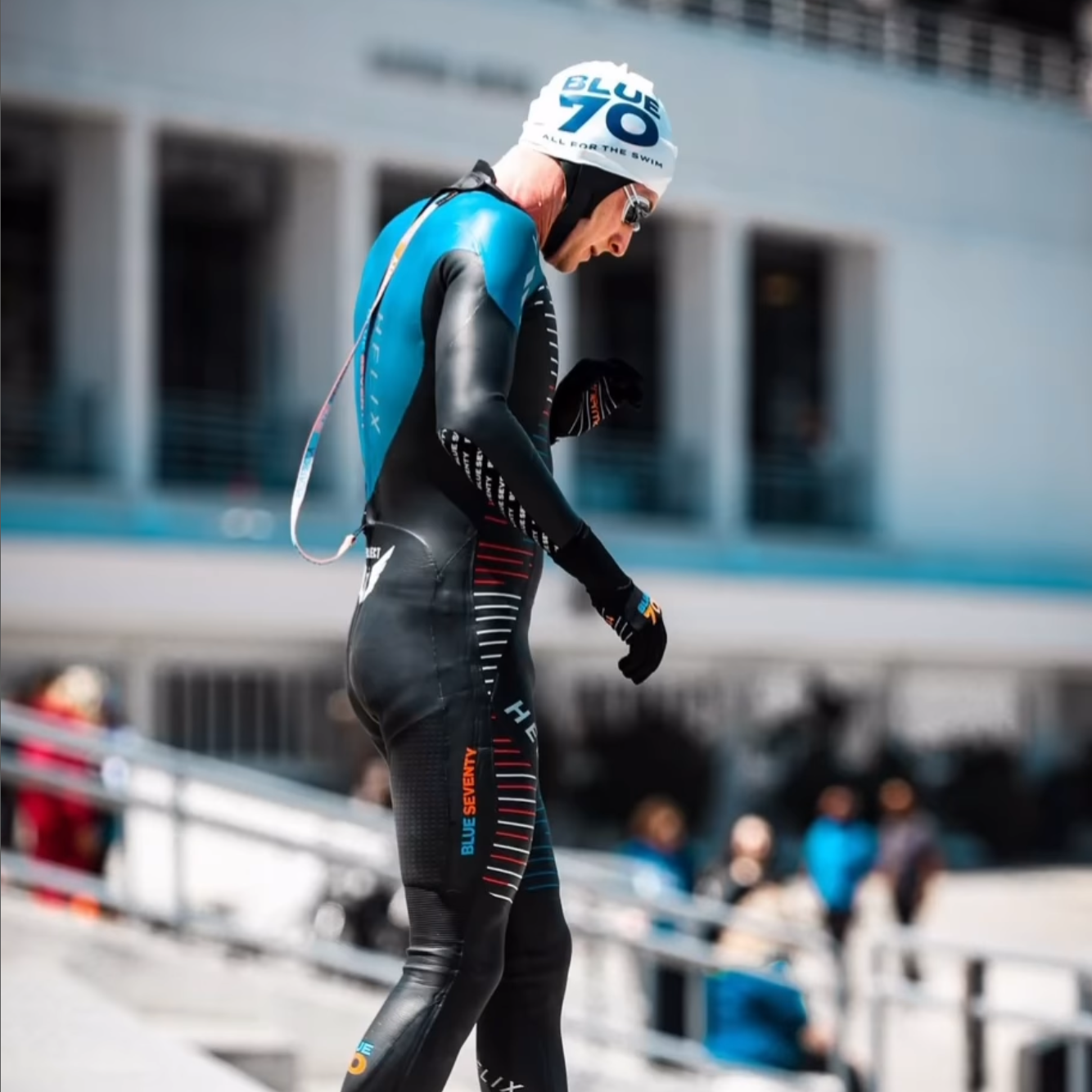
Blue70 builds every wetsuit in the line - Helix, Reaction, Fusion, all of it - with this in mind. The zipper sits at the back, well clear of the rotation that drives your stroke, freeing up the chest and shoulder panels to be built as thin and flexible as possible. The permeable catch panel that's been part of the lineup since 2010 exists for the same reason: keep the water-facing side of the stroke unrestricted, because that's where feel lives.
There's a Buoyancy Reason Too
Here's the part swimmers don't usually think about: it's not just shoulder mobility. It's also about where the suit puts its lift.
A wetsuit's whole job, physics-wise, is to raise your hips and legs into a flatter, faster line in the water. Buoyancy equals speed - that's not a slogan, it's just how displacement works. Suits accomplish this with strategically placed panels of thicker neoprene through the torso and legs, engineered to work together as one system.
Now picture a zipper running straight down the center of that system. It's a break in continuity right where buoyant structure would otherwise sit uninterrupted. Keep the zipper on the back instead, and the chest panel gets to focus entirely on flexibility while the torso panels focus entirely on lift. Neither one has to compromise for the sake of the other.
It Also Saves You Time in Transition
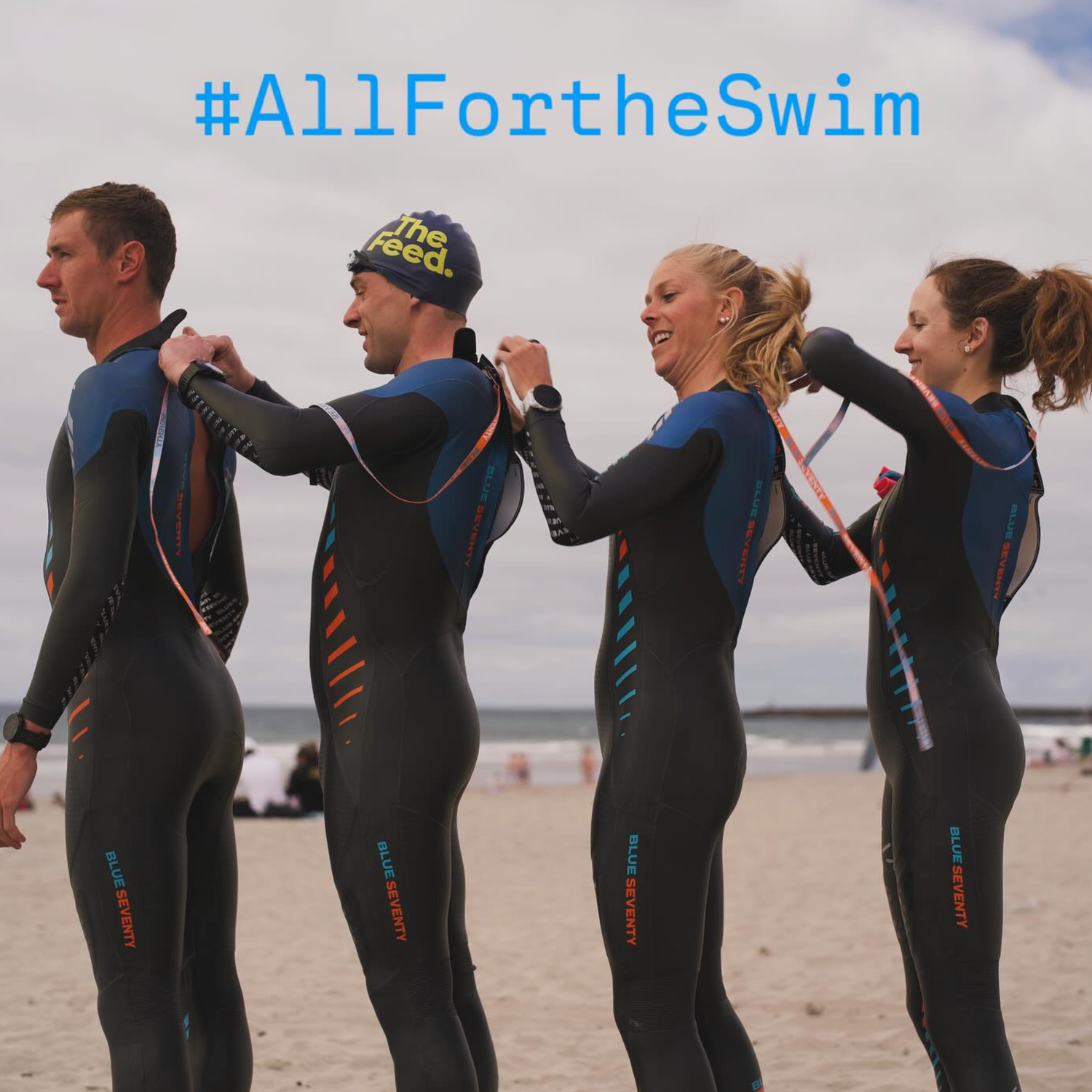
There's a race-day angle here that triathletes will appreciate. A back zip with a long pull cord isn't just about swimming faster - it's built for getting the suit off fast, too.
Picture T1: you're out of the water, heart rate through the roof, hands a little numb, and you need this suit gone in seconds. Reaching over your shoulder and ripping the cord downward is a motion you can do reliably under stress. Fumbling with a front zipper across a wet chest is not.
This is part of the logic behind Femme Fit sizing as well - the extended zipper length on Blue70's women's suits isn't just about getting the suit on more comfortably, it's about a faster, easier exit when the clock is running. The 2021 Fusion redesign followed the same thinking: a lower-sitting neckline for comfort, without giving up the watertight seal or moving that closure anywhere near the chest.
What to Actually Check When You're Trying One On
Since the zipper's out of the way, most of what matters for fit shows up somewhere else. Here's where to focus:
- The neckline seal. It should sit snug against your neck with no gapping. A loose neckline lets water flush in and out with every stroke - that's drag you're carrying, and it undercuts whatever thermal benefit the suit is supposed to give you.
- Shoulder and chest range. Stand on dry land, raise both arms overhead, and rotate through a few mock strokes. A well-fitted swim suit should feel snug when you're standing still but shouldn't fight you when you reach.
- The pull cord. Practice reaching for it over your shoulder before race day arrives. First time doing it with cold hands and a spiked heart rate in a crowded transition area is not when you want to figure this out.
This is exactly why Blue70's Test Swim policy exists. You can genuinely swim in the suit - open water, pool, wherever - and still return or exchange it as long as it comes back clean and dry. Chest and shoulder fit is something you feel in motion. No amount of standing in front of a mirror tells you what you'll learn in the first 200 meters.
Don't Skip Zipper Care
One thing that's easy to overlook: the zipper is the one mechanical part on an otherwise all-neoprene suit, and it's usually the first thing to fail if you're rough with it. Most wetsuit warranties - Blue70's included - won't cover zipper damage caused by force, like yanking a stuck zipper sideways instead of working it straight down the track, or trying to force the suit on without unzipping it all the way first.
Keep it simple: rinse the zipper with fresh water after every swim, especially in salt water, add a little zipper lubricant if it starts sticking, and always handle it by the zipper itself rather than tugging at the fabric around it. That habit alone will add real years to a suit's life.
The Bottom Line
It's easy to overlook zipper placement as a footnote in wetsuit design. It's actually the opposite - it's a decision that shapes how the whole suit performs. Every panel in a swim-specific wetsuit earns its spot based on what your stroke needs from it, and your shoulders are doing the hardest work in the water. That's exactly why nobody's putting hardware there.
If you're not sure how a back-zip suit should feel through the shoulders, start with the fitting guide and size charts. And if you want to know for sure before you commit, take it for a Test Swim.