


Most wetsuit damage starts after you get out of the water. You rinse the suit. You hang it somewhere. Gravity takes over from there.
A wall-mounted drying rack won't make you faster on race day. What it does is more useful over the life of a $995 Helix or a $680 Reaction. It changes how much stress the suit carries while it dries.
The Weight Problem With Wet Neoprene
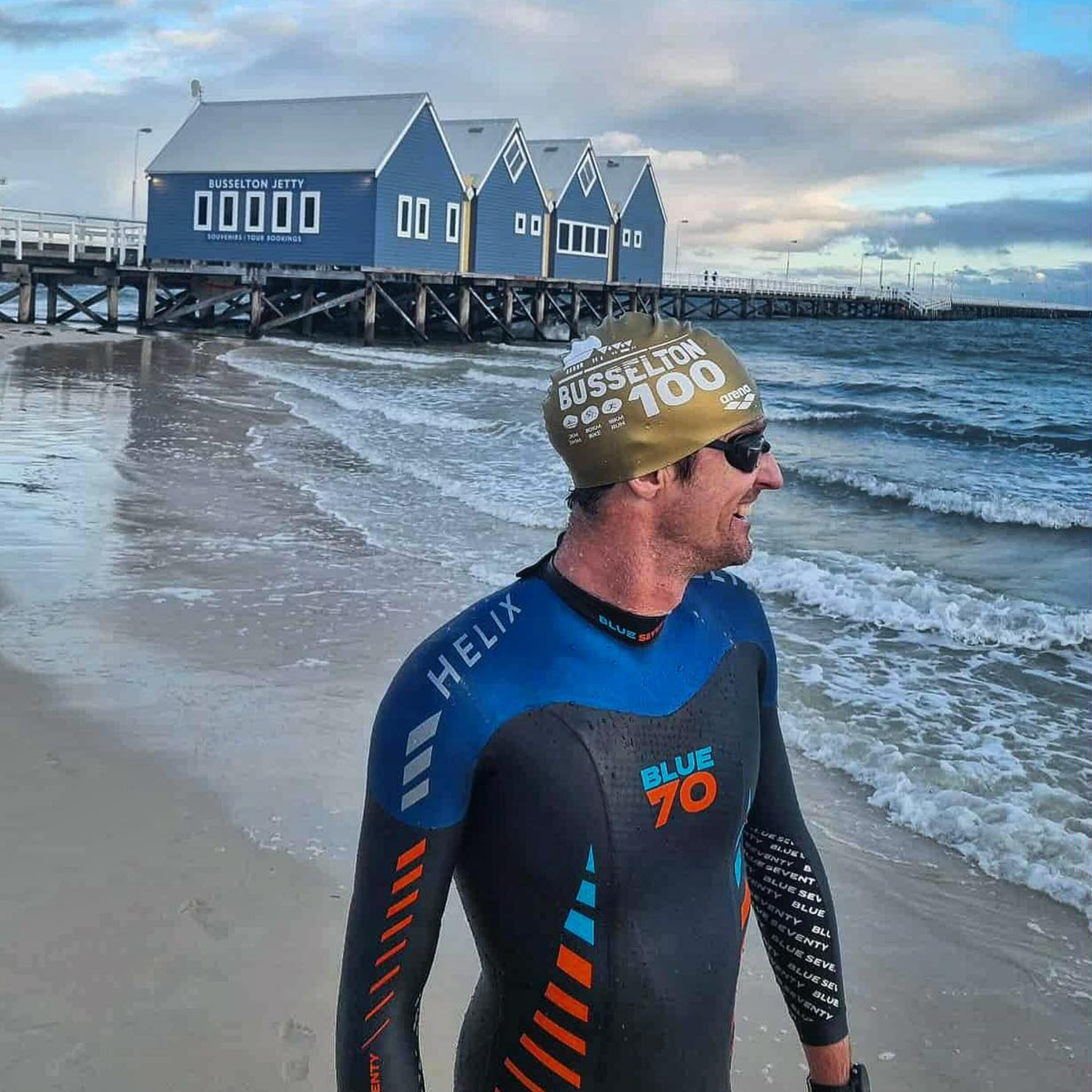
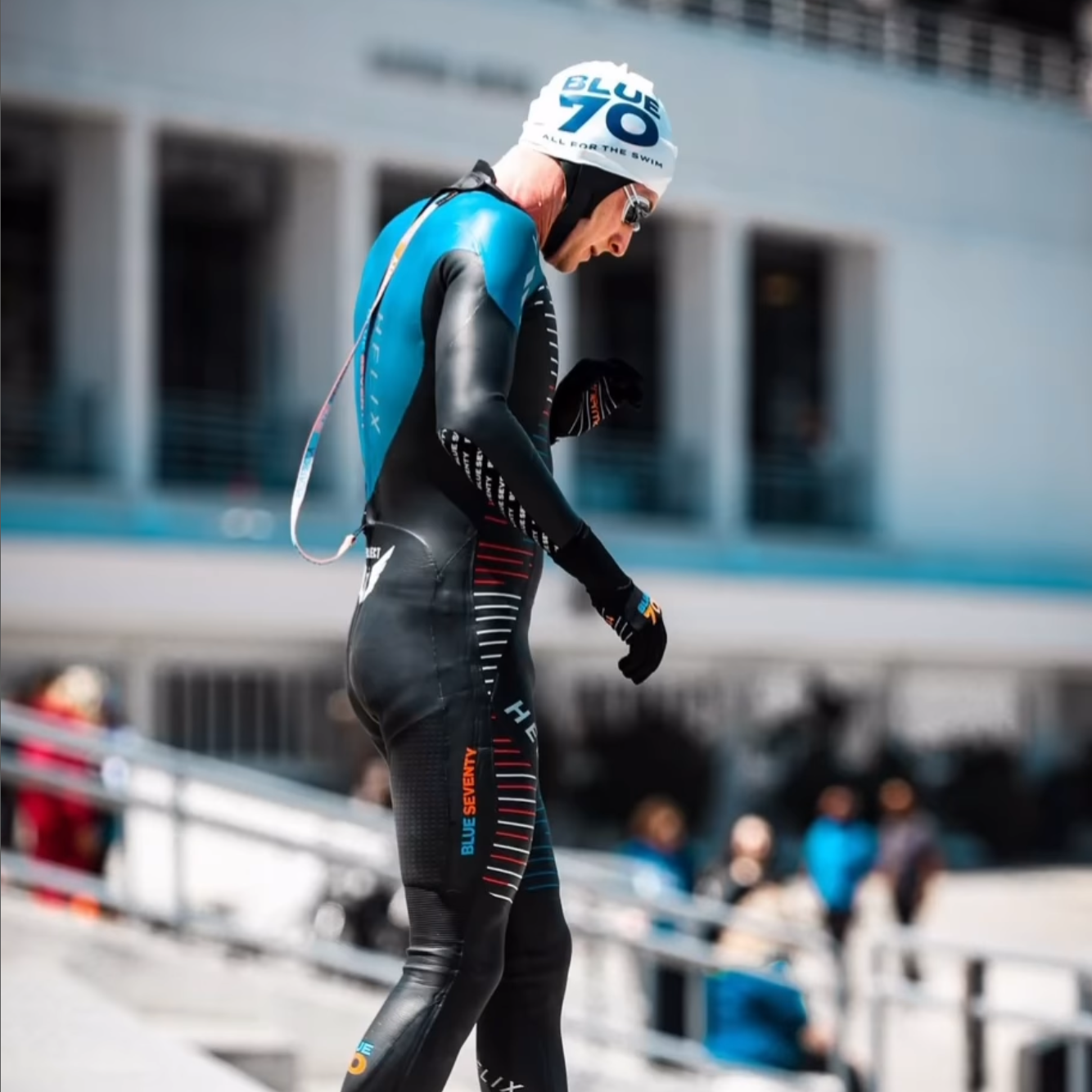
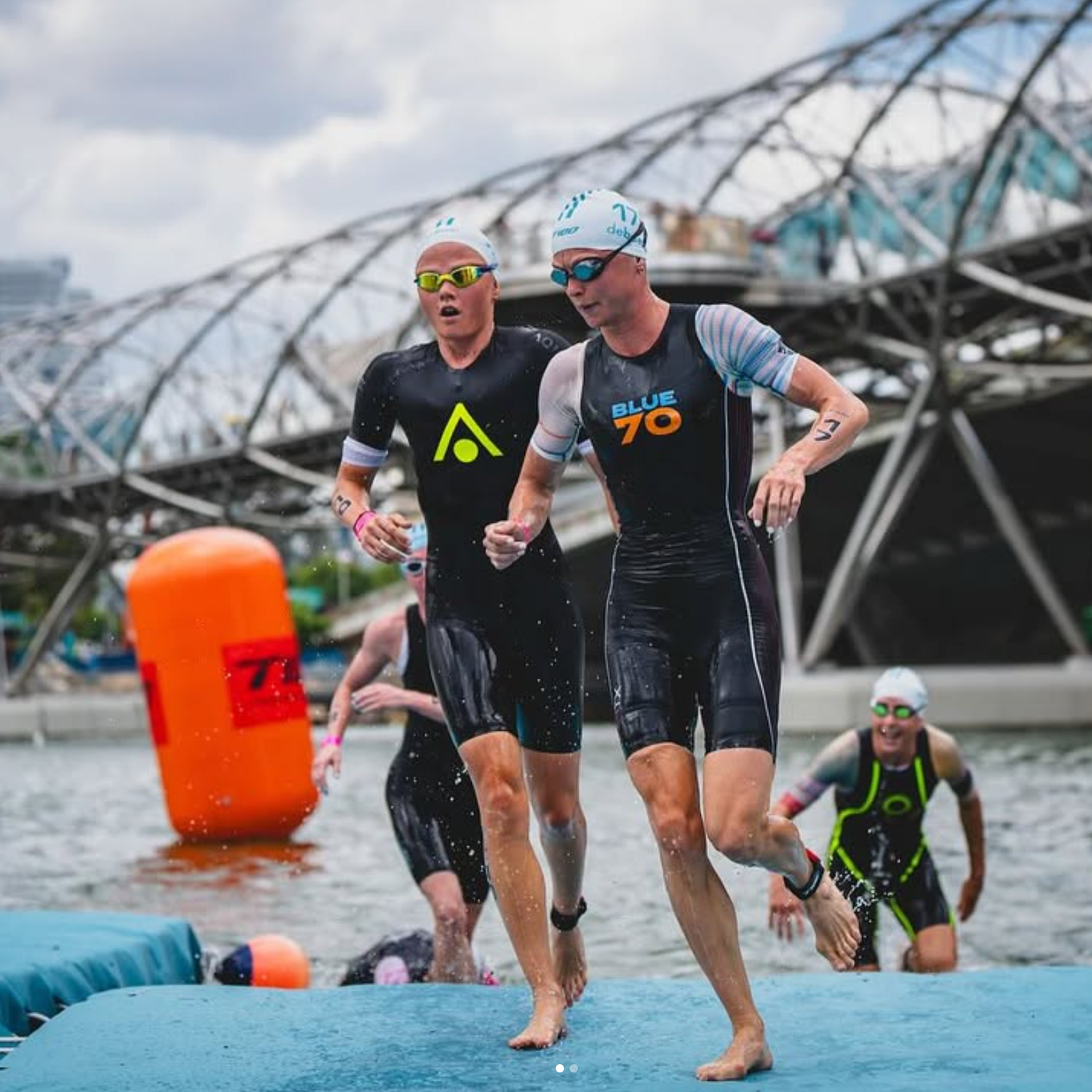
A wetsuit isn't waterproof. It lets a thin layer of water inside, and your body warms that layer for insulation. After a swim, that water stays in the lining and seams. The suit gets heavier. If you hang it from a single hook, all that weight pulls through the narrowest, most flexible panels. The shoulders and neck take the load. On a swim-specific suit like the Helix, those panels use thin, high-flex neoprene. Blue70 states the Helix is built for race-day performance and its delicate neoprene is not ideal for heavy training use. Hanging a soaked Helix from the shoulders is exactly the kind of stress you want to avoid.
Door Hooks and Shower Rods Work Against You
A door hook concentrates the full wet weight of a suit on a few centimeters of material. The zipper can stay under tension too. If the suit is draped over a rod, the neck opening stretches slightly every hour it hangs. Blue70's warranty covers manufacturing and material defects for one year, but it excludes zipper damage from force, heat damage, and general wear and tear. A suit that dries under constant tension can turn a small weak point into a failure that no warranty will cover.
How a Wall Mount Carries the Load
A wall-mounted wetsuit rack carries the suit across a wide, padded surface, allows air to move around both sides of the suit, and folds flat against the wall when you finish drying. The shoulders stop being the load-bearing point. Water drains through the legs instead of pooling at the cuffs.
Look for these features when you choose one:
- Wide padded support surface
- Smooth, rounded edges to avoid creasing
- Fold-flat design for small spaces
- Weight rating that handles a fully saturated suit
Mount the rack high enough that the legs of the suit don't bunch on the floor. If they do, water collects at the ankles and the suit never dries evenly.
Where to Put the Rack
Mount the rack into a wall stud or use an anchor rated for the weight of a wet suit. A saturated wetsuit weighs more than a dry one. Place it somewhere shaded and ventilated. An interior wall in a bathroom, laundry room, or garage works. Keep it away from direct sunlight and any heat source. Neoprene breaks down faster with repeated heat exposure. Blue70's warranty excludes heat damage. A rack near a radiator or a sunny window solves one problem and creates another.
A Post-Swim Routine That Matches the Rack
- Rinse the suit in cool or lukewarm fresh water after every swim. Salt, chlorine, and sand accelerate breakdown.
- Hang the suit from the torso or waist, zipper open. Water drains through the legs and air reaches both sides.
- Let the suit dry completely before you store it. Keep it out of direct heat and sun the whole time.
- Fix small nicks right away with a neoprene cement like Aquaseal from the Blue70 care range. Clean and dry the area first.
Small Spaces and Shared Rooms
Triathletes who train before work often need a suit dry by the next morning. A wall-mounted rack in a bathroom or laundry room gives the suit a dedicated spot without taking floor space. In a shared house, a suit draped over a chair gets sat on or knocked to the floor. A rack removes that risk.
Wetsuit design has changed faster than drying habits. In 1993, Blue70 began as Direct Innovations and developed one of the first triathlon wetsuits. Modern swim-specific suits use high-cell Yamamoto neoprene in 38, 39, and 40 cell grades. The arms and shoulders get the most flexible panels. The Helix includes a permeable catch panel and LIFT buoyancy panels. That thin material gives you feel for the water, but it tolerates a coat hook about as well as it tolerates a clothes hanger. Drying gear had to catch up to panel design.
Hang It Right and the Suit Lasts
A wall-mounted drying rack is a small investment after a $995 Helix or a $680 Reaction. It supports the suit the way the panels are designed to be supported. Rinse after every swim. Hang from the torso or waist, never the neck. Keep it out of heat and sun. Let it dry fully. That routine keeps the shoulders, zipper, and watertight seal working through the season.
For fit guides, size charts, and wetsuit care products, including Aquaseal neoprene cement, visit the Blue70 care and fit pages.