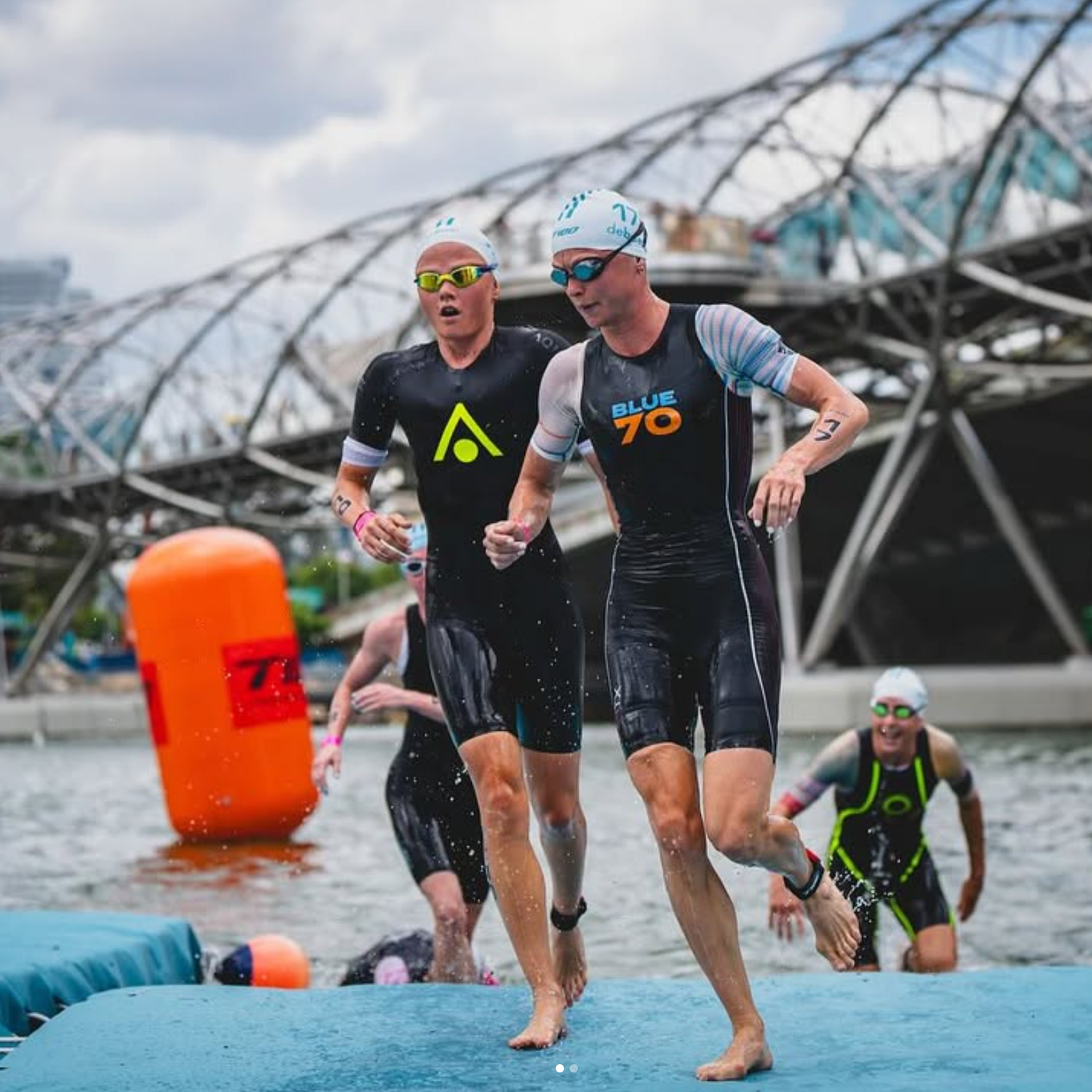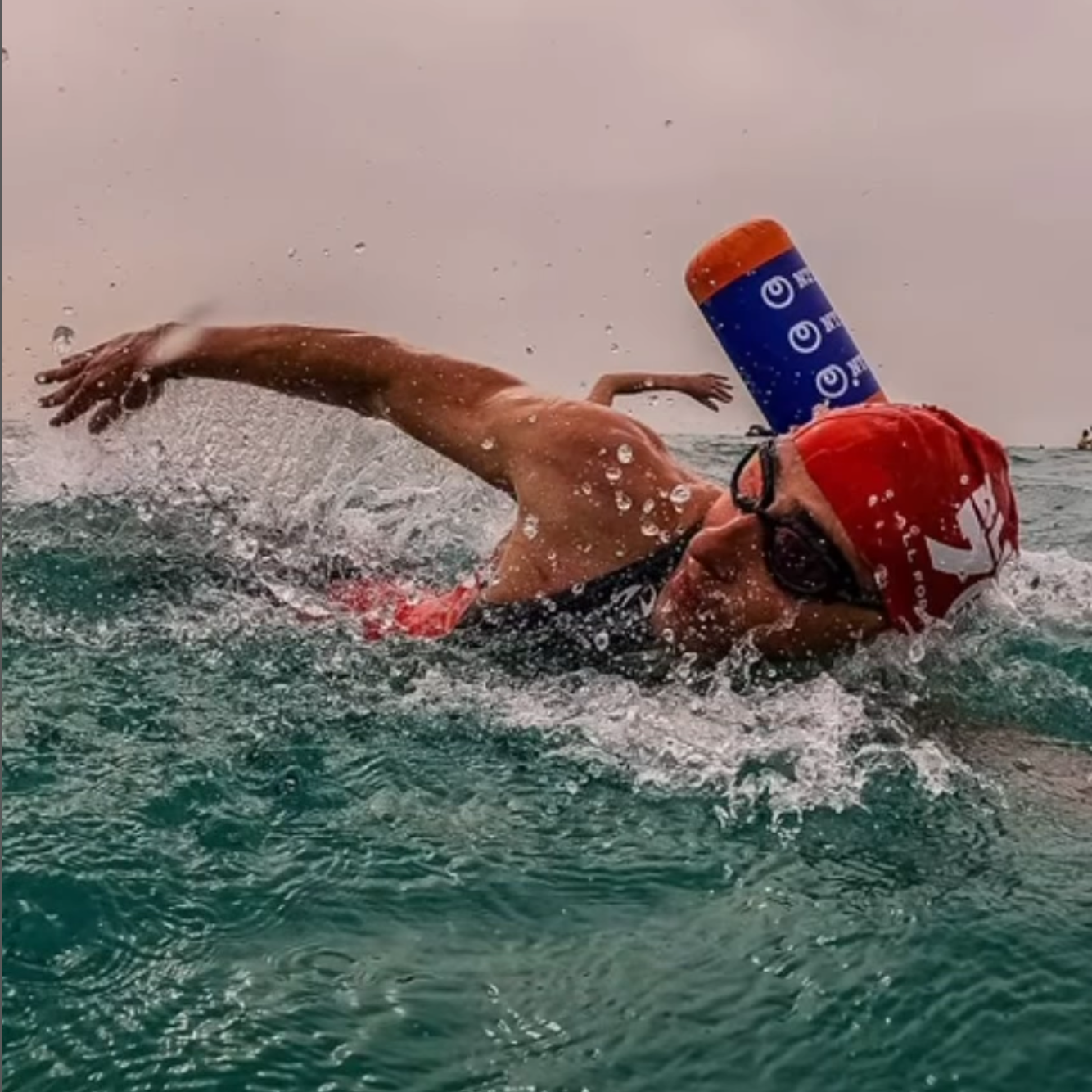



Every fitting chart on the market asks for your height and weight, sometimes your chest size. None of them ask where you actually carry your weight. That's a problem if your torso holds more volume through the belly and chest than through your hips, because the fit rules that work for an average build start breaking down fast.
Here's what happens: a swimmer with a fuller midsection sizes up to get comfortable at the waist. The shoulders and upper arms end up swimming in extra neoprene. That's exactly backwards. Your shoulders are where the wetsuit needs to hug closest, because that's where stroke mechanics and feel for the water actually happen.
The Physics You're Fighting
A wetsuit isn't waterproof. It lets in a thin layer of water that your body heats up, and that layer only works as insulation if it stays put against your skin. The moment a panel gaps, that layer flushes out and gets replaced by cold water on every stroke cycle. You lose warmth. You also pick up drag, because any pocket of trapped water or air behind the suit acts like a tiny sea anchor as you move through the water.
For swimmers carrying weight centrally, three spots tend to gap first:
- Lower back and waist - a suit sized for the chest and belly often billows here, where your frame narrows.
- Underarm and side panels - extra volume through the ribs pulls the front taut and leaves slack along the sides.
- Zipper line - a torso fuller through the middle than the hips can make the back panel bow instead of sitting flat.
Fix the fit in these three zones and you fix the drag problem at the same time. They're connected.
Stop Trusting the Size Chart Alone
Two swimmers can share the same height and weight and still differ by four to six inches in waist-to-hip measurement. A chart built on height and weight alone can't see that difference. It'll happily size both swimmers into the same suit, and one of them will end up loose everywhere that matters.
Blue70's approach starts at the shoulder, not the waist. A suit should feel snug enough on dry land that it's mildly restrictive. Once you're in the water, buoyancy and a bit of neoprene stretch bring that down to comfortable. Size for waist comfort standing in your bedroom, and you've already made the suit too big everywhere else.
What to Actually Check at Fitting
Start with the neck and shoulder seal. Non-negotiable. If it gaps, the suit floods immediately and you lose the thermal benefit you paid for. If your shoulders feel locked in and your waist feels tight standing still, that's usually correct. Don't panic and size up.
Look past the size label to the panel construction. Suits built with more stretch through the torso and firmer, less-stretch panels elsewhere can accommodate a fuller midsection without you needing to jump a whole size. Ask what neoprene grade sits where, not just what number is on the tag.
Then move. Reach both arms overhead and twist your torso the way you would mid-stroke. Watch the zipper line. If it pulls or gaps here, standing in a fitting room, it'll do the same thing worse once you're actually swimming and rotating with every stroke.
One more check most people skip: sit down. Abdominal volume compresses forward when you're seated, and that's often when waist bunching shows up that you'd never notice standing. Worth doing if you'll be sitting in a support boat or on a dock before a race start.
Why the Test Swim Policy Earns Its Keep Here
Fit problems tied to body shape rarely show up in a mirror. They show up mid-swim, when your torso is rotating, your ribs are expanding for a breath, and your arms are reaching overhead stroke after stroke. That's exactly the situation Blue70's Test Swim policy is built for. Swim in the suit. If the fit isn't right, you can still exchange it, as long as it comes back clean, dry, and with tags attached. For a build that doesn't map cleanly onto a standard chart, that takes most of the guesswork out of buying online.
A Word on Women's Fit
Carrying more weight through the midsection interacts differently with a suit built on Femme Fit sizing, which already accounts for a lower neckline, refined bust and torso panels, and a longer zipper for easier entry. Run through the same shoulder-first, seated checks above, but starting from a pattern designed around female proportions closes a lot of the gap a unisex cut would leave at the waist and lower back.
Resist the Urge to Just Size Up
When the waist feels tight, sizing up feels like the obvious fix. It usually isn't. Loose neoprene at the shoulder kills your feel for the water during the catch and pull, and extra slack anywhere means more water for the suit to manage and warm. If the waist is the only tight spot and everything else fits well on land, you probably have the right size. If tightness at the waist comes paired with restriction across the chest or upper back, the answer isn't a bigger version of the same suit. It's a different cut with more generous torso panels.
The Short Version
Fit your shoulders first. Check how the panels are built, not just the number on the tag. Test the fit in motion, not standing still in front of a mirror. Use the online sizing tool to get close, then confirm in the water with a Test Swim before you commit. A suit that moves with your torso and locks in at the shoulder will do more for your swim than one picked to make your waist comfortable on dry land.