


Most swimmers treat their wetsuit like a race-day accessory. They buy it, try it on in the living room, and stuff it into a transition bag until the gun goes off. Then they spend the first 400 meters fighting the neck seal or wondering why their shoulders feel tight. Speed in a wetsuit is built weeks earlier, in training sessions, fitting adjustments, and post-swim care. Nothing about a wetsuit works better when it is unfamiliar.
Speed in a wetsuit comes from a handful of unglamorous habits: fit, repeat exposure, a practiced exit, and basic care. You will not find a magic panel or a secret coating here. You will find the small decisions that make a Blue70 suit feel like part of your stroke.
Fit First: Why Dry-Land Snugness Matters
A wetsuit should feel tight on land. That sensation is not a sizing error. The neoprene needs to sit close to your skin so a thin layer of water can enter and warm against your body. A suit that is too loose lets water flush through the neck, wrists, and ankles. You lose warmth and spend mental energy adjusting the suit mid-stroke. A suit that is too tight across the chest or shoulders restricts breathing and rotation.
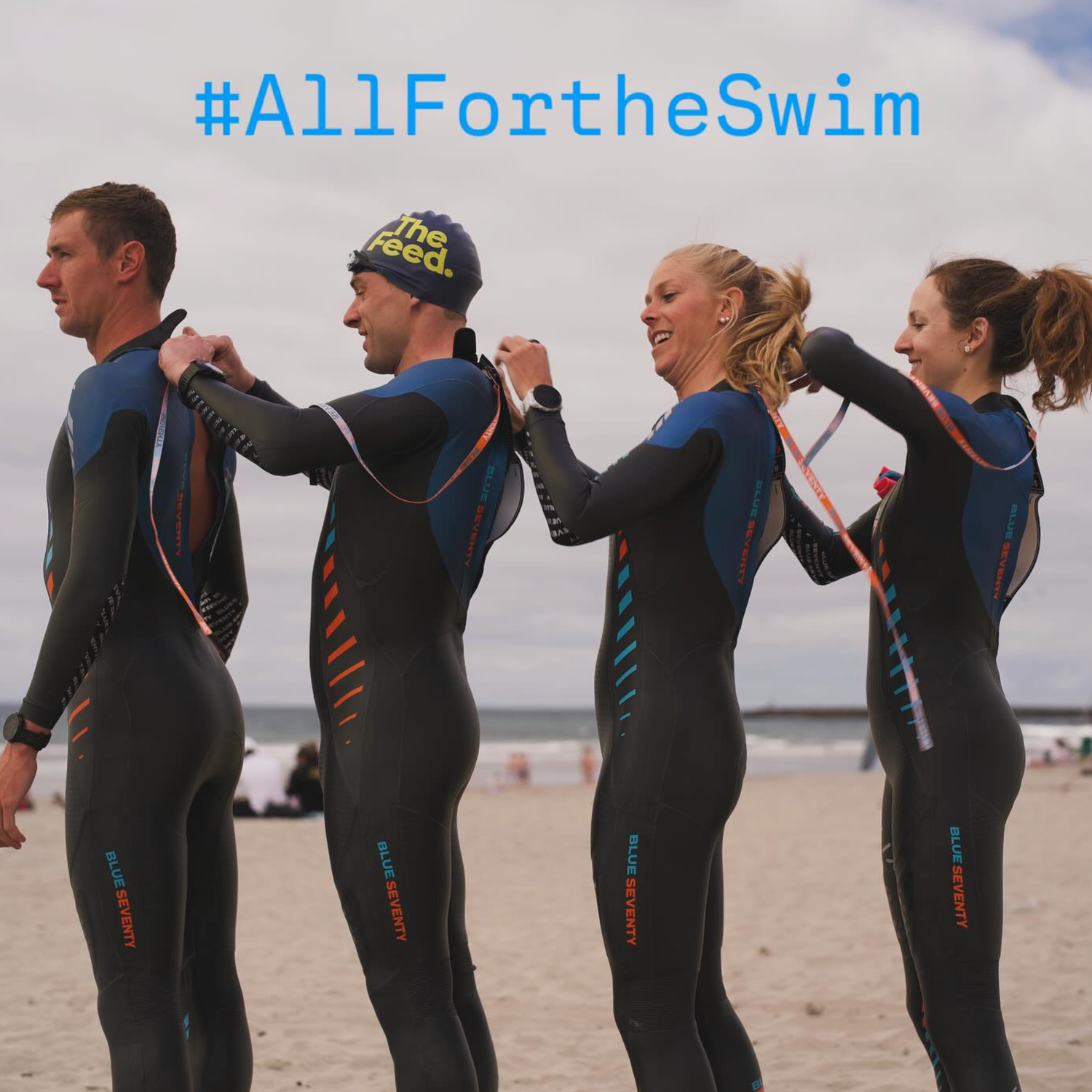
Learning to put the suit on correctly is the first speed habit. Gather the leg panels one at a time, use the pads of your fingers, and work the neoprene up your legs. Never use fingernails to pull. Smooth the torso before zipping. Spend extra time seating the shoulder panels because a twisted shoulder panel adds resistance to every stroke.
For women, fit means more than buying a smaller version of a men's suit. Blue70's Femme Fit changes the pattern in the bust, torso, wrists, and ankles. It lowers the neckline and extends the zipper for easier entry and faster transitions. Less excess material means less drag. The best way to confirm fit is to swim in the suit. Blue70's Test Swim policy lets you swim in a wetsuit and still return or exchange it within 30 days if it is clean, dry, unmodified, and has its tags.
Buoyancy Changes Body Position and Reduces Drag
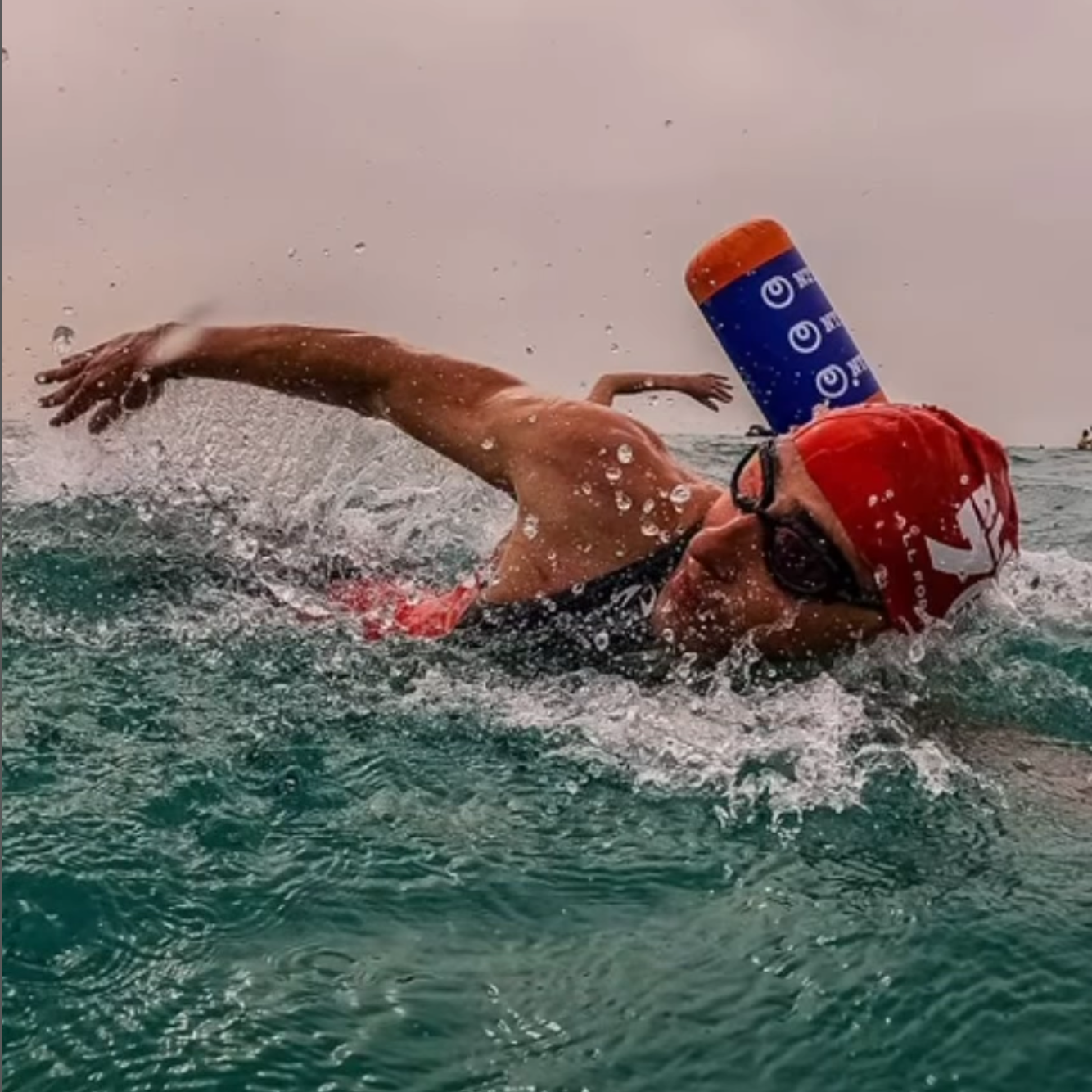
Buoyancy equals speed. In open water, a wetsuit lifts your hips and legs toward horizontal. That reduces the frontal area pushing against the water and lowers pressure drag. You spend less energy fighting a sinking lower half and more energy moving forward. Beginners often gain proportionally more from a wetsuit than advanced swimmers because they have more body position to recover.
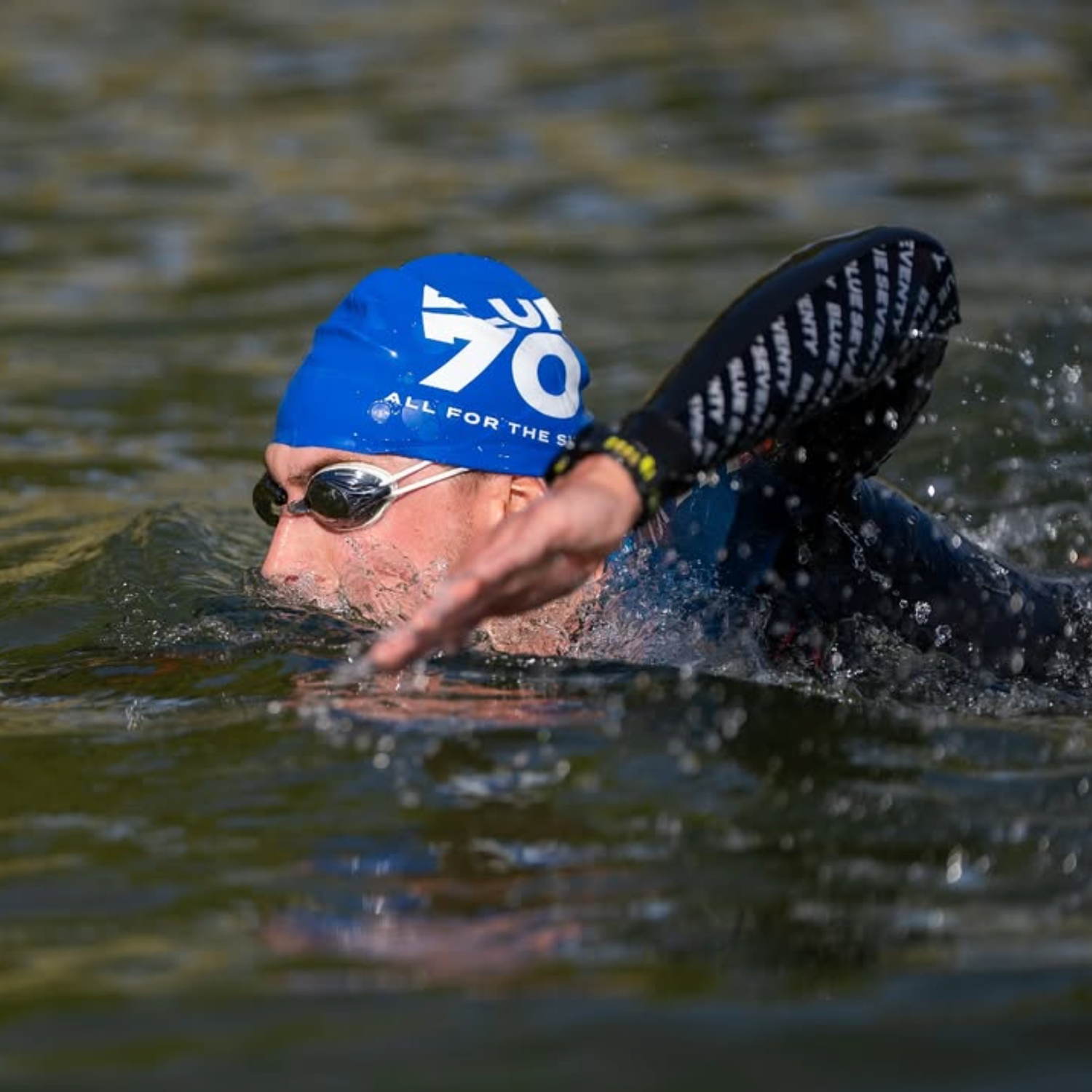
Shoulder flexibility is where stroke freedom lives. Blue70 suits use Yamamoto neoprene in 38, 39, and 40 cell. The higher the cell number, the more flexible the foam. A flexible shoulder panel lets you hold a long stroke with less fatigue. A stiff panel makes every catch cost more energy, especially late in a session.
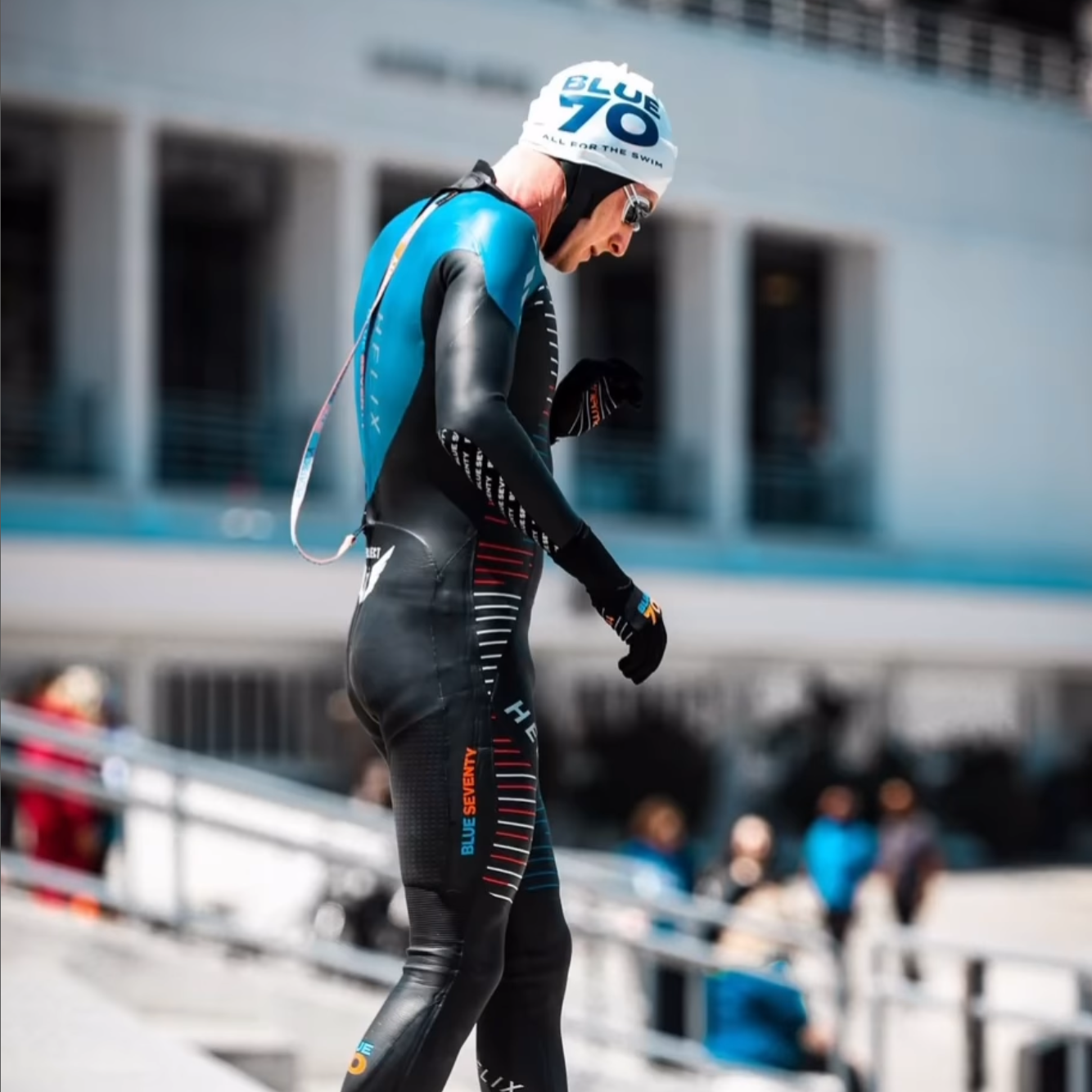
The Helix, Blue70's flagship race suit, uses thin, flexible neoprene in the arms and shoulders and a permeable catch panel that preserves feel for the water. LIFT panels, added in 2018, place targeted buoyancy where it supports body position. The trade-off is durability. That thin race neoprene breaks down more quickly with frequent training use. For weekly open-water training, the Reaction or Fusion is the smarter daily choice. Reaction handles longer and more frequent sessions. Fusion works well for shorter weekly swims. The Sprint is an entry-level suit with swim-specific patterning.
Train in the Suit You'll Race In
A wetsuit changes pacing, sighting, and stroke rhythm. You learn those changes only by swimming in the suit repeatedly. If you save a race suit for race morning, you are testing the fit and feel at the worst possible time. The suit you know will serve you better because you have already solved its fit and feel.
Match the model to your training load. If you swim in open water once a week or more, choose a durable suit. Reaction handles longer sessions and frequent use. Fusion works well for shorter weekly swims. If you are building from zero, the Sprint is an entry-level suit with swim-specific patterning. The Helix belongs on race day and in a few tune-up sessions, not a full season of daily training.
Cold-water swimmers face a related choice. Below roughly 56 to 58 degrees Fahrenheit, a purpose-built thermal suit adds meaningful warmth. The Thermal Reaction uses a Zirconium jersey lining for insulation in cold water. Warmth lets you hold form longer, but cold-water swimming still requires acclimatization, a swim buddy, and a visible tow float. A thermal suit provides added thermal protection; it does not replace safety practices.
The Exit Is Part of the Race
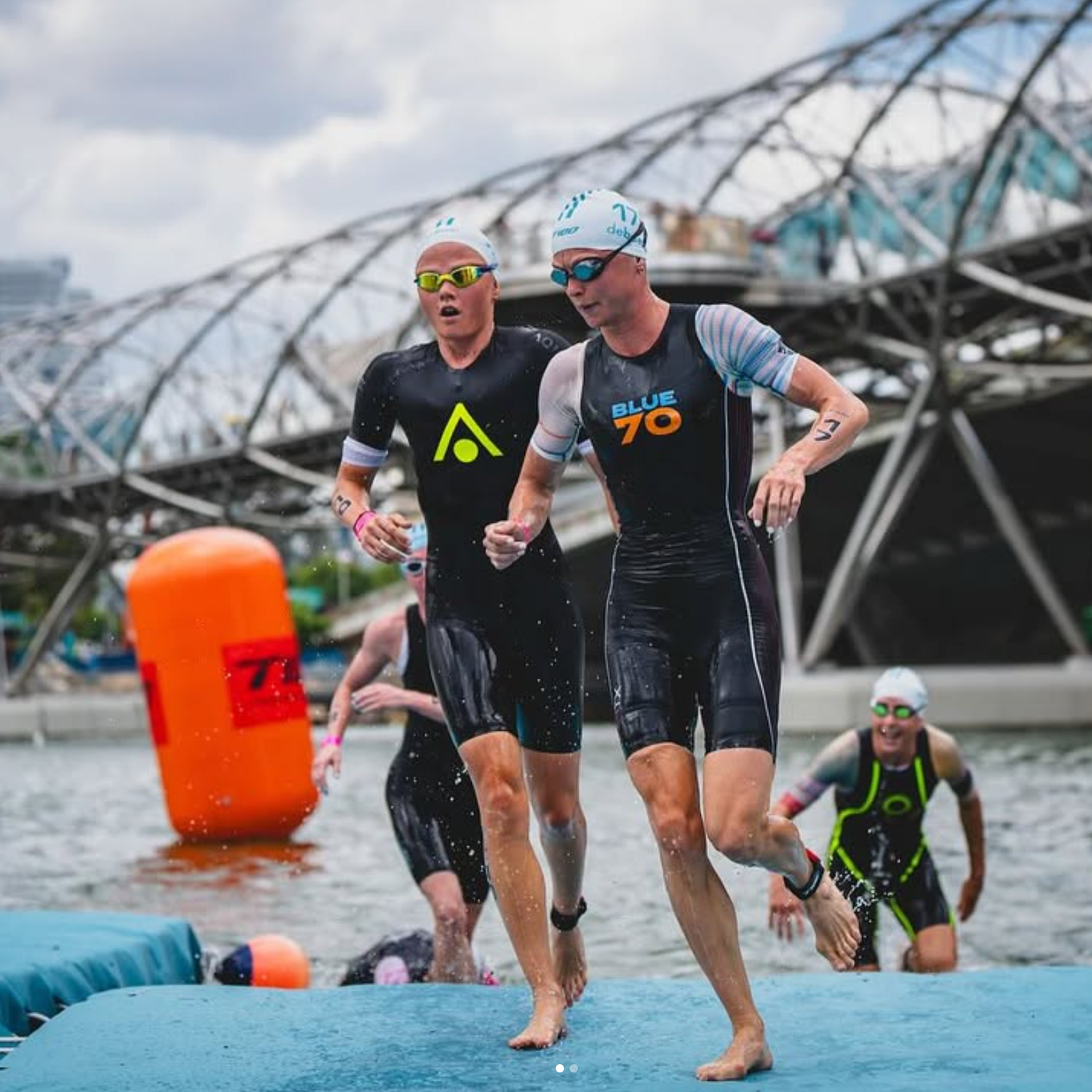
Triathlon speed includes the transition. A slow wetsuit exit can erase a strong swim split. The same close fit that reduces drag in the water can make removal slow if you have not practiced. Blue70 designs race suits like the Helix to come off smoothly, but removal skill is the swimmer's job.
Practice the exit on dry land first. Pull the zipper down early, get the arms out before you run, and roll the suit down from the shoulders rather than yanking from the neck. Use the extended zipper on Femme Fit suits to clear the hips. Then practice in the water after a short swim, when your hands are wet and the suit is heavy. A few rehearsals turn a slow, awkward removal into a smooth one and save real time in T1.
Care Habits Preserve Flexibility and Speed
Neoprene flexibility is not permanent. Chlorine, salt, heat, and improper storage make the cells stiffer and reduce the suit's ability to move with you. Rinse the suit with fresh water after every swim. Dry it inside-out, then turn it right-side out. Store it flat or folded loosely at the waist. Hanging a wet suit by the shoulders stretches the neoprene and can deform the fit.
Most damage comes from fingernail punctures during donning and heel tears when pulling the suit over the foot. Use the pads of your fingers. Roll the ankle opening or reach inside to pull the leg panel up. Small tears can be repaired with Aquaseal neoprene cement. Blue70's one-year warranty covers manufacturing and material defects for the original owner, but it does not cover fingernail punctures, heel tears, or heat and chlorine damage. Careful donning and a rinse after every swim are the most direct speed habits you can build.
A Practical Week-by-Week Plan
This is the sequence Blue70 recommends for first-time triathletes and open-water swimmers:
- Use the sizing tool before ordering, and check the size chart against your height and weight.
- Do a Test Swim in the suit before race week. Fit changes in the water.
- Practice donning and removal at home until you can do it without nail contact.
- If you train weekly, choose Reaction or Fusion for durability and keep the Helix for race day.
- Rinse and dry the suit after every session, and store it flat or folded loosely.
- Complete at least three open-water swims in the exact suit you will race in before race morning.
If you are between sizes or unsure which model matches your week, start with the Blue70 size chart or contact support. A test swim is the fastest way to turn fit uncertainty into confidence. Happy swimming.