


Type "neoprene booties" into a search bar and you'll land in surf shops. Thick soles. Stiff ankles. Rubber built to survive a barefoot walk across a reef. That gear does its job well for the sport it was made for. For swimmers, it solves almost nothing.
This gap matters more than most swimmers realize. Cold feet end open-water sessions early, and the discomfort rarely gets traced back to the actual cause: a piece of gear built for standing, not kicking.
The Physics of Why Feet Chill First
Feet and hands share a disadvantage built into their shape. Both have a lot of skin surface wrapped around comparatively little muscle and fat. That ratio leaves little insulation, and water pulls heat through it fast.
Your body makes the problem worse on purpose. In cold water, blood vessels in your hands and feet constrict, sending circulation toward your core and vital organs instead. Your extremities lose blood flow first and get it back last.
Mike Tipton's cold-water immersion research at the University of Portsmouth has tracked how fast this response fires, often within the first sixty seconds of entry, alongside the gasp reflex and rapid breathing that catch so many swimmers off guard. A full wetsuit does nothing to change any of this at the feet.
Below roughly 56 to 58°F, the range where a purpose-built thermal suit starts to earn its cost, numb feet are frequently the reason a swimmer climbs out of the water. Not core temperature. Feet.
A Different Sport, a Different Demand
Surfers paddle, pop up, and stand. Swimmers kick continuously, sometimes for hours, which means anything covering the foot has to move with the ankle instead of fighting it.
Why Surf Gear Fights Against a Kick
Thickness in a surf boot exists for a reason. It has to survive standing on rock and getting stepped on. That same thickness makes the ankle stiff and the sole rigid exactly where a swimmer needs freedom of motion. Try to point your toe wearing one and you'll feel the restriction immediately.
Buoyant foam creates a second problem. Extra float at the ankle disrupts the narrow kickline a swimmer works hard to maintain. None of this is bad design. It's a boot built for a different job entirely.
What Swimmers Actually Need
The swim-specific version looks almost nothing like its surf counterpart: thin neoprene, cut low around the ankle, minimal sole material, enough stretch to disappear once you start moving.
The fit logic mirrors what governs a good wetsuit overall. It should feel snug enough on dry land that it's almost too tight, then settle into place the moment you're in the water. Loose at the ankle, and cold water floods in and out with every kick cycle. Whatever thermal benefit you were counting on disappears with it.
A few situations where this kind of gear earns a spot in your bag:
- Cold entry and staging. Standing barefoot on a dock in 50°F air slows you down before you've even started swimming. A thin pair worn until the last minute keeps your feet functional for gripping ladders, rocks, or sand.
- Long cold-water swims. Distance swimmers spending 45 minutes to several hours in cold water often add neoprene foot coverage specifically because numb feet, not a dropping core temperature, force them to stop.
And where it usually doesn't belong: sprint sets, kick-focused sessions, or any swim where feel for the water matters more than warmth. Even thin neoprene changes water flow around the foot, and a competitive swimmer will notice it within a few strokes.
One note if you're racing: check your event's current rules before adding neoprene foot coverage on race day. Rules on supplemental gear vary by sanctioning body and shift from season to season. Confirm against your race's official documentation rather than assuming last year's rule still holds.
Getting the Fit Right
The same fit doctrine that governs a full wetsuit scales down to your feet. Bunched material at the toes wastes energy on every kick. Too tight at the ankle restricts circulation, which defeats the entire point of wearing the thing.
If you're layering thin neoprene under a full wetsuit's leg opening, check the overlap. A hard seam at that junction is exactly the kind of pressure point that turns into chafing by hour two.
Neoprene Takes a Beating at the Ankle
Foot-level neoprene absorbs more abrasion than almost any other part of your kit: sand, rocks, ladder rungs, your own fingernails pulling it on and off. The same care rules that protect a full wetsuit apply here.
- Rinse in fresh water after every swim.
- Dry away from direct heat and sun.
- Turn the material right-side out before it fully dries so it doesn't set in a folded position.
Fingernail punctures and heel tears remain the two most common ways any piece of neoprene gets damaged early. Both are avoidable if you take your time putting gear on instead of yanking it into place.
When to Leave It at Home
Warm water flips the equation. Above roughly 70 to 72°F, added neoprene works against you, feet included. If your swim doesn't call for a thermal wetsuit, foot coverage is more likely to trap heat uncomfortably and disrupt your kick than to help you.
Gear built to survive a rocky reef entry has almost nothing in common with what a distance swimmer needs to finish a cold lake crossing with working feet. Build your cold-water kit around swim-specific gear: thin, low-cut, and built to move with the ankle instead of against it.
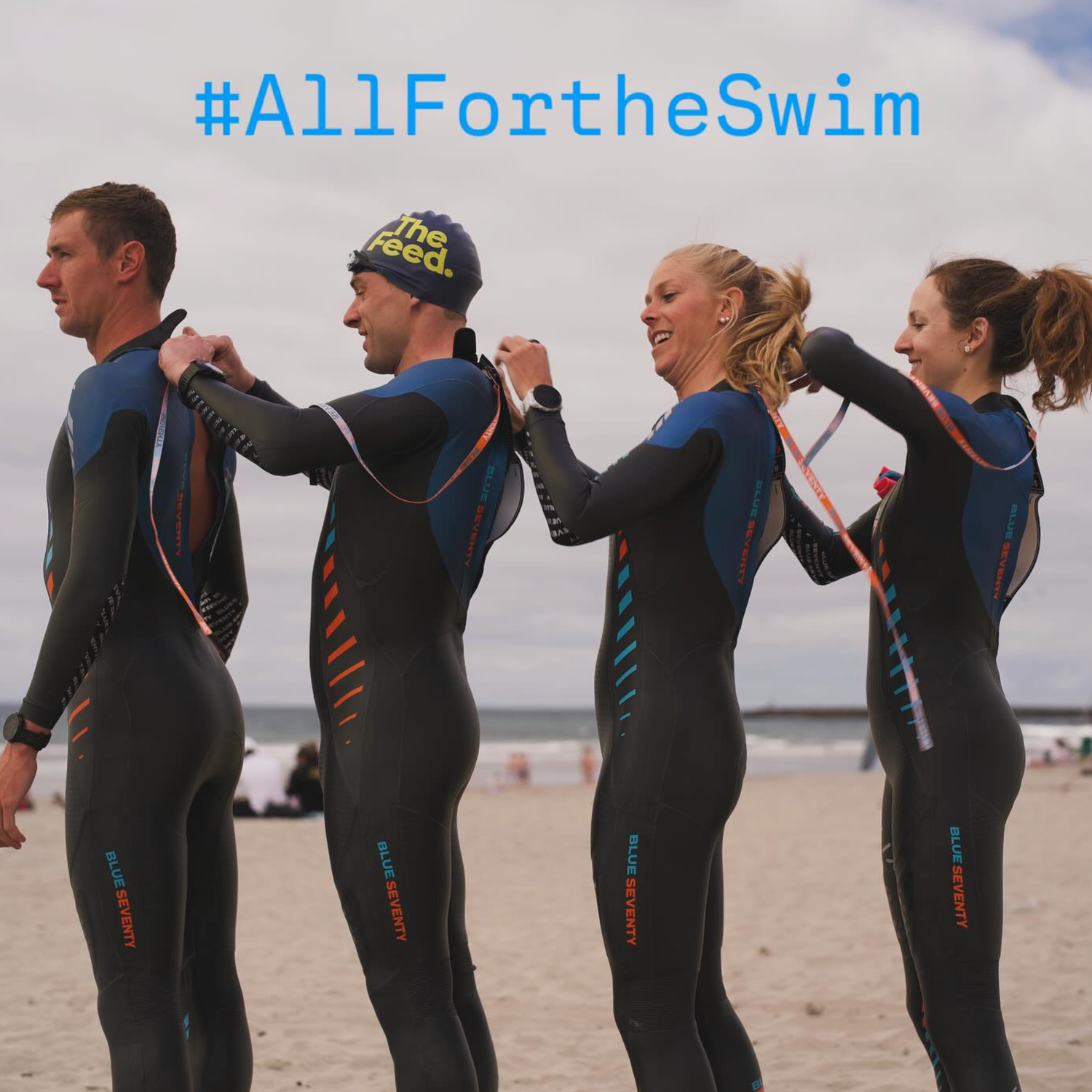
For swimmers building out a full cold-water setup, Blue70's Thermal Reaction line and thermal accessories follow this same fit philosophy: real warmth without giving up the freedom of movement a swim demands. Reach out to Blue70's support team for guidance on layering thermal gear to match your specific water temperature and event.