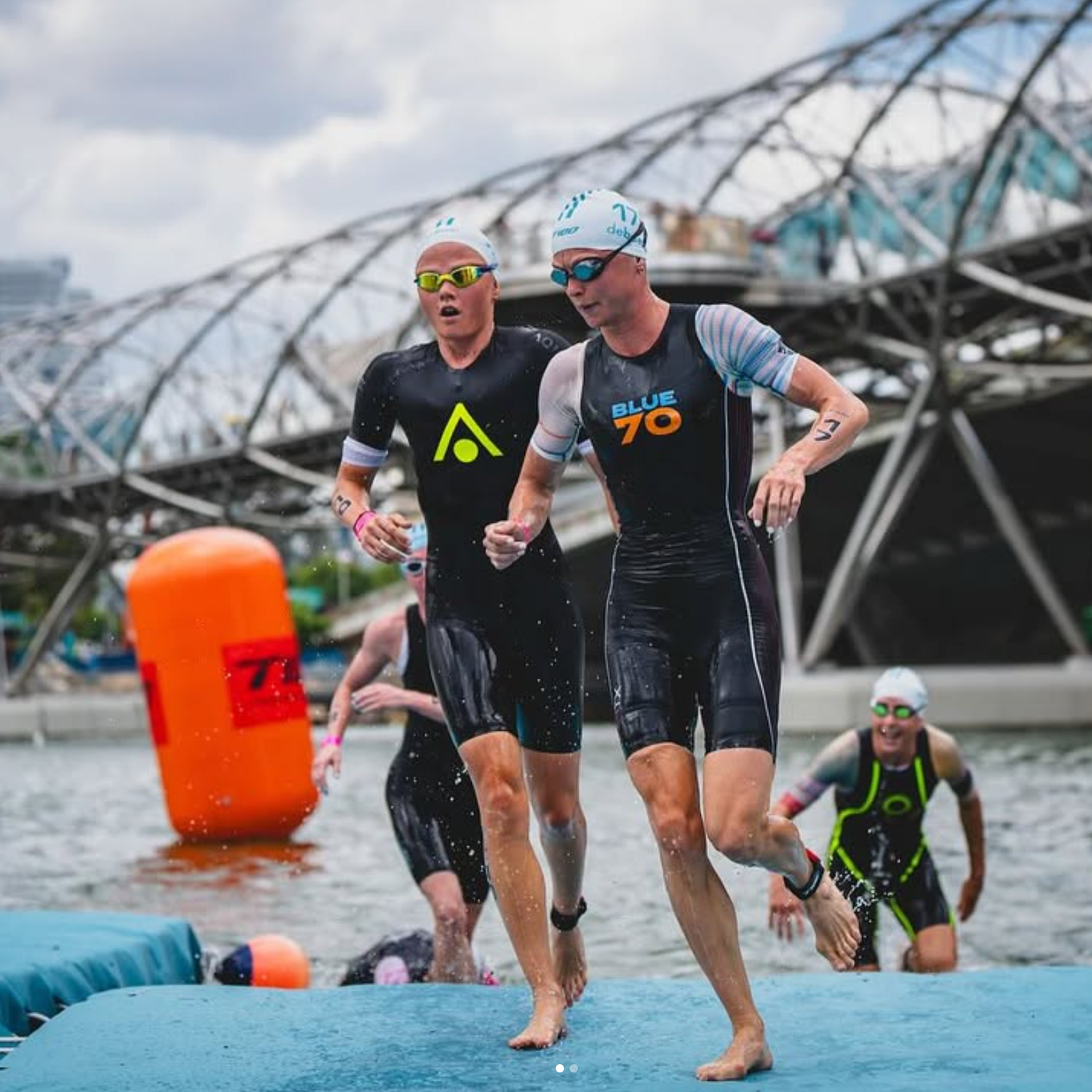



We hear some version of this story every single open water season. A first-time triathlete borrows a wetsuit from a friend who scuba dives, or grabs whatever's hanging in a rental shop by the lake. They zip up, wade in, and by the first hundred meters, something feels off. The shoulders seize up. The neck rides high and chokes on every breath. By the first buoy turn, they've quietly decided open water swimming just isn't for them.
Here's the thing: it's almost never the swimmer. It's the suit.
This is one of those corners of wetsuit knowledge that doesn't get talked about enough. Most buying guides compare swim wetsuits against each other - thickness here, buoyancy there - without ever explaining what a swim-specific suit was actually built to fix, or why a dive wetsuit, despite looking similar on a hanger, is solving a completely different problem. Once you understand that distinction, it changes how you shop, how you train, and honestly, how much you enjoy being in the water.
Same Material, Opposite Goals
Neoprene - closed-cell foam rubber with nitrogen gas trapped inside - is the base material for both scuba and swim wetsuits. That's where the similarity stops.
A dive wetsuit's job is to keep a mostly stationary or slow-moving diver insulated at depth, sometimes for 45 to 60 minutes at a time, while resisting compression as water pressure builds. To pull that off, dive suits lean on thicker, denser neoprene with minimal stretch. Insulation and durability under pressure come first - shoulder mobility doesn't, because a diver isn't rotating their arms through a full stroke cycle a thousand times an hour.
A swim wetsuit is built to do almost the opposite. It needs to help a moving body hold an efficient, hydrodynamic line at the surface, allow full shoulder rotation stroke after stroke, and place buoyancy exactly where swimmers need it most - at the hips and legs, not spread evenly across the whole body.
Blue70 wetsuits use Yamamoto neoprene in 38, 39, and 40-cell grades, with the higher cell numbers concentrated in the highest-mobility zones: shoulders and underarms. A higher cell count means more nitrogen gas per cell and a lighter, more flexible foam. That's simply not a priority in dive suit construction, where flexibility gets traded away for compression resistance and abrasion durability against rocks, boat hulls, and gear.
The Shoulder Problem, By the Numbers
This is where the difference stops being a technical footnote and starts costing you real energy.
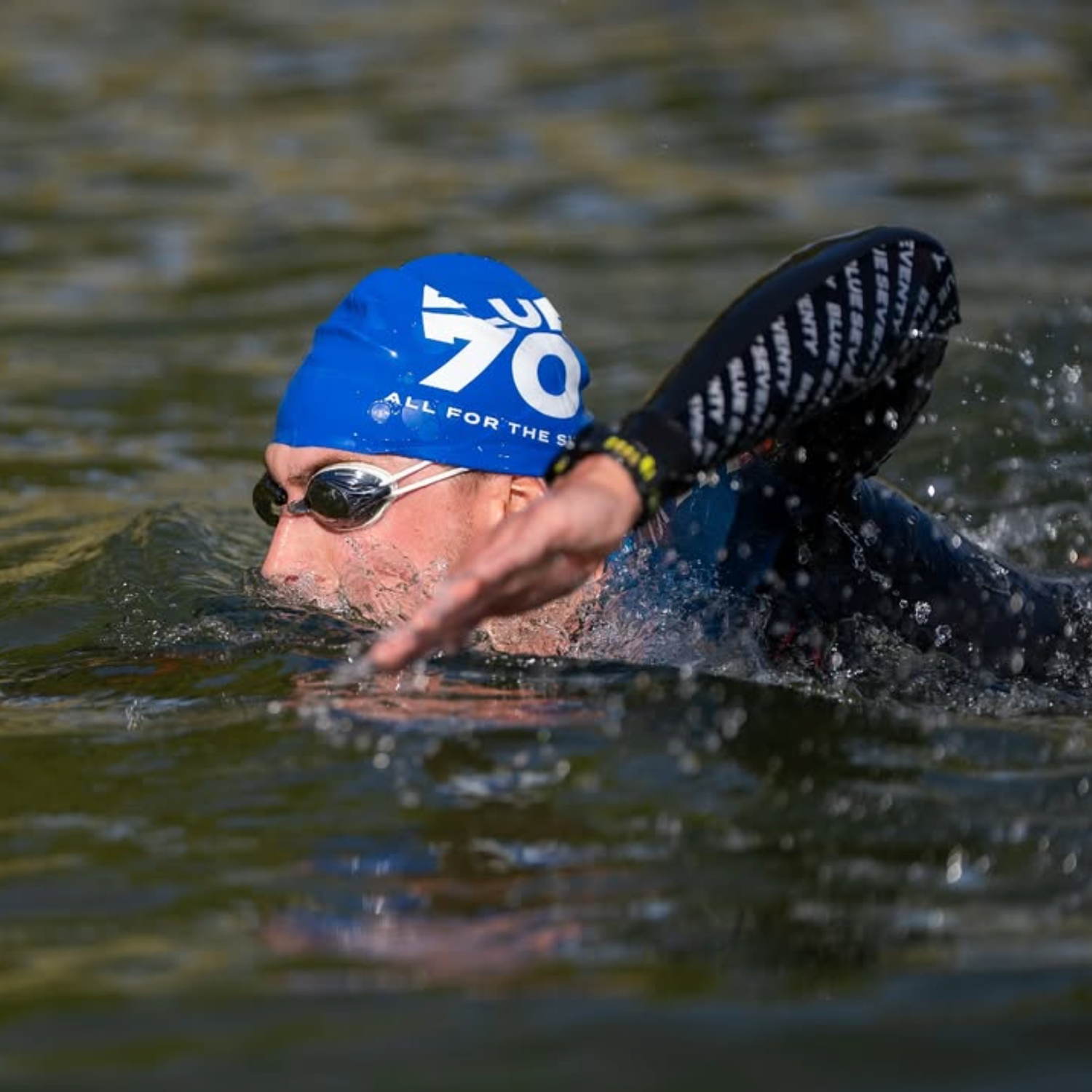
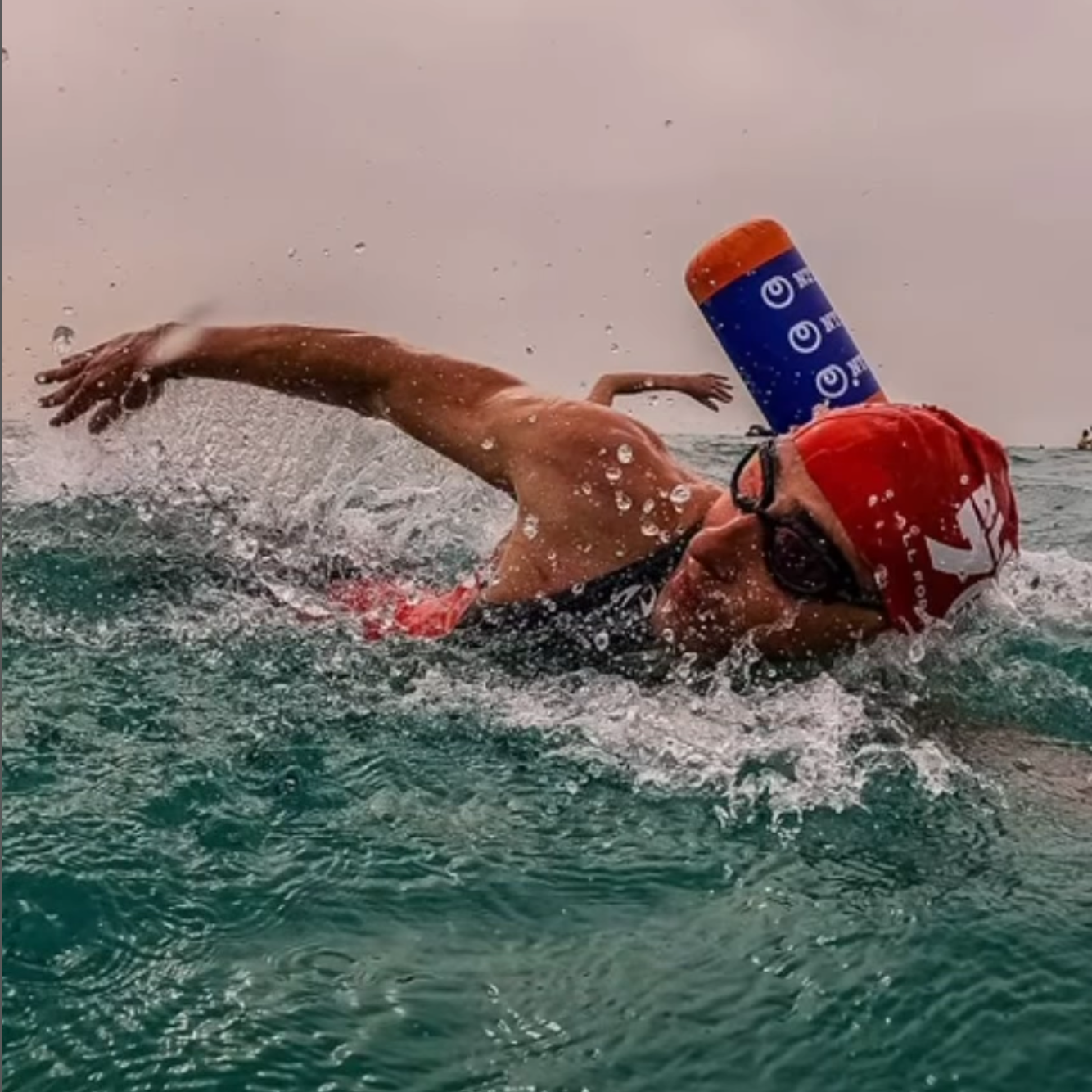
Freestyle asks the shoulder to move through nearly its full range of motion on every single stroke - recovery, entry, catch, pull, exit - for the entire length of a swim. A triathlete swimming a 40-minute Olympic-distance leg at roughly 60 to 70 strokes per minute is asking each shoulder to complete that full arc well over a thousand times before they ever hit T1.
Dive neoprene wasn't built to flex that much, that often. It's designed for a diver doing fine motor work - adjusting gear, finning, signaling - not full-extension rotational strokes repeated without a break. Swimmers who've trained in dive-style neoprene almost always describe the same thing: shoulder fatigue that shows up early and feels less like normal training fatigue and more like fighting the suit itself. That's not a fitness gap. That's neoprene doing exactly what it was engineered to do - resist stretch - in a context where it's being asked to do the exact opposite.
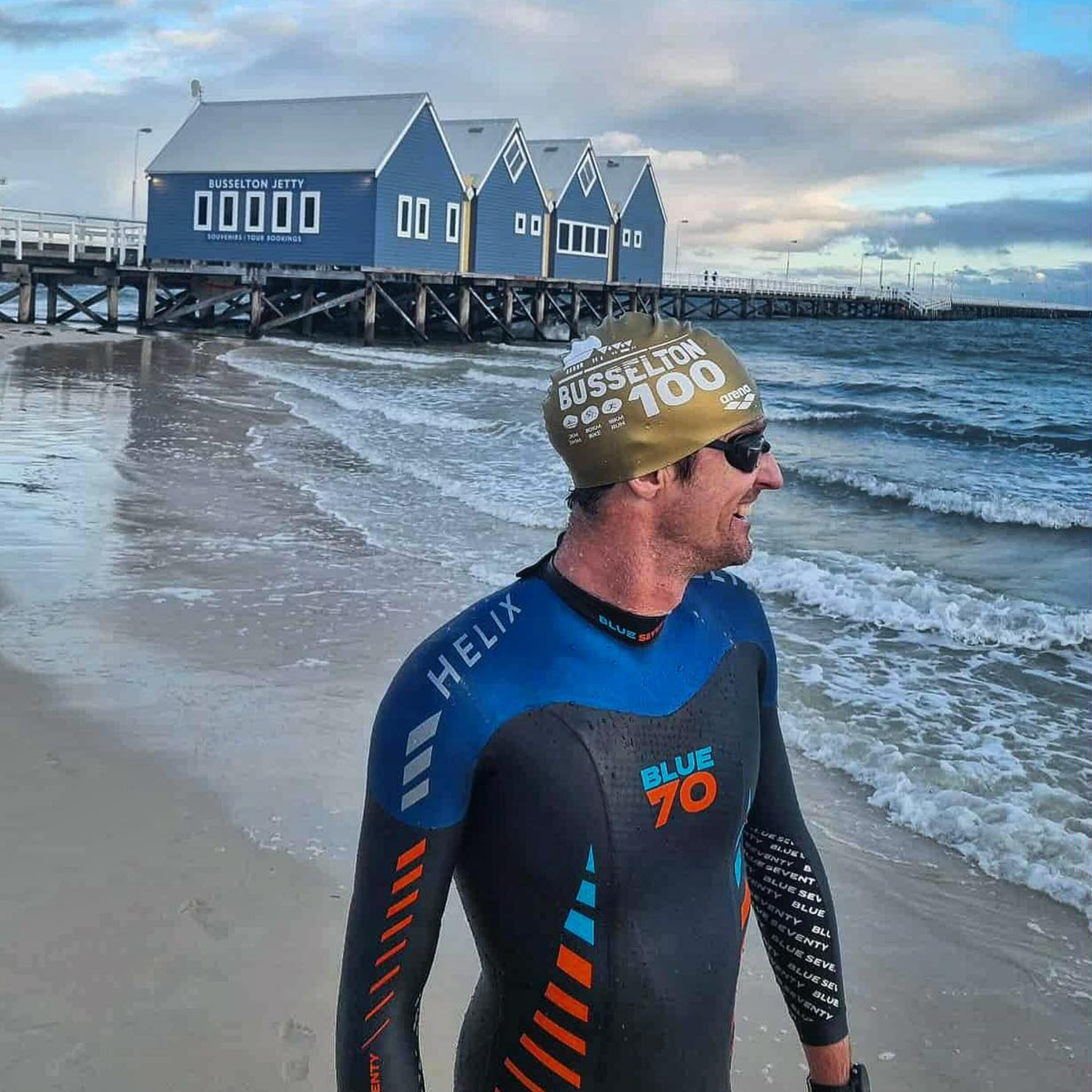
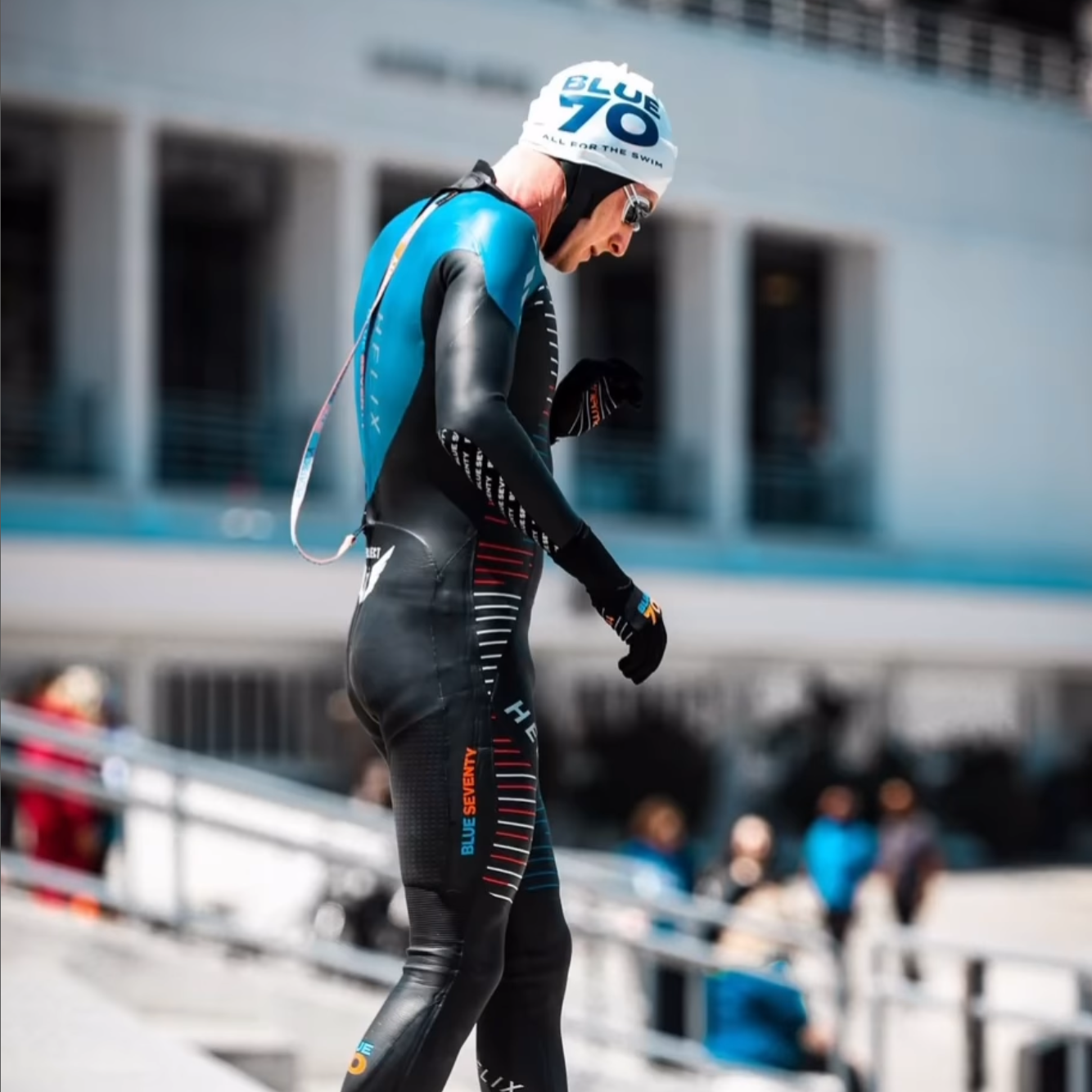
This is the whole logic behind building a race suit like the Helix with extremely thin, high-cell neoprene through the arms and shoulders. There's an honest tradeoff worth naming here: that thinner panel neoprene is more delicate and will wear out faster under frequent, high-volume training than a thicker suit would. That's not a flaw - it's a deliberate choice that prioritizes stroke mechanics on race day. Swimmers training multiple times a week are usually better served by something like Reaction or Fusion, which use tougher neoprene built for repeated wear, while still keeping shoulder mobility miles ahead of anything made for diving.
Buoyancy Placement: Solving the Right Problem
Dive wetsuits distribute buoyancy pretty evenly, because a diver's goal is neutral buoyancy managed through a BCD - not body position at the surface. The wetsuit itself isn't trying to fix a postural issue. It doesn't need to.
Swimmers deal with a very specific, well-known postural challenge: without a wetsuit, most people's hips and legs sit lower in the water than their torso, simply because legs and hips carry less natural buoyancy than a torso full of air. That tilt creates drag - a body swimming at a downward angle pushes more surface area through the water with every stroke.
Swim-specific wetsuits are built to correct exactly this, using buoyancy panels to lift the hips and legs toward the same plane as the torso. Blue70's LIFT panels, part of the Helix since 2018, are built around one simple idea: buoyancy equals speed, but only when it's placed where the body actually needs it. A dive suit was never built to solve this problem, because a diver isn't trying to hold a hydrodynamic line at the surface. They're managing buoyancy an entirely different way.
The Small Details That Aren't Actually Small
Two other differences deserve more credit than they usually get.
- Neckline height and flexibility. Dive suits often use a higher, snugger neck seal to limit water flushing at depth, where a diver isn't turning their head to breathe every few strokes. For a swimmer, a rigid or high neckline turns every breath into a small wrestling match against the collar - and the chafing that results over an hour-long swim is instantly familiar to anyone who's dealt with it. Blue70's 2021 Fusion redesign specifically lowered the neckline to cut down on that friction without giving up the watertight seal.
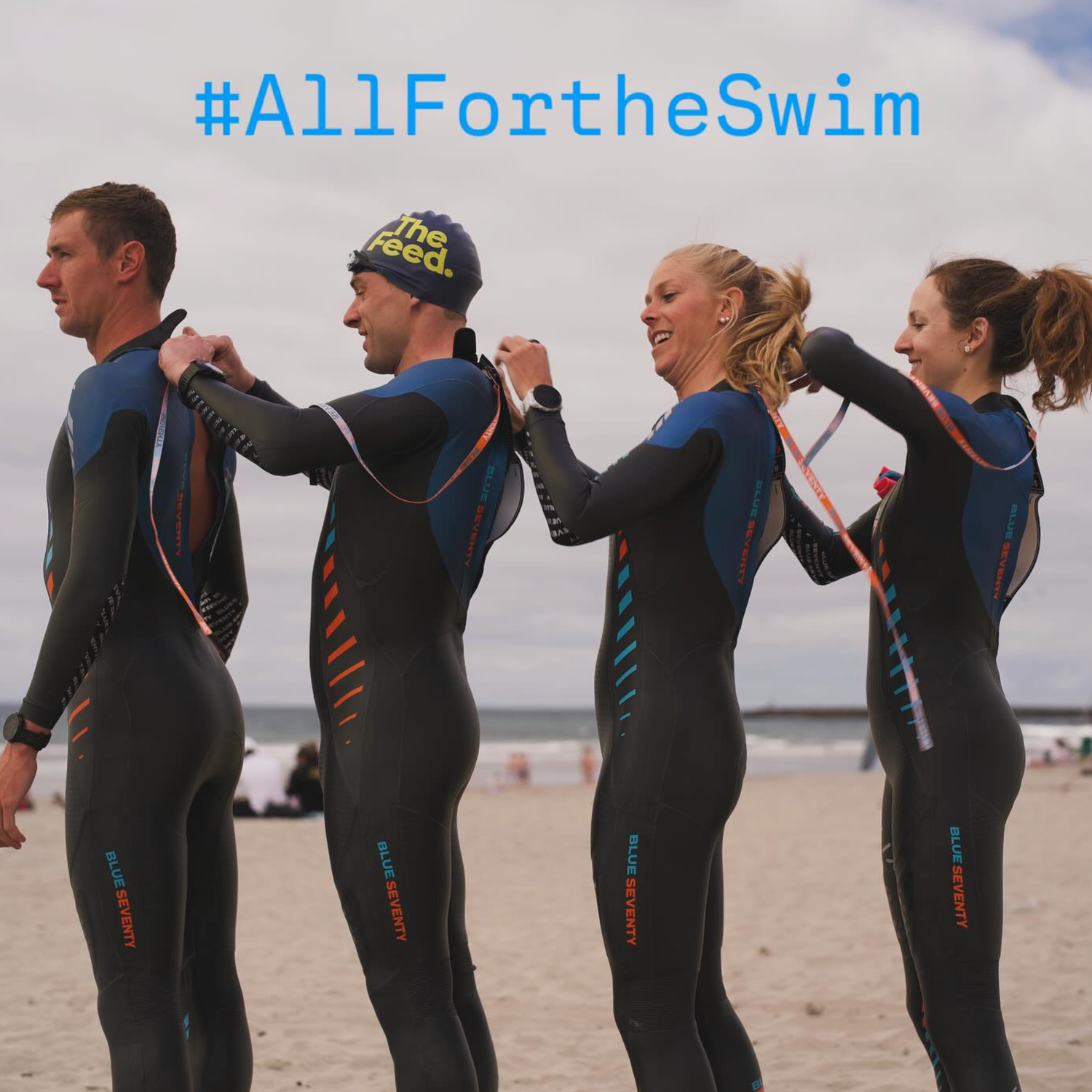
- Zipper length and entry speed. Dive suits are typically put on once, dockside or beachside, with zero urgency around how fast that happens. Triathlon wetsuits are built with transition speed in mind, because every second in T1 counts toward a finish time. That's part of why extended zipper length and lower-sitting design details - also central to Blue70's Femme Fit pattern engineering - exist in the first place.
These are small construction choices with very real competitive consequences, and neither is a priority in a suit built for diving.
What This Means When You're Shopping
If you've ever swum in a dive wetsuit and felt like the water was working against you, that instinct was right. It isn't a technique problem or a fitness gap - it's a materials mismatch. A suit built to solve someone else's problem, handed to you instead.
The practical takeaway is simple: match the suit to the sport. If you're training for open water swims or triathlon, look for a wetsuit built explicitly around swim mechanics:
- Thin, high-cell neoprene through the shoulders for stroke freedom
- Buoyancy panels concentrated at the hips and legs, not spread evenly
- A low, flexible neckline built for repeated head rotation
- A zipper system designed for speed, not just security
Fit matters just as much as construction. A swim-specific wetsuit should feel snug, even a little restrictive, on dry land - and noticeably more comfortable once you're actually moving through the water and the neoprene is doing its job. If you're not sure what that should feel like, Blue70's Test Swim policy lets you swim in a wetsuit before fully committing, with the option to return or exchange it afterward if it's not quite right.
A Quick Note on Staying Warm
One more thing worth being precise about: both dive and swim wetsuits provide thermal benefit by trapping a thin layer of water against your skin that your body then warms - not by keeping you dry, and not by acting as a certified flotation or safety device. The buoyancy neoprene provides is a swimming aid, nothing more. For swimmers pushing their season into colder water, a purpose-built cold-water suit like Blue70's Thermal Reaction - fully lined with Zirconium jersey - is designed to add meaningful thermal protection in water below roughly 56 to 58°F. Even then, acclimatization, swim duration, and your own cold tolerance matter just as much as anything on a spec sheet, so always ease into colder water rather than diving straight in.
The Bottom Line
Neoprene is neoprene until you ask it to do a job it wasn't built for. Dive wetsuits are excellent at what they're engineered to do: insulate a mostly stationary diver at depth with minimal flushing and enough durability to shrug off contact with reefs, boats, and gear. Swim wetsuits are engineered around a completely different set of demands - full shoulder rotation, hip and leg buoyancy correction, low-friction neck seals, and fast transitions.
If open water swimming or triathlon is the goal, the suit needs to be built around the stroke, not the dive. That's the design philosophy running through Blue70's entire swim-specific line, from the Sprint through the Helix - every material choice traces back to what actually happens to a body in motion at the surface of open water.
Happy swimming.