


Most cold-water advice starts and ends with thickness. Buy a thicker suit, the thinking goes, and you'll stay warmer. That's true as far as it goes. But it skips a better question: where on your body does heat escape fastest, and does your wetsuit address those spots, or just pile on bulk everywhere?
The answer changes how you should think about thermal protection. It's also why Blue70's Thermal Reaction wetsuit is built around targeted insulation rather than a thicker version of a standard suit.
Heat Loss Isn't Evenly Distributed
Water pulls heat away from the body far faster than air at the same temperature. That's the baseline reason any water below body temperature drains warmth continuously once you're in it. But the rate isn't the same everywhere on your skin.
The head, neck, and areas where major blood vessels sit close to the surface, like the sides of the neck, armpits, and groin, lose heat fastest. At the same time, your shoulders and upper back are generating heat through muscular work the whole time you swim. Those two facts pull in opposite directions. A wetsuit needs to protect the zones losing heat quickly while staying loose enough at the shoulders for you to actually swim in it.
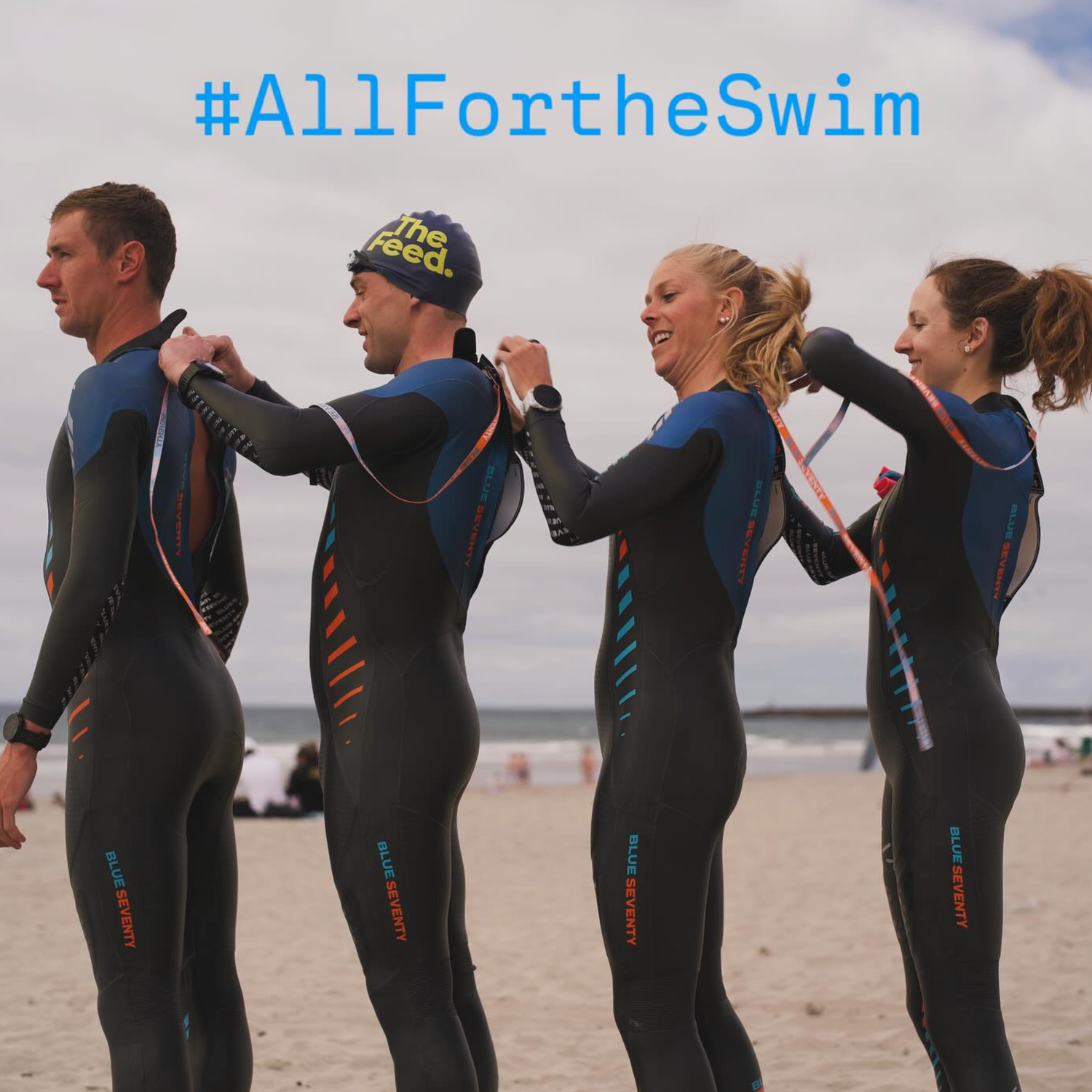
A purpose-built thermal wetsuit isn't just neoprene stacked thicker. Blue70's Thermal Reaction is fully lined with Zirconium jersey, a synthetic wool-like lining that adds warmth without the stiffness that comes from thickening a panel. The design concentrates protection where the body needs it, without punishing your catch and rotation over the length of a long swim.
The Trade-Off Nobody States Plainly
Insulation and flexibility work against each other. Thicker neoprene traps more warm water against your skin and slows heat loss. It also resists stretch, which means more energy spent per stroke and a shoulder that tires sooner.
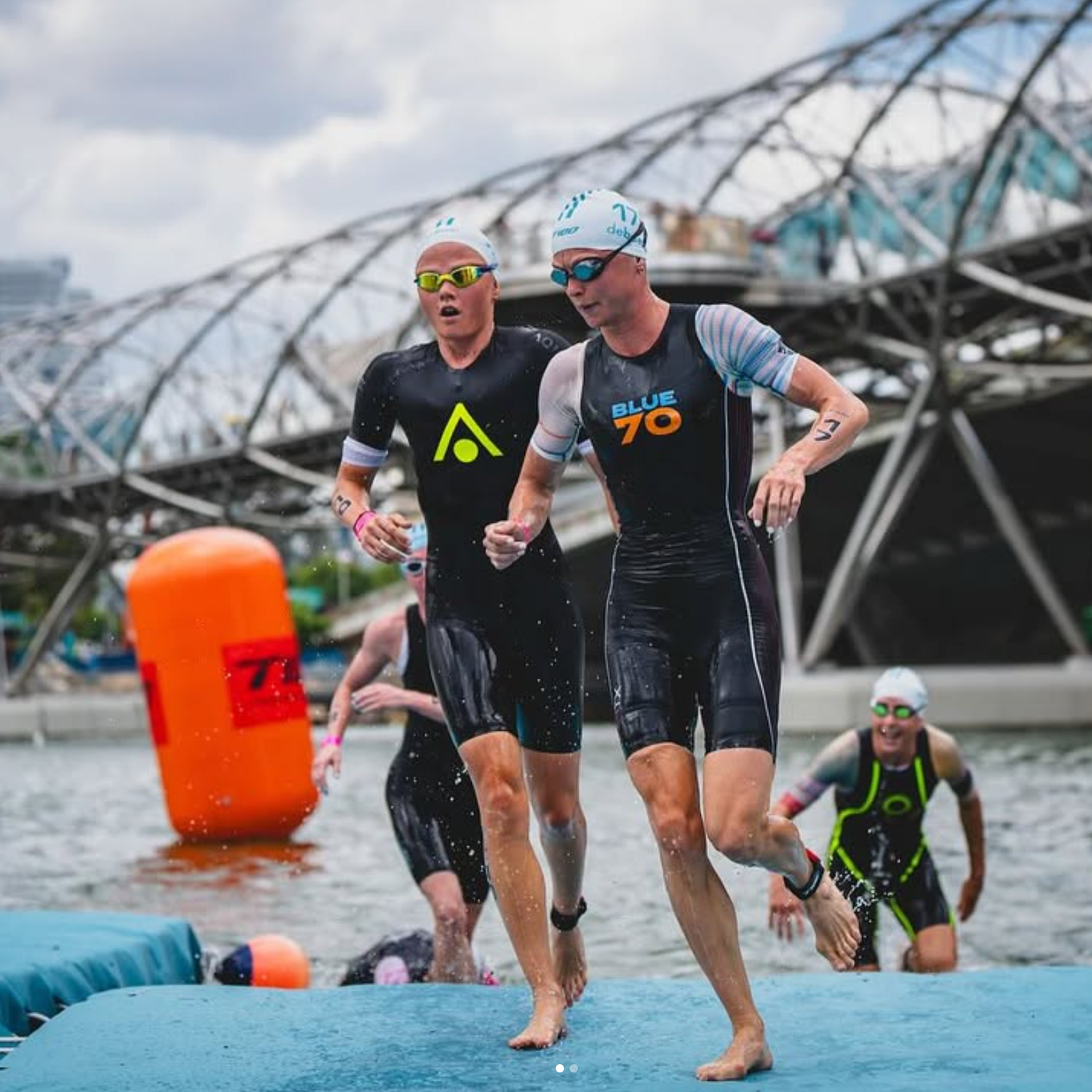
For a triathlete swimming 25 to 40 minutes, that barely registers. For a distance swimmer in the water two or three hours, it compounds. A suit that feels warm for the first fifteen minutes but stiffens your rotation by minute ninety isn't doing its job. Degraded stroke mechanics burn more metabolic heat compensating, which speeds up the cooling and fatigue you're trying to avoid in the first place.
Warmth that doesn't cost you range of motion beats warmth that does. That's the practical case for lining technology over raw thickness alone.
What Acclimatization Actually Changes
Regular cold-water exposure produces real physiological adaptation. Cold-water immersion research, much of it drawn from occupational diving and military physiology studies, has documented shifts in the point at which shivering begins among habitually cold-exposed swimmers, along with lower reported discomfort at a given water temperature compared with newcomers.
Two swimmers in the same 54°F water, wearing the same suit, will have different experiences depending on how many cold sessions they've logged that season. Acclimatization is real. It also fades. Lose consistent cold exposure for a few weeks and much of that adaptation goes with it.
If you're building toward a cold-water event, don't just track yardage. Track cold exposures too. A thermal wetsuit lets you accumulate that exposure at a pace your body can handle, instead of forcing a choice between skipping cold sessions or swimming underdressed for them.
Reading Temperature as a Range
Below roughly 56 to 58°F, a purpose-built thermal suit starts adding real warmth over a standard suit. Treat that as a planning range, not a hard line. Individual cold tolerance, swim duration, and body composition all shift where it lands for you.
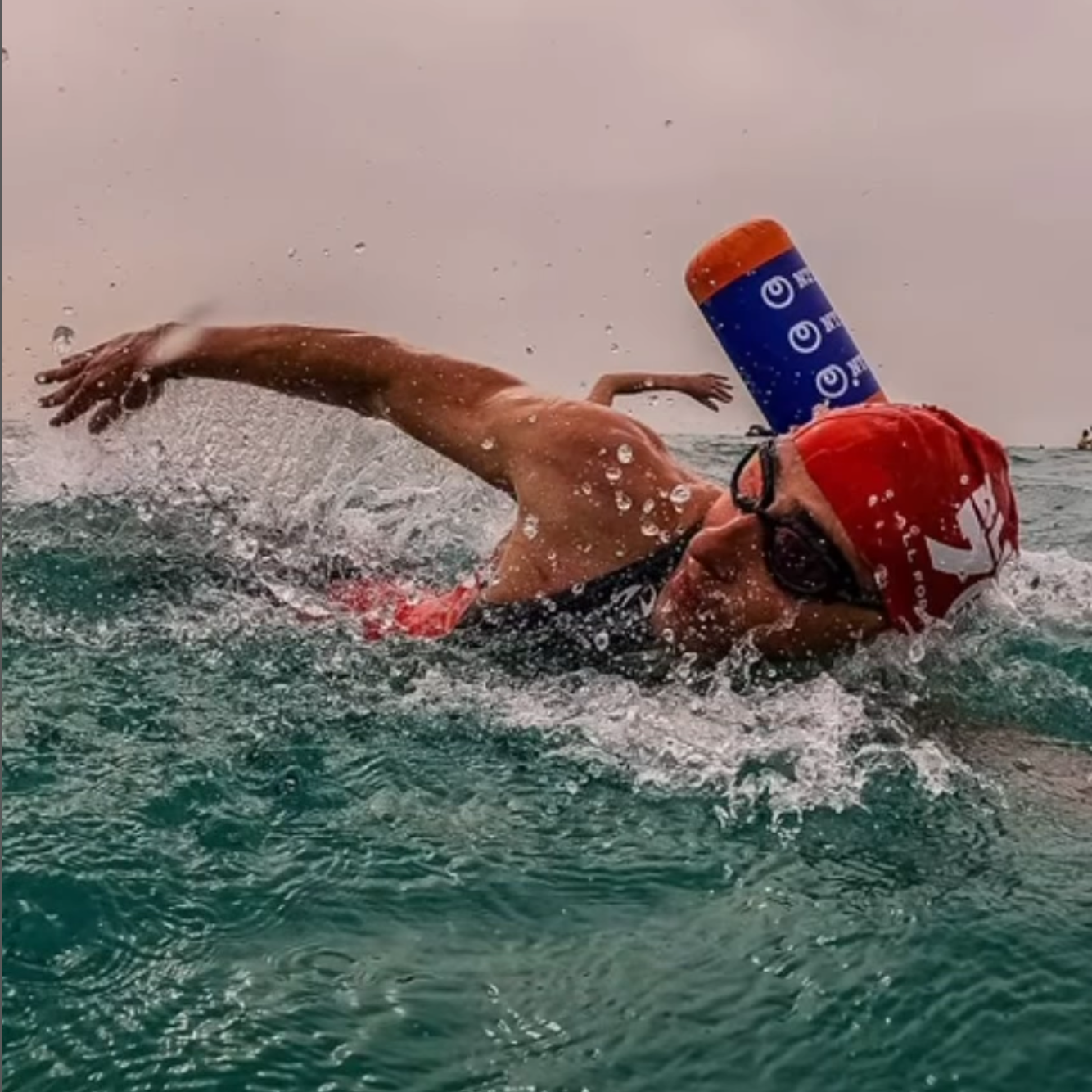
A 25-minute swim at 58°F and a 90-minute swim at 58°F are not the same problem, even though the water is identical. Duration multiplies exposure. If you're training for a long cold-water swim, your projected time in the water matters as much as the forecast.
Wetsuit-legal temperature cutoffs for competition are set by each event's sanctioning body and can shift from season to season. Check the current rules for your specific race rather than relying on a number you remember from last year. Your own physiology doesn't update on the same schedule as a rulebook.
Fit Matters More in Cold Water, Not Less
A loose wetsuit performs worse in cold water than in warm water. The mechanism is simple. A wetsuit works by trapping a thin layer of water against your skin, which your body then warms. That's the entire insulating principle: not keeping water out, but limiting how much moves in and out. A suit that's too loose lets that warmed layer flush with every stroke, especially at the neck, wrists, and ankles, exactly where heat loss is already fastest.
This is why fit doctrine matters as much for warmth as it does for speed in the water. A suit should feel snug on dry land, almost restrictively so, and settle into a more comfortable fit once you're swimming and the neoprene compresses slightly. If you can slide more than a finger or two under the neckline before you're even in the water, expect flushing at the exact spots you can least afford it.
The Recovery Window People Forget
Core temperature often keeps dropping after you exit the water. This is called afterdrop, and it happens as cooled blood from your arms and legs recirculates to your core once you stop generating heat through muscular activity. The minutes right after a cold swim deserve a plan, not an afterthought: dry layers staged at the exit point, a warm drink, and shelter from wind, which strips heat from wet skin faster than still air does.
A wetsuit that manages the swim well doesn't undo the cooling that continues once you're out of it. Build your exit routine into the plan. Don't leave it to whoever remembers to bring a towel.
Building a Cold-Water Plan, Not Just Buying a Suit
Selecting thermal protection works best when you follow function, not a single number on a chart.
- Swim duration matters as much as water temperature. Longer swims justify more dedicated thermal construction.
- Acclimatization status shifts your personal comfort threshold, but only holds up with consistent exposure.
- Fit determines whether insulation stays against your skin or flushes out at the neck, wrists, and ankles.
- Post-swim recovery deserves its own checklist, since core cooling doesn't stop the moment you exit.
Blue70's Thermal Reaction wetsuit is built around this fuller picture. Full Zirconium jersey lining adds thermal protection without sacrificing the shoulder flexibility your stroke needs deep into a long cold-water swim. Extending your season into colder water rewards preparation on all four fronts, not just the neoprene you're wearing.
If this is your first season pushing into colder water, start with shorter, controlled swims close to shore or support, and build duration gradually from there. Take a look at the Thermal collection to find the setup that matches your training and racing plans.
Happy swimming.