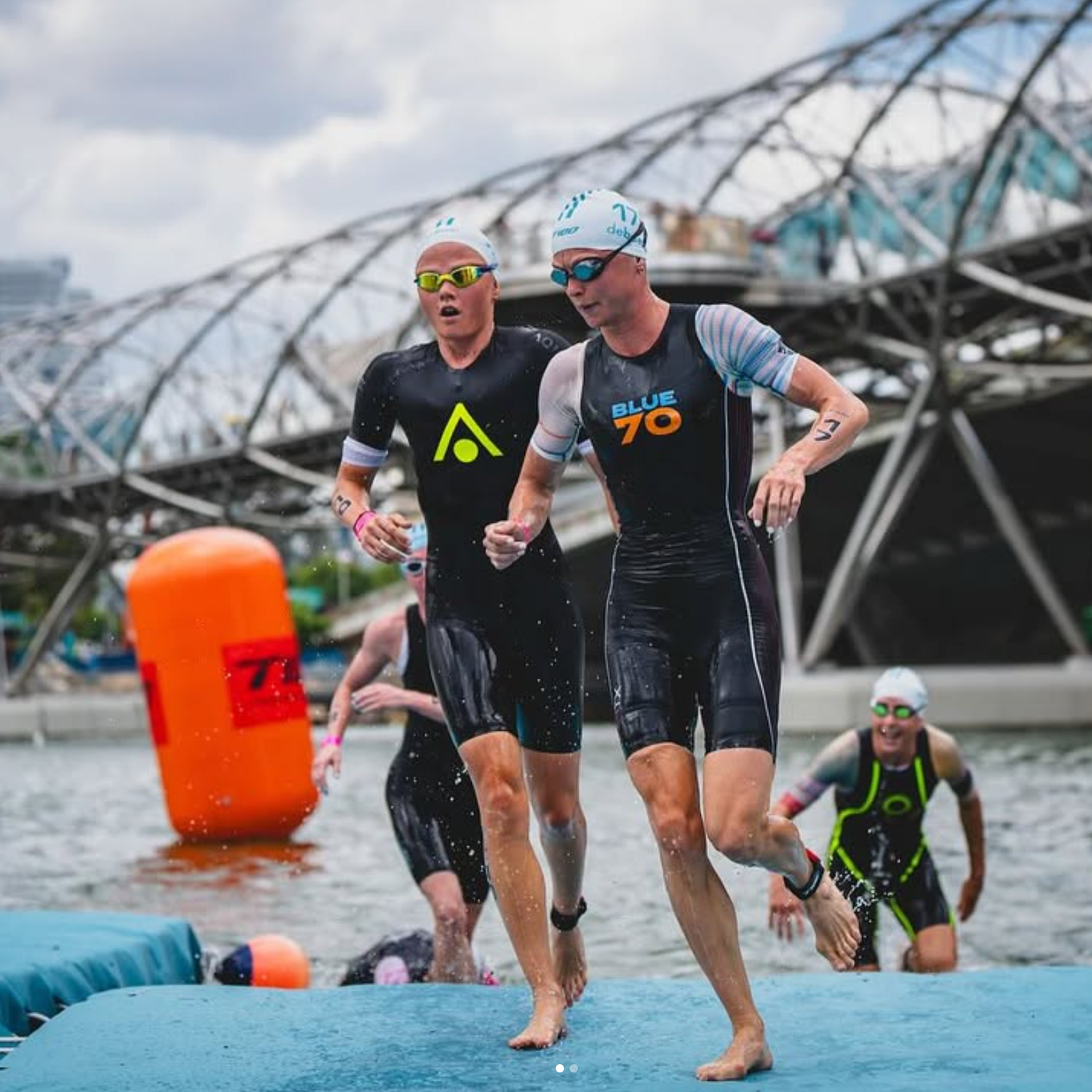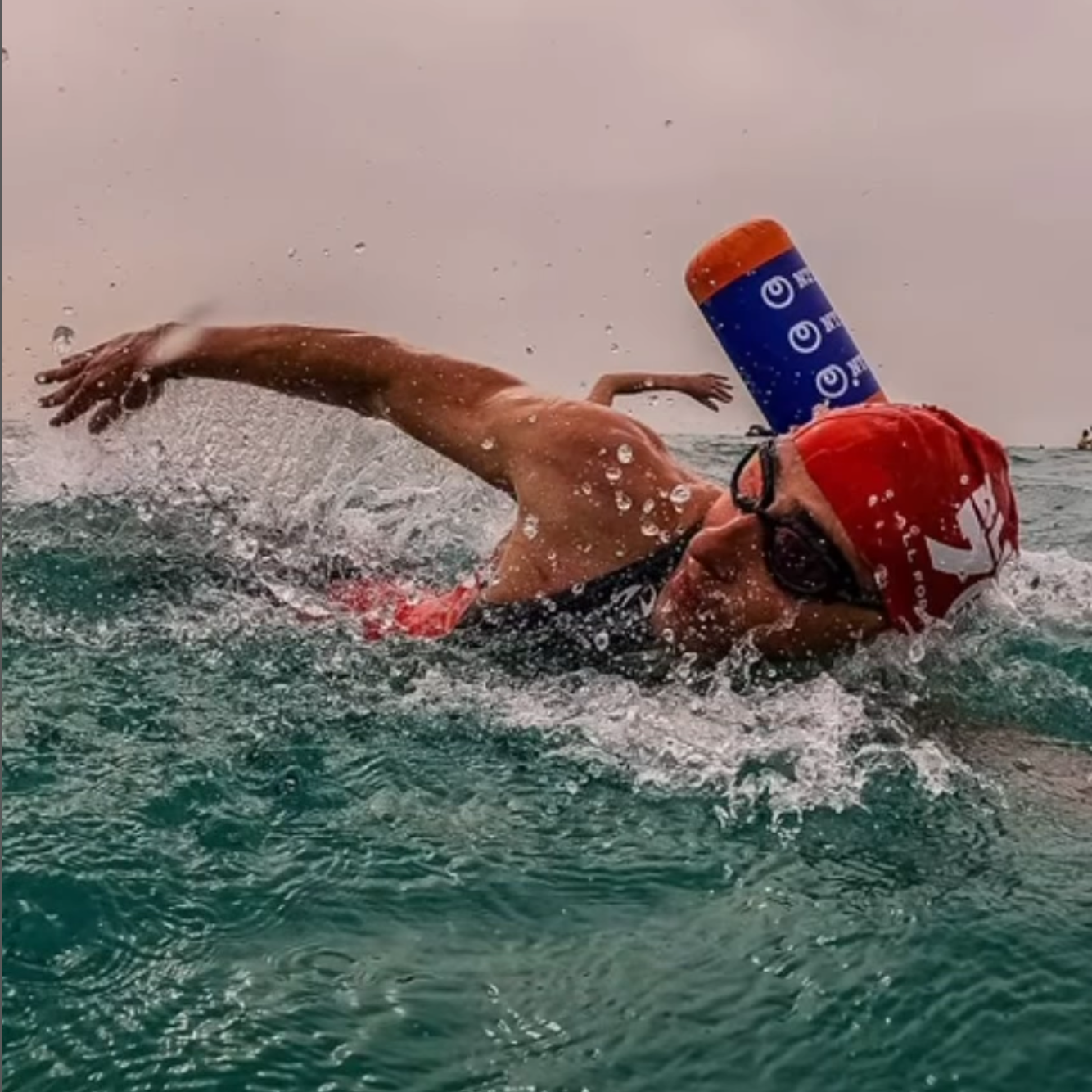



Type "wetsuit for cold water" into a search bar and most of what comes back is built for a sport you're not doing. Dive gear is designed for someone holding a breath and staying still, floating behind a rock, waiting for a fish to swim into range. That's a serious pursuit with its own demands. It's also solving a different problem than the one you face swimming freestyle in 58°F water for 40 straight minutes.
Mix up the two categories and you end up overheated, restricted through the shoulders, or cold in exactly the spots where it matters most. Here's what actually separates a diving suit from a swimming suit, and why the difference should shape what you buy.
Two Bodies, Two Heat Problems
A diver holding position at depth isn't producing much heat. Muscular effort stays low for long stretches, so the suit has one job: slow down heat loss from a body that isn't generating much warmth on its own.
A swimmer is the opposite case entirely. Continuous freestyle at a moderate pace runs at roughly 8 to 10 METs, a standard measure of exercise intensity relative to resting metabolism used in the Compendium of Physical Activities compiled by researcher Barbara Ainsworth and colleagues. That's eight to ten times the heat output of sitting still. Your working muscles are throwing off real warmth, but your arms and legs are also pumping that heat straight into the surrounding water through constant movement. Your head, even under a cap, loses heat fast too.
Two different heat budgets. Two different suits.
Buoyancy Points in Opposite Directions
For a diver, extra buoyancy is a problem, not a benefit. Thick neoprene wants to float, but the diver needs to descend and hold depth without fighting the water column. Dive suits get paired with added weight to cancel out that natural lift.
For a swimmer, buoyancy is the whole point. Blue70 builds its wetsuits around a simple principle: buoyancy equals speed. A suit that lifts your hips and legs toward the surface corrects the drag created by a body riding low in the water, which is exactly the problem slowing down most swimmers who haven't spent years refining their technique. That's why buoyant panels concentrate through the hips and legs instead of spreading evenly across the whole body the way a dive suit does. The goal isn't to make you float like a cork. It's to fix your position so your stroke does less work.
Shoulder Mobility Is the Part Diving Never Had to Solve
A diver holding a speargun doesn't rotate the shoulders hundreds of times a minute. A swimmer does, every stroke cycle, for the entire swim. This is where the two suit types split the most.
Dive suits are commonly built from uniformly thick neoprene, often 5mm to 7mm, because retaining heat across the whole body matters more than mobility in any single joint. Put a swimmer in that suit and fatigue sets in within a few hundred meters. Every stroke fights the material instead of working with it.
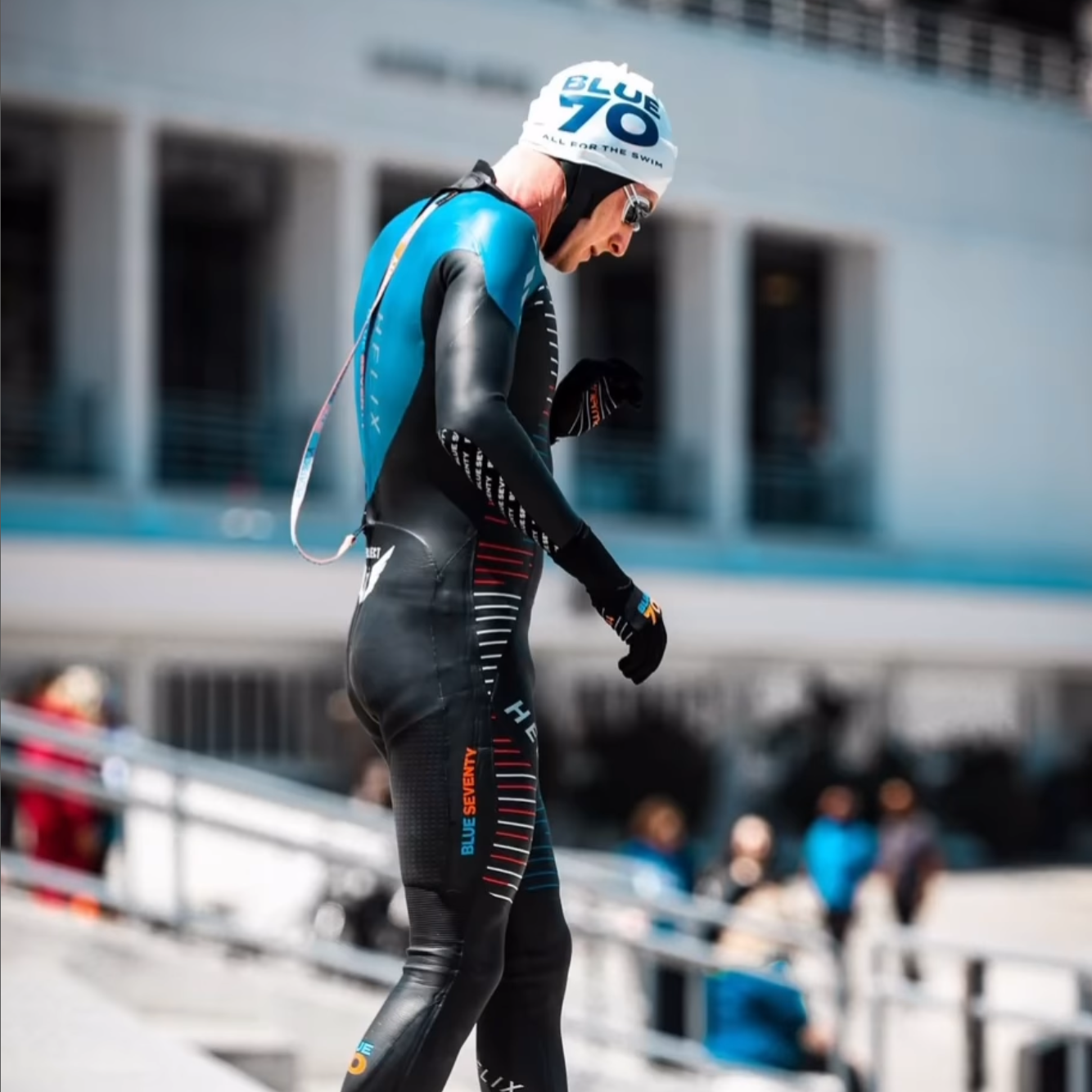
Blue70 handles this by varying the neoprene itself. Yamamoto neoprene comes in different cell structures, referred to by cell count: 38, 39, and 40 cell, with higher numbers producing more flexible material. The shoulder panels use the more flexible grades so your arm can complete a full stroke without the suit pulling back against the recovery phase. Thicker, less flexible neoprene goes where mobility matters less and buoyancy or warmth matters more, through the torso and legs. It's a deliberate trade-off, and it runs the opposite direction from a static-posture dive suit.
Skin, Seals, and What Happens When You Actually Move
Open-cell neoprene, common in dive suits, sits directly against the skin without a fabric lining. It seals tightly against water flushing, which helps a mostly still body hold onto heat, but it needs lubricant to put on and it isn't built to stretch and release hundreds of times a minute the way a swim stroke demands.
Swim-specific suits solve this a different way. Blue70's cold-water model, the Thermal Reaction, is fully lined with Zirconium jersey, a synthetic wool lining that adds warmth while still letting the suit go on without lubricant and hold up through repeated stretch cycles. The permeable catch panel design used across the line, introduced in 2010, answers a swim-specific need too: it preserves your feel for the water through the hand and forearm, something a diver gripping a speargun never has to think about.
What This Means If You Swim Cold Water
If you're swimming rather than diving in genuinely cold conditions, the guidance is straightforward:
- Below roughly 56 to 58°F, a purpose-built thermal suit like the Thermal Reaction adds meaningful warmth over a standard open-water or triathlon wetsuit.
- Above roughly 70 to 72°F, a full suit over a longer swim can trap more heat than you want, and a sleeveless option becomes the more comfortable choice.
Fit matters just as much as thickness. A wetsuit should feel snug on dry land and settle into something more comfortable once you're in the water and the suit has taken on its thin layer against your skin. A suit that's loose at the shoulders on land will shift around during the stroke and cause fatigue well before the cold does. If you're unsure of sizing, check a fitting guide before you buy. Better yet, take it for a real swim. Swimming in a suit tells you things a size chart never will.
Cold Water Still Demands Respect
None of this changes the basic rules of cold exposure. A well-designed thermal wetsuit provides added thermal protection and extends how long you can comfortably train, but it doesn't remove the need for acclimatization. Build your cold-water time up gradually. Swim with others, or somewhere you can be seen. Get out and warm up deliberately rather than pushing past the point where your stroke starts falling apart.
Physiologist L.G. Pugh's research on English Channel swimmers, published in The Lancet in 1955, established something every cold-water swimmer eventually learns firsthand: tolerance for cold immersion is individual, time-limited, and worth taking seriously no matter what you're wearing.
A dive suit and a swim wetsuit both keep you in the water longer. They just get there by solving opposite problems. Know which problem you're solving before you buy.
Curious whether your current wetsuit fits the way it should? Take a Test Swim. It won't affect your ability to return or exchange it.