


Most swimmers start thinking about wetsuit gloves when their fingers ache on the walk to the water. That is usually too late. By the time your hands feel painfully cold, your stroke has often changed already.
That is the part of the conversation that gets missed. Gloves are usually treated as a comfort item, but for open-water swimmers and triathletes they also affect mechanics. Your hands are where each stroke begins. If they lose dexterity, you lose precision at entry, catch, and front-end timing. A pair of gloves can protect that function in cold water, but they can also change the way you feel and hold the water. That trade-off deserves more attention than it gets.
For swimmers who care about rhythm, direction, and efficiency, the question is not just whether gloves keep your hands warmer. The better question is whether they let you keep swimming well when the water gets cold.
Cold hands show up in your stroke before they show up in your mindset
When your hands get cold, the first signs are easy to recognize on land. Zippers feel harder to manage. Fine motor tasks slow down. In the water, the effect is subtler and often more important.
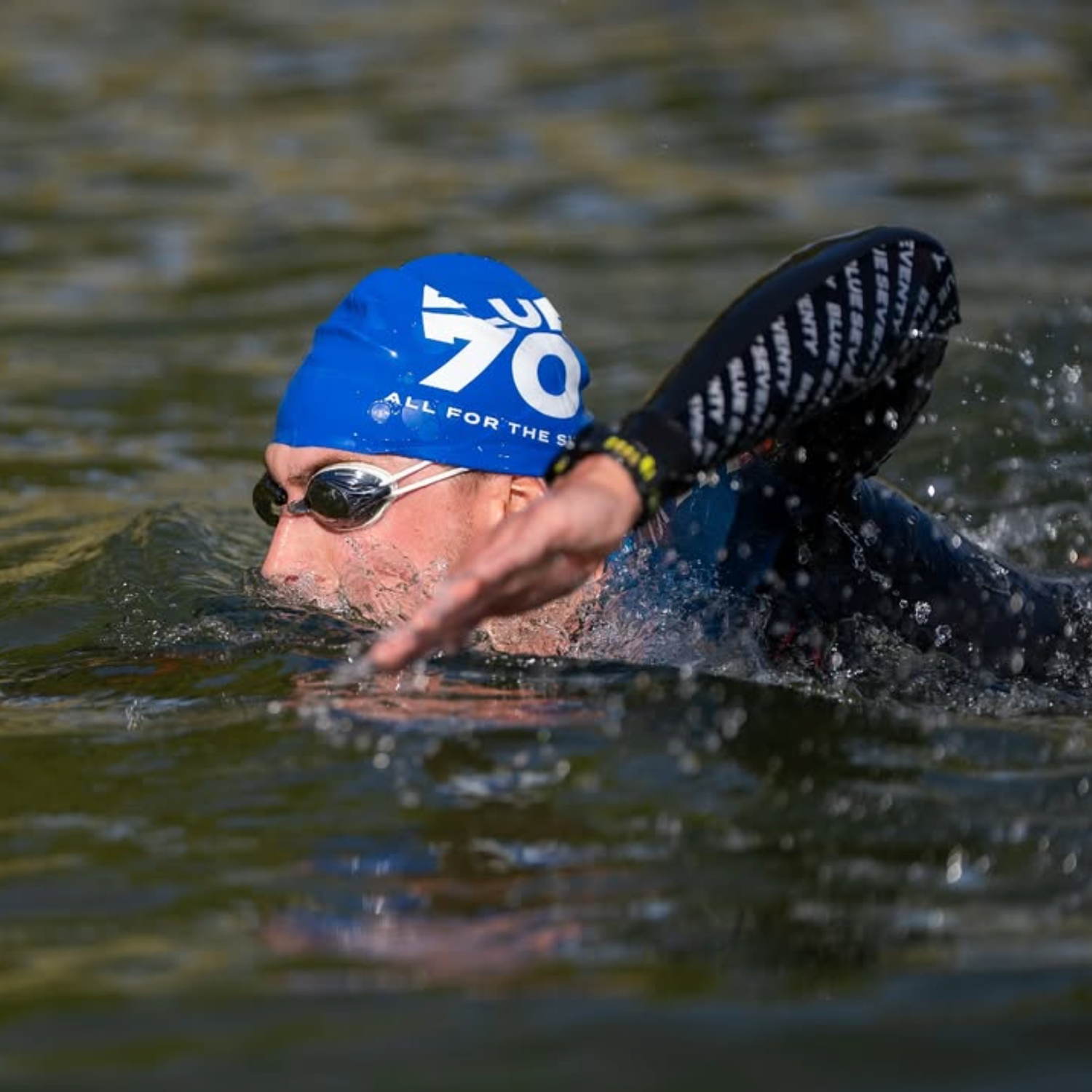
A numb hand does not enter the water with the same precision as a warm one. The catch gets less distinct. Many swimmers start pressing down instead of setting the hand and forearm cleanly. Others rush the pull because they cannot feel the front of the stroke as clearly. You can still work hard in that state, but hard work is not the same as a good stroke.
That is one reason cold water can make strong swimmers feel disconnected. Their engine is there. Their feel for the water is not.
What gloves actually do in the water
Neoprene gloves provide added thermal protection. Like a wetsuit, they are designed to let a thin layer of water in, and your body warms that water. They are not waterproof, and they are not supposed to keep your hands dry. Their job is to slow heat loss enough that your hands stay more functional during the swim.
That sounds straightforward, but it comes with a cost. Every layer between your skin and the water changes sensation. Sometimes that change is small. Sometimes it is enough to alter hand position, wrist mobility, and timing through the first half of the pull.
For a swimmer, that matters. A glove is not sitting passively on your hand. It is involved in every stroke cycle.
The real trade-off: warmth versus feel
Most gear choices in open-water swimming come down to balance. Gloves are a good example. More neoprene often means more insulation, but it also means less direct feel for the water. If the glove is too thick, too loose, or poorly shaped through the wrist, you may keep more warmth while giving away stroke quality.
That does not make gloves a bad choice. It means the best glove is rarely the one that feels most protective standing on shore. The better choice is usually the one that gives you enough warmth to preserve hand function without turning your stroke blunt or awkward.
Warmer is not always better for performance. For swimmers and triathletes, the better target is minimum effective protection.
Wrist freedom matters more than most swimmers think
If there is one detail swimmers overlook with gloves, it is the wrist. The fingers get all the attention, but the wrist is where a lot of mechanical problems begin.
The wrist links hand entry to the catch. If a glove cuff feels restrictive, bunches under the wetsuit sleeve, or changes how the hand angles into the water, the front of the stroke can flatten out. You may enter with a stiffer hand. You may press downward before establishing the catch. You may feel the forearms and shoulders working harder to compensate for a small restriction that seemed harmless on land.
Those changes are easy to miss in the first few minutes. Over a longer swim, they add up.
Common signs that gloves are interfering with your stroke
- Your hand enters flatter than usual
- You feel less precise at the start of the catch
- Your forearms tire earlier than expected
- One hand feels less coordinated than the other
- You shorten the front of the stroke without trying to
Those are useful clues, especially during training. They tell you to judge gloves by function, not by warmth alone.
Cold water changes pacing too
Swimmers often misread the opening minutes of a cold-water swim. The first reaction is urgency. Breathing is high, muscles feel tight, and the body wants to rush. If your hands are also going numb, the stroke can unravel quickly.
Gloves can help by preserving enough hand function to keep the front end of the stroke more stable. That does not mean they remove the stress of cold exposure. It means they can reduce one source of disruption, which makes it easier to settle your breathing, hold your line, and keep the stroke longer during the early part of the swim.
That matters in training, and it matters on race day. A calmer first few minutes usually lead to better decisions for the rest of the swim.
How to test wetsuit gloves in a useful way
A single swim does not tell you much. Most swimmers need more than one session to judge whether gloves are helping or hurting. Test them with a structure, and pay attention to what changes in your stroke instead of asking only whether your hands felt warmer.
A simple testing approach
- Check the first five minutes. Focus on hand entry, timing, and how cleanly you find the water at the front of the stroke.
- Notice the middle of the swim. If your shoulders or forearms start working harder than usual, your gloves may be limiting wrist freedom or dulling feel.
- Watch your line. Technical changes often show up in direction first. Crossing over, pulling wider, or sighting more often can point to hand position issues.
- Pay attention after the swim. Can you still manage your cap, zipper, and goggles with reasonable control once you get out?
It is also worth testing in different conditions. Flat water and choppy water ask different things of your hands, and gloves that feel acceptable in one setting may feel clumsy in another.
Think in systems, not single accessories
Gloves work best when you think about them as part of a full cold-water setup. Your suit, your cap strategy, your swim duration, and your pace all influence whether gloves help.
Below about 56 to 58°F, a purpose-built thermal suit adds meaningful warmth for many swimmers. The blueseventy Thermal Reaction uses a full Zirconium jersey lining and is designed for cold-water swimming. If your core and upper body stay more comfortable, your hands often stay more functional for longer as part of that overall system.
Fit matters too. A wetsuit should feel snug on land and more comfortable once you are in the water. If the suit is not pulled fully into place through the shoulders and arms, fatigue rises fast. Add gloves to an already compromised fit, and the problem often shows up in the forearms and wrists first.
If you need help with fit, the blueseventy fit guide is the right place to start.
When gloves make sense
Gloves usually make sense when cold hands start changing your mechanics or limiting the session you planned to do. That can happen in training well before a swim becomes mentally uncomfortable.
- Longer open-water swims where hand function fades before the rest of the body
- Cold training days when numb hands disrupt your catch or line
- Acclimatization blocks when you are building tolerance to colder water
- Race preparation for cold conditions where you need to rehearse the full setup
They make less sense when the water is cool but your hands still work well, or when the loss of feel is greater than the benefit in warmth for that particular session.
Practical advice for swimmers and triathletes
The best approach is straightforward: judge gloves by how well they preserve your stroke.
- Choose enough protection, not the most protection. More material is not always better for swimming quality.
- Pay close attention to the wrist. Small restrictions there can change the entire front half of the stroke.
- Practice before race day. Cold conditions are not the time to discover that your hands feel awkward in the water.
- Match your setup to the session. A technique swim, an endurance swim, and a race-pace effort do not place the same demands on your hands.
- Start with fit. A swim-specific wetsuit that is properly positioned through the shoulders and arms gives everything else a better chance to work.
The standard worth using
Wetsuit gloves should not be judged only by whether they feel warm on shore or less cold in the water. For swimmers, the real standard is more demanding than that.
Do they let you keep your stroke?
If the answer is yes, they are doing their job. If they protect your hands but leave you feeling disconnected from the water, the setup needs work. Cold water always changes the swim. Good gear choices keep that change from taking over your mechanics.
If you are refining your cold-water setup, start with a suit that supports body position, freedom from restriction, and feel for the water. From there, test every accessory by the same standard. If you want to dial in your fit before your next open-water block, use the size charts or Take a Test Swim to sort it out in the water where it counts.