


Most swimmers treat wetsuit cleaner spray like an end-of-season chore. Spray the suit, rinse it, hang it up, and forget about it until next year. That habit misses the real point. For open water swimmers and triathletes, cleaner spray is less about storage and more about keeping a wetsuit comfortable, familiar, and ready for the next session.
A swim-specific wetsuit does a lot at once. It changes body position, affects shoulder freedom, adds thermal protection, and shapes how the suit feels through the neck, torso, and catch. When the suit feels clean, those details tend to disappear into the background. When it feels sticky, stale, or rough from leftover salt, chlorine, or lake residue, you notice every part of it.
That is why wetsuit care deserves a place in the training routine, not just the storage routine. A clean suit is easier to trust. It is easier to put on well, easier to wear for longer swims, and less likely to distract you on race morning.
Cleanliness affects feel in the water
Many athletes assume wetsuit care is only about making gear last longer. Durability matters, but comfort and feel matter just as much. A wetsuit that has been rinsed poorly and left damp in a bag often feels different the next time you pull it on. The fit may be the same, but the sensation is not.
Salt dries into the suit. Sunscreen sits in the neckline. Sweat and body oils settle into the lining. Chlorine lingers if the suit is used in a pool session or packed away before a proper rinse. None of that changes the size printed on the label, but it can change how the suit feels against your skin and how freely it seems to move with you.
blueseventy wetsuits use Yamamoto 38, 39, and 40-cell neoprene, with higher cell numbers offering more flexibility. That flexibility is one of the defining traits swimmers notice in a well-fitted swim-specific suit. Routine cleaning helps preserve that feel across a full season of use.
Why cleaner spray works for real training schedules
The best gear-care system is the one you will actually follow after a cold lake swim on a Wednesday evening. That is where cleaner spray earns its place. It gives you a simple routine that fits normal training life instead of asking for a full deep-clean every time you get out of the water.
A practical routine looks like this:
- Rinse the wetsuit in cool, fresh water.
- Apply cleaner spray to the areas that collect the most residue.
- Rinse again if the product directions call for it.
- Hang the suit to dry away from direct heat and direct sun.
Short routines get repeated. That matters more than any once-a-month cleaning project that never quite happens.
The most important benefit: more accurate fit feedback
One of the hardest parts of wetsuit ownership is separating a real fit problem from a care problem. A properly fitted wetsuit should feel snug on land and more comfortable once you are in the water. If the suit is not pulled high enough through the hips and shoulders, it can feel restrictive. If it is dirty, it can also feel restrictive. Those are not the same issue.
Cleaner spray helps remove one variable. When the suit is clean, you get a more honest sense of the actual fit. That matters if you are deciding whether the neckline is truly bothersome, whether the shoulders feel loaded because the suit was not donned correctly, or whether the discomfort is simply residue buildup from repeated use.
That is one reason experienced swimmers pay attention to clean neoprene. They are not being fussy about gear. They are trying to preserve consistency.
Where residue builds up fastest
Not every area of the suit needs the same attention. Focus on the zones that see the most skin contact and the most trapped moisture.
- Neckline: collects sunscreen, salt, and skin contact quickly.
- Underarms: holds sweat and body oils, which can affect comfort during long swims.
- Shoulder and torso lining: important for upper-body feel and overall comfort.
- Wrists and ankles: trap debris and often stay damp longer than expected.
- Lower interior panels: common source of odor if the suit sits in a bag after use.
If you clean those areas consistently, you handle most of the buildup that changes how a suit feels day to day.
Salt, chlorine, and lake water leave different problems
Saltwater
Ocean swimmers usually spot the effects first. Salt dries into the suit and leaves it feeling rougher, especially around seams and contact points. A plain rinse helps, but cleaner spray can do a better job loosening residue that settles into the lining.
Chlorine
Chlorine deserves quick attention. blueseventy’s warranty notes that chlorine damage is not covered, which is a good reminder to rinse gear promptly after any pool exposure. Cleaner spray helps remove what a quick splash of water can leave behind.
Fresh water
Lakes and rivers may look cleaner than ocean water, but they leave their own residue. Silt, plant matter, and organic material can produce that stale smell swimmers know well if the suit sits damp for too long. A cleaner spray helps reset the suit before that smell becomes permanent.
Performance starts with comfort
No cleaner spray guarantees faster swim times. That is not a claim worth making. What it can do is support the conditions that let you swim well. When your wetsuit feels clean and predictable, you are less likely to waste attention on the suit itself.
That can help with small but important details:
- settling into stroke rhythm early
- breathing without thinking about the neckline
- avoiding unnecessary tension through the shoulders
- feeling calmer before the start
- getting out of the suit more smoothly in transition
Those are not flashy gains. They are practical ones, and they matter.
Care matters even more with high-performance neoprene
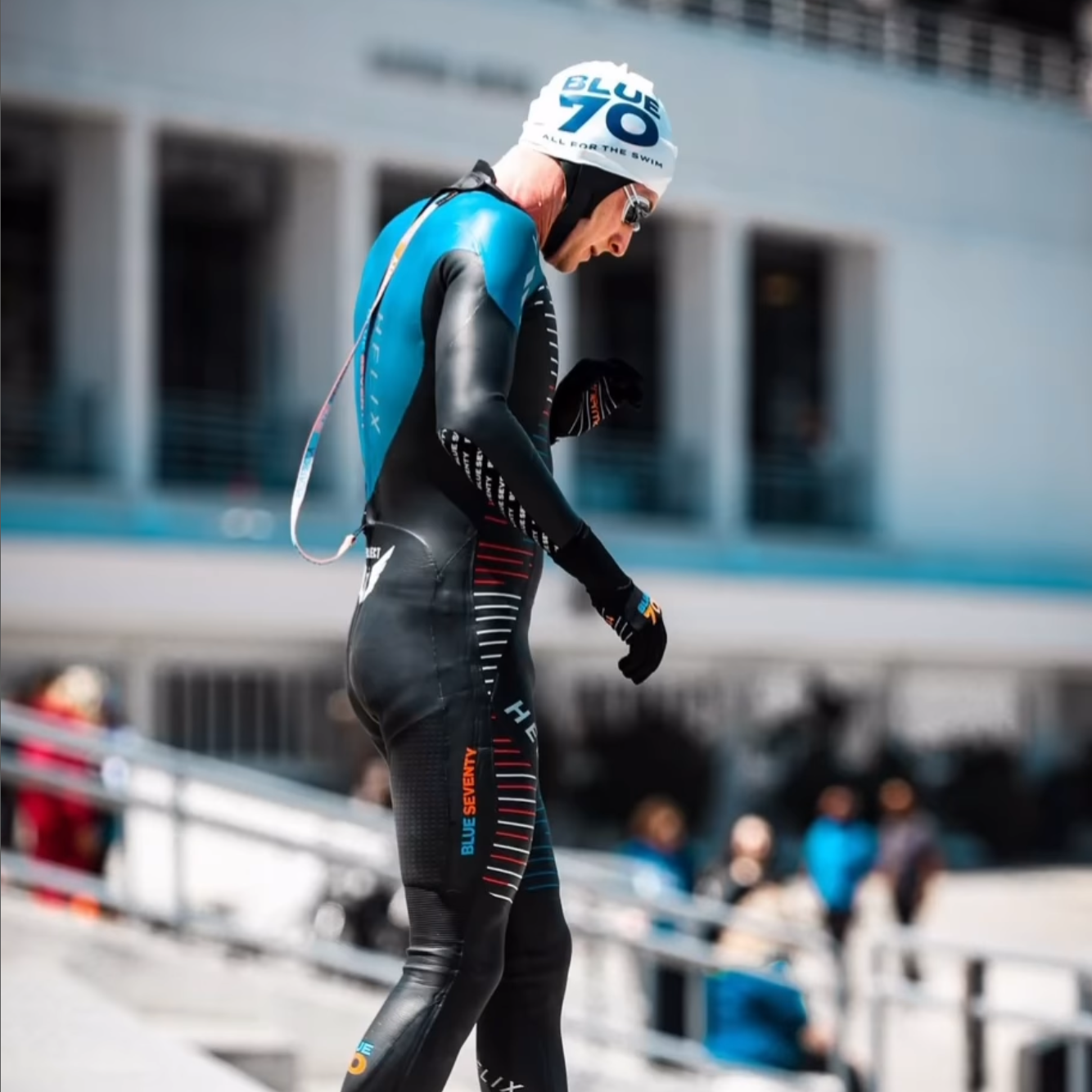
Some suits demand more careful handling than others. The blueseventy Helix, for example, is built for race-day performance with very thin, highly flexible neoprene through the arms and shoulders, a permeable catch panel that helps preserve feel for the water, and LIFT buoyancy panels added in 2018. blueseventy also states plainly that the Helix is not ideal for heavy training use because delicate neoprene breaks down faster under frequent wear.
That kind of honesty is useful because it highlights the trade-off. The more performance-focused the material and construction, the more attention the suit deserves. Cleaner spray will not stop normal aging, but it does support the day-to-day care that keeps a performance suit feeling better through a race block.
A simple post-swim routine that works
If you want the easiest care system to repeat, keep it basic.
- Rinse the suit after every swim.
- Use cleaner spray after saltwater swims, chlorinated sessions, or any workout where the suit stayed damp in a bag.
- Dry the suit inside out first, then turn it back once the lining is dry.
- Store it flat or on a wide hanger.
- Avoid heat, sharp folds, and long periods crammed under other gear.
That routine does not take long, and it prevents many of the comfort problems swimmers blame on the suit itself.
What cleaner spray does not do
Cleaner spray is maintenance, not repair. It does not fix fingernail punctures, heel tears, zipper damage from force, or wear from poor storage habits. It also does not keep you dry. Wetsuits are designed to let in a thin layer of water that your body warms for insulation.
Its job is simpler than that. It helps remove residue, reduce odor, and preserve the clean, familiar feel that makes a swim-specific wetsuit easier to wear with confidence.
Make it part of race-season preparation
Swimmers track pace, volume, and interval times carefully. Gear feel rarely gets the same attention, even though it can shape how the first minutes of a race unfold. A clean suit feels normal. That is the goal. You do not want the neckline grabbing your attention during a crowded start or the shoulders feeling stale because the suit sat damp after the last training session.
Use cleaner spray through the season, not only when it is time to store the suit. If race week arrives and your wetsuit already feels familiar, one variable is gone. That is useful preparation.
A small tool with a real job
Wetsuit cleaner spray will not transform your swimming. It does not need to. Its value is more practical than that. It keeps your wetsuit cleaner, more comfortable, and more consistent from one session to the next. For open water swimmers and triathletes, that is enough reason to give it a permanent place in the gear bag.
If your wetsuit has started to feel off, start with the basics before you assume the fit is wrong. Clean it well. Rinse it thoroughly. Dry it properly. Then check your donning technique, especially through the hips, torso, and shoulders. A swim-specific wetsuit should feel snug on land and better once you are swimming.
If you need help with fit, take a look at the blueseventy fit guide or Take a Test Swim to make sure your suit feels right where it matters most: in the water.