


In the early 1990s, a triathlete had two choices for the swim leg: race without rubber or wear a suit built for a different sport. Surf wetsuits were easy to find but hard to swim in. The thick neoprene kept surfers warm while they sat on a board between waves, but it bound a freestyle stroke at the shoulder and turned a long swim into a fight instead of a glide. blueseventy, then called Direct Innovations, built one of the first triathlon-specific wetsuits in 1993. That decision started a design path we still follow.
The shoulder is where a wetsuit earns its purpose
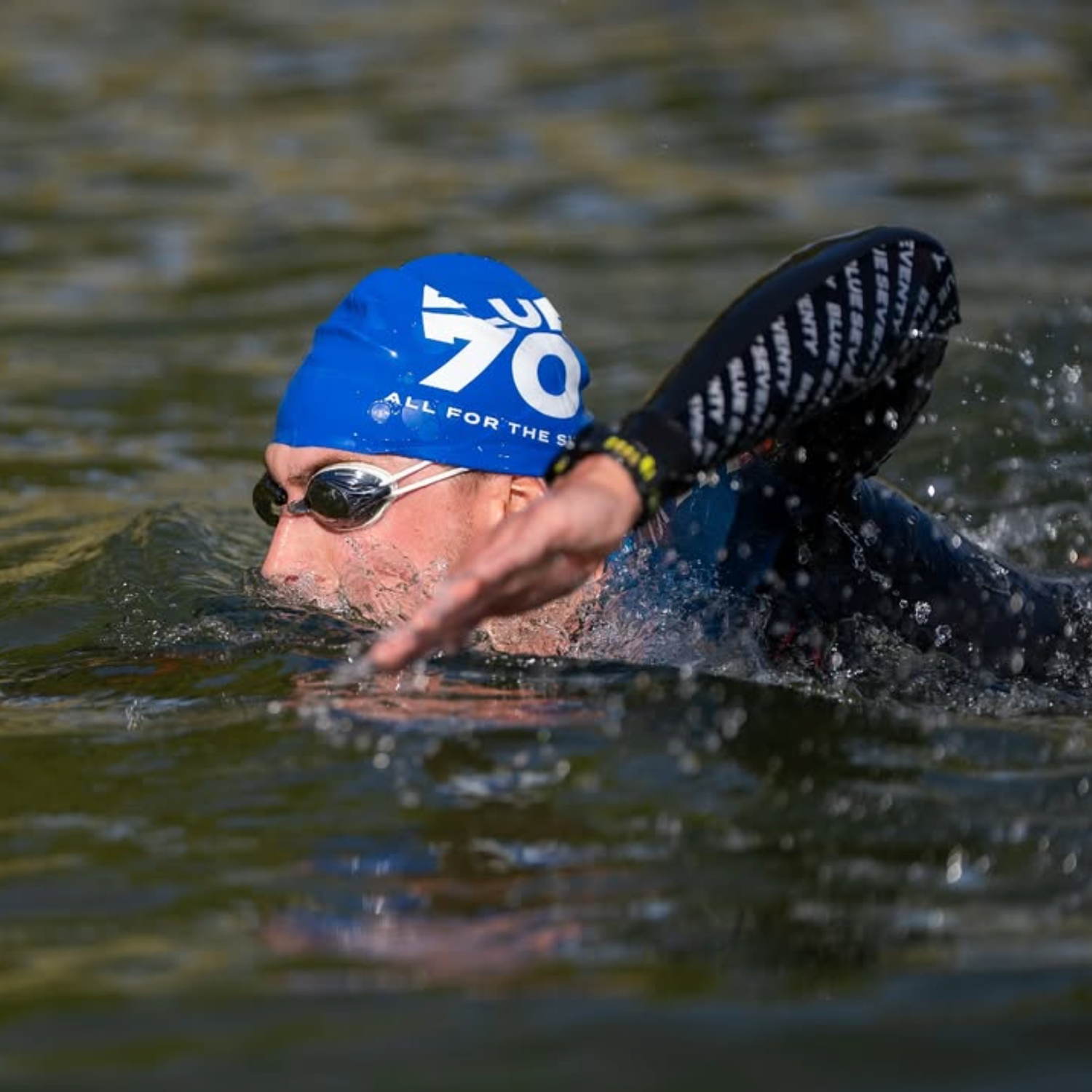
Freestyle is repetitive. A long swim asks the shoulder to flex, extend, and rotate hundreds of times per session. Neoprene that resists any part of that arc forces you to recruit the upper traps and neck to complete a normal recovery. Fatigue shows up early, and the stroke loses its line. A surf suit targets a different movement pattern: long sits followed by short paddle bursts. The rubber that holds warmth during those sits becomes resistance for a swimmer.
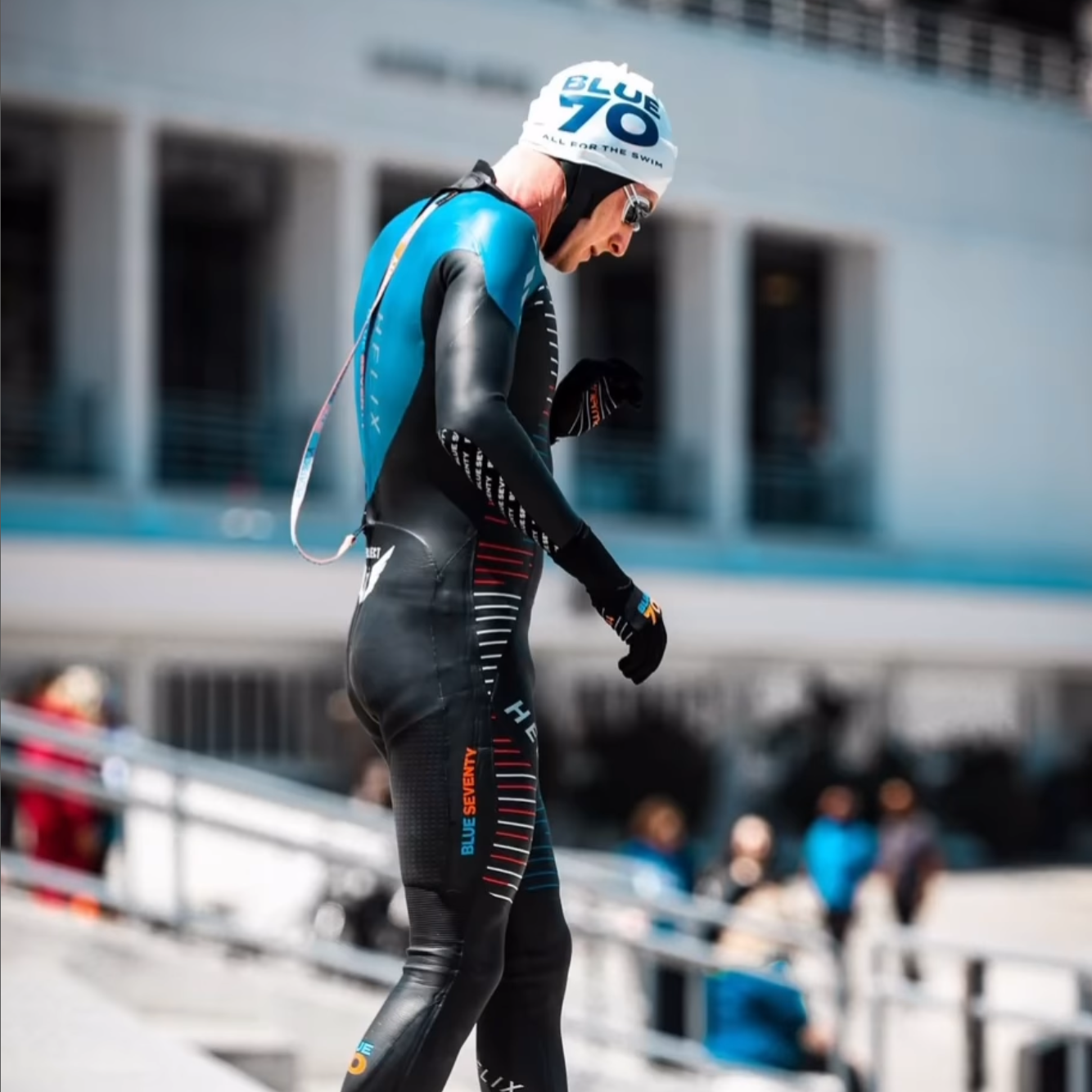
Our suits use Yamamoto neoprene in 38, 39, and 40 cell. A higher cell number means more flexibility. The Helix, our race suit, uses thin, flexible neoprene in the arms and shoulders. The suit follows the stroke. It has a permeable catch panel, added in 2010, that preserves feel for the water on the catch. The Reaction uses higher-grade neoprene than the Fusion and works for swimmers who train often and want flexibility with durability.
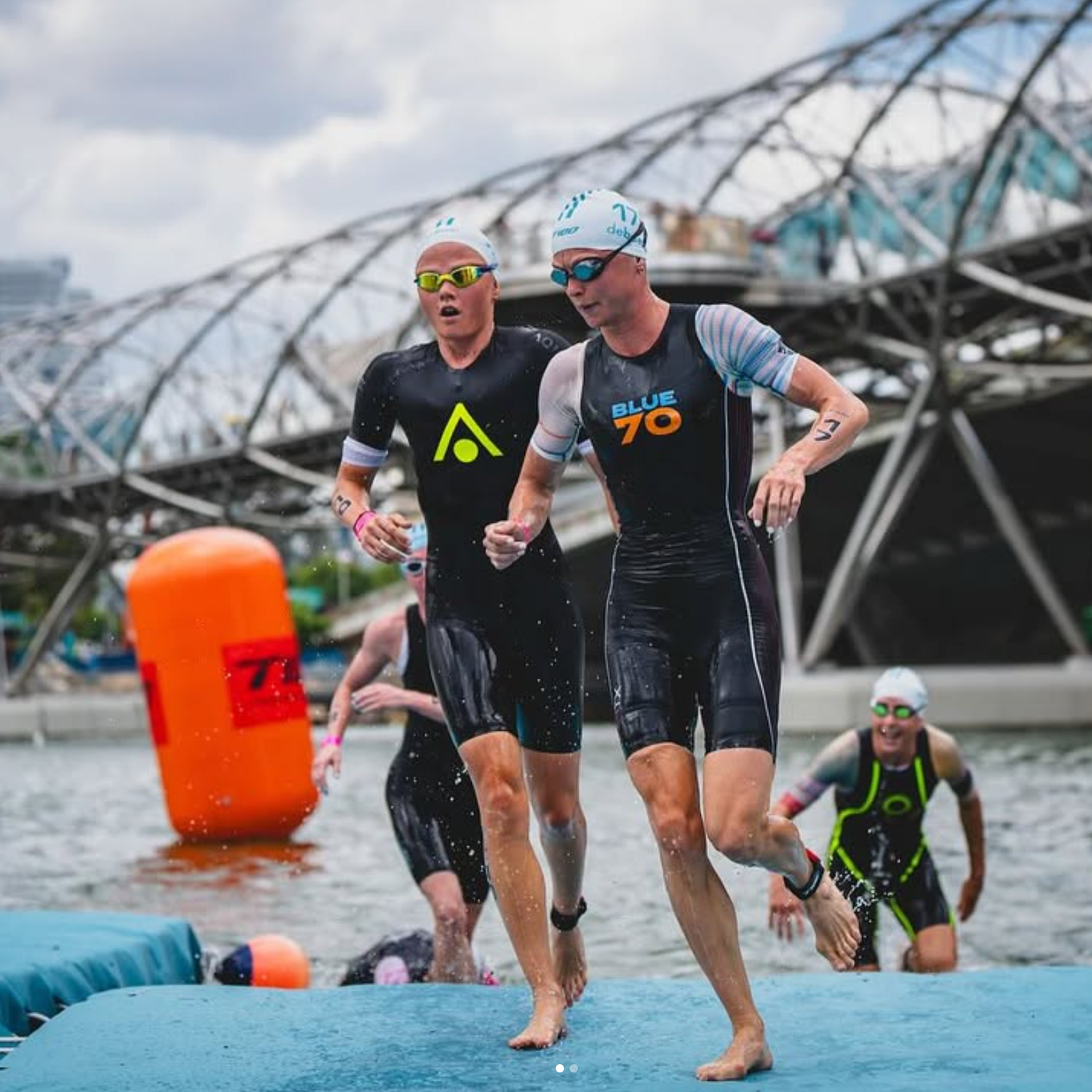
At the 2012 London Olympics, the Helix was first out of the water in both the men's and women's races, and blueseventy athlete Alistair Brownlee took triathlon gold that day. The result came from a suit shaped around the freestyle stroke rather than a general water sport.
Try a 500-meter test. If your elbows drop and your pull widens by the five-minute mark, the suit is fighting you. In a swim-specific suit, that same distance should leave your shoulders free enough to hold a relaxed high elbow recovery.
Buoyancy placement matters more than total buoyancy
Surf suits spread flotation evenly because a surfer needs stability while sitting and falling. A swimmer needs something different: hips and legs lifted, torso horizontal, and frontal drag reduced. That is why we concentrate buoyancy low in the body. The phrase we use is simple: buoyancy equals speed. Less frontal drag at the same stroke rate saves energy.
We added LIFT panels to the Helix in 2018. The LIFT buoyancy short followed in 2020, built with NBR foam for maximum buoyancy. Both place lift where it changes body position rather than adding bulk to the arms and chest. First-time open-water swimmers gain proportionally more from this correction than advanced swimmers do.
One boundary matters here. Neoprene adds buoyancy, but a swim wetsuit is not a Coast Guard-certified personal flotation device. It improves body position. It does not replace a life jacket or race-provided flotation.
Fit starts before you reach the water
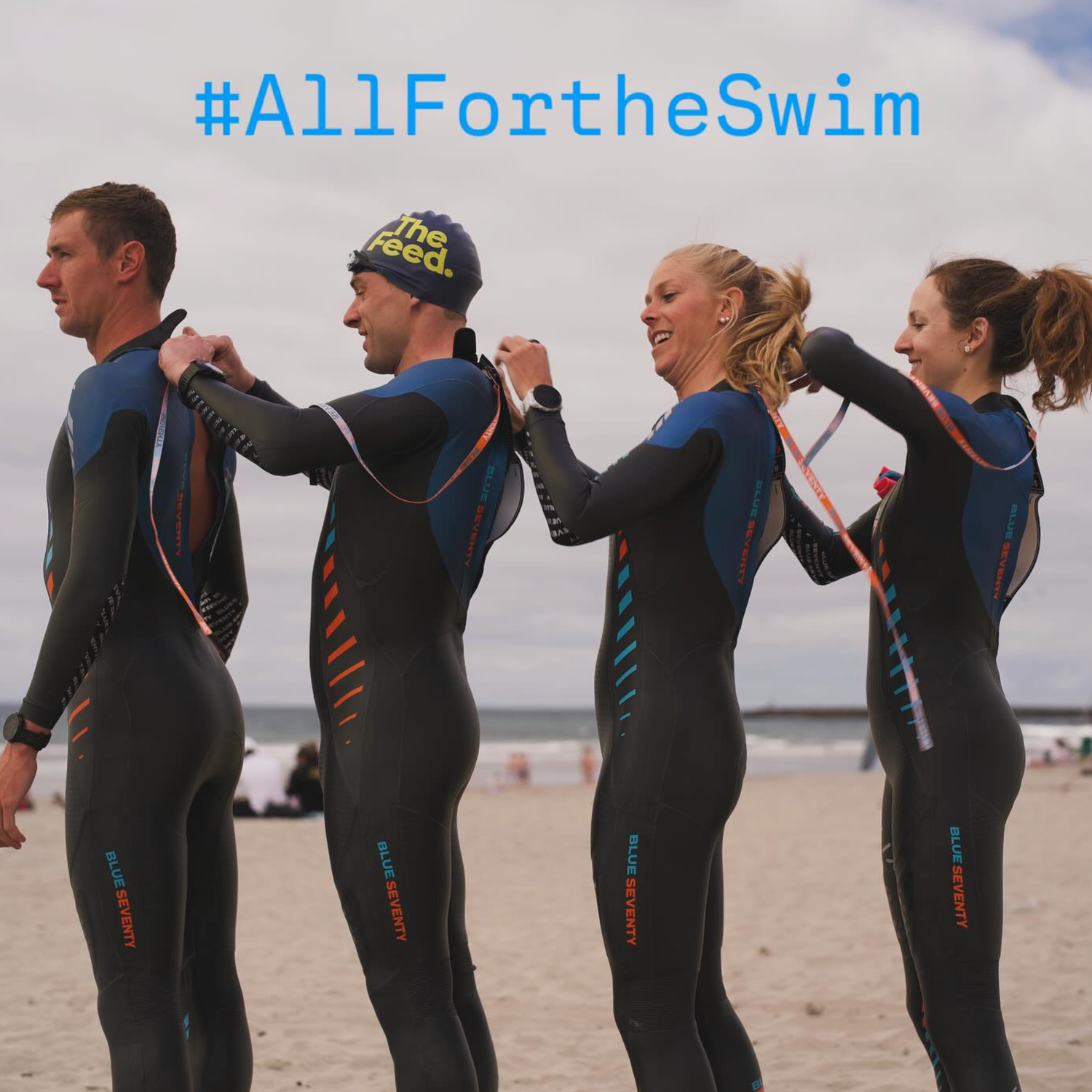
A surf suit often emphasizes easy entry in a parking lot. A swim-specific suit should feel snug on dry land. It gets easier in the water. If the suit feels roomy in the shop, it will gather water at the neck and drag at the hips. Getting the suit on carefully matters. Pull the neoprene up in stages and check that the shoulder panels sit snug against the skin before you start swimming. An improperly donned suit causes fatigue even when the size is right.
- Turn the suit inside out down to the waist.
- Feed one leg in at a time and work the neoprene up your calf and thigh.
- Pull the torso section up until it sits tight in the crotch without sagging.
- Slide one arm in, adjust the shoulder panel, then repeat on the other side.
- Have someone check that the back panel lies flat and the zipper sits flush.
blueseventy's Femme Fit changes the pattern in the bust, torso, wrists, and ankles. The neckline sits lower and the zipper extends further, which makes entry easier and accommodates wider hips. Femme Fit expanded to 15 women's sizing options in 2014. The Fusion got a lower-sitting neckline in its 2021 redesign. That change reduced a common long-swim problem without losing the watertight seal.
You can verify all of this with a real swim. The blueseventy Test Swim policy lets you swim in a wetsuit and still return or exchange it if the suit comes back clean, dry, unmodified, and with tags and accessories. That is the fastest way to confirm the fit matches your stroke and not just your standing measurements.
Water temperature narrows the decision
Below roughly 56 to 58 degrees Fahrenheit, a purpose-built thermal suit adds meaningful warmth. The Thermal Reaction is fully lined with Zirconium jersey, a synthetic wool lining designed for cold-water swimming. Thermal protection depends on water temperature, exposure time, and the individual. No suit can guarantee warmth in every condition.
Above 70 to 72 degrees, a full suit can feel overly warm over longer swims. Sleeveless suits or swimskins become the better choice. blueseventy built the pointzero3 swimskin worn by Kona winners and introduced the first short-sleeved swimskin in 2016. Wetsuit legality temperatures vary by sanctioning body and change over time, so check the race organizer's current rules before you commit.
Match the model to your training week
The right blueseventy suit depends on how often you swim and how cold the water is. We would rather put a swimmer in the correct suit for their volume than push everyone toward the most expensive model.
- Reaction for frequent, longer open-water swims. Higher-grade neoprene gives it durability and flexibility.
- Fusion for shorter, regular sessions. The lower neckline and practical price make it our best seller.
- Helix for race-day speed. The thin neoprene is flexible but delicate with heavy training use.
- Sprint for first-timers and budget-conscious swimmers.
- Reaction Sleeveless for warm water or an easier fit.
Choose the tool that matches the movement. A surf suit does its job well in the surf. A swim-specific suit does a different job in open water. If you want to feel the difference, take one for a test swim. blueseventy accepts returns and exchanges within 30 days of the ship date, and swimming in the suit does not affect your ability to get a refund when the suit comes back clean, dry, unmodified, with tags and accessories. Use the sizing tool on the blueseventy homepage to find your size in 30 seconds. Then dive in.