


Most triathletes think of the transition mat as a place to stand while they pull on shoes. That sells it short. In a wetsuit race, the mat works more like a reset point between two different movement patterns: swimming with buoyancy and rhythm, then standing up, running barefoot, and handling gear with a high heart rate. Used well, it can make T1 cleaner, calmer, and more repeatable.
From a swim-specific point of view, that matters. A good wetsuit changes body position in the water, supports efficiency, and helps you hold form through the swim. The moment you stand up, the demands change. Your feet hit the ground, your hands go to the zipper, and the race asks for coordination instead of stroke timing. The transition mat sits right in the middle of that handoff.
The mat is less about comfort and more about control
A lot of athletes treat the mat like a towel with a race number next to it. In practice, it does more than keep your feet off the pavement. It creates a fixed place to complete your wetsuit exit, organize your next steps, and avoid the kind of rushed mistakes that turn a fast swim into a messy T1.
T1 rewards order. That is the real value of the mat. It gives you a small work zone where the sequence stays the same every time:
- arrive at your spot
- finish removing the wetsuit
- keep the suit clear of your shoes
- move to helmet and the next item
That sounds simple because it is. Simple wins in transition. Athletes usually lose time when they rush the first action and create problems they have to clean up with the next three.
Wetsuit removal should already be in progress before you reach your mat
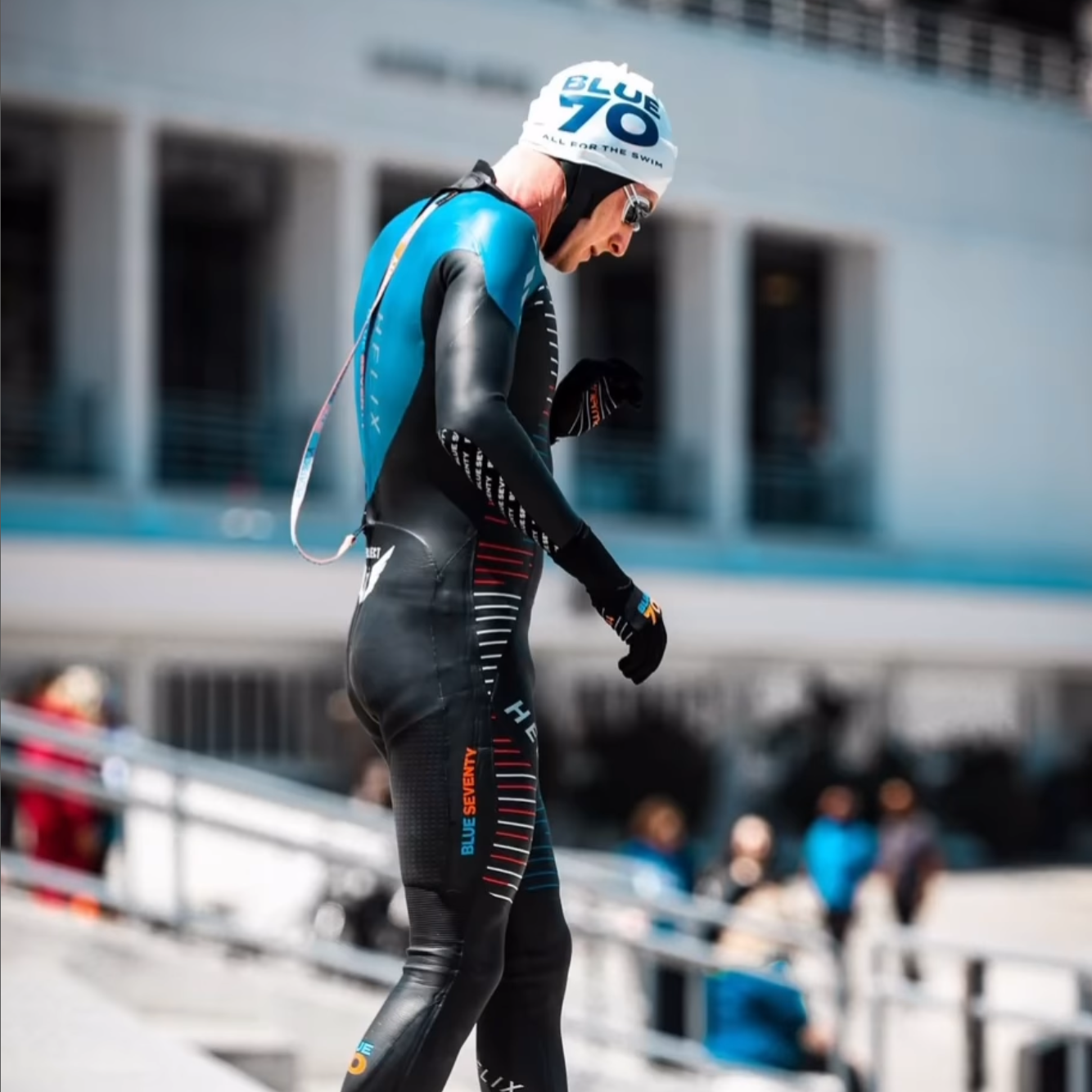
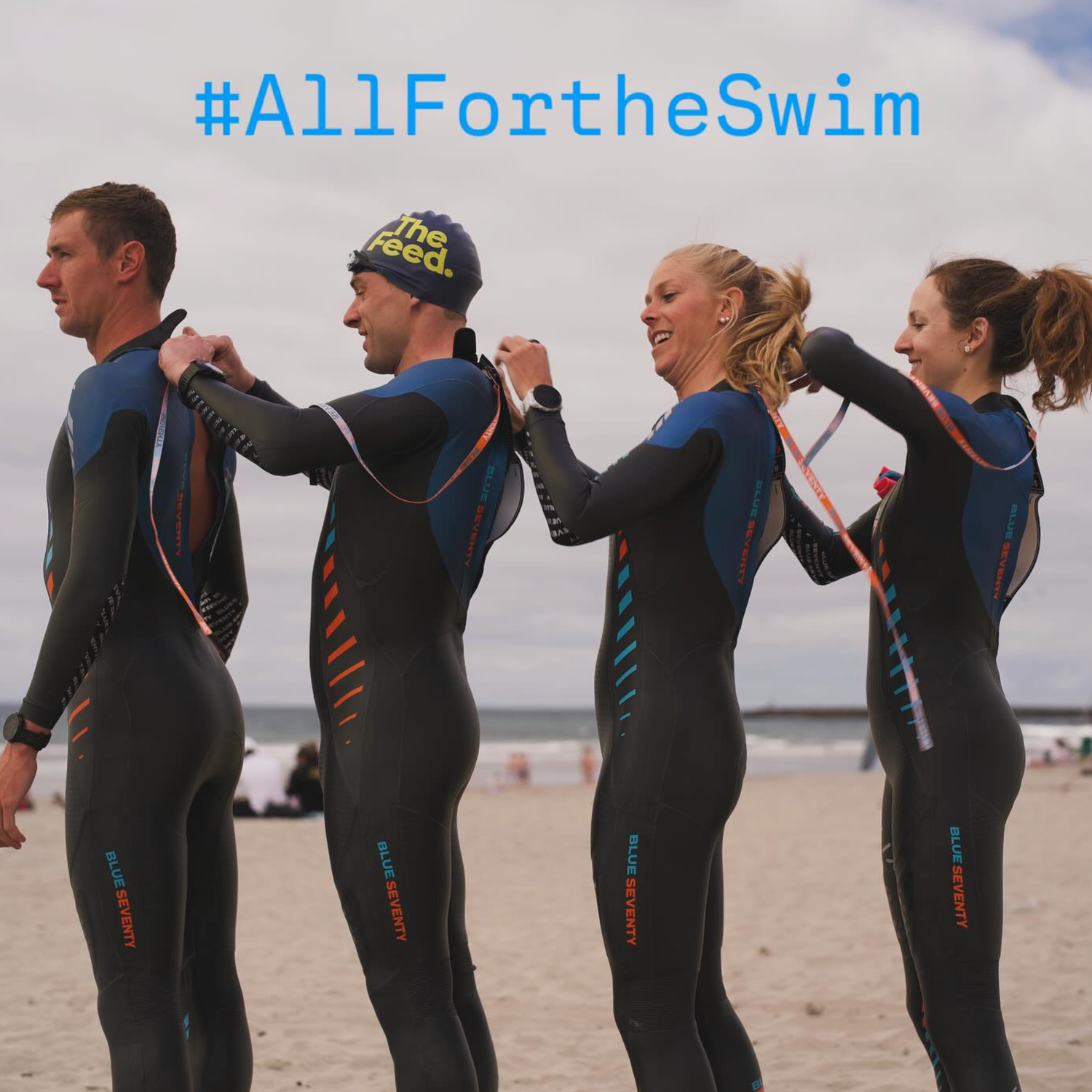
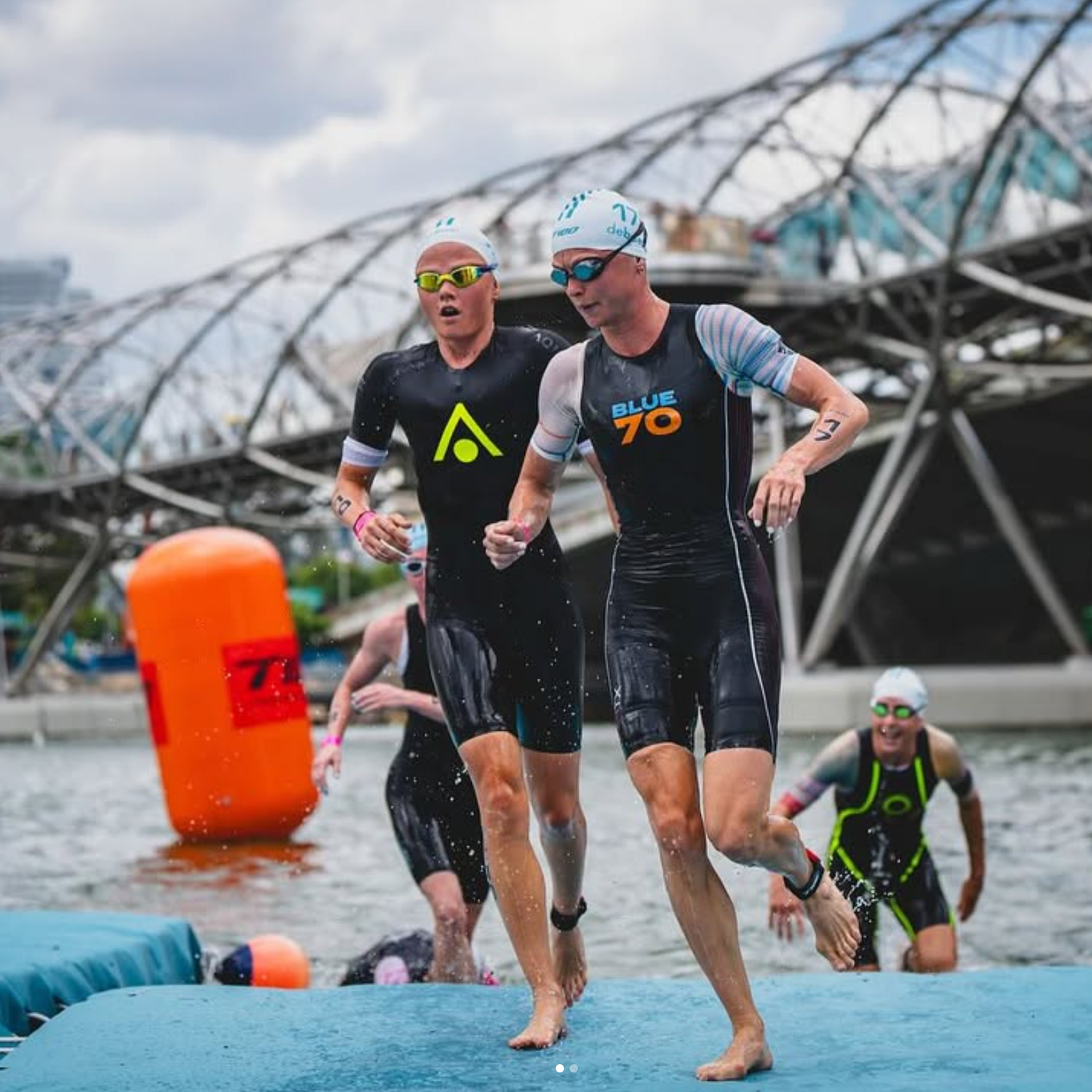
The cleanest T1s start at swim exit, not at the rack. Once you are upright and moving, get to work on the upper half of the suit as soon as the course and the crowd allow it. Find the zipper cord, open the suit, peel the shoulders free, and bring the neoprene down to the waist while you run. If you do that well, the mat becomes the place where you finish the job, not the place where you begin it.
If you arrive at your transition area with the suit still up around your shoulders, you have added an unnecessary task to the slowest part of T1. That is where athletes stall. Wet hands, high breathing, and crowded racks are a poor mix for fine motor work.
Why the lower leg is where transitions go wrong
The sleeves are rarely the real problem. Ankles and heels are. That is where the wetsuit has to slide over the widest part of the foot and lower leg, often when the athlete is bent over, breathing hard, and trying not to step on their own gear. A transition mat helps because it gives you a cleaner, more predictable place to plant one foot while you free the other.
Balance comes first. The usual mistake is trying to yank the suit off while standing on one foot and twisting. That leads to hopping, wobbling, and extra seconds. A better sequence is compact and controlled.
- Step onto the mat with both feet under you.
- Push the suit low on one calf.
- Free that foot.
- Switch sides and repeat.
- Move the wetsuit clear of your shoes.
No part of that needs to look dramatic. The best transitions usually look boring because every movement has already been decided.
Your mat setup reveals whether your wetsuit fit is working
T1 has a way of exposing fit problems fast. A swim-specific wetsuit should feel snug on land and settle more naturally once you are in the water. That snugness is normal. Trouble starts when the suit has not been pulled high enough through the legs and hips before the swim, or when the shoulders are not seated properly and the whole suit stays under tension.
Those setup errors often show up on the mat in a few predictable ways:
- the suit catches at the heel
- bending down feels restricted
- the lower half takes force to remove instead of timing
- the athlete ends up hopping instead of stepping out cleanly
This is one reason proper donning matters so much. If the material is fully worked into the ankles, calves, knees, hips, and shoulders before the start, the exit usually goes far better. If it is hanging low or sitting unevenly, you often pay for it in T1.
How to lay out a transition mat for a wetsuit race
You do not need much space. You need clear space. A mat works best when it supports one short chain of actions from swim exit to bike-out. Keep it compact enough that you can read your setup in one glance.
A clean layout usually includes:
- a front section where you will step out of the wetsuit
- a helmet placed so it is easy to grab and put on
- sunglasses beside the helmet if you race with them
- shoes set to one side or at the rear edge
- an open patch where the wetsuit can fall without covering anything important
That last point gets missed all the time. The wetsuit needs somewhere to go. If every inch of the mat is occupied, the suit ends up across your shoes or under your helmet straps. Then T1 turns into a sorting exercise.
Cold water changes the equation
In colder races, the transition mat becomes more useful because dexterity drops as the water temperature drops. Below about 56 to 58°F, a purpose-built thermal suit adds meaningful thermal protection for many swimmers. Those same conditions can leave your hands less responsive when you reach transition, which makes simple tasks feel less simple.
That is where a clear setup pays off. If your mat, helmet, and shoes are arranged the same way every time, you have less thinking to do and less fumbling to manage. Cold conditions do not change the sequence. They make the value of the sequence easier to see.
Size matters, and smaller usually works better
A huge towel looks organized before the race starts. During the race, it often creates clutter. It bunches up, takes more room than you need, and encourages you to spread gear out instead of grouping it by task.
A compact mat or small towel is usually the better call. It gives you enough room to stand, enough surface to cut some of the water and grit underfoot, and enough visual contrast to find your space. More material does not always mean more speed.
Practice the mat the same way you practice the swim
Many triathletes train the swim, the bike, and the run, then expect transition to sort itself out. That works until race morning. Transition skill is still skill. It improves with repetition.
Set up a small mat in training and rehearse the full sequence. If you have access to open water, practice after a short swim. If not, simulate the effort with a short hard run before starting the drill. Then repeat your T1 routine until it feels familiar.
- Move with purpose from your simulated swim exit.
- Peel the suit to the waist while running.
- Step onto the mat under control.
- Strip the suit from one leg, then the other.
- Place the suit out of the way.
- Put on your helmet and handle the next item.
- Leave the area cleanly.
This kind of practice does two useful things. It sharpens the order of operations, and it shows you where the suit is fighting you. If the ankles stick every time in training, race day will not fix that.
Common transition mat mistakes
Using too much space
A larger setup often leads to more clutter, not more efficiency.
Leaving the suit on top of your shoes
The wetsuit should finish away from the items you need next.
Starting to pull before you are balanced
Get both feet under you first. Then work the neoprene down.
Trying to dry your feet completely
You need enough control to move to the next step, not a full grooming session in T1.
Only practicing when you are tired and annoyed
Learn the movement when you are calm. Add speed after the sequence is automatic.
Why this matters from a Blue70 perspective
At Blue70, we look at transition as an extension of the swim. Suit flexibility, buoyancy placement, shoulder freedom, neckline comfort, and proper fit all shape what happens when you hit the mat. A wetsuit that matches your body, your training frequency, and your race conditions is easier to swim in and easier to exit cleanly.
That is one reason swim-specific design matters. Race-focused suits, training-oriented suits, thermal suits, and sleeveless options all serve different needs. The better that choice matches the day, the fewer problems you need to solve in T1.
If you are still dialing in fit, a Test Swim is one of the best ways to learn how a suit behaves in the water and how it comes off when the swim is over.
A short checklist before your next race
- Can you spot your transition area quickly?
- Is your mat compact and easy to work on?
- Is there open space for the wetsuit to fall clear?
- Have you practiced removing the suit from the ankles and heels?
- Does your wetsuit feel properly fitted through the legs, hips, and shoulders?
The transition mat will never be the most expensive piece of race equipment you own, and it will never get the attention a wetsuit or bike does. Still, on race day, it can become one of the most useful pieces of ground you stand on. Treat it like part of your T1 strategy, not an afterthought, and it will do what good race systems always do: reduce mistakes and make good execution easier.