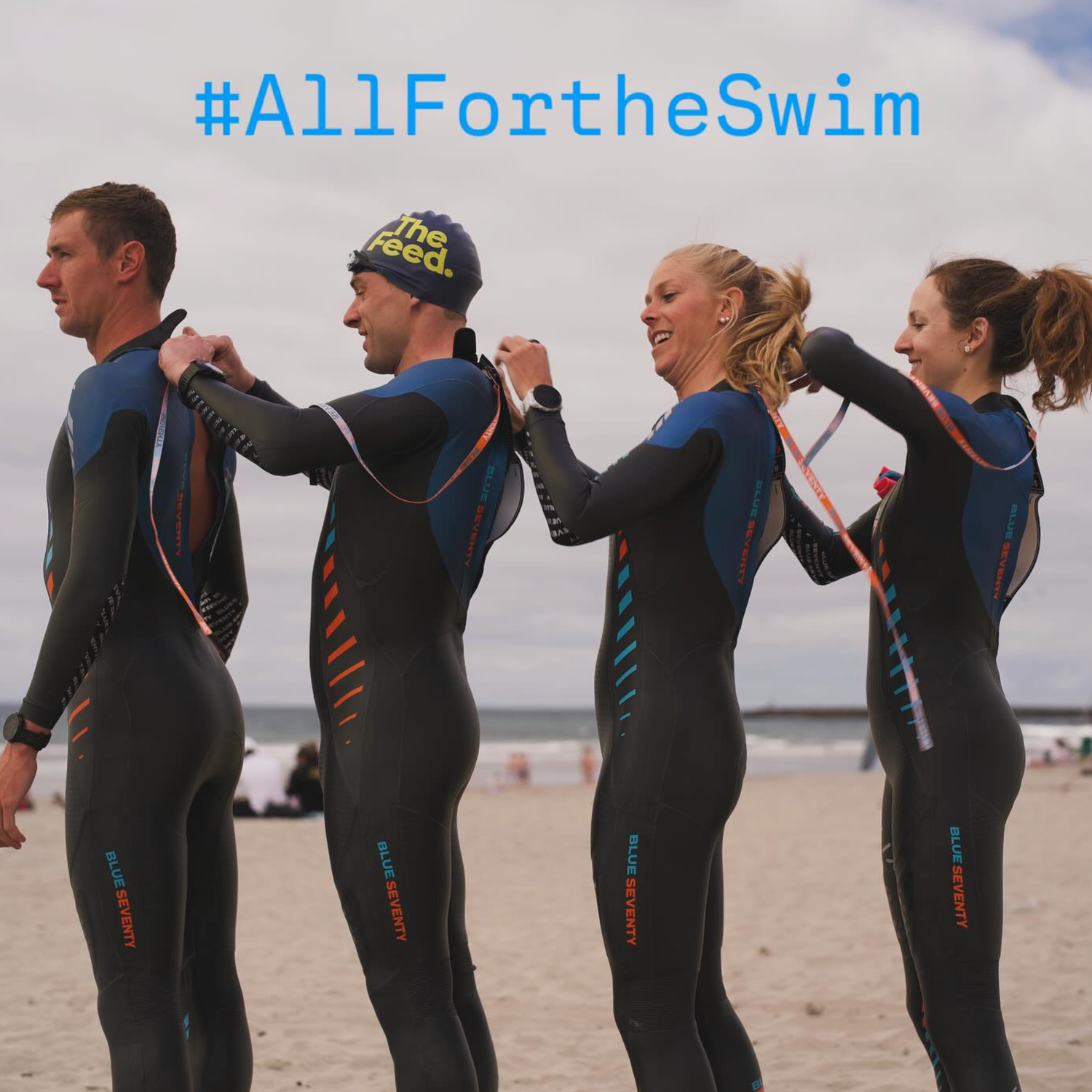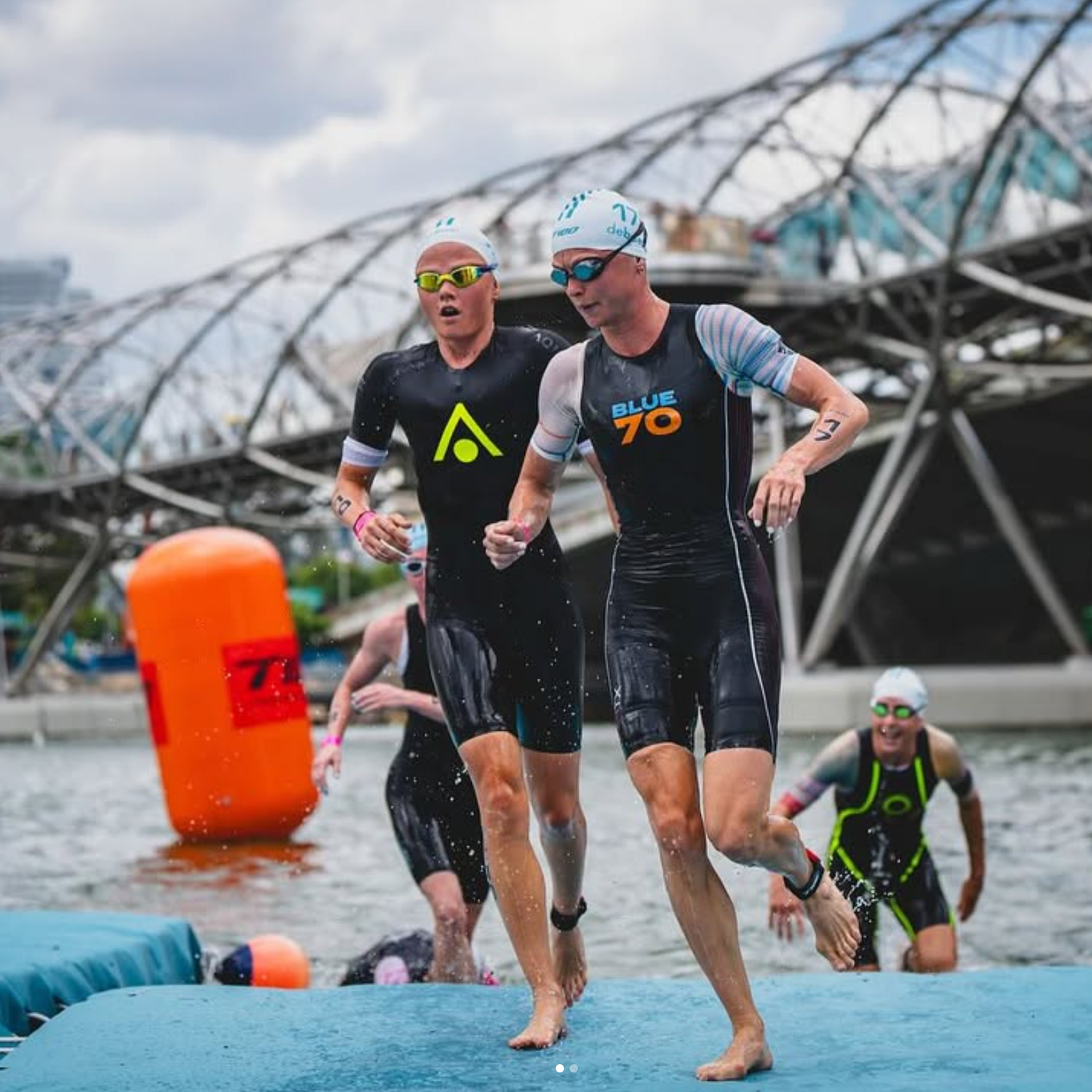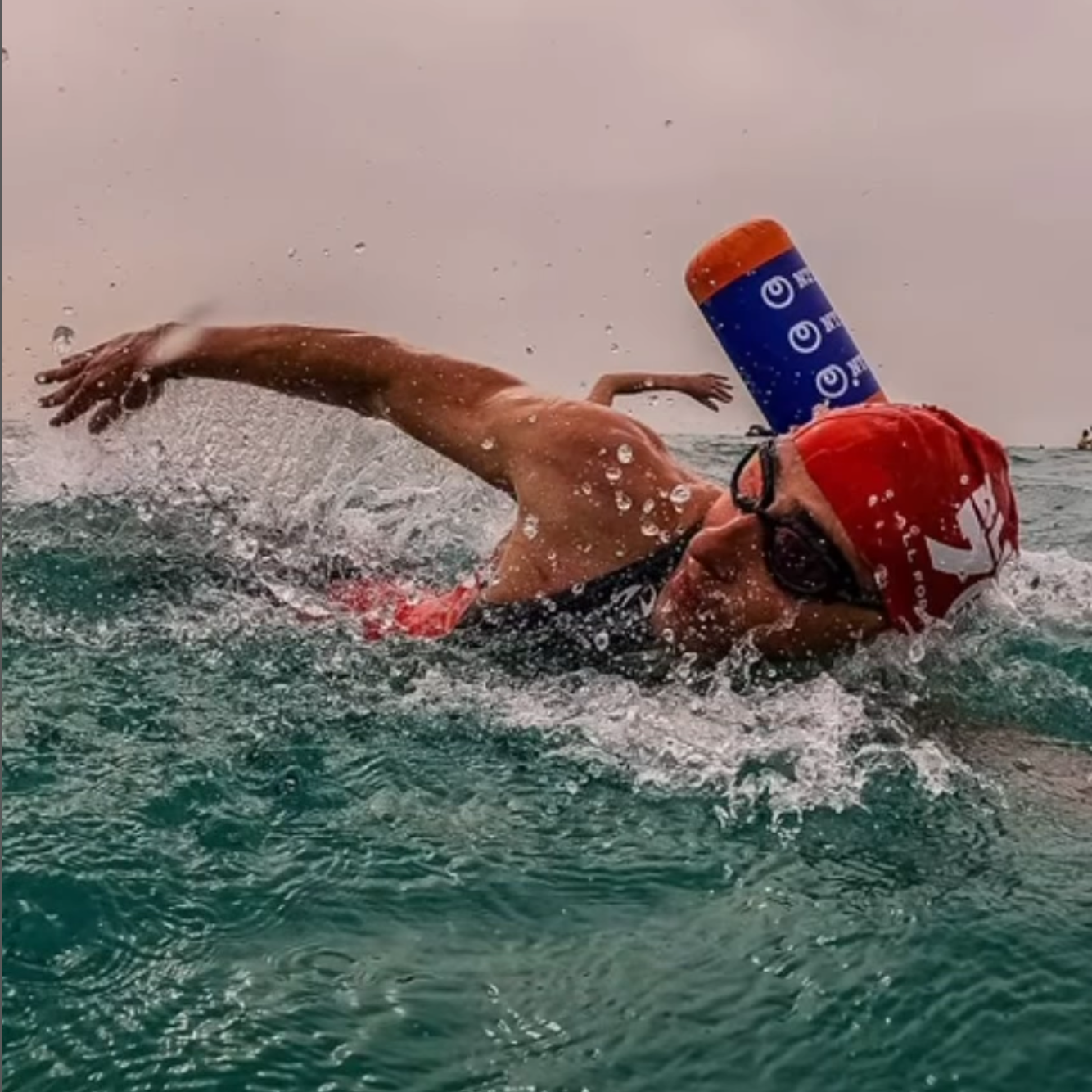



Surfers and divers have worn hooded wetsuits for decades. Walk into any cold-water surf shop and you'll find suits with the hood built right into the torso, sealed at the neck as one piece. Ask a triathlete or open-water swimmer for the same setup and you won't find one on the market. Swim-specific wetsuits keep head coverage separate: a neoprene cap worn under a silicone or latex cap, not a hood bonded to the collar.
That's a design choice, not an oversight. It comes down to how heat actually leaves the body in water, and what front-crawl swimming demands from the neck that paddling never does.
The Real Math on Heat Loss
Water pulls heat from the body about 25 times faster than air at the same temperature. That single fact drives most cold-water wetsuit design: how thick the neoprene is, where the panels sit, how far up the torso a suit reaches.
For years, swimmers heard that 40 to 45 percent of body heat escapes through a bare head. A 2007 review in the BMJ, by physicians Rachel Vreeman and Aaron Carroll, traced that number back to old military cold-exposure testing. Researchers covered the torso and limbs in cold-weather gear, left the head bare, then measured heat loss from the only exposed surface. Reporting that number as a share of total body heat loss produced a figure with almost no connection to how the body actually behaves. The head makes up roughly 7 to 9 percent of adult body surface area. Left uncovered, it loses heat in rough proportion to that share, not far beyond it.
So the head isn't a special drain on core temperature. That's the myth-busting part. It's also not the end of the story for swimmers.
Why the Face Still Matters in Cold Water
The face and scalp carry a dense network of capillaries close to the skin surface. The face also has arteriovenous anastomoses: direct connections between small arteries and veins that show up in the fingers, toes, ears, and nose. These structures exist for fast temperature control. They can shunt warm blood to the surface to release heat, or clamp down hard to protect the core. That's useful on a cold morning walk. In water, where heat loss per square inch already runs high, a face and scalp built for fast blood flow can lose heat faster than torso skin sitting under a wetsuit.
Add the breathing pattern. Swimmers submerge and re-expose the face on every stroke cycle. A hiker in a hat stays covered continuously. A swimmer resets cold-water contact with each breath, on skin that's already working hard to hold heat. Swimmers training below the low 60s°F report facial pain, jaw stiffness that throws off sighting and breathing rhythm, and sharp headache-type pain, often before core temperature drops in any meaningful way.
The face is a genuine cold-water problem. It's just a different problem than wrapping the whole head in neoprene the way a torso suit wraps the chest.
The Neck Seal Has One Job
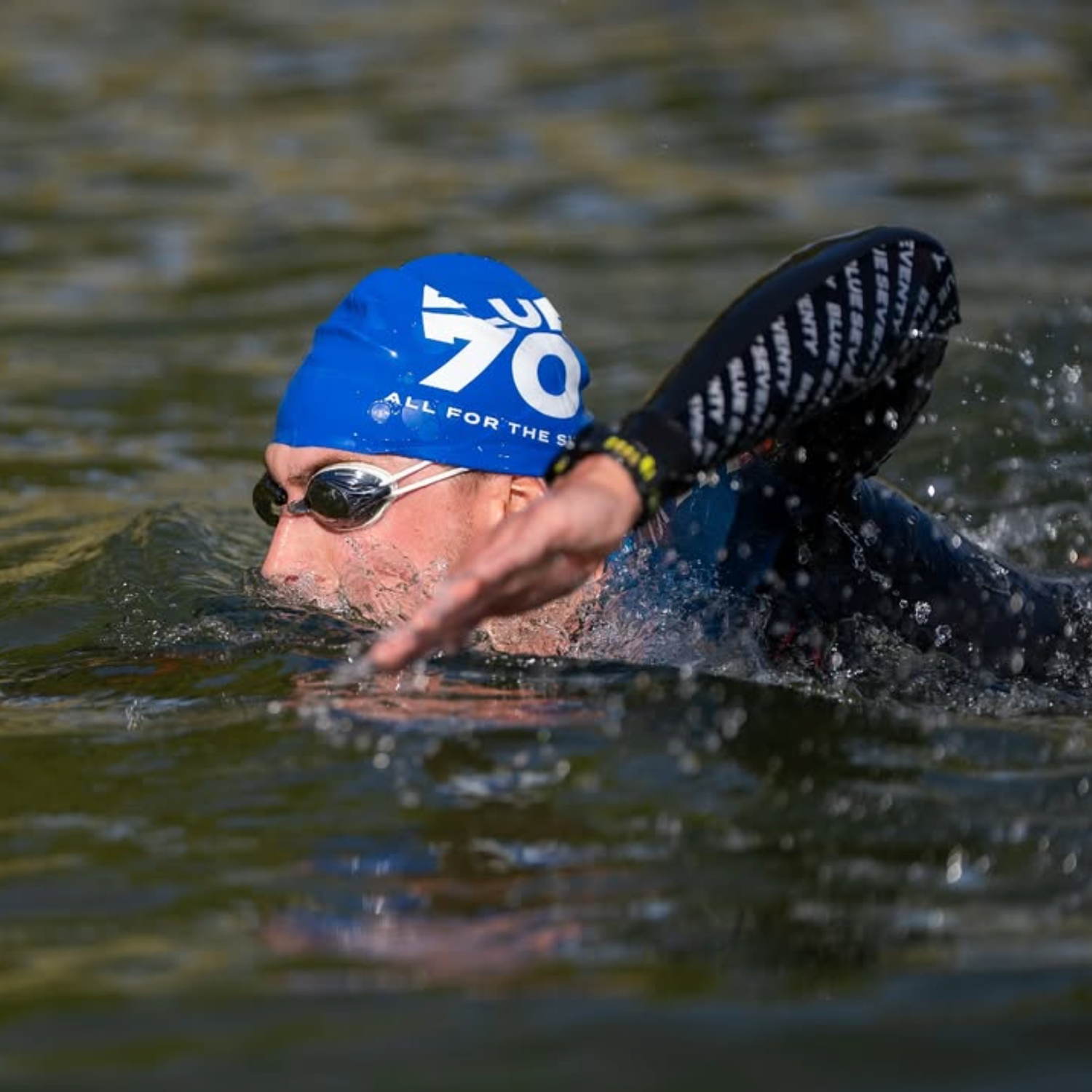
A neck seal on a triathlon or open-water suit exists to block water from flushing down the chest while letting the head rotate freely to breathe. Front crawl asks the cervical spine to rotate through a wide range on every stroke cycle. Any restriction at the neck shows up fast: added drag, early shoulder fatigue, a breathing rhythm that falls apart by the second buoy.
Bond a hood to the collar of a swim suit and you fix a joint exactly where the body needs the most movement. Surfers paddling prone don't rotate the neck anywhere near that far, so an integrated hood costs them little. A swimmer sighting every six to ten strokes and breathing on both sides faces a completely different mechanical demand.
A separate head system solves a fit problem too: the goggle seal. Build the hood into the suit collar and a swimmer has to pull on goggles and hood as one unit, which makes it hard to seat the straps over the ears and get a clean seal at the orbital bone. A separate neoprene cap goes on after goggles are already in place. Check the seal, adjust if needed, then pull the cap over the straps to lock everything down.
Layering a Cap the Right Way
Blue70's thermal accessories are built for exactly this approach, worn with a full suit or the Thermal Reaction rather than an integrated hood. Order matters here, and skipping a step usually shows up as a leaky goggle seal thirty minutes into a swim.
- Goggles go on first, seated and adjusted for a dry seal.
- A neoprene cap goes over the goggle straps, holding them in place and adding insulation across the scalp.
- A thin silicone or latex cap goes over the top, locking the neoprene down and smoothing the surface.
Fit at the temple and jaw deserves real attention. A neoprene cap that's too tight across the temples can press on the outer ear and create a pressure sensation some swimmers mistake for cold-water dizziness. It should sit snug enough to stop water flushing at the edges without pinching.
When to Add More Coverage
In water in the mid-50s°F and below, a neoprene cap plus a silicone cap covers most swimmers through an hour-long session. Marathon and ice-mile swimmers pushing past that exposure time sometimes add a second thin neoprene layer, or a face-covering option that leaves only the mouth and nose clear. That trade sacrifices sighting flexibility for insulation, which makes sense for an event without frequent sighting demands. It's a specialized setup, not a default choice for triathlon or a standard open-water swim.
Acclimatization does more work than gear ever will. Swimmers who build cold tolerance gradually, adding a few minutes of exposure per session over several weeks, report far less facial discomfort at a given water temperature than swimmers who jump straight into cold water with maximum insulation and no adaptation period.
Cold water swimming carries real risk. Anyone easing into water below 60°F should build exposure time step by step, swim with a partner or group, and know the signs that call for getting out and warming up rather than pushing through ordinary discomfort.
Caring for Neoprene Head Gear
Neoprene caps need the same care as the rest of a wetsuit kit. Rinse in fresh water after every ocean or chlorinated-pool swim. Dry away from direct heat and sunlight. Store flat or on a wide hanger rather than folded at a sharp crease. Chlorine and prolonged heat exposure break down neoprene cell structure over time, the same failure mode that affects a full wetsuit. A cap is no exception for being small.
The Bottom Line for Your Cold-Water Setup
A built-in hood solves a real problem for surfers and divers who don't need cervical rotation through a stroke cycle. Swimmers face a different problem entirely: keeping the face and scalp warm enough to swim comfortably while keeping full rotation for breathing and sighting. A separate neoprene cap, layered correctly with goggles and a silicone cap, handles that job without compromising the neck seal or shoulder mobility a suit like the Thermal Reaction is built around.
If you're extending your open-water season into colder water this year, check your neck seal and shoulder mobility before you add head layers on top, and build your cold tolerance gradually. Gear helps. It doesn't do the work acclimatization does.