


Most swimmers think of pool wetsuit training as a backup plan for days when open water is not practical. That view sells the session short. A swim-specific wetsuit changes your position in the water, your kick demand, your breathing rhythm, and the way you settle into pace after a hard start. The pool gives you a controlled place to feel those changes clearly, repeat them, and decide which ones help on race day.
That is why pool wetsuit training works best as race rehearsal. You are not using the pool to imitate open water in every detail. You are using it to isolate the parts of wetsuit swimming that matter most: posture, pacing, sighting rhythm, shoulder freedom, and comfort under steady effort. Those are all easier to study in a lane than they are in a choppy lake start.
What the wetsuit changes first
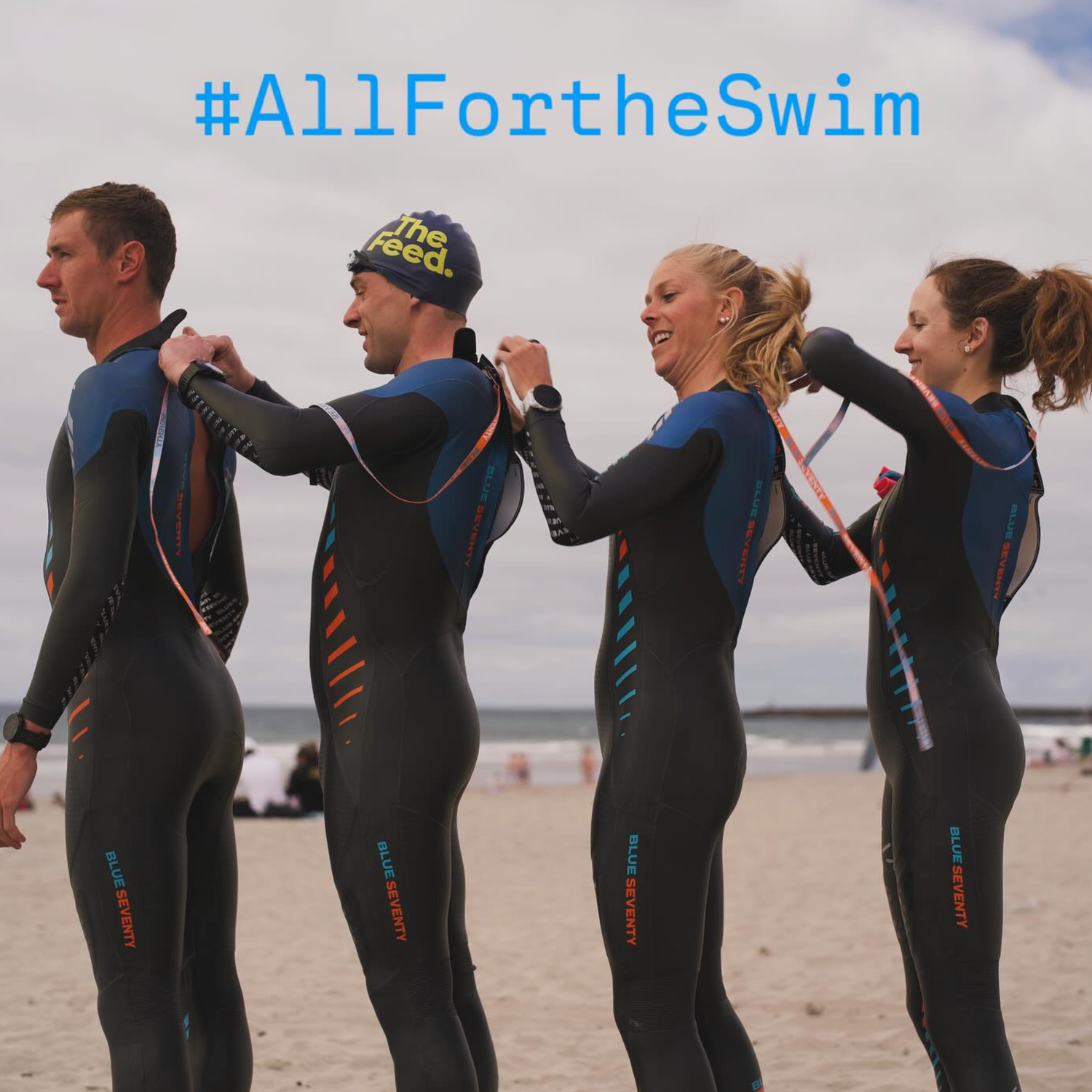
The first thing a swim-specific wetsuit changes is body position. It lifts the hips and legs, supports a flatter line through the water, and reduces the drag that comes from swimming with the lower body too low. For triathletes, that matters because better alignment usually means less wasted energy over the swim leg. Blue70 has long framed this simply: buoyancy equals speed in the water.
That does not mean a wetsuit guarantees a faster split. It means the suit is designed to improve hydrodynamics and reduce drag by supporting a more efficient position. In the pool, you can actually feel whether that support lets you lengthen the stroke, soften the kick, and breathe with less disruption.
Why the pool is useful before open-water season
Open water adds too many variables to make clean comparisons easy. Temperature, chop, visibility, current, and nearby swimmers all shape what you feel. In the pool, you can hold the effort steady and pay attention to details that often disappear outdoors.
A short wetsuit set in the pool can answer practical questions:
- Is the suit high enough through the shoulders, or did you leave material too low in the torso?
- Does your breathing stay smooth after a hard opening effort?
- Can you reduce the kick and still hold a stable line?
- Does sighting throw off your balance?
- Do you still feel pressure on the forearms early in the catch?
Those are useful race questions. The pool lets you test them without much noise around the answer.
The common mistake: using the suit to cover up flaws
There is one trap here. A wetsuit can make a swimmer feel better without making the stroke better. A swimmer with sinking legs often feels immediate relief in neoprene. A swimmer with a weak catch may hold pace more comfortably because the body rides higher. A swimmer with an oversized kick may stop noticing the problem because buoyancy is doing part of the work.
That is why pool wetsuit training should be selective, not constant. Put the suit on for a purpose. Learn what changes when buoyancy improves. Then take it off and see what carries over. If the better posture remains, the session helped build a skill. If the same flaws return right away, you found a problem worth training directly.
How a swim-specific wetsuit changes the stroke
Body line
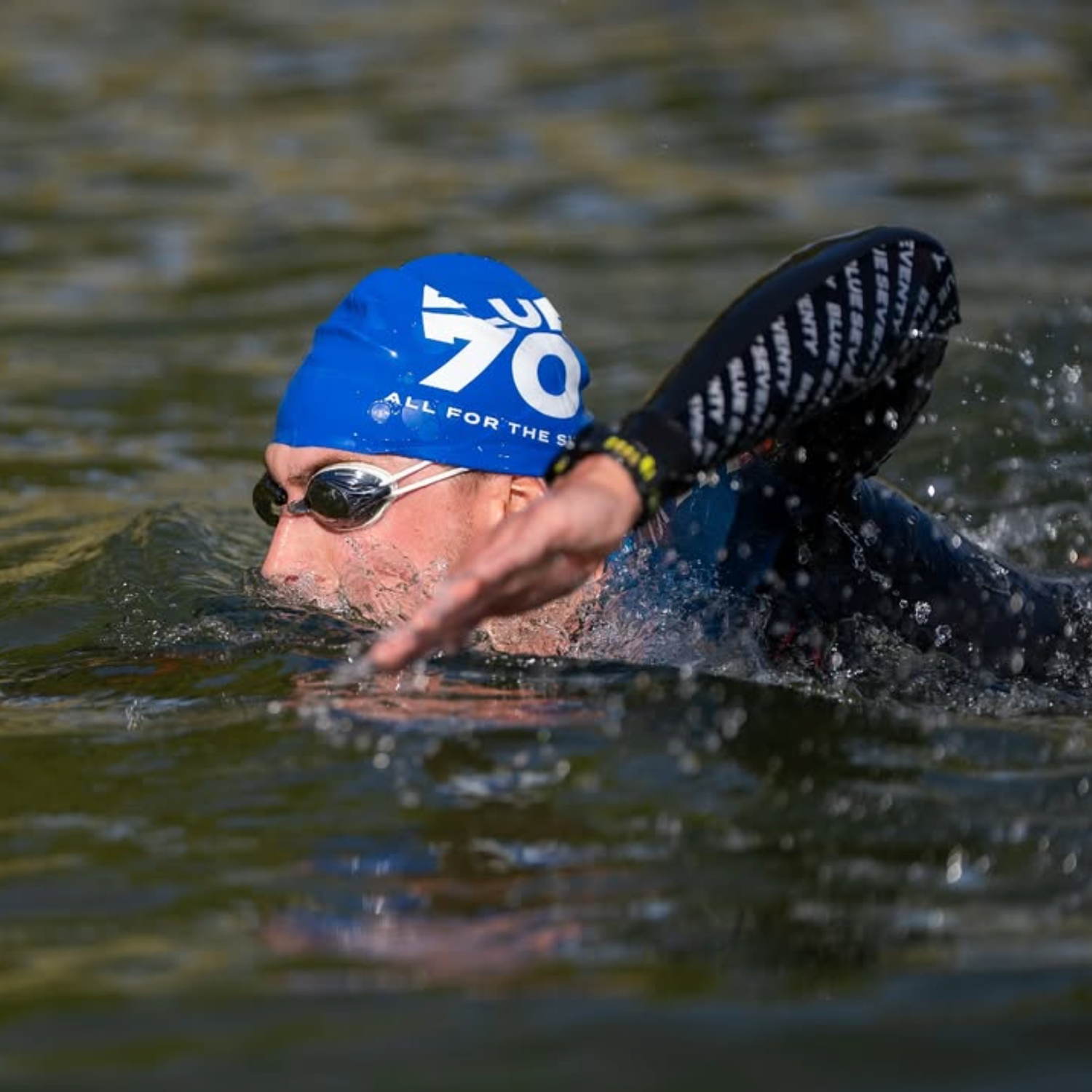
Most swimmers notice a higher, flatter position first. That tends to reduce drag and lower the cost of staying aligned. Beginners often feel the biggest difference because body position usually costs them more to begin with.
Kick demand
A wetsuit supports the lower body, so many triathletes do not need much kick to stay balanced. That can save the legs for the bike and run, but it can also reveal timing issues. Some swimmers use a heavy kick to hold together a stroke that is out of sync. Once the suit supplies support, that habit becomes easier to spot.
Feel for the water
Swimmers still need to feel pressure on the hands and forearms to establish a clean catch. Blue70’s Helix uses a permeable catch panel intended to preserve feel for the water, and that kind of detail matters when you are trying to hold a connected front end of the stroke. If the catch starts slipping in the suit, the answer is usually technical correction, not more force.
Shoulder freedom
Restriction often comes from setup, not the suit itself. A wetsuit should feel snug on land and more comfortable in the water. If your shoulders feel loaded in the first 100, stop and check the fit before blaming the pattern. A suit that has not been worked fully up through the legs, hips, and torso will often feel tighter across the shoulders than it should.
Why short sessions usually work better
Most pools are warm enough that a full wetsuit can become uncomfortable if you leave it on for a long aerobic set. Blue70’s own guidance suggests that above roughly 70 to 72°F, a full suit can become too warm over longer swims. That makes purpose important. A wetsuit block in the pool should have a clear job to do.
A good session often looks like this:
- Warm up without the wetsuit.
- Do a focused comparison set in the suit.
- Practice a few race-pace efforts.
- Add sighting if that is part of the goal.
- Finish with quick removal practice if the facility allows it.
That format keeps the session specific and useful.
Pool sets that tell you something
Body-position comparison
Swim 4 x 200 and alternate between no wetsuit and wetsuit at the same moderate effort. Track stroke count per length, breathing comfort, kick use, and where you feel pressure in the catch. If the stroke count drops but the front end feels disconnected, that tells you one thing. If the stroke count stays steady and breathing gets easier, that tells you another.
Race-start control
Swim 8 x 50 in the wetsuit. On the odd repeats, swim the first part of the length strong, then settle quickly into control. On the even repeats, swim smoothly from the start. This teaches one of the most useful race skills in triathlon: calming the stroke after the opening surge.
Sighting with balance
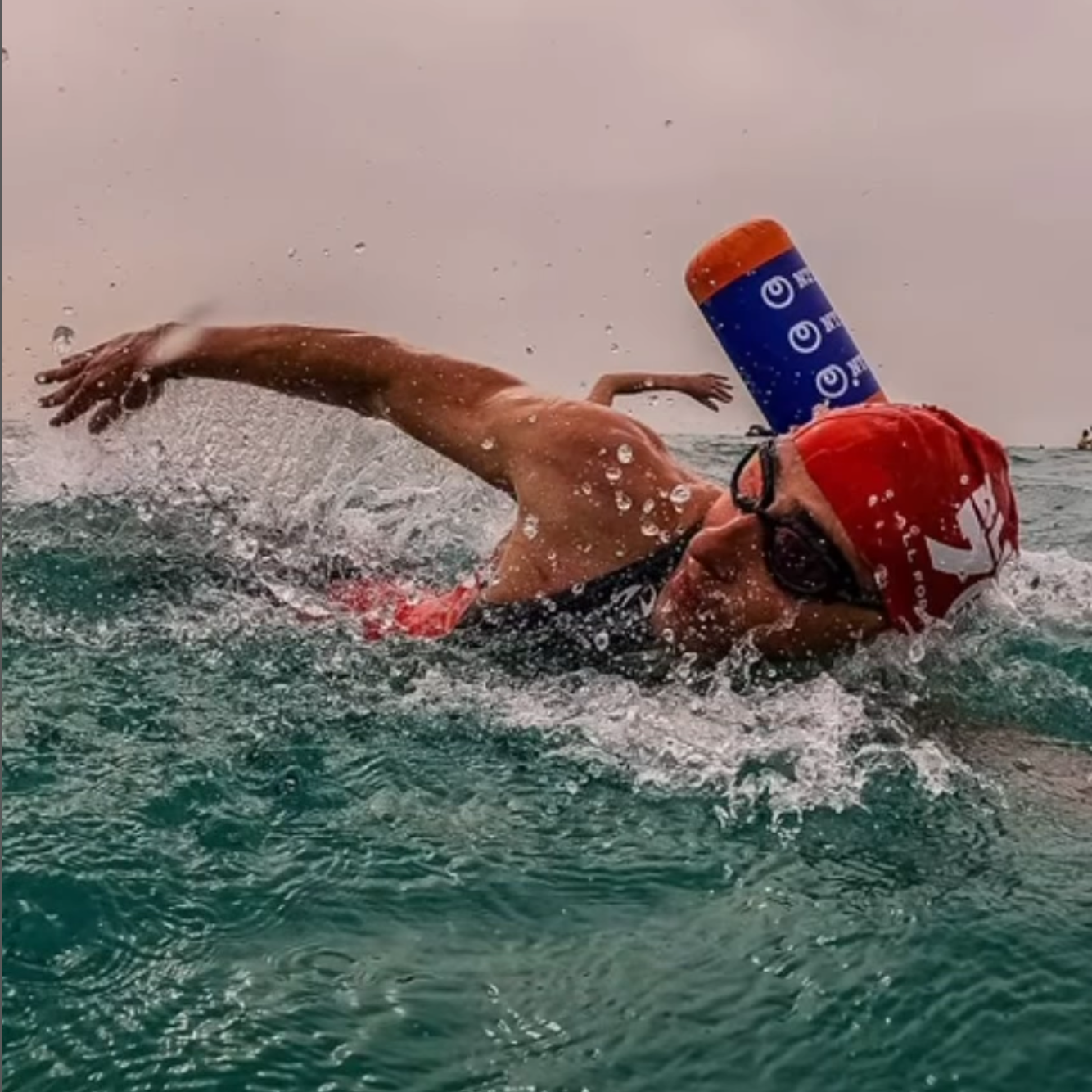
Swim 6 x 100 at moderate effort and add several sights during each repeat. Keep the eyes low and return them forward and down quickly. Watch whether the hips drop each time you lift the head. If they do, your sighting mechanics need work.
Exit rehearsal
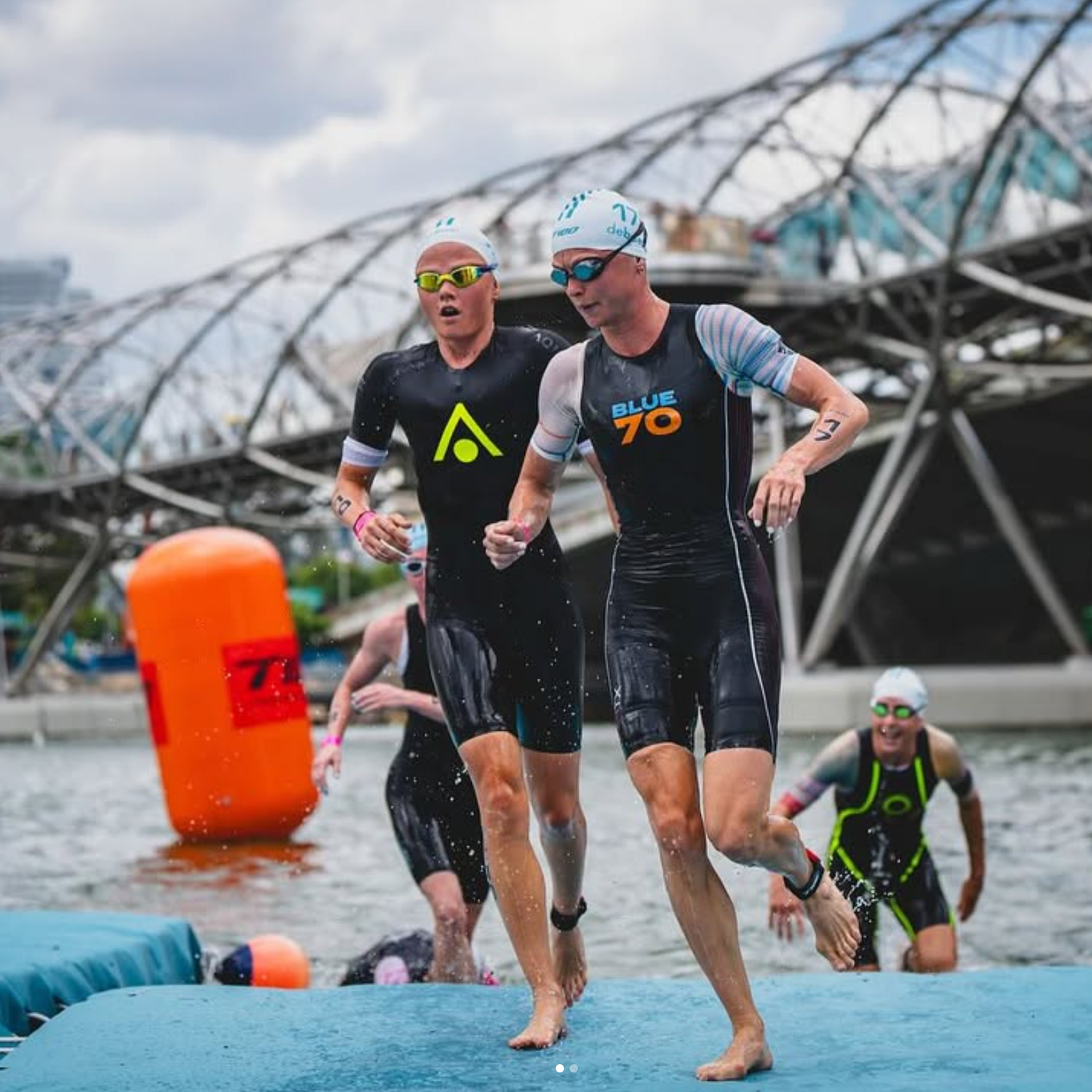
At the end of the set, swim into the wall at race effort, stand, unzip, and peel the suit to the waist with purpose. T1 starts before you reach the bike rack. Pool rehearsal is a good place to make that movement smoother.
Which Blue70 options fit different training goals
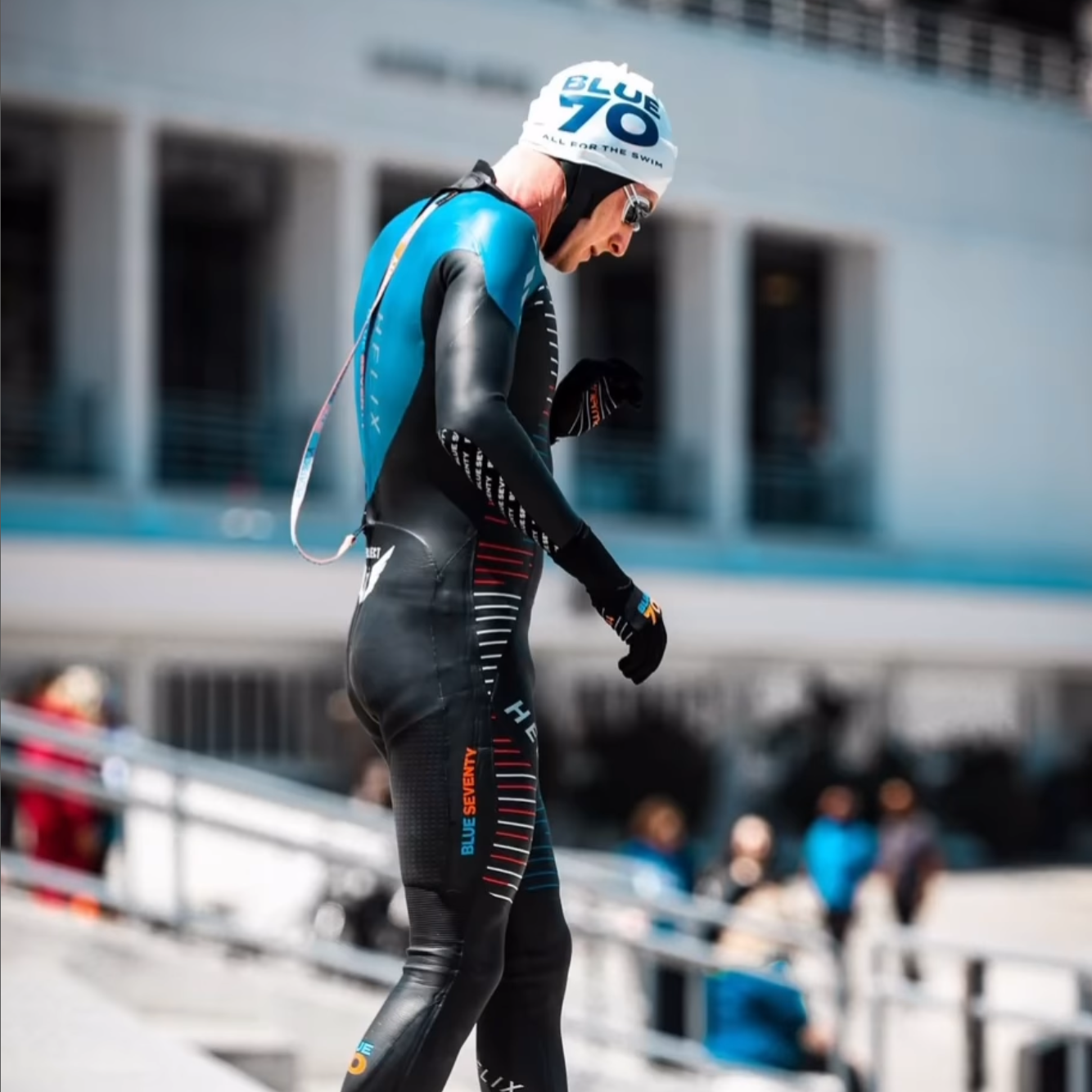
If your goal is race-day specificity, the Helix is Blue70’s flagship race suit. It uses very thin, flexible neoprene in the arms and shoulders, includes the permeable catch panel, and features LIFT buoyancy panels introduced in 2018. Blue70 is also direct about the trade-off: that delicate neoprene is not the best choice for heavy training use.
If you plan to spend more time training in a wetsuit, the Reaction is often the better fit for frequent or longer swims. The Fusion works well for shorter frequent sessions and features a lower-sitting neckline from the 2021 redesign, built for comfort while maintaining a watertight seal.
If you are preparing for colder outdoor swims, the Thermal Reaction is the purpose-built cold-water option in the line. It is fully lined with Zirconium jersey for added thermal protection. If your training focus is body position rather than full-suit rehearsal, the LIFT Buoyancy Short offers another route for pool work by adding buoyancy in a more targeted way.
Who benefits most from pool wetsuit training
- First-time triathletes: Pool sessions reduce uncertainty. You can practice fit, breathing, pacing, and calm starts before your first open-water race.
- Frequent racers: The pool is a strong place to compare stroke count, kick demand, and pacing control while wearing the same type of gear you expect to race in.
- Cold-water swimmers: The pool helps with fit and stroke rhythm before early-season outdoor swims, though it does not replace acclimatization and safe cold-water practice.
- Athletes focused on fit: Swimming reveals problems that standing on deck does not. That is especially useful when dialing in comfort through the shoulders, neckline, wrists, and ankles.
Common mistakes that waste the workout
- Leaving the suit on for the entire session. The best information usually comes from comparison work, not from endless straight swimming in neoprene.
- Swimming every repeat too hard. If the effort changes each time, the comparison becomes messy.
- Ignoring setup. A poorly positioned suit creates shoulder fatigue that has nothing to do with actual fit.
- Training in water that is too warm for too long. Heat changes stroke quality and comfort quickly.
- Assuming pool readiness equals open-water readiness. The pool teaches posture and rhythm. It does not teach chop, current, contact, or cold-water response.
A simple pre-race sequence
You do not need weeks of nonstop neoprene pool swimming. A short run of focused sessions before race season is enough for most athletes.
- Session one: Check fit, neckline comfort, shoulder freedom, and breathing rhythm.
- Session two: Compare body position and stroke count with and without the suit.
- Session three: Practice race-start control and settling into pace.
- Session four: Add sighting and finish with exit practice.
That sequence gives the pool a clear role. It becomes a place to sharpen race skills, not just a place to swim in extra rubber.
The real value of the pool
Pool wetsuit training works when you ask a specific question and use the lane to answer it. Can you breathe freely once the suit is on correctly? Can you hold a quieter kick? Can you sight without dropping the hips? Can you settle your stroke after a fast start? Those are questions worth bringing into a controlled setting.
If you want to test fit in the water instead of guessing on deck, Blue70’s Take a Test Swim program lets you swim in a wetsuit and still return or exchange it, as long as it comes back clean, dry, and unmodified. You can also visit the fit guide or check the size charts before your next session.