


When athletes look for a plus-size wetsuit, they’re often trying to solve a bigger problem than sizing alone. They want a suit that feels right in the water, supports their stroke, and doesn’t turn the swim into a fight against the gear.
That’s why this topic deserves a better conversation. In open-water swimming and triathlon, wetsuit fit is not just about whether the zipper closes. It influences shoulder freedom, neckline comfort, body position, fatigue, and how confidently you begin the swim. A suit that fits poorly can change your mechanics before the race has really started.
From a swim-specific perspective, the real question is not simply, “Do they make my size?” It’s, “Is this wetsuit shaped in a way that works with my body and my stroke?”
Why the size label only tells part of the story
One of the most common mistakes athletes make is assuming that if a wetsuit feels too tight, the answer is automatically to go up a size. Sometimes that helps. Often, it just moves the problem somewhere else.
A larger suit may create more room in one area while introducing new issues in another. That can mean a loose lower back, extra material in the legs, water moving through the suit, a neckline that won’t sit cleanly, or shoulders that still feel off because the panels are no longer aligned where they should be.
A swim-specific wetsuit should feel snug on land and typically more natural in the water. But there is an important difference between snug and wrong. If the suit compresses your chest unevenly, pulls down on your shoulders, or leaves you with extra material in key areas, the problem may be the shape of the fit rather than the number on the tag.
Fit affects hydrodynamics, not just comfort
This is where wetsuit advice often gets oversimplified. Athletes are told to focus on comfort, but comfort is only part of the equation. Fit also affects how the suit performs once you start swimming.
A well-fitted wetsuit is designed to help with body position and reduce unnecessary drag. As we often say, buoyancy equals speed in the water. That does not guarantee a faster split, but it does explain why a properly fitted suit can help swimming feel more efficient and controlled.
For plus-size swimmers and triathletes, poor fit often shows up in very specific ways:
- dropped elbows because the shoulders feel restricted
- a shortened stroke because the torso fit is pulling
- neck irritation from a collar sitting too high
- upper-body fatigue from fighting the neoprene
- lower-body tension because the suit was never fully seated through the hips and legs
Those are not minor annoyances. They can change how you move through the water.
The better conversation: shape, pattern, and movement
One of the most useful shifts in swim-specific wetsuit design has been moving away from the idea that fit problems are solved simply by making a suit bigger. Better wetsuit design looks at how the pattern is built and where athletes commonly need a more refined fit.
That includes critical zones like the bust, torso, hips, wrists, ankles, neckline, and zipper entry. When those areas are designed thoughtfully, the whole suit works better in motion.
For women, this is especially important. blueseventy’s Femme Fit approach focuses on refined pattern design in the bust, torso, wrists, and ankles. It also includes a lowered neckline for comfort and reduced chafing, plus an extended zipper length to make entry easier, accommodate wider hips, and support faster transitions.
Those details are not cosmetic. They directly affect how the suit goes on, how it sits once zipped, and how it feels 500 yards into a swim.
Where plus-size athletes should pay the closest attention
If you’ve struggled with wetsuit fit before, start by identifying where suits tend to fail on your body. That usually tells you more than the broad size category ever will.
Torso length
A wetsuit that is short through the torso can create several problems at once. It may pull into the shoulders, push up into the neck, and make the entire stroke feel tight. Athletes often read this as “too small,” when in reality it may be a shape issue or a sign the suit is not fully seated.
Bust and chest fit
For many women, chest fit is one of the biggest deciding factors. The suit should feel secure and smooth, not harshly compressive in one concentrated area. If the collar gets distorted or the shoulders feel dragged downward, the chest and upper torso fit may be off.
Hip shape and entry
If getting into the wetsuit is consistently difficult at the hips, pay attention to that. Wetsuits are not supposed to be easy to put on, but they also should not require the zipper to solve a lower-body fit problem. If the suit never settles correctly through the hips, that tension usually travels upward.
Shoulder freedom
This is one of the most important performance checks in any wetsuit. In open water and triathlon, restricted shoulders lead to earlier fatigue and a less natural stroke. If your shoulders feel loaded before you have even started swimming, something is wrong in the fit or in how the suit was put on.
Neckline comfort
A neckline should feel secure, not abrasive. If the collar sits too high, rubs aggressively, or creates a choking sensation, it can ruin an otherwise promising suit. A lower, better-balanced neckline often makes a meaningful difference.
How to choose a wetsuit more intelligently
Instead of shopping only by size, use a three-part framework:
- How often will you use it?
- What water temperatures are you swimming in?
- Where does fit usually become difficult for you?
Your use case should guide the starting point.
- Sprint is a strong entry-level option for newer triathletes and occasional users.
- Fusion is a mid-range best seller, with a lower-sitting neckline that many athletes appreciate for comfort.
- Reaction is a smart choice for more frequent training and longer swims.
- Thermal Reaction is designed for cold-water swimming and provides added thermal protection below about 56-58°F.
- Reaction Sleeveless or Glide Short John can be useful in warmer water or for athletes who prefer more open shoulder feel.
Above about 70-72°F, a full suit can feel too warm over longer swims, so a sleeveless option or swimskin may be a better direction depending on the conditions and format. [VERIFY: current sanctioning-body rule if discussing race legality]
The point is not to chase the most aggressive option. The point is to choose the suit that matches your body, your water, and your training rhythm.
Why trying it on is not enough
A dry-land fitting gives you useful information, but it does not tell the whole story. The water is where a wetsuit reveals itself. Once you start swimming, the neoprene settles, the body position changes, and any restriction in the shoulders, neck, or torso becomes much easier to spot.
That is especially important if you have felt burned by sizing in the past. A suit that seems acceptable standing still can feel completely different once you begin stroking.
That’s why blueseventy’s Take a Test Swim policy matters so much. You can test the wetsuit in the water and still return or exchange it, provided it comes back clean, dry, unmodified, with tags and accessories. For athletes who have been unsure about fit, that removes a lot of guesswork.
What a good fit should feel like in the water
You are not looking for a miracle. You are looking for a suit that lets you swim naturally.
A well-fitted wetsuit often feels like this:
- your breathing settles after the first minute or two
- the stroke feels less obstructed
- the shoulders move without constant resistance
- the neck stays comfortable
- your body position feels supported rather than forced
- you stop thinking about the suit and start focusing on the swim
That last point matters. In open water, confidence comes partly from preparation and partly from trust in your gear. If the suit feels like it is working with you, the swim usually feels calmer and more manageable.
Don’t judge the fit until the suit is actually on correctly
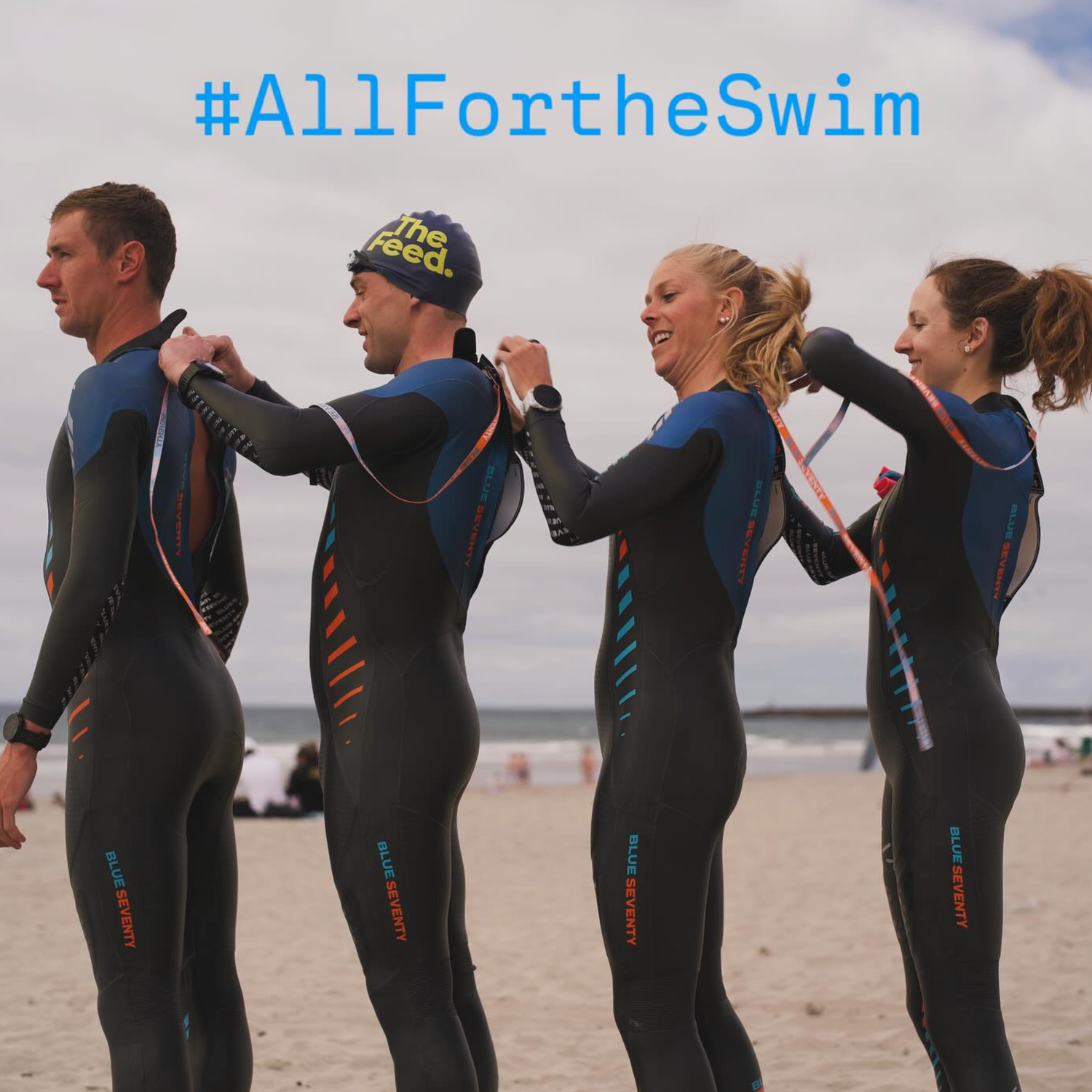
A surprising number of wetsuit complaints come down to donning technique. Before deciding that a suit is too small or too restrictive, make sure it is fully in place.
- Start at the ankles and calves. Work the material upward gradually.
- Seat the legs and hips fully. If the lower body sits low, the torso and shoulders will pay for it.
- Lift the material through the torso. This helps keep the suit from stealing length from your upper body.
- Set the shoulders last. Once the lower half is correct, position the back and shoulders carefully.
- Handle the neoprene gently. Avoid fingernail punctures, heel tears, and forcing the zipper.
Done properly, those steps can completely change how a wetsuit feels.
The bigger takeaway
The phrase “plus-size wetsuit” can be useful when starting the search, but it should not be the end of the conversation. What really matters is whether the wetsuit’s shape, pattern, and panel placement allow you to swim well.
That is the standard worth using. Not whether the suit barely zips. Not whether the number on the chart looks right. Whether it supports your stroke, your comfort, and your confidence in the water.
If you want to remove some of the uncertainty, Take a Test Swim and evaluate the suit where it matters most: in the water.