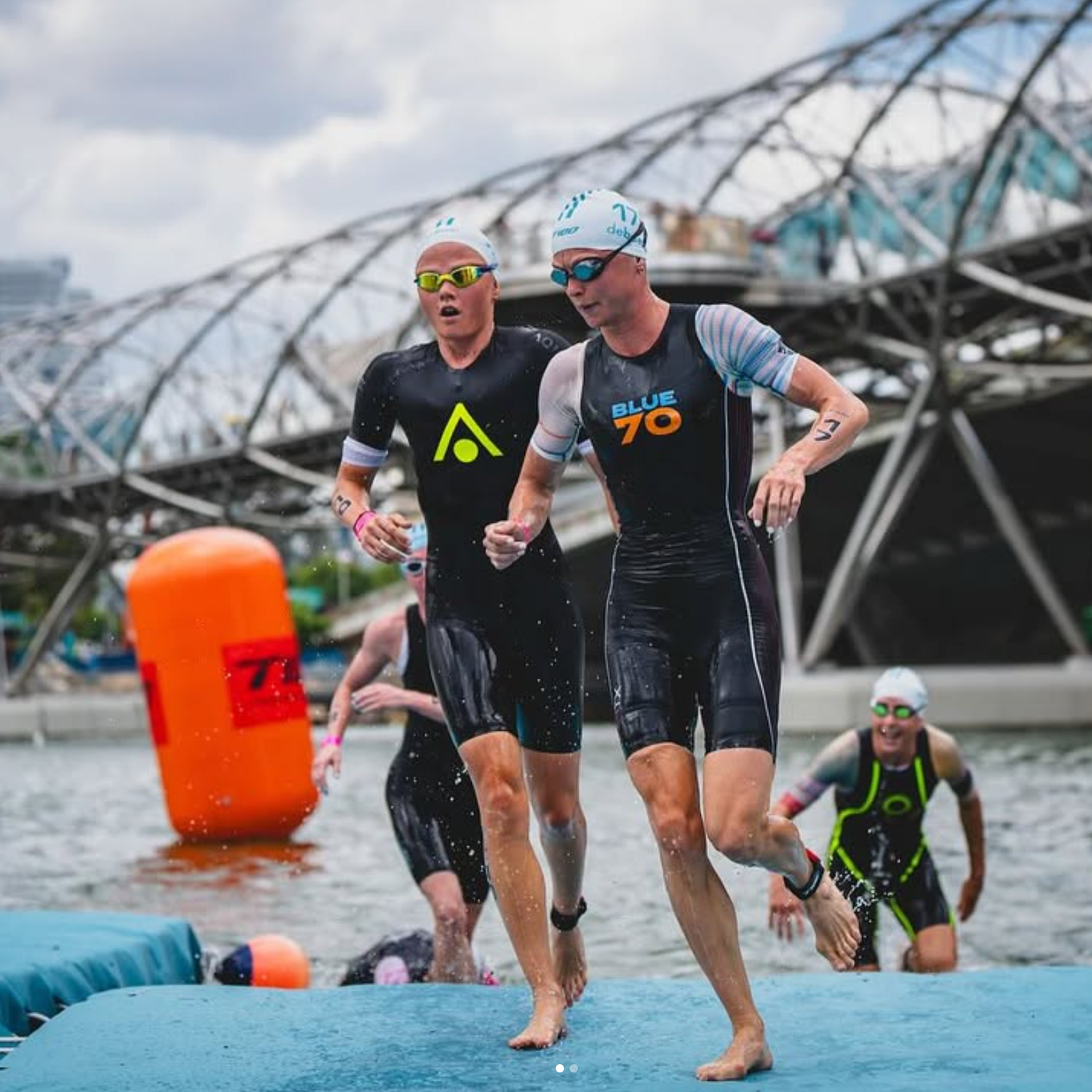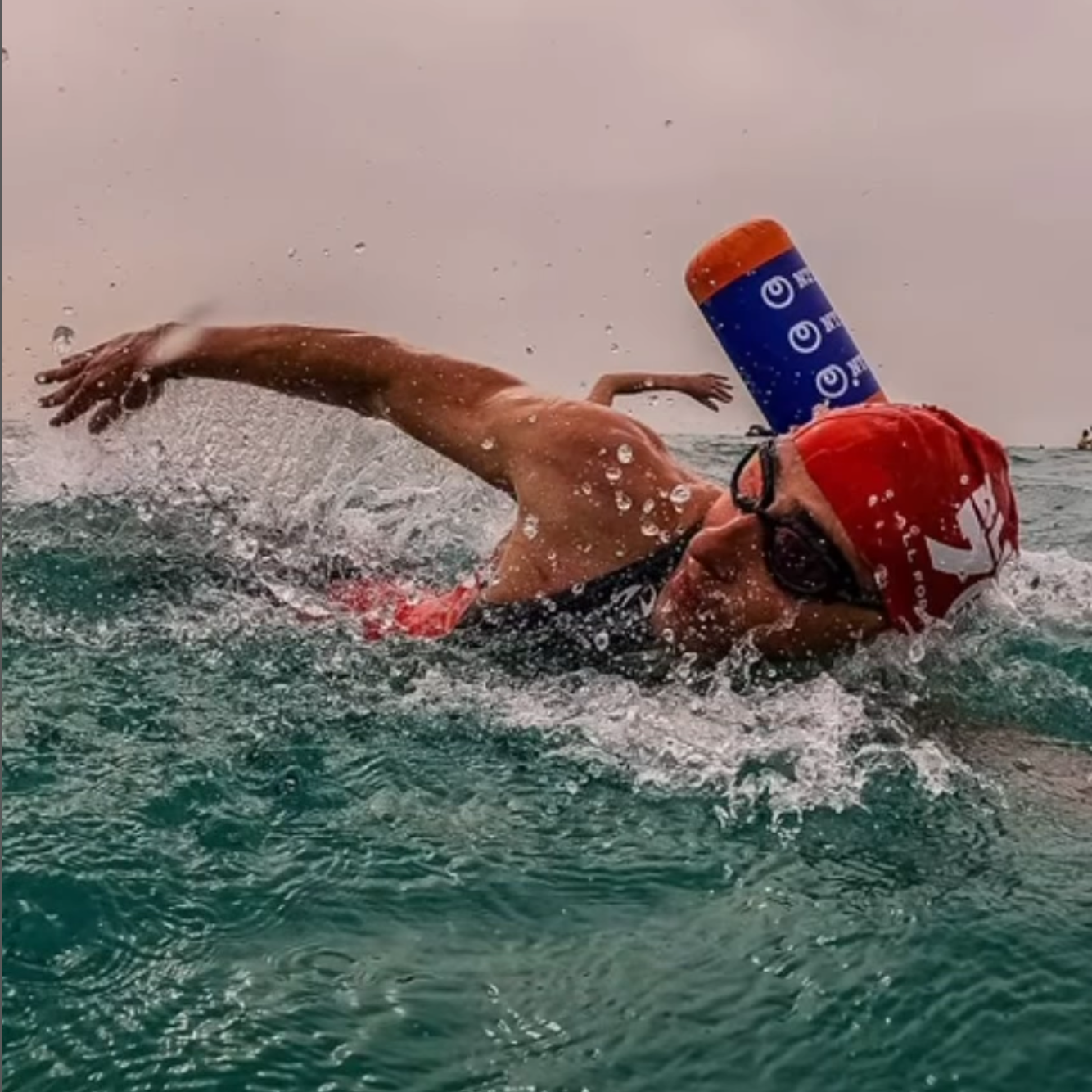



Most petite swimmers end up in a suit that matches the size chart but fights them in the water. The pattern underneath is the problem. When a brand shrinks a larger suit to make a small size, the proportions often stay wrong. The ankles bag, the collar gaps, and a fold of neoprene sits across the midsection. That fold adds drag and lets water move inside the suit. All wetsuits are not created equal.
Stop asking only which size you are. Start checking whether the suit was cut from a pattern that accounts for short torso length, shorter arms, narrower shoulders, and the relationship among those three measurements.
Size Charts Measure Height and Weight, Not Fit
A size chart is a useful first filter, not a final answer. Height and weight are proxies for torso length, arm length, shoulder width, and hip girth. Two swimmers can weigh the same and carry that weight in different places. A shorter swimmer with a long torso and short legs may need a different model or adjacent size than a same-weight swimmer with long limbs.
That is why blueseventy's size charts sit alongside a fitting guide and Test Swim policy rather than standing alone. The two measurements most size charts do not capture are shoulder-to-wrist length and collar-to-hip length. On a petite frame, those two lengths decide whether the suit seals or fights you.
Pattern Grading: What Changes When a Suit Gets Smaller
Pattern grading is the process where a base pattern is scaled up or down. For many early swim and triathlon wetsuit patterns, the base was a men's or unisex block. To create a smaller size, a pattern maker applies grade rules at specific points like the neck, armhole, torso, and leg. If those rules shrink every measurement by the same ratio, the result is a shorter, narrower version of the original pattern.
That works for rectangles. It works less well for human bodies, because body dimensions do not scale evenly. A petite swimmer needs the neck, armhole, and leg cuff graded individually rather than reduced by the same ratio applied to the chest and waist. A neck opening sized for a broader neck will sit too low or gape when scaled down by the same amount as the chest. A sleeve that loses length at the same rate as the torso may still stop halfway down the hand. Those errors are not cosmetic. Excess neoprene folds, catches water, and can restrict shoulder rotation.
A more useful approach is to grade each part of the suit from a base pattern that already reflects the target body shape. That means shortening the torso without tightening the neck in the same proportion, and tapering the wrist without cutting the sleeve too narrow at the forearm.
Three Fit Checks Before You Leave the Sizing Chart
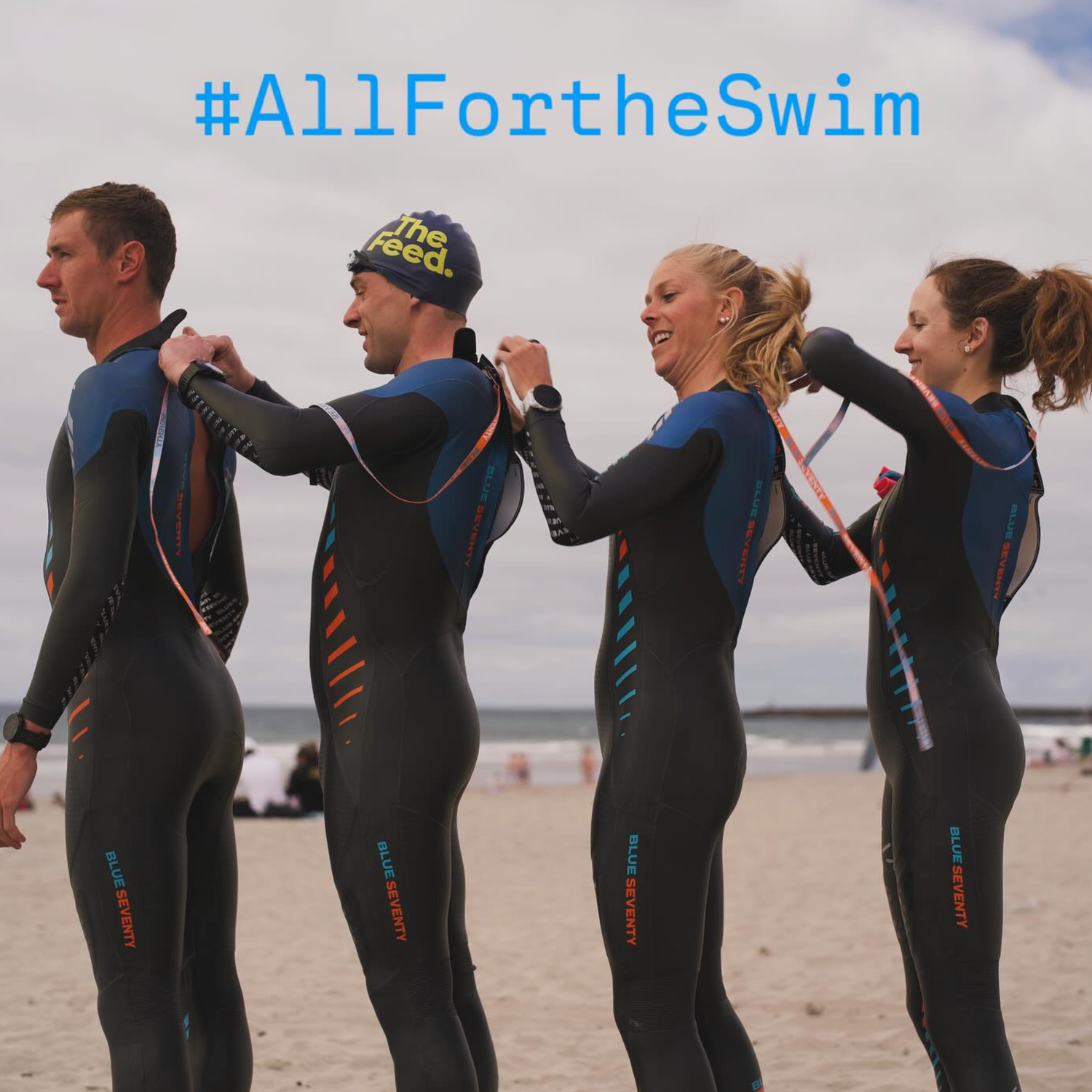
You can check most of what matters without a tape measure. Put the suit on slowly, use the pads of your fingers rather than nails, and work the neoprene up inch by inch. Then run through three zones.
- Neck. The collar should lie flat against the skin without pinching the throat. A gap at the back or a collar that rides up into the jaw means the neck opening was graded too large or the torso too long.
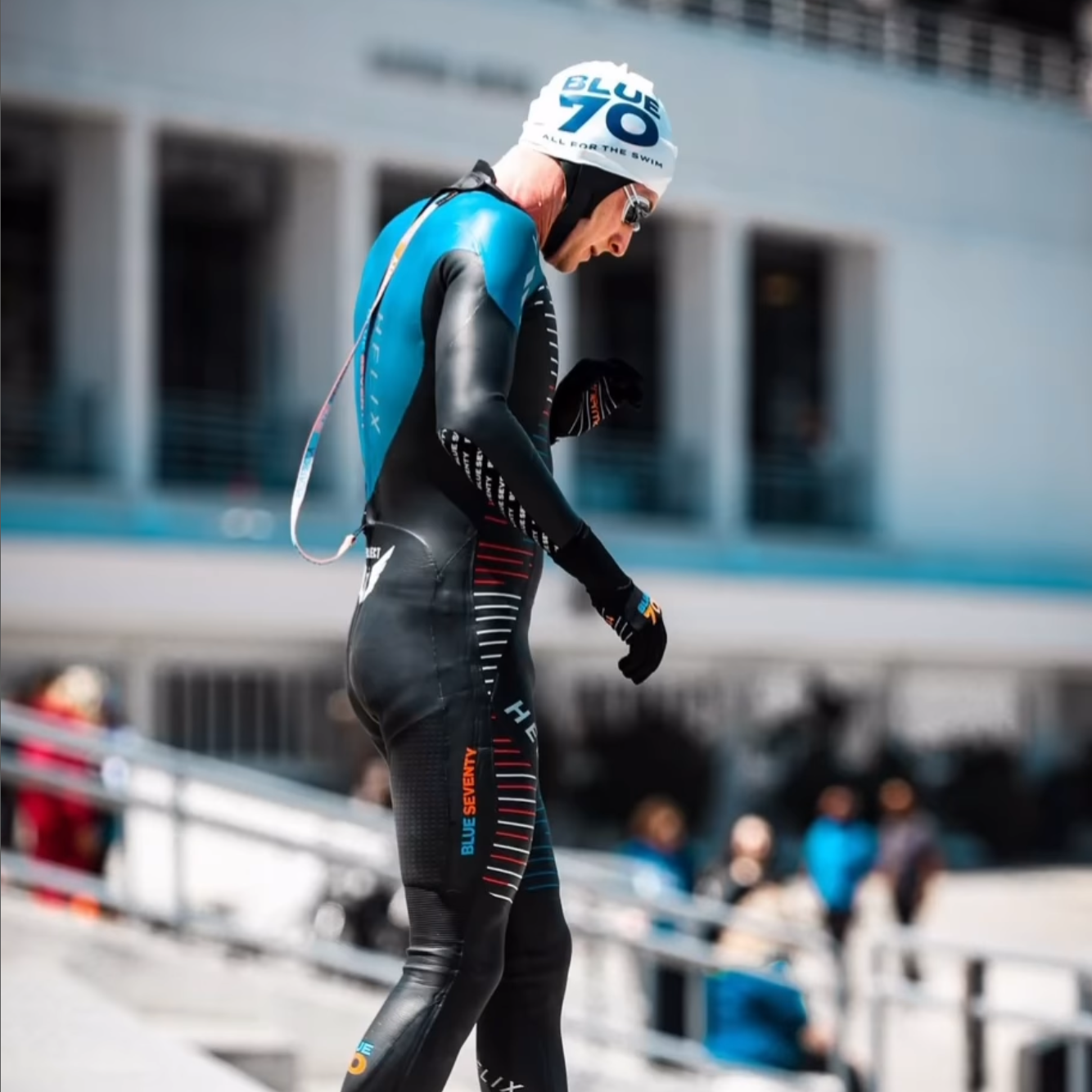
- Shoulder and sleeve. Raise both arms overhead and swing them through a crawl stroke. The cuff should sit at the wrist bone, not mid-forearm or over the knuckles. Excess fabric in the armpit or tightness across the upper back tells you the armhole is in the wrong place.
- Torso and legs. Look for horizontal folds at the waist or lower back. Those folds trap water. The ankle cuffs should reach the ankle, not the mid-calf. If the suit is too short through the torso, the crotch will sit low and the shoulders will pull downward.
Femme Fit Uses a Women's-Specific Pattern Block
Femme Fit began with a women's-specific pattern block. It refined the pattern in the bust, torso, wrists, and ankles, lowered the neckline, and extended the zipper. By 2014, the Femme Fit range had expanded to 15 women's sizing options.
Those changes matter for a petite frame. A lowered neckline reduces the chance that the collar rides high on a shorter neck. The longer zipper makes entry and exit easier when you have less torso length to work with. The wrist and ankle adjustments keep the cuffs from ballooning on narrower hands and ankles.
The reasoning is biomechanical. A petite woman has a shorter lever arm between shoulder and elbow, a shorter spine, and often a smaller wrist and ankle circumference. When a suit is cut from a women's-specific base, those points are designed into the grade rules from the start, so the neck sits lower, the zipper runs longer, and the wrists and ankles taper instead of ballooning. That is a different outcome from taking a men's pattern and shrinking it.
Use the Water Test, Not Just the Mirror
A dry-land fit will always feel snug because neoprene is designed to sit tight until the suit fills with a thin layer of water. That layer is what your body warms for insulation. The suit should feel more comfortable once you swim, not less. If the shoulders stay uncomfortable after a few minutes of easy swimming, the suit is too small through the chest or the armholes are too tight. If the collar flushes water every time you breathe to the left, the neck seal does not match your neck length.
blueseventy's Test Swim policy exists for exactly this situation. You can swim in the suit and still return or exchange it if it is clean, dry, unmodified, and returned with tags and accessories. That removes the biggest risk of buying a petite size online. If you are between sizes or unsure, take the suit for a Test Swim. It won't affect your ability to get a refund if returned clean and dry.
Model Selection Follows the Training Week
Model choice should follow your training week before your race distance. If you swim once a week and race a sprint or Olympic distance, the Fusion sits in the middle of the range, and the 2021 redesign gave it a lower neckline that often works well for a shorter neck. If you put in longer weekly open-water sessions, the Reaction uses higher-grade neoprene and is built for repeated use. If arm length is the recurring issue, a sleeveless suit removes that variable entirely and works well in warmer water. For race day only, the Helix uses thin, flexible neoprene in the arms and shoulders, but it is not designed for heavy training use.
Petite swimmers who race often ask whether they should drop down a size for compression. Don't do that. A suit that is too short through the torso will pull the shoulders down and restrict breathing. Choose the size that seals, then let the water test confirm it.
Care That Preserves the Fit
Once you have a suit that fits, treat the cuffs and neckline gently. Pinch the neoprene with your fingertips, not fingernails, when putting it on. Rinse after salt or chlorine, dry it inside out, and store it flat or on a wide hanger. Fingernail punctures and heel tears are the most common causes of fit-breaking damage, and both are avoidable.
A wetsuit that fits a petite frame is built from a pattern that respects shorter measurements instead of shrinking a larger one. When the pattern is right, you won't need to choose between a collar that chokes and ankles that gape. You can put it on, swim, sight, breathe, and forget the suit is there after the first few hundred meters. A well-fitted suit improves body position, and buoyancy equals speed in the water.
All for the swim.