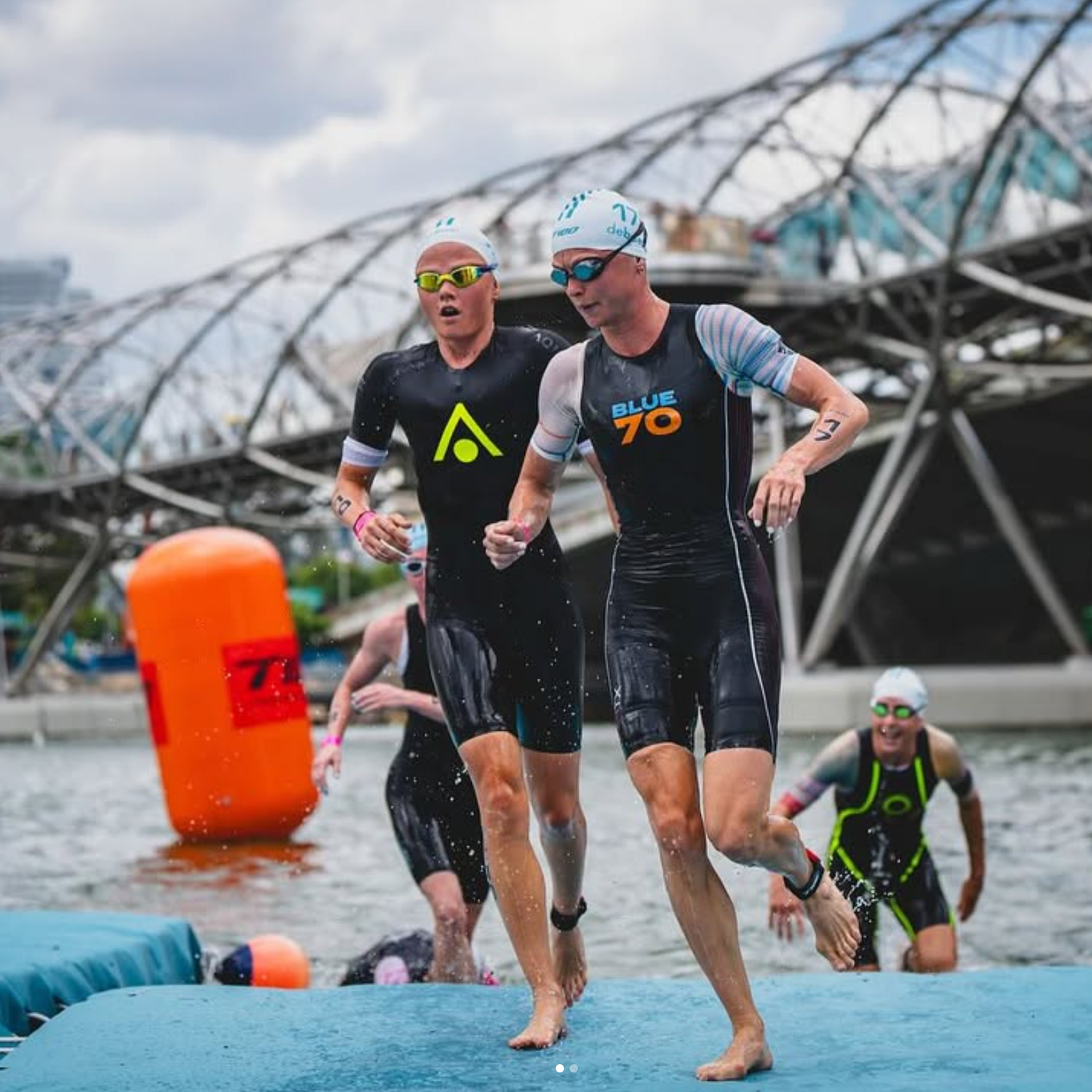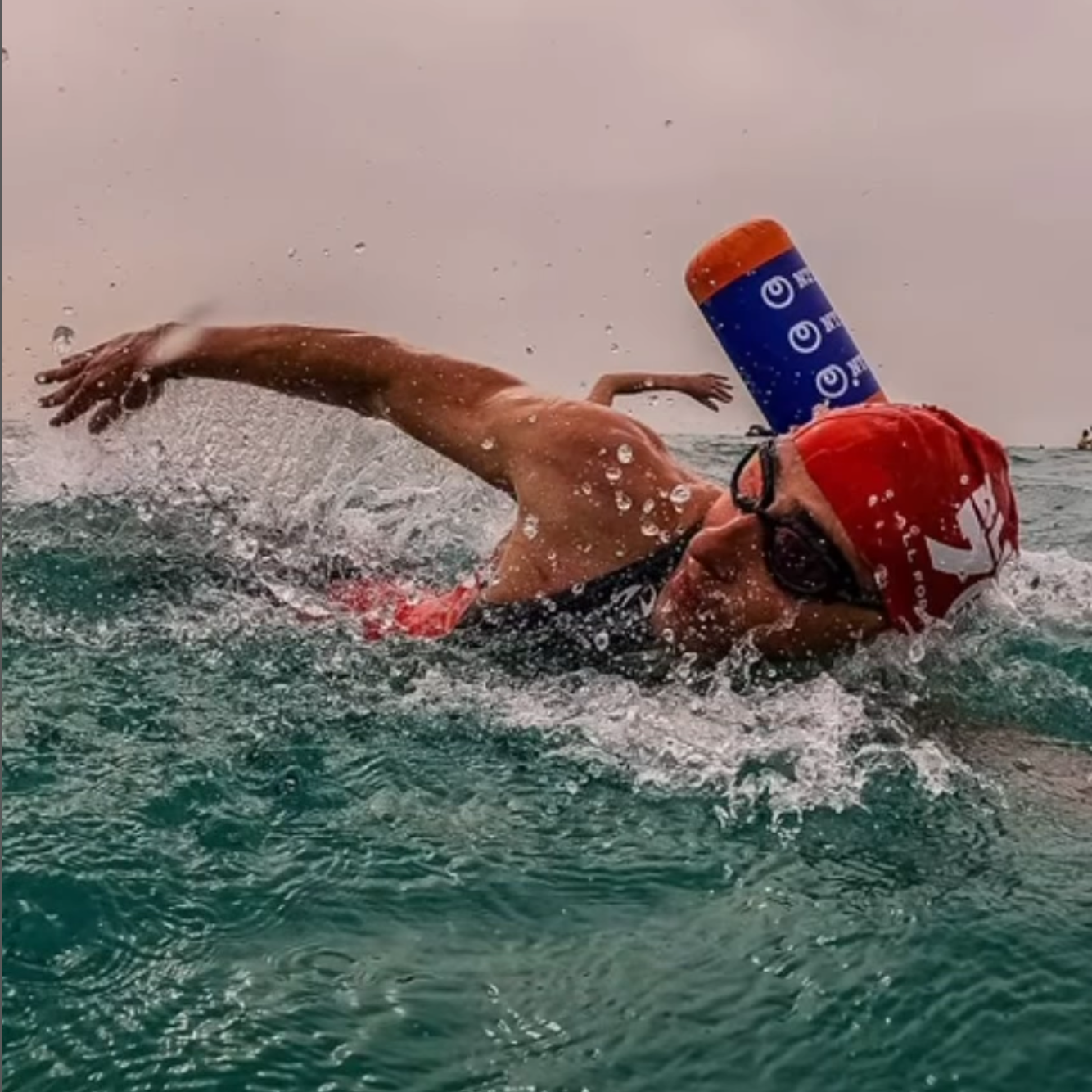



Cross the finish line, unzip, peel off the suit, hose it down if there's a hose nearby, hang it in the garage. That's the routine for most triathletes. Conditioner shows up once a season, if at all, usually the week before a big race, treated like a pre-race ritual instead of ongoing care.
That timing is backwards. Neoprene breaks down gradually, not all at once, and conditioner works best as prevention. Used only as a last-minute fix the week before a race, it's arriving after most of the wear has already happened.
Neoprene Is a Foam, Not a Fabric
Every triathlon wetsuit is built around a core of foamed rubber, closed-cell neoprene, sandwiched between thin layers of jersey lining or smooth-skin coating. Blue70 wetsuits use Yamamoto neoprene graded in 38, 39, and 40 cell counts. Higher numbers mean a more open cell structure and more flexibility. That's what lets a swimmer rotate through a full stroke without the suit fighting back at the shoulder.
Flexibility has a cost, though. A more open cell structure means thinner cell walls. Thinner cell walls take more damage from two directions: mechanical stress from stretching and folding, and chemical stress from salt, chlorine, sun, and even the ozone that's just floating around in normal air.
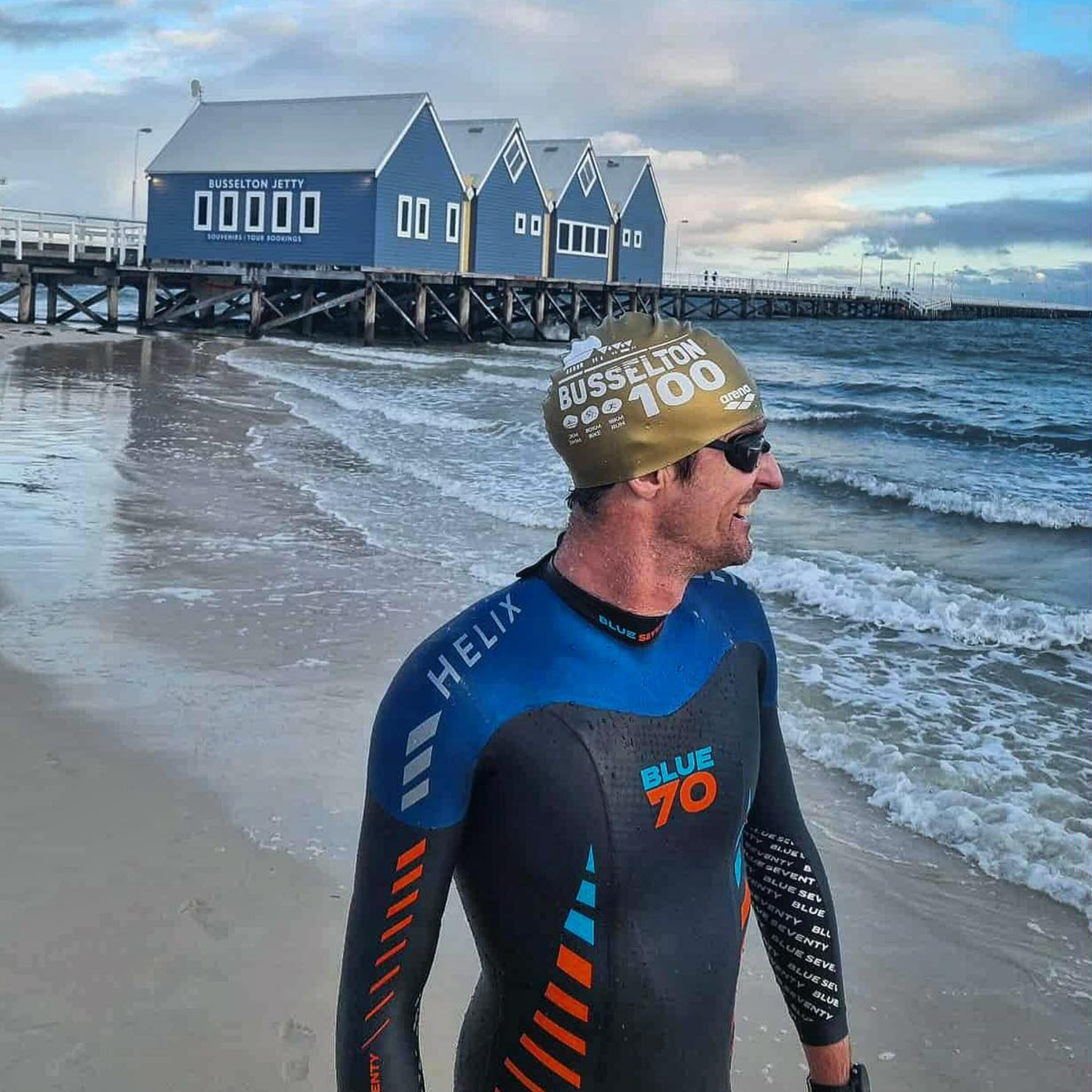
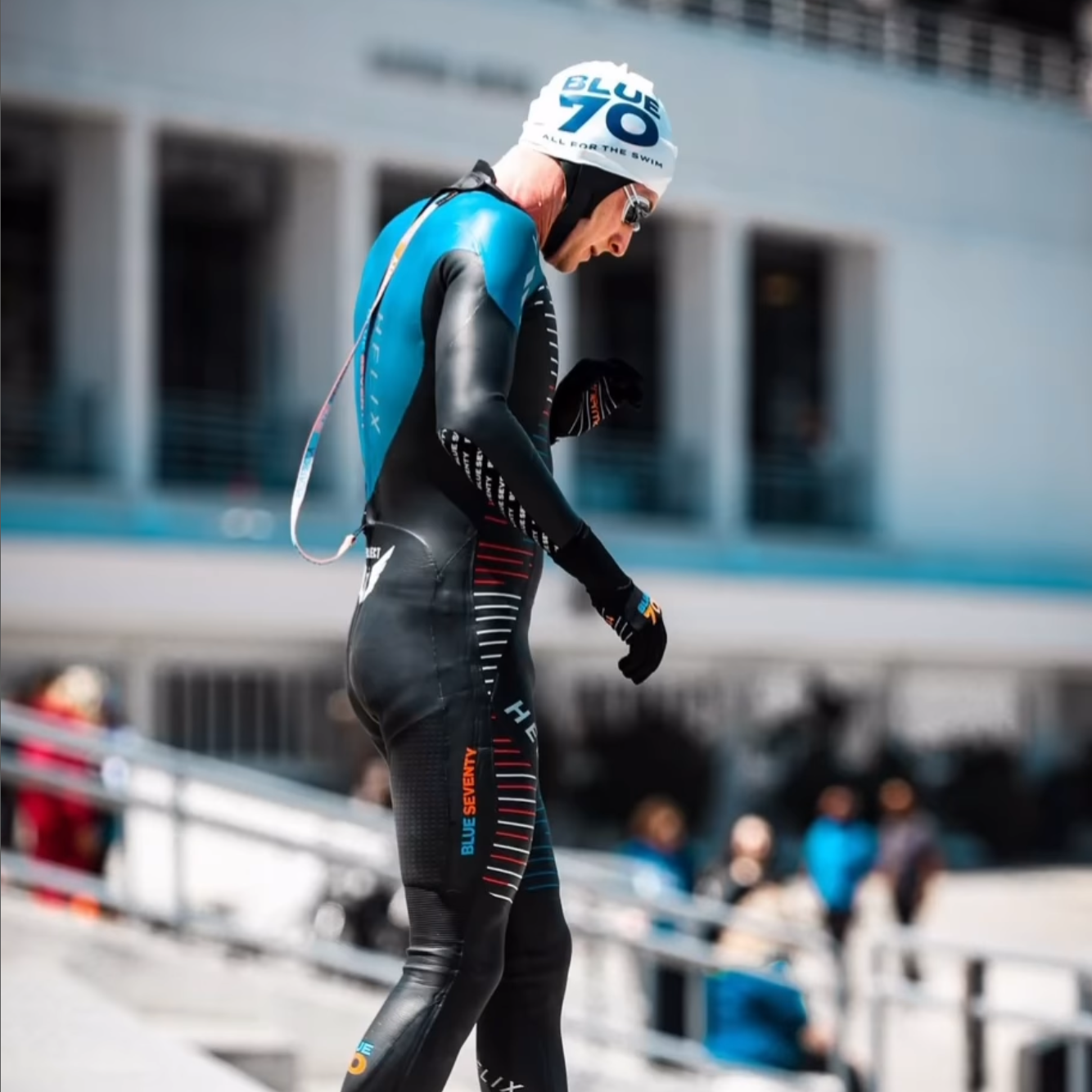
This is part of why Blue70 is direct about its flagship Helix. The ultra-thin neoprene in the arms and shoulders is what makes the suit fast. It's also the neoprene that wears out fastest under heavy training use. That's not a flaw the brand hides. It's a tradeoff built into the design, and it's exactly the kind of tradeoff conditioner is meant to manage.
What's Actually Happening When You Condition a Suit
Wetsuit conditioner isn't soap. Soap strips oils and residue, which helps clear chlorine and salt off the surface, but it does nothing for the rubber underneath. Some detergents leave the neoprene's outer skin drier than before you started.
A wetsuit-specific conditioner acts more like a leave-on treatment for the outer coating and the jersey lining underneath it. Three things happen when you use one on a regular basis:
- Residue gets flushed before it can grind into the material. Salt crystals and chlorine byproducts sitting in the neoprene's surface act like fine sandpaper every time the suit flexes. A plain-water rinse clears some of it. A conditioning rinse, built to lift mineral residue rather than just dilute it, clears more.
- The outer skin regains suppleness. Neoprene's surface dries and stiffens under repeated sun and salt exposure, the same way untreated leather cracks over time. Conditioning restores flexibility exactly where a suit takes the most repeated flex: the shoulders, and the back of the knee.
- Oxidative breakdown slows down between swims. Storage still matters more than any product in a bottle. A suit folded in a hot trunk breaks down faster than one hung loosely in a closet, and no conditioner fixes bad storage habits. But conditioning does add real protection against the slow chemical degradation that happens even in still air.
The Maintenance Gap Nobody Mentions
Most wetsuit care advice focuses on the dramatic failures. A heel tear from a fingernail. A zipper that catches and rips the pull tab. A seam that starts to separate. Those get attention because they're sudden and obvious.
Conditioner deals with something quieter: the slow loss of flexibility that happens long before any visible damage shows up. Here's what that looks like for a swimmer training weekly in a Reaction or Fusion, suits Blue70 recommends for frequent, longer sessions because the neoprene is built to take regular use. That suit still goes through hundreds of shoulder rotations per swim. Every rotation stresses the same fold lines.
Left untreated, those fold lines stiffen first. A stiffening shoulder panel doesn't announce itself with a rip. It shows up as fatigue. The suit starts feeling like it's fighting the stroke again, the same sensation you'd get from a suit that's the wrong size, except now it's a suit that used to fit fine.
This is where conditioning earns a spot in a training week instead of just a race week.
Match Conditioning Frequency to How You Use the Suit
Not every wetsuit in your gear bag is doing the same job. A race suit and a training suit don't need the same care schedule.
- Race-day suits (Helix): Used rarely, so total exposure is limited. But because the neoprene is thinner, each exposure matters more. Salt water on race morning, sun during a beach warmup. Condition after every open-water race and again before the suit goes into off-season storage.
- Frequent-training suits (Reaction, Fusion): These absorb the most cumulative flex and the most cumulative chemical exposure. Rinse after every swim. During an active training block, work in a conditioning treatment every few weeks, adjusted to how often the suit actually gets wet.
- Entry-level and sleeveless suits (Sprint, Glide, Reaction Sleeveless): Still benefit from the same habits. A lower price point doesn't mean lower care value. It just means skipping maintenance shows up sooner, in reduced flexibility rather than in your wallet.
Chlorine Deserves More Respect Than It Gets
Open-water swimmers tend to assume the ocean or a lake is the harsher environment for gear. Salt leaves visible residue, so it's easy to blame. Chlorine is worse. It's a more aggressive oxidizer at the molecular level, and anyone doing cold-water pool sessions in a Fusion or Reaction is exposing neoprene to a chemical built specifically to break down organic material.
Rinsing with fresh water right after a chlorinated swim isn't optional. It's the single highest-leverage habit for extending suit life. Conditioning after that rinse compounds the benefit by restoring what the chlorine pulled out.
What Conditioner Won't Fix
It's worth being straight about the limits. Conditioner won't repair a tear. It won't rescue a suit that spent a season folded up damp at the bottom of a gear bag. It won't undo heat damage from a suit left baking on a dark towel in direct sun.
Blue70's warranty specifically excludes wear and tear, heat damage, and chlorine damage from use outside the suit's intended purpose. That's a good reminder: conditioning extends the life of correct use. It doesn't fix incorrect use.
And it won't make an old suit feel new. A wetsuit with forty-plus open-water swims on it has accumulated real mechanical fatigue in the cell structure, and no surface treatment reverses that. Conditioning slows the decline. It doesn't turn back the clock.
The Part That Actually Affects Your Stroke
Here's the performance case, beyond just longevity. A wetsuit's shoulder flexibility and catch panel are engineered to let a swimmer maintain stroke mechanics without added drag or fatigue. A suit that's stiffened unevenly, more rigid in one shoulder than the other because of accumulated residue and uneven drying, changes how the stroke feels from one session to the next.
Swimmers working on stroke rate and catch consistency should treat conditioning the way they treat a consistent warm-up. It keeps the variable they're actually training, the stroke, separate from a variable they're not paying attention to: their gear.
A Routine Worth Building
None of this takes much time. The obstacle isn't knowledge. It's habit.
- Rinse the suit in fresh water immediately after every swim, inside and out, turning sleeves and legs to get water inside the suit and not just over the surface.
- Hang it to dry on a wide hanger, out of direct sun, away from any heat source.
- Apply a conditioning treatment on a schedule that matches how often you use the suit, following the product's instructions for contact time and rinse-off.
- Store the dry suit loosely. Never fold it under weight. Keep it somewhere cool.
Fold conditioning into the same after-swim routine as rinsing and hanging, rather than saving it for race week, and the difference shows up two seasons from now. A suit that still flexes the way it did on day one, instead of one that's quietly started fighting you back.
Not sure which conditioning routine fits your training volume, or which Blue70 model makes sense for how often you're actually in the water? Reach out through Expert Support. A five-minute conversation now can save a suit's shoulder flexibility for years of swims to come.