


Try this before you reach for new gear. Swim a relaxed 100 in your current wetsuit or buoyancy shorts at an easy pace. Watch where your heels sit. Swim the same 100 with a pull buoy. If the pull buoy levels your legs almost immediately, your hip position is doing more work than your legs.
Swimmers chase lower-body lift with thicker neoprene, a harder kick, or another pair of shorts. But a leg buoyancy problem usually starts above the legs.
Your hips drop before your legs do
The lungs sit high in the chest, so the body's center of buoyancy sits near the ribcage. The pelvis, femurs, and lower legs are denser. The distance between those two points determines how hard the kick has to work. A swimmer's legs sink because the human body is unevenly buoyant.
Tight hip flexors pull the front of the pelvis down. A wetsuit that is too short through the torso does the same. When the pelvis tilts forward, the legs follow, and the same swimmer who looks fast standing on the beach drags low heels through the water. That adds drag with every stroke. A leg buoyancy fix often starts at the waistband, not the ankles.
Head position also changes leg depth. Lifting the head to sight pushes the hips down. Keep the head neutral and sight with a quick forward glance, then return to a low position. The legs follow the spine, and the spine follows the head.
How targeted lower-body lift entered the blueseventy line
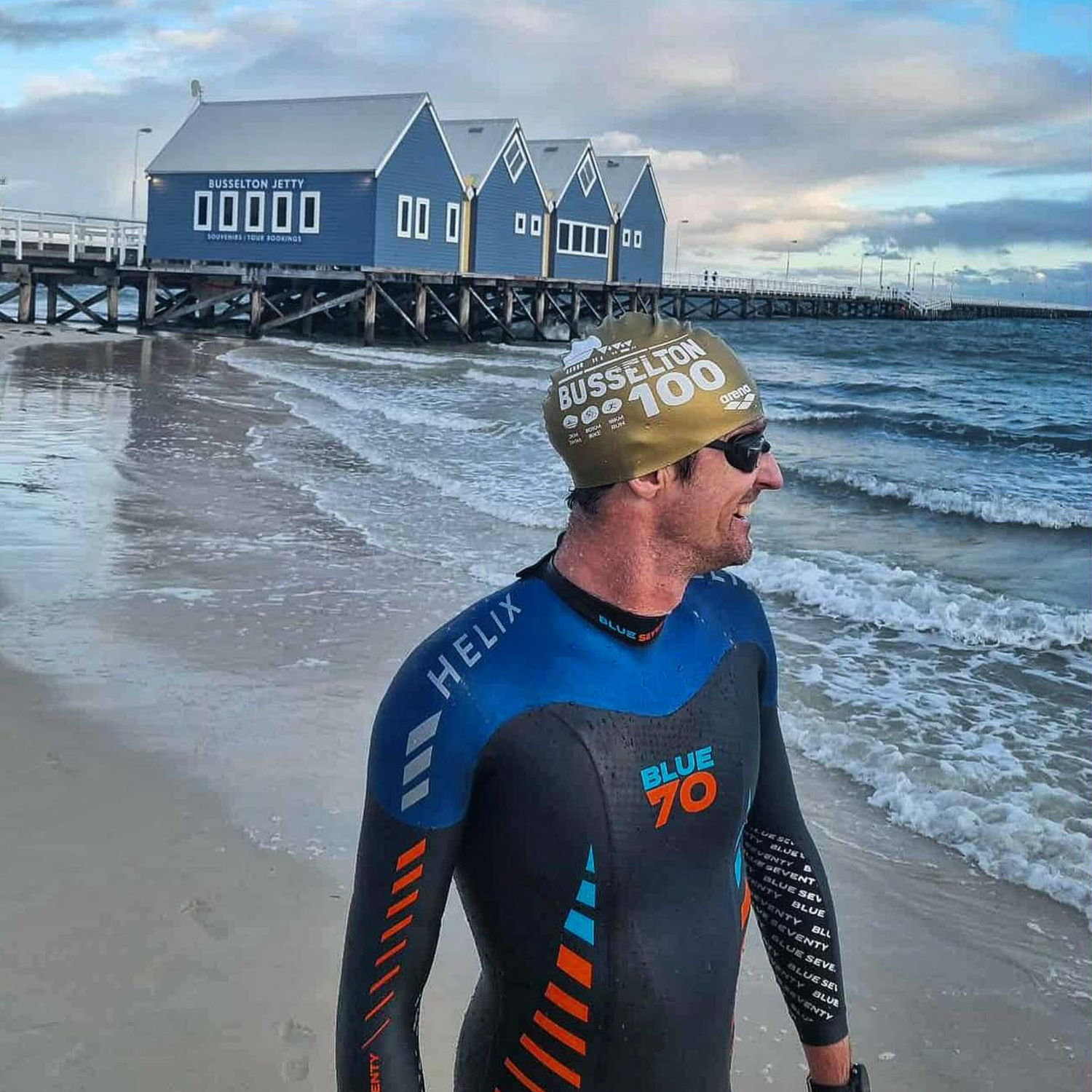
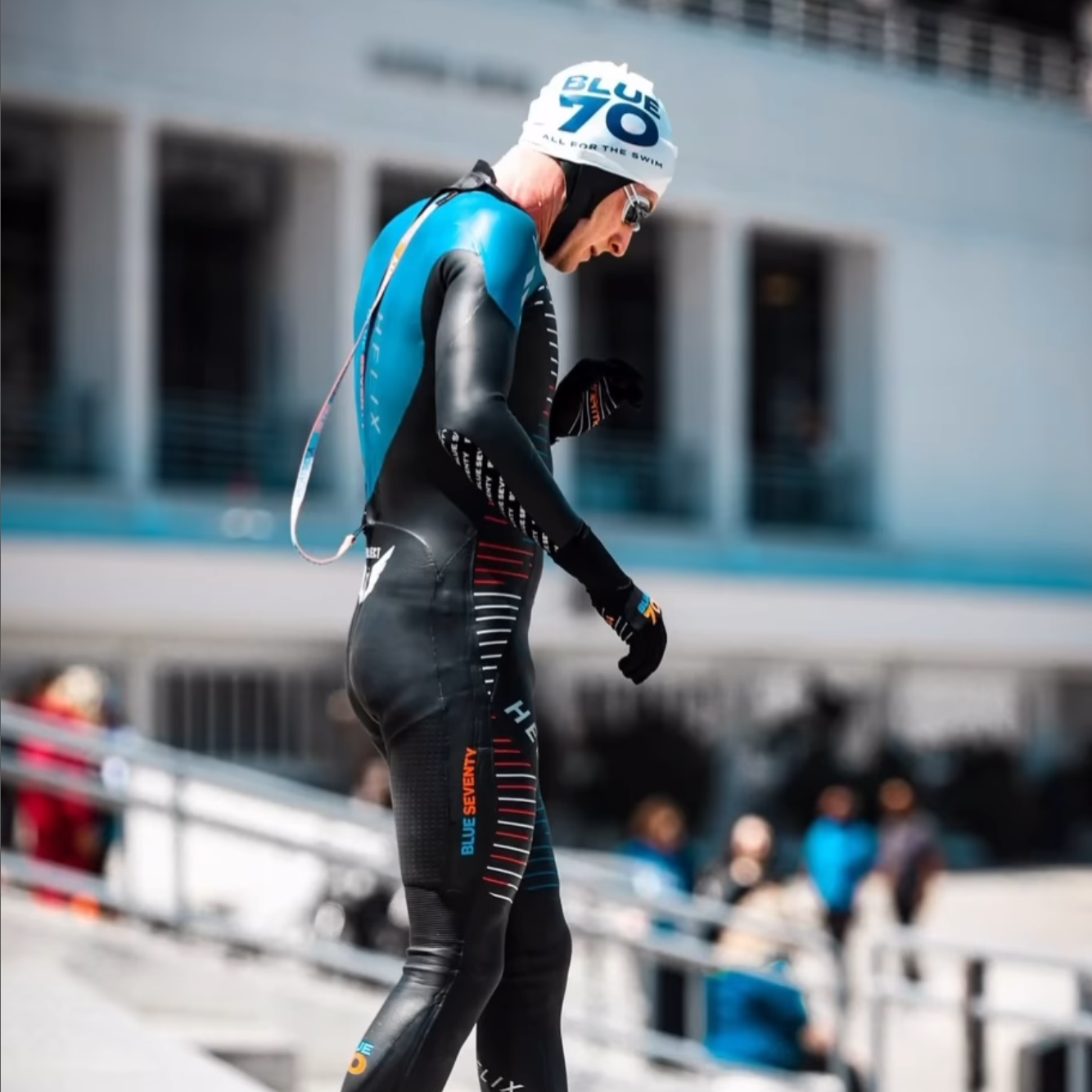
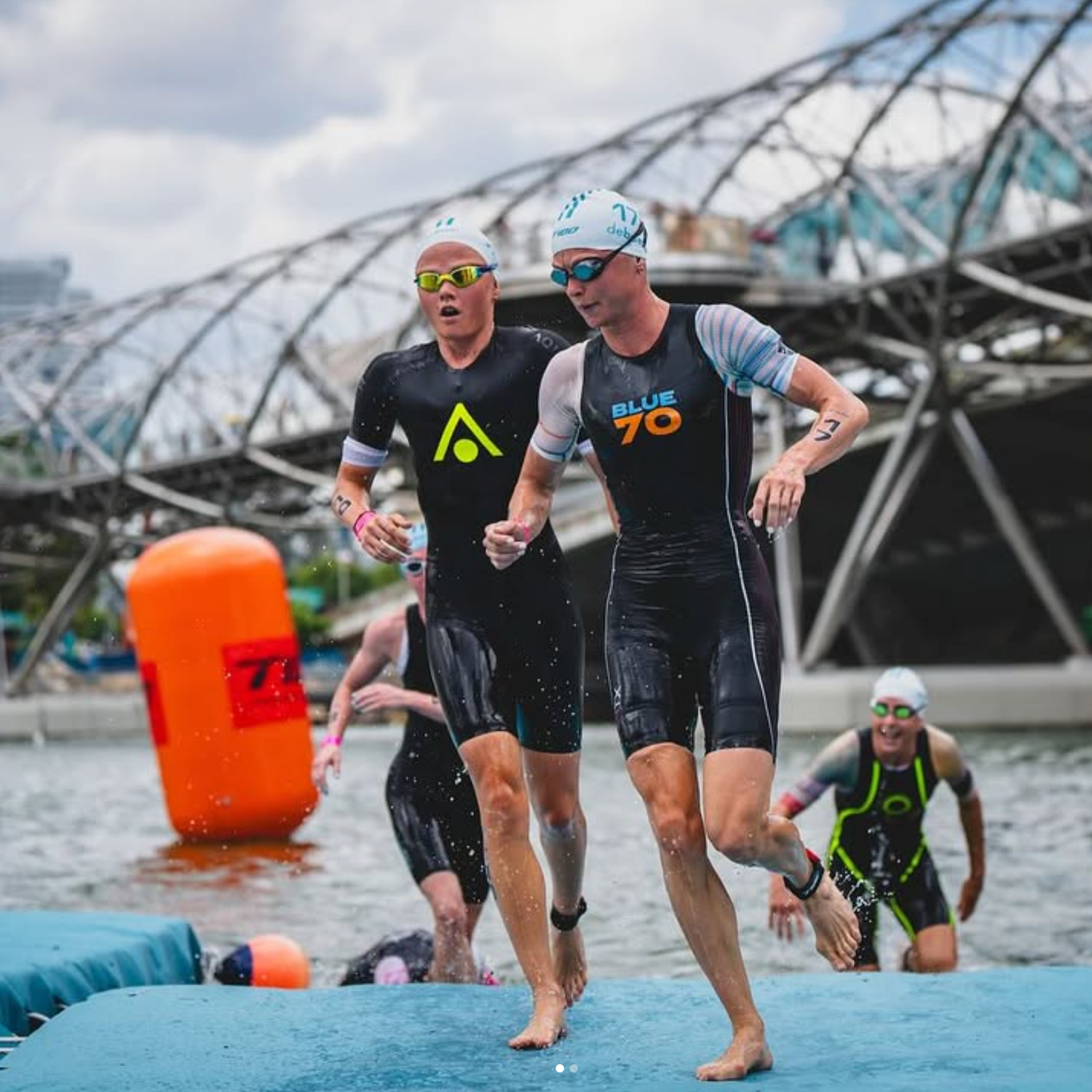
Blueseventy has moved away from even-thickness neoprene. In 2018, the Helix gained LIFT panels placed to support the hips and upper legs. In 2020, the LIFT Buoyancy Short brought that principle to a standalone short using NBR foam for concentrated lower-body lift without upper-body coverage. The design logic is direct: add lift where the body needs it, not where the chest already floats.
All blueseventy wetsuits use Yamamoto neoprene in 38, 39, and 40 cell grades. A higher cell number means more flexibility. LIFT panels in the Helix let a race suit keep the arms and shoulders thin and flexible while supporting the lower body. That matters for swimmers who want a long body line without giving up the catch.
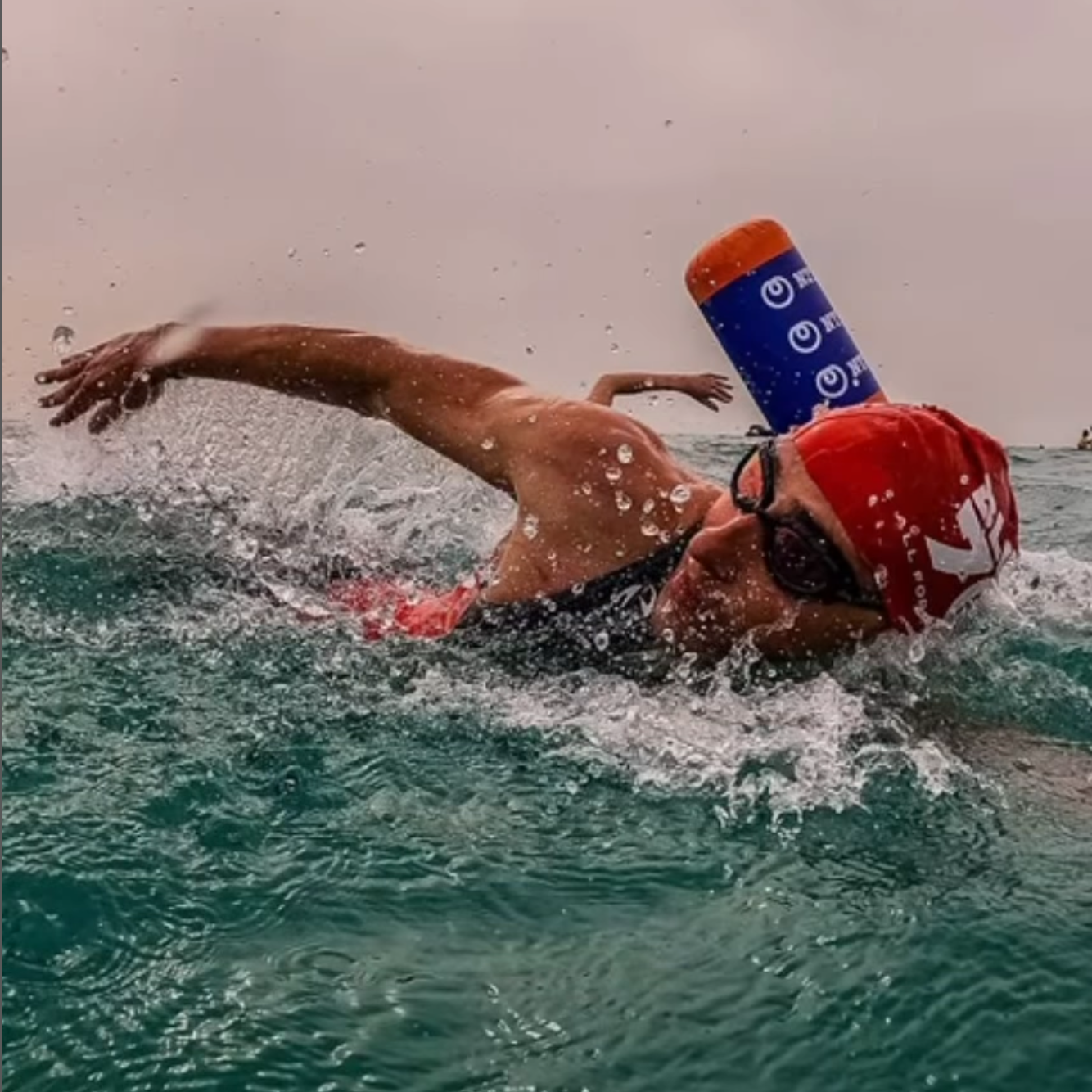
In a swim-specific wetsuit, buoyancy equals speed. The goal is a long, level body line. Warmth is secondary. Swim-specific design means a suit is cut for horizontal swimming. It is not a board-riding suit.
Read your waterline before changing equipment
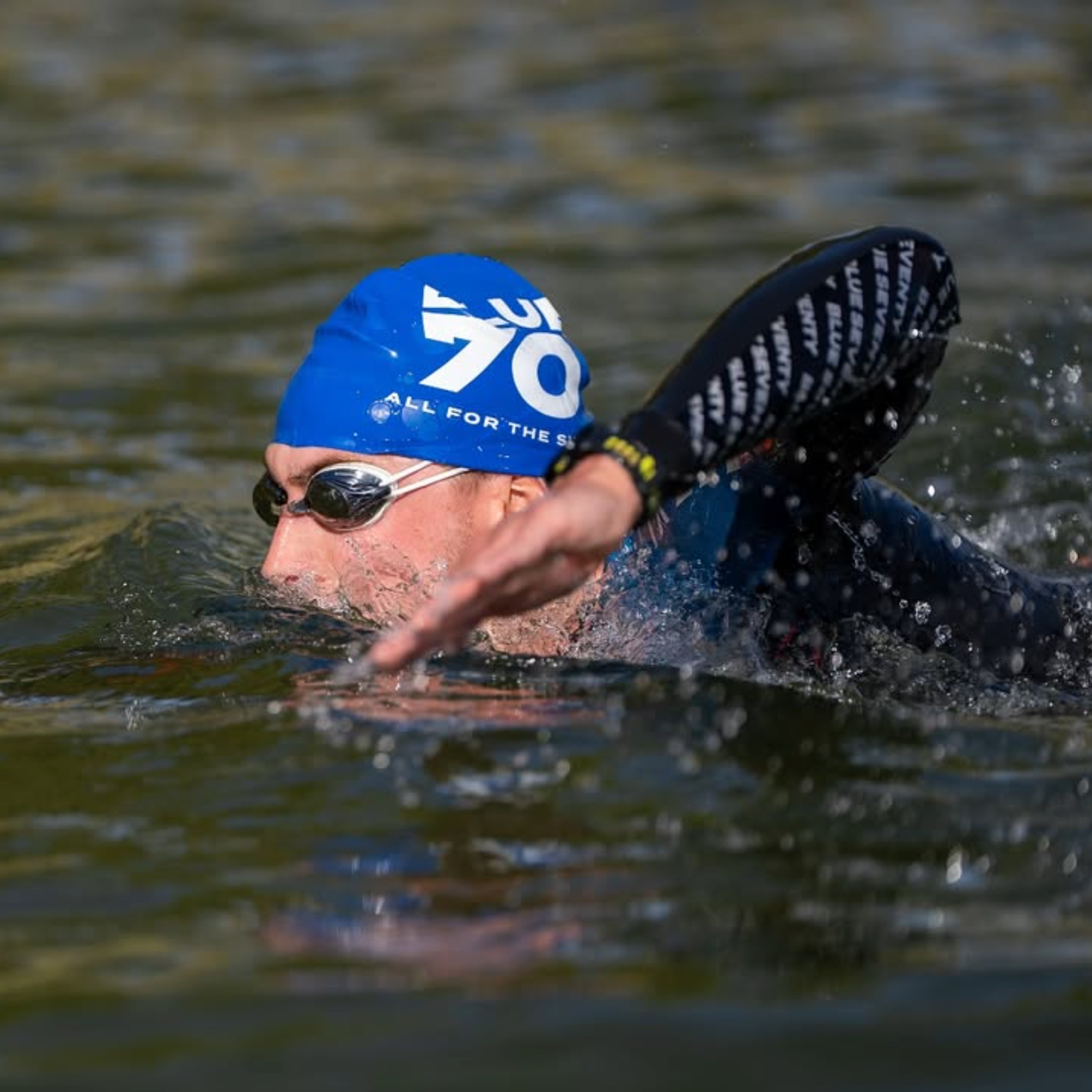
The test takes less than five minutes. Wear the suit or shorts you want to evaluate. Push off from a wall or dock in a streamlined position with no kick. Glide until you lose forward momentum. Watch where your feet sit when your hands stop moving forward. Then repeat with a light, hip-driven flutter kick.
If the feet stay level only when you kick, the suit is not the whole answer. The same test works without a wetsuit, which helps you separate a fit problem from a kick problem.
Fit problems that push your heels down
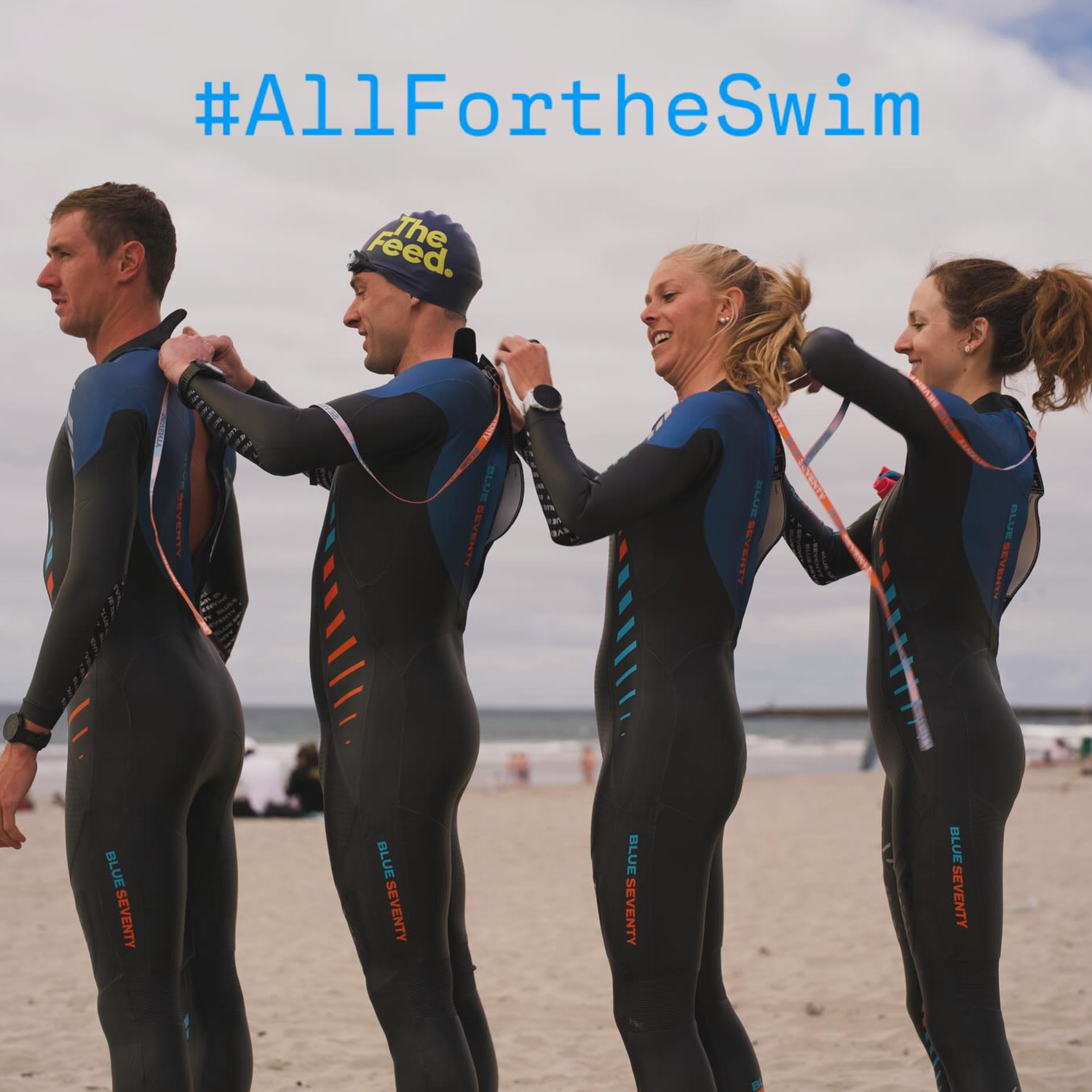
A leg buoyancy fix can fail before you reach the water. Three fit clues show up before you ever start the watch:
- The suit bunches behind the knees.
- The torso pulls tight across the chest and shoulders.
- The hips fit loose enough to let water pool.
A suit should feel snug on dry land, then settle in the water. You cannot evaluate a waterline in a mirror. Blueseventy's Test Swim policy lets you swim in a wetsuit and still return or exchange it clean and dry. That matters because the only honest waterline test happens in the water, not in a fitting room.
Train the kick that keeps legs high
A narrow, hip-driven flutter kick does two jobs. It provides lift and keeps the legs inside the body's slipstream. A knee-driven kick pushes water down and adds drag. A smaller, steadier kick that starts at the hip beats a bigger knee-driven kick.
Train the kick in short repeats. Try 25 meters with a board, then 25 meters on your back with arms overhead. Kick timing also matters. A late or wide kick opens the hips and breaks the body line. In open water, chop and sighting interrupt your rhythm, so the same flaw gets worse. Practicing a compact kick in calm water builds the pattern before race day.
When to add lower-body lift
Once you rule out fit and kick, targeted lower-body buoyancy becomes the next tool. The LIFT Buoyancy Short adds lift at the hips and thighs while leaving the arms and shoulders free. It is not a personal flotation device. Its job is body position, not safety. The same principle applies to the LIFT panels in the Helix.
Wear it high
Wear the short high on the pelvis, not low on the thighs. If the short sits too low, the lift works below the body's center of mass and pushes the legs up while dropping the torso. If the waistband digs in, it restricts hip flexion and shortens the kick. Check the size chart and treat the fit like a wetsuit leg. Snug, not tight.
The case for swimming without them
Buoyancy can mask a kick flaw. If every session includes extra lower-body lift, you may never learn whether your waterline comes from the gear or from your stroke. Run a simple A/B test. Swim 200 meters with the shorts, rest, then 200 without. If the without interval falls apart, spend the next few sessions on hip mobility and a compact flutter kick. Then retest. The shorts become a diagnostic tool instead of a crutch.
Swimmers with a strong, efficient kick and a level pelvis rarely need much added leg buoyancy. Swimmers who race in cold water or swim long open water sets often feel the difference sooner. Use the right tool for the specific problem.
A sequence that holds up in open water
A leg buoyancy fix is rarely one thing. It is a sequence:
- Fit the torso first.
- Rebuild the hip-driven kick.
- Add targeted lower-body lift if your waterline still falls.
The order matters because each layer changes how the next one feels. Fix the suit, fix the posture, then decide if you need the extra float.
If your lower body still sits low after that sequence, look at the LIFT Buoyancy Short or the Helix's LIFT panels. Check the size charts, and use the Test Swim policy for the wetsuit you choose. Happy swimming.