


A wetsuit that feels heavy in the water usually is not heavier in any useful sense. It is sitting too low, holding extra water, or making your shoulders do more work than they should. In a Blue70 suit that fits, the buoyancy should support your hips and legs, not feel like dead weight. If your suit feels labored, work through the checks below in order.
Separate the wet-on-land feeling from swimming
Every wetsuit gains water weight when you stand up after a swim. That is expected. A wetsuit is designed to let a thin layer of water in, and your body warms that layer. In the water, buoyancy offsets much of that mass once you are horizontal. If the suit feels heavy only while you walk into transition or stand in the shallows, that is usually the wet-suit-on-land feeling, not a fit problem.
Pull the legs up high enough
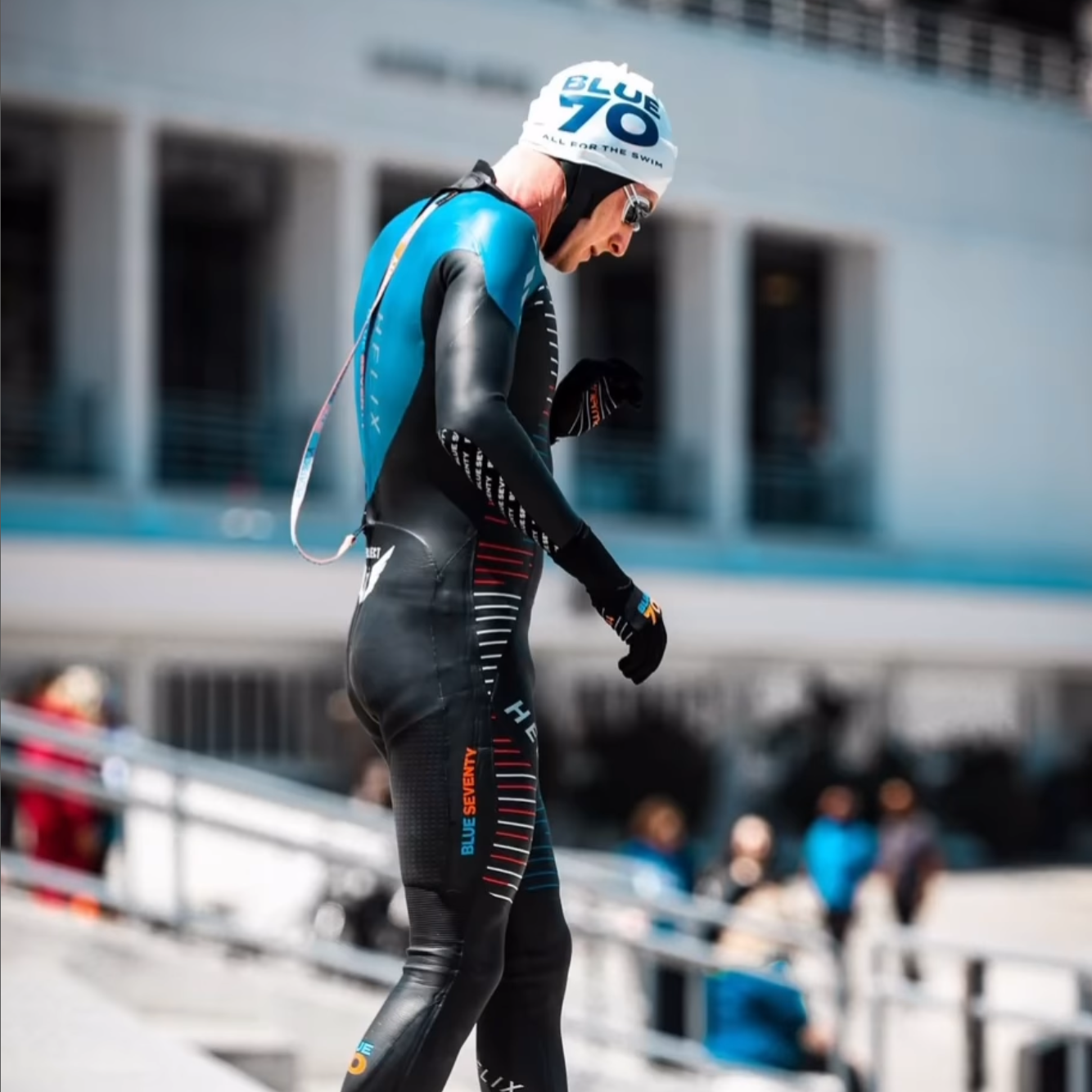
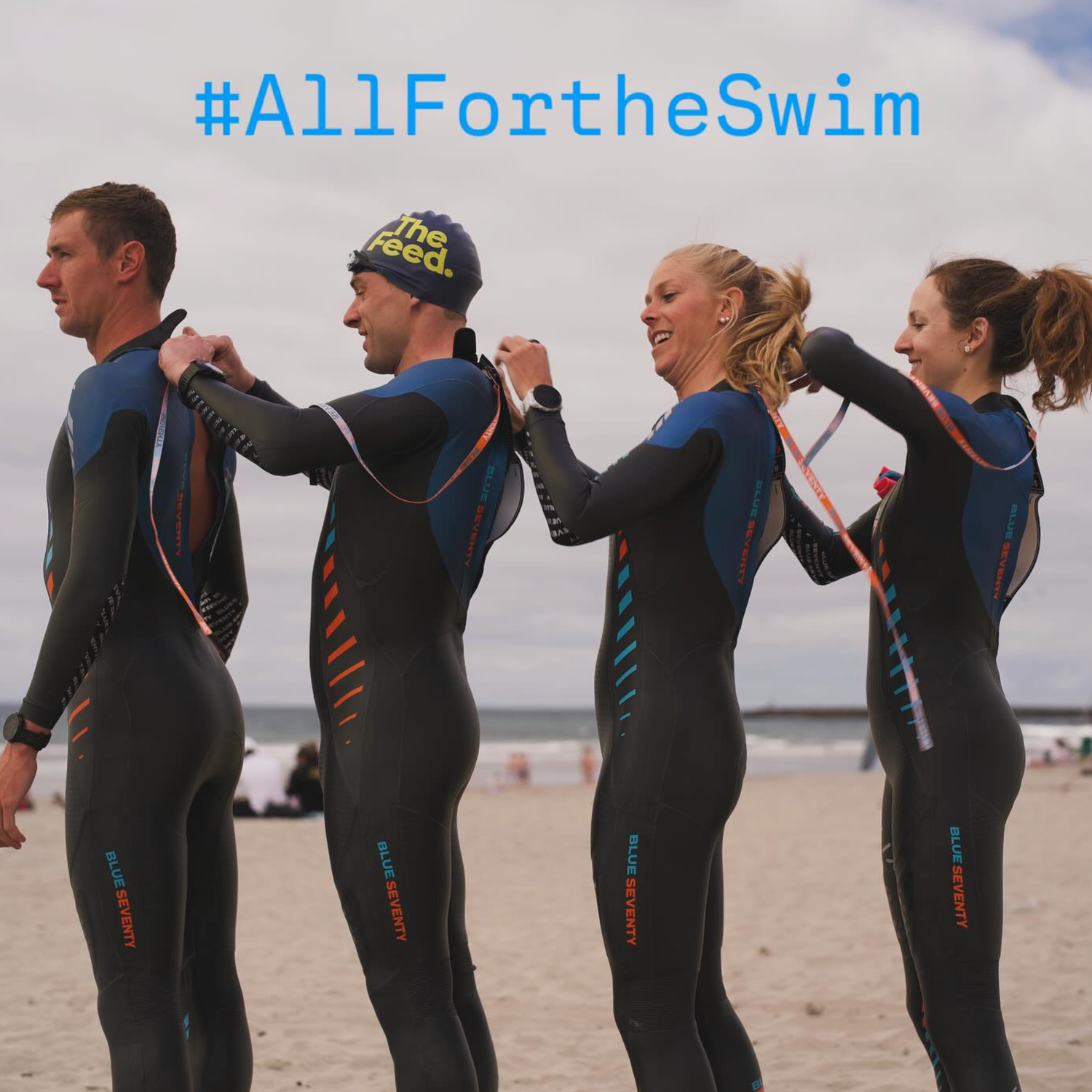
The most common cause is a suit that is not pulled up enough. Pull the lower legs up in small increments until the suit sits flush in the crotch and behind the knees. Deep folds behind the knee catch water and resist each kick. A low ankle cuff can let water pool in the lower leg. Work the material up with the pads of your fingers, not your nails. Fingernail punctures are a common way to damage a new suit and are not covered under warranty.
Seat the shoulders before you zip
Once the torso is up, settle the shoulder panels. A Blue70 suit should sit snug against the shoulders without deep wrinkles across the chest. If a shoulder panel is too low, the suit pulls against your arm on every reach, and you notice that pull as a heavy, dead-arm feeling after a few hundred meters. The same feeling appears if the chest is too small and limits your stroke. Snug on land, more comfortable in the water is the rule.
Check for excess water exchange
A little water inside the suit is expected. Excess water moving through the neck, zipper, wrists, or ankles is not. When water rushes in and out, the suit can feel sloshy and heavy. After zipping, check that the neck seal sits against the skin without gaping. The Fusion redesigned its neckline in 2021 to sit lower for comfort while keeping a watertight seal. A suit that is too large overall tends to take on more water than a correctly fitted suit.
Match the suit to the water temperature
Sometimes heavy means hot. In water above roughly 70 to 72 degrees Fahrenheit, a full suit can feel warm and sluggish over longer swims. A sleeveless or short-john cut, such as the Reaction Sleeveless or Glide Short John, reduces coverage and feels lighter in warm water. In water below roughly 56 to 58 degrees Fahrenheit, the Thermal Reaction, fully lined with Zirconium jersey, adds meaningful warmth. That suit may feel heavier in a wet bag on land, but in the water it should not feel heavy if the fit is right.
Recognize when heavy is fatigue
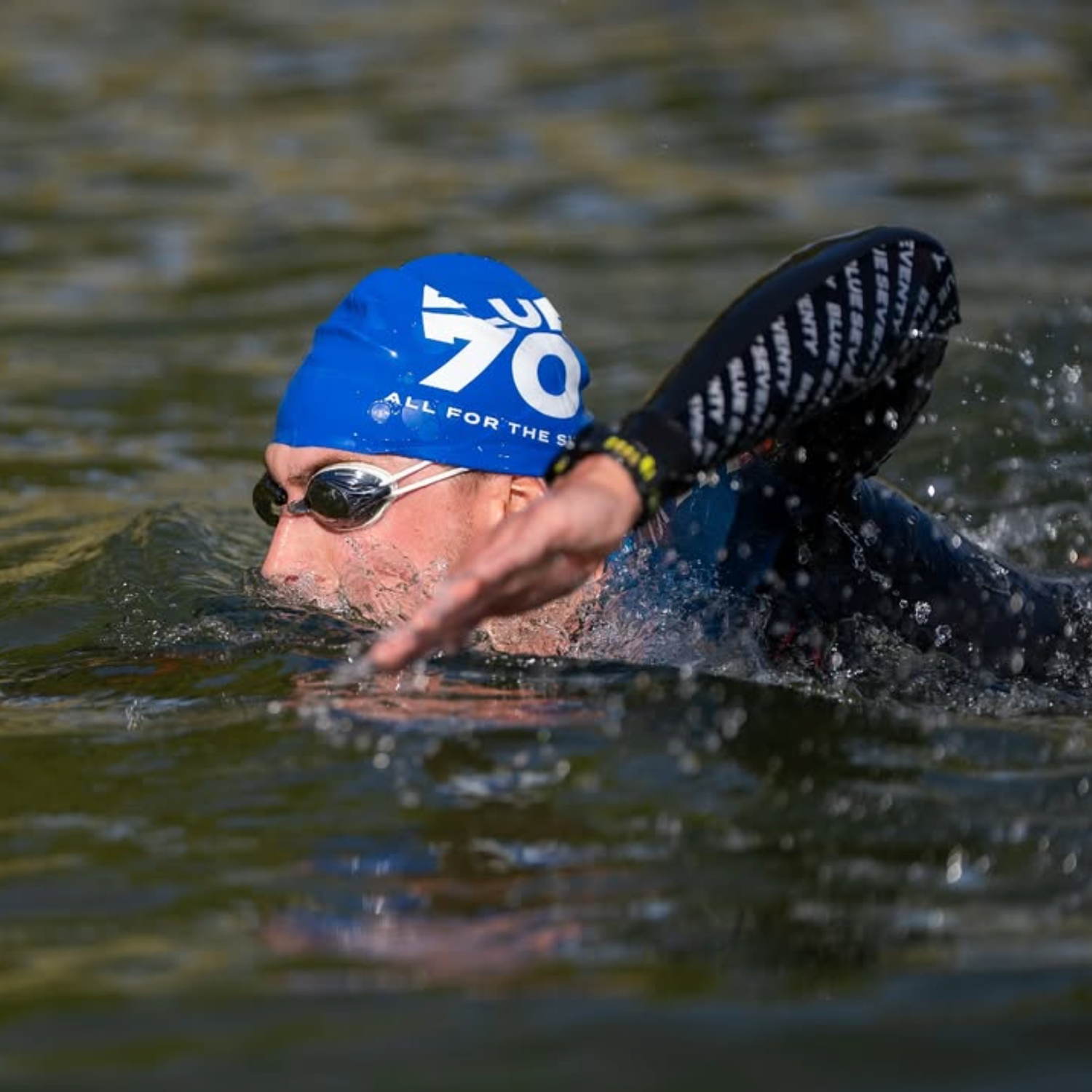
A suit that restricts the shoulders or compresses the chest will tire you quickly, and you feel that fatigue as heaviness. Blue70 uses Yamamoto neoprene in 38, 39, and 40 cell grades, and the higher cell numbers deliver more flexibility in the arms, shoulders, and chest where a long reach and relaxed recovery matter most. The Helix uses thin, flexible neoprene in the arms and shoulders to protect your stroke, with LIFT buoyancy panels placed for body position. If your arms tire early in a suit that fits, check your stroke and breathing. Lifting the head to sight or breathe drops the hips, and the suit cannot correct that alone.
Quick troubleshooting sequence
- Pull each leg up until there are no deep folds behind the knee.
- Pull the torso up, zip fully, and settle the shoulder panels.
- Walk in and let the thin water layer form, then swim 200 easy meters.
- If water sloshes in the lower back or legs, check the neck, ankle, and wrist seals and the overall size.
- If you feel hot and sluggish, consider less coverage or cooler water.
- If your arms tire earlier than normal, check shoulder fit and stroke.
When to resize
If you can pinch thick vertical folds across the chest or hips, or if the lower back balloons with water, the suit is too large. If the neck digs, the zipper strains, or the shoulder panel pulls down hard when you extend your arm, the suit is too small. Blue70 size charts and the fit guide are on the site. You can also take a Test Swim. The 30-day return and exchange window lets you swim in the suit and still return or exchange it if it is clean, dry, unmodified, and has the tags and accessories.
A heavy wetsuit usually traces to one simple cause: it is too low on the legs, too loose around the seals, too warm for the water, or too tight in the shoulders. Fix the donning first, then the fit, then the suit choice. A Blue70 suit that fits should feel like part of your body position in the water, not a weight you are pulling.