


You are mid-swim and suddenly your suit feels heavy with water. It is a common concern among new open-water swimmers, and it usually has a simple fix. A swim-specific wetsuit is designed to let in a thin layer of water. That’s how it works. The water warms against your skin and insulates you. But feeling like you are dragging a bucket behind you means something is off.
A quick refresher on wetsuit insulation
A small flush of cool water when you first enter is normal. That water warms quickly and stays put. What you are describing is different: a constant, heavy inflow that makes the suit slosh or balloon.
Normal flush vs. water that pools
A true “filling” happens when water keeps entering faster than it can drain. The suit becomes heavy, drag increases, and you get cold. In most cases the root cause is a fit or donning issue, not a design flaw. Here are the most common reasons.
Why it fills up: four common causes
-
The suit is too loose overall
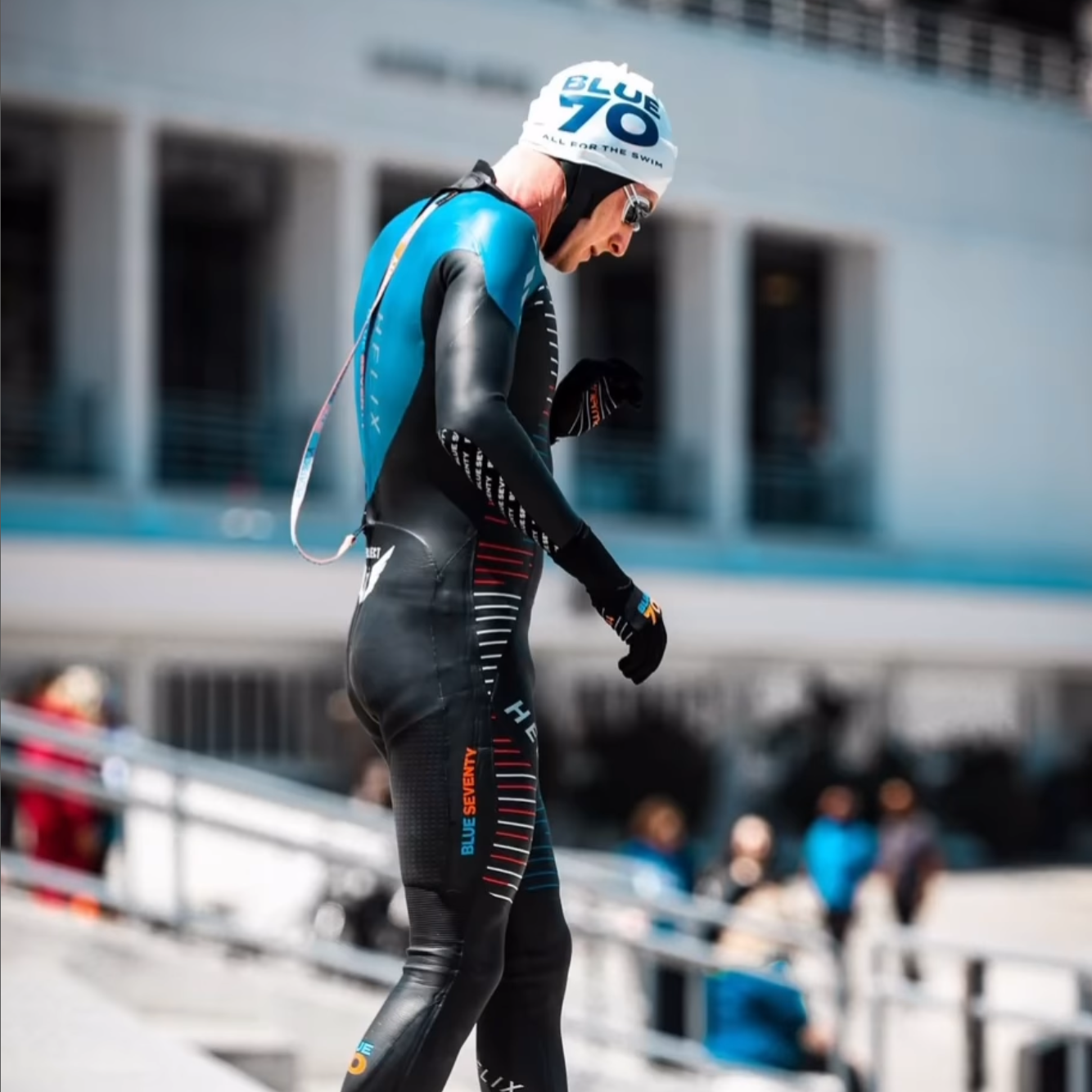
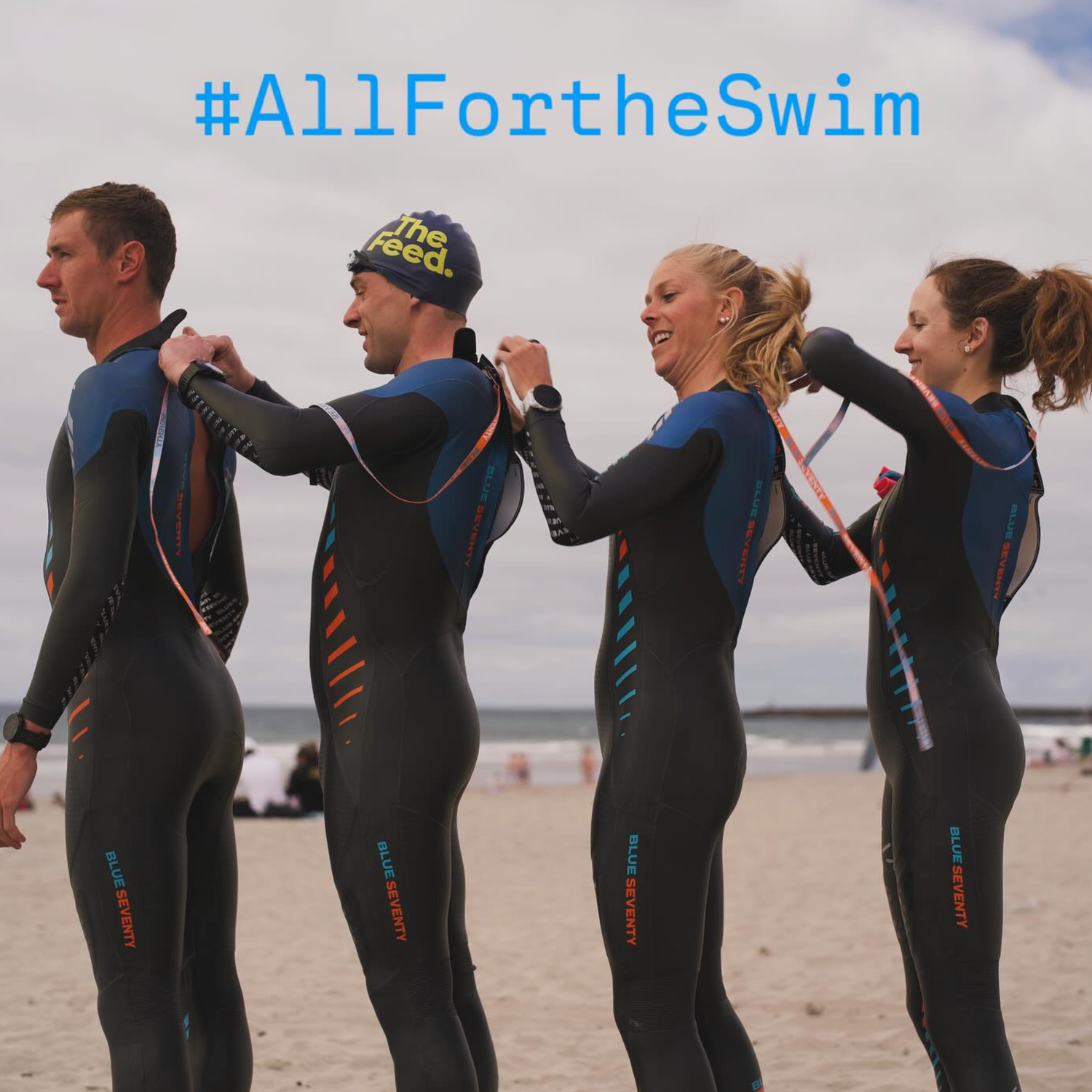
A swimming wetsuit must fit like a second skin. Any excess air space becomes a pocket that water fills with each stroke. If you can pinch a full fold of neoprene across your stomach or lower back, the suit is too big. The torso is the main reservoir; water sloshes side to side, wrecking your body position. On dry land, a properly sized blueseventy wetsuit should feel snug, almost uncomfortable. That tension relaxes once you are horizontal in the water and the neoprene conforms to your shape.
-
The neck seal isn’t seated correctly
The collar is the biggest potential entry point for water. If it does not lie flush against your skin all the way around, every head turn or breath scoops water inside. Check that the neck is completely unfolded and pulled up as high as it can go. On the Fusion wetsuit, the neckline was redesigned to sit lower for comfort without sacrificing the seal, but any neck gasket will fail if the suit is too large or you haven’t worked it into position. Run a finger around the inside of the collar while standing; there should be no gaps.
-
Arm and leg openings are gaping
Wrist and ankle seals matter almost as much as the neck. If you can slide an index finger inside the opening without resistance, water will pump in with every arm stroke and kick. Often, pulling the sleeve or leg up an extra half inch moves the seal to a slightly thicker part of the limb and stops the leak. The same trick works at the ankles. Neoprene cuffs are meant to hold against your skin, not to act like loose drainpipes.
-
Damage you cannot see
A tiny fingernail puncture is the most common invisible culprit. Even a 2 mm nick can let a steady trickle through. Inspect the suit under bright light, especially where you grip the material to pull it on: hips, shoulders, and neck. Also examine the seams and the back zipper. A zipper that hasn’t closed completely, or one that was forced past its stop, will leak. Always use the long pull cord and guide the slider with a steady, even motion; never yank. Fingernail holes and zipper damage from force are not covered by the warranty, so it pays to be gentle from day one.
What to check right now
Put the suit on in a dry room and have someone look at your back, then lift your arms and twist your torso to check for gaps opening at the neck or under the arms, because if you spot daylight between your skin and the suit, water will find it.
You can also rinse the suit in a clean-water shower while wearing it. A normal wetsuit lets in a slow seepage that warms and pools. A strong stream running down your chest or back suggests a fit problem or a puncture. Cold tap water is fine; just don’t use hot water, which damages neoprene.
Getting the fit right
If you’ve checked all the seals and still take on water, the suit is likely the wrong size. blueseventy sizing is based on height and weight, not just chest measurements, because swim-specific suits need to seal across multiple zones simultaneously. For women, Femme Fit patterns address common gapping at the bust and hips by shaping the suit around a female silhouette, so there’s less excess material to trap water.
The best test is water itself. blueseventy lets you take a suit for a Test Swim within 30 days of purchase. You can return or exchange it afterward as long as it’s clean and dry, with tags attached. That way you verify the fit in real conditions without risk or guesswork.
Head to the size chart, use the online sizing tool, or visit a dealer to get measured. A suit that fits correctly won’t feel like it’s filling with water. It’ll feel like you’re wearing a thin, warm layer that moves with you through every stroke.
Happy swimming!