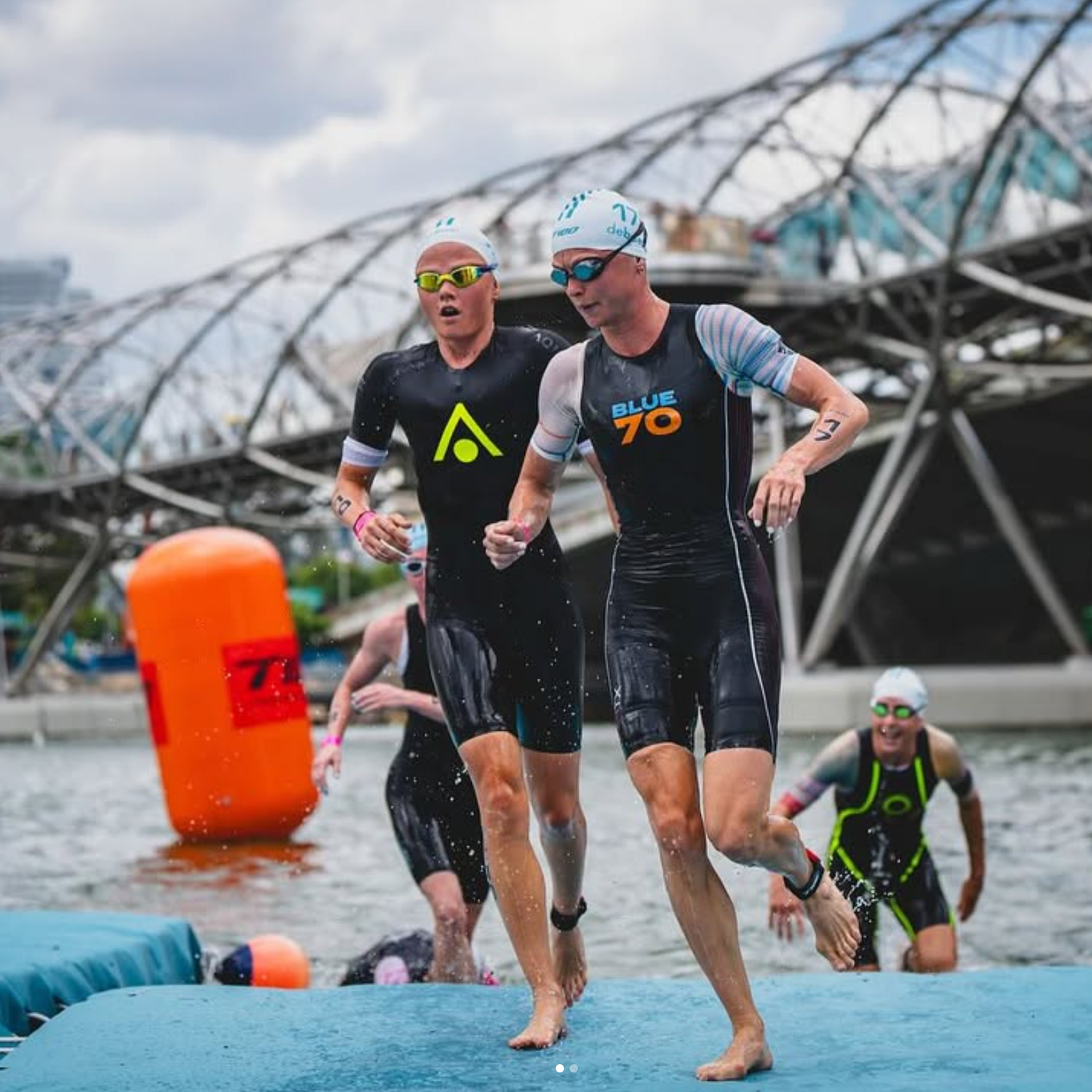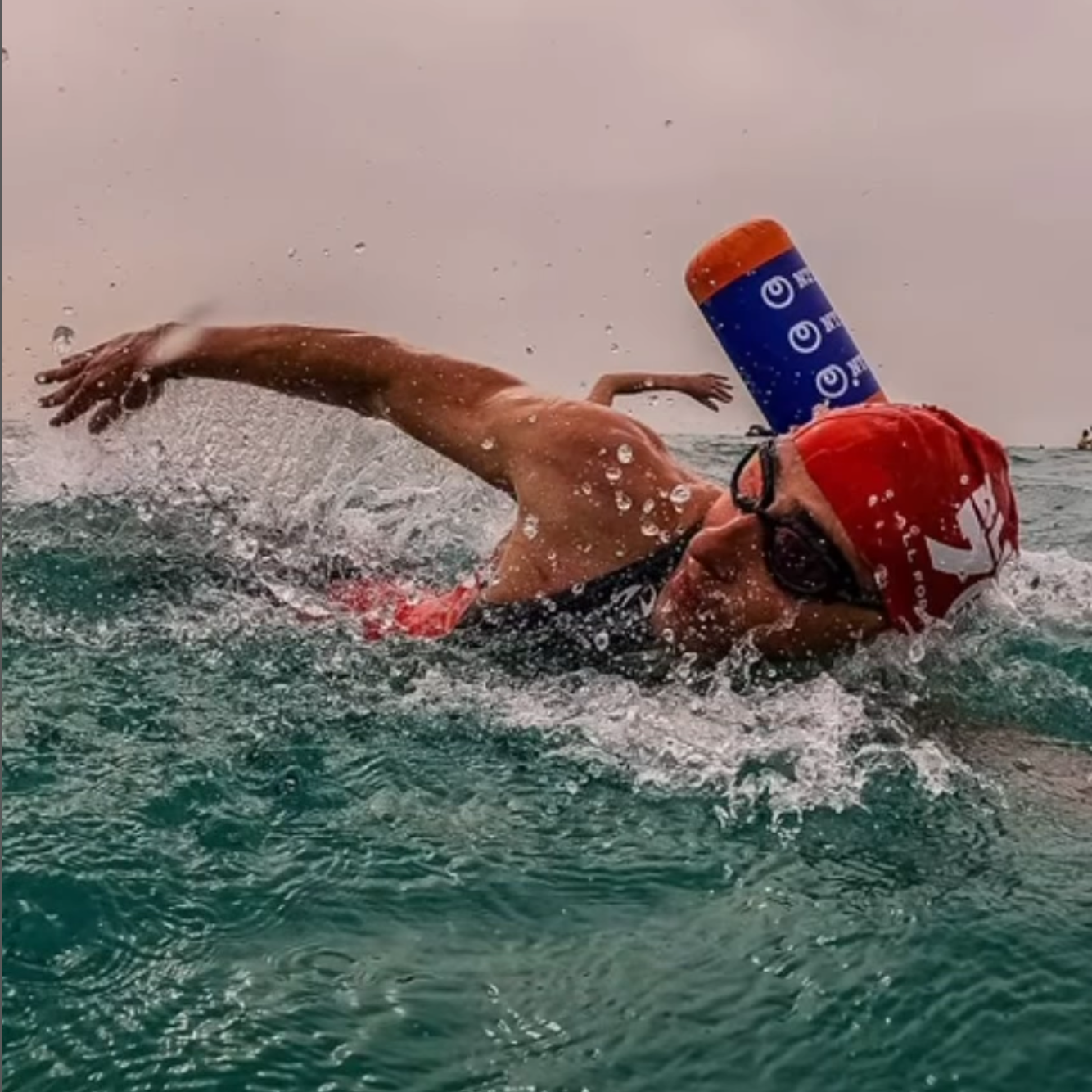



Ask ten triathletes with a fuller bust how their wetsuit fits and you'll hear some version of the same story. They sized up to get room in the chest, then spent the whole swim fighting a suit that sagged everywhere else: a loose back, water-logged underarms, a shoulder that never sat quite right. That's the fix most swimmers reach for by default, and it doesn't solve the problem.
The real issue sits in the pattern, not the size number stitched into the collar.
Standard Sizing Charts Assume a Proportional Body
Most wetsuit sizing charts plot chest and waist measurements against a single torso block and assume everything else scales up or down to match. That works fine for a narrow slice of body types. It breaks down the moment chest volume and overall frame size stop moving together, which happens constantly in real bodies and almost never shows up on a size chart.
Take a swimmer with a 38-inch bust built on a narrower shoulder and rib frame. She doesn't need more suit everywhere. She needs volume concentrated in one specific place, the front chest panel, without extra bulk dragged into the underarm or across the back.
Size up to solve for bust volume and you get exactly the wrong fix. The extra fabric bunching around the shoulders and back fills with water. Water-filled slack adds drag, and it changes how the suit moves with your body through every stroke, the opposite of what a wetsuit is built to do.
What Poor Chest Fit Does to Your Stroke
Three specific failures show up again and again in poorly patterned suits, and each one has a traceable, physical effect on how a swimmer moves through the water.
Compression Across the Sternum
Size a suit down to keep the shoulders and back from ballooning, and the chest panel can compress the ribcage enough to shorten breath volume on every cycle. Swimmers describe feeling winded far earlier than their fitness should allow, because neoprene is physically limiting how much their lungs can expand in a stroke pattern that already runs on tight breath timing.
A Shoulder Seam That Drifts
When the front panel is cut too small for bust volume, something has to give. Usually it's the shoulder seam, pulled forward and down to compensate for the shortfall in chest fabric. A seam out of place by even a couple of centimeters shifts the pivot point the arm rotates around during recovery. Over a 1,500-meter swim leg, that small shift adds up to real shoulder fatigue and a stroke rate that drops sooner than it should.
A Collar That Gaps
Go the other way and size up to fit the chest, and the collar often ends up loose at the base of the neck. Water floods in and out with every breath. That flushing adds a cooling effect well beyond what the suit's thermal rating promises, and it increases drag at the single highest-drag point on the body: the transition from head to water.
These are oxygen delivery and propulsion problems. Chest fit for a fuller-busted swimmer is a mechanics question, with real consequences for stroke fatigue and air intake over the length of a swim leg.
Why Pattern Design Beats a Bigger Size
A dedicated women's pattern solves this differently than a size chart ever could. Blue70's Femme Fit pattern refines the suit specifically through the bust, torso, wrists, and ankles, lowers the neckline to cut down on chafing and collar gapping, and extends the zipper for easier entry and a faster exit during transitions. That design approach keeps neoprene volume exactly where the body needs it, so the suit's seams stay lined up with the joints doing the actual work.
Built around the bust, the front panel carries the volume it needs without pulling fabric, and seams, out of position elsewhere. The shoulder stays where your shoulder actually is. The collar stays snug without choking you on every breath. That's the difference between a suit sized to a chart and a suit fit to a swimmer.
A Five-Step Fit Check Before You Buy
Skip the single size number. Run this sequence instead, at home or in the store, before the suit ever touches open water.
- Zip up fully and raise both arms overhead. If the chest panel pulls or you feel sternum compression at the top of that movement, the suit is undersized through the torso. Breaking it in won't fix that.
- Take three full breaths at rest, then three after some light exertion. A few arm circles will do it. Noticeably restricted breath volume means the suit is fighting your ribcage now, and it will keep fighting on race day.
- Check the collar with your chin tucked and your head turned to each side, mimicking a breathing stroke. Gapping here means water flush on every breath, not a minor nuisance.
- Reach one arm forward and rotate through a mock freestyle pull. Watch the shoulder seam. It should track with your actual shoulder joint, not sit forward of it or slide down your upper arm.
- Sit down and lean forward, the position you'll hold right before a race start. The suit should feel snug everywhere on dry land, chest included, without pinching.
Pass the first three checks but fail the fourth, and you're looking at a pattern problem, not a sizing one. Going up a size won't fix a shoulder seam pulled out of alignment by an undersized front panel. It will just add slack through the back and arms while the chest may still be wrong.
Confirm Fit With a Test Swim
Chest and shoulder fit problems usually only surface once a swimmer is horizontal and moving through a full stroke cycle, something no fitting room mirror can show you. That's why Blue70 lets you take a wetsuit for an actual swim and still return or exchange it, as long as it comes back clean, dry, and with tags and accessories attached.
For a fuller-busted swimmer, that test swim is where the real answers surface: whether the collar flushes when breathing to the dominant side, whether the shoulder seam holds its position through 200 continuous strokes, whether breath still feels normal by lap four. A two-minute changing room check can't tell you any of that. Forty-five minutes in the water can.
Treat Fit as a System
Sizing up for the chest treats bust fit as an isolated problem with an isolated fix, and it rarely is one. Every adjustment made to accommodate chest volume ripples outward: shoulder rotation shifts, breath volume changes, drag at the collar increases, all from a single decision at the fitting room mirror. Solve for the chest alone and a new problem tends to show up somewhere else in the suit within the first few strokes.
A pattern built around the bust, rather than scaled up from a block designed for a different frame, closes that gap at the source. If you're not sure whether your current suit's issue is sizing or pattern, run the five-step check before your next open water session and let the water, not the size chart, make the final call.
Check Blue70's size charts and fitting guide to find a starting point, or take a wetsuit out for a Test Swim and see how it holds up once you're actually moving.