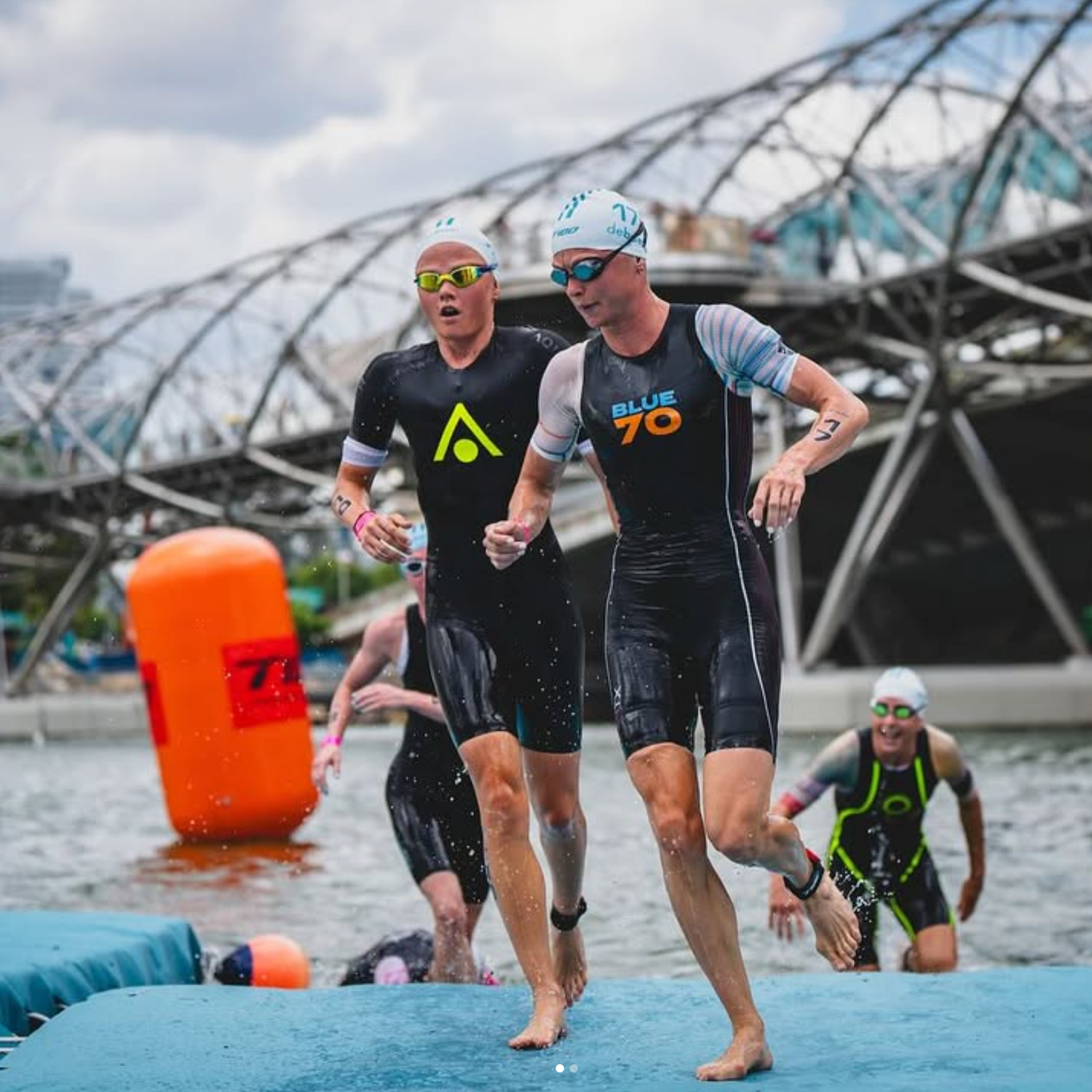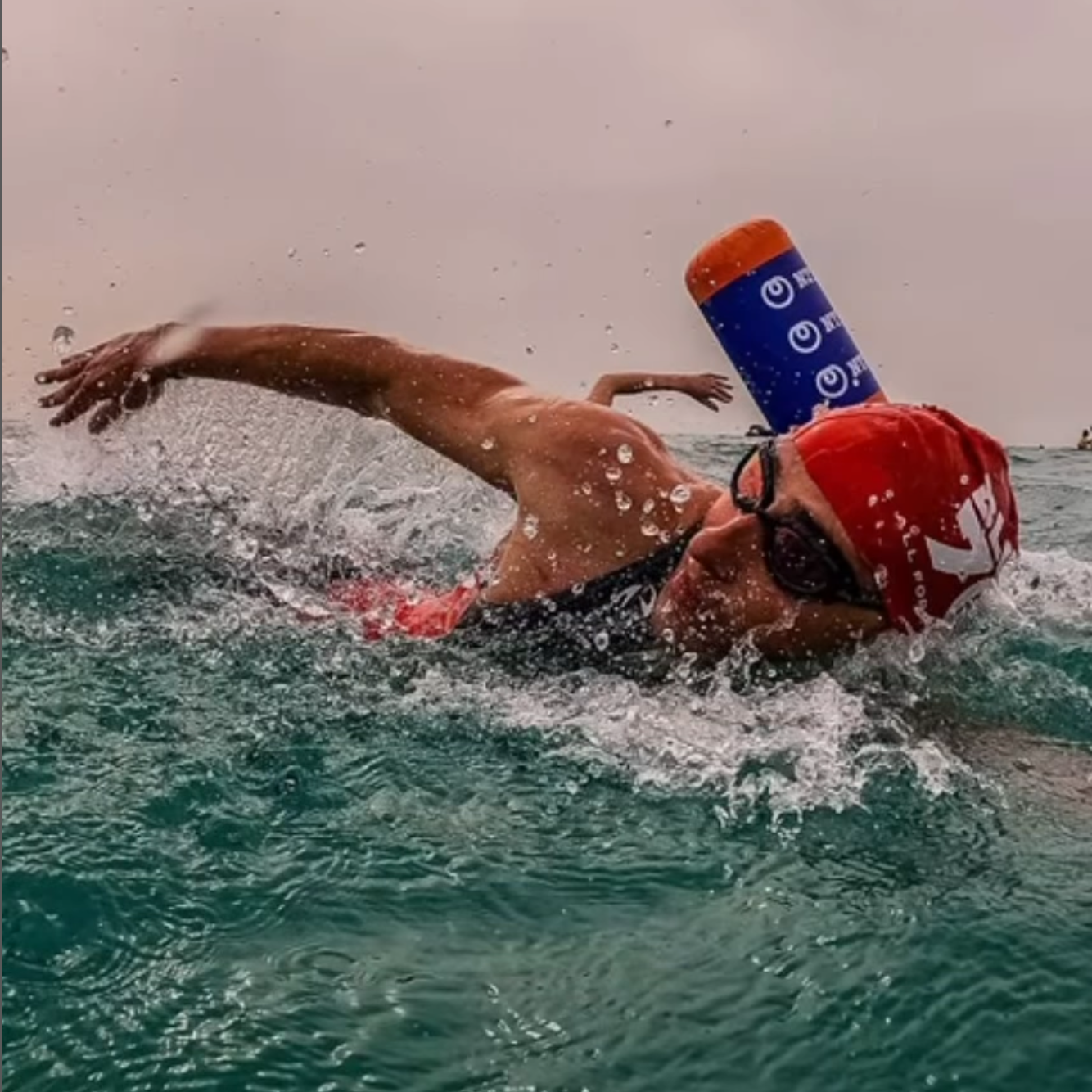



Surfers and swimmers share the same ocean, but their bodies are doing completely different work in it. A surfer paddles in short bursts, then sits upright on a board between sets, chest and shoulders drying off in the air. A swimmer never gets that break. The torso rotates with every stroke, the arms go fully overhead on recovery, and the whole body stays underwater from the first stroke to the last wall or buoy.
That difference matters more than most swimmers realize. Thermal rash guards show up in gear bags at open-water swims and triathlon transitions because they're neoprene-ish, warm-ish, and cheap. But a garment built for intermittent exposure on a surfboard doesn't hold up against the demands of continuous submersion. Here's why that gap matters, and what it actually takes to stay warm and mobile through a long swim.
What a Rash Guard Is Actually For
A rash guard's real job is abrasion resistance against a surfboard deck and sun protection during hours spent paddling and waiting. Thermal versions add a brushed fleece or polyester lining for a modest bump in warmth, usually worn under a surf wetsuit rather than trusted on their own.
That logic works fine for surfing. It falls apart for swimming. A thin thermal layer provides limited insulation against moving water, and almost no buoyancy. Swim in one instead of a proper wetsuit and the cold sets in fast, because your arms and shoulders are submerged the entire time instead of alternating between wet and dry.
Why Continuous Submersion Changes Everything
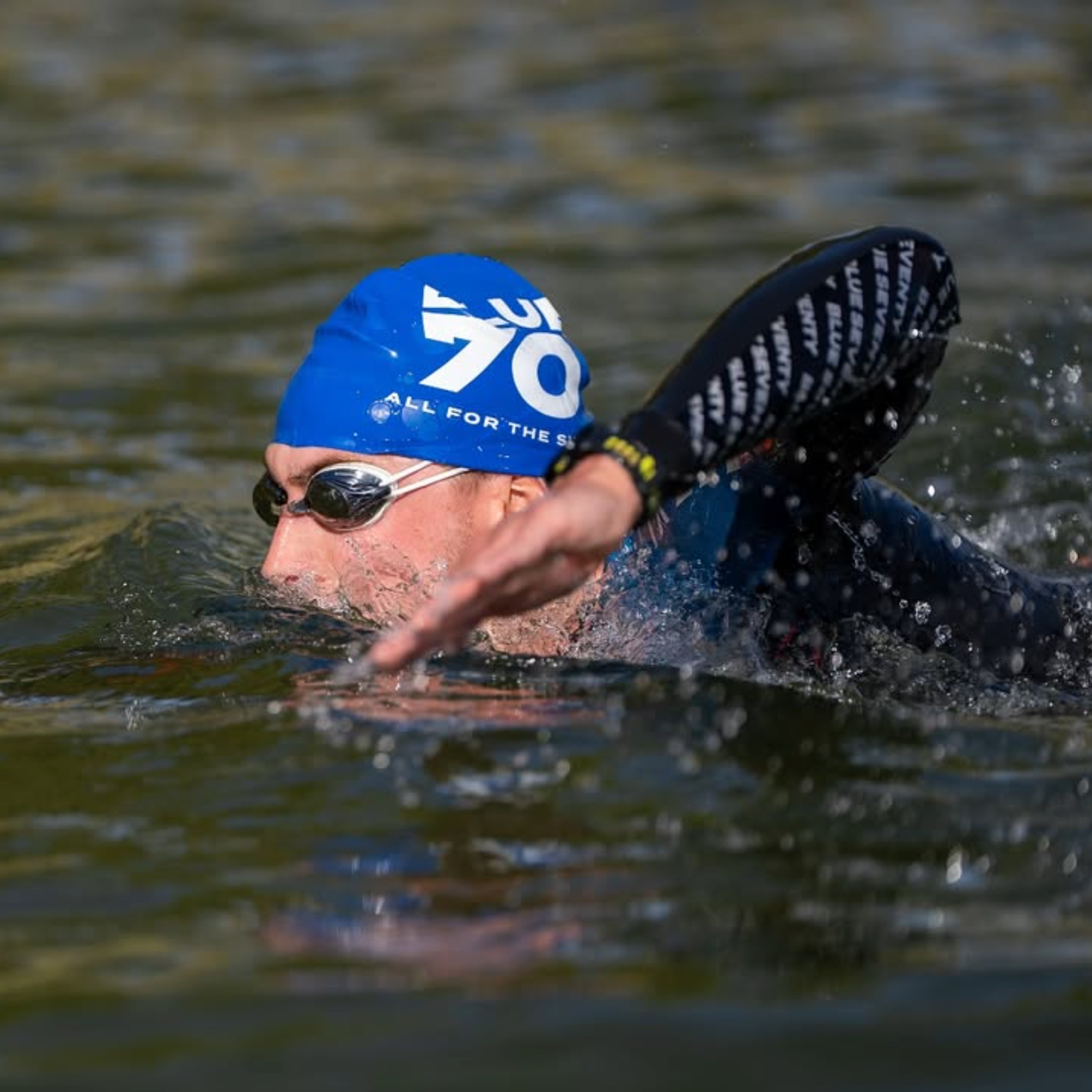
Water strips heat from your body far faster than air does, and movement through water speeds that loss up even more. A surfer gets relief between sets. A swimmer doesn't. Arms, shoulders, and chest stay in motion and underwater almost without interruption for the length of the swim.
That's the physiological problem a thin thermal layer can't solve. Blue70 builds the Thermal Reaction around a Zirconium jersey lining that covers the entire suit, not just the chest panel, because a swimmer needs consistent insulation everywhere the body stays wet, not just the spots exposed to wind on a surfboard. Below roughly 56 to 58°F, that full-coverage construction starts to matter in a way a partial thermal layer simply can't replicate. Above about 70 to 72°F, the opposite issue shows up: too much neoprene traps heat over a long swim, which is worth knowing before assuming more coverage is always safer.
The Shoulder Problem Surf Gear Doesn't Solve
Surf wetsuits are built for durability and board contact. That usually means thicker, more uniform neoprene and stiffer panels that can take repeated abrasion. Good for surfing. Not so good for swimming.
A continuous overhead arm recovery, repeated hundreds of times across a 30-, 60-, or 90-minute swim, needs shoulder panels that move freely. Stiff neoprene at the shoulder adds resistance to every stroke, and across a long swim, that resistance compounds into real fatigue, the kind that shows up as your stroke falls apart in the final few hundred meters.
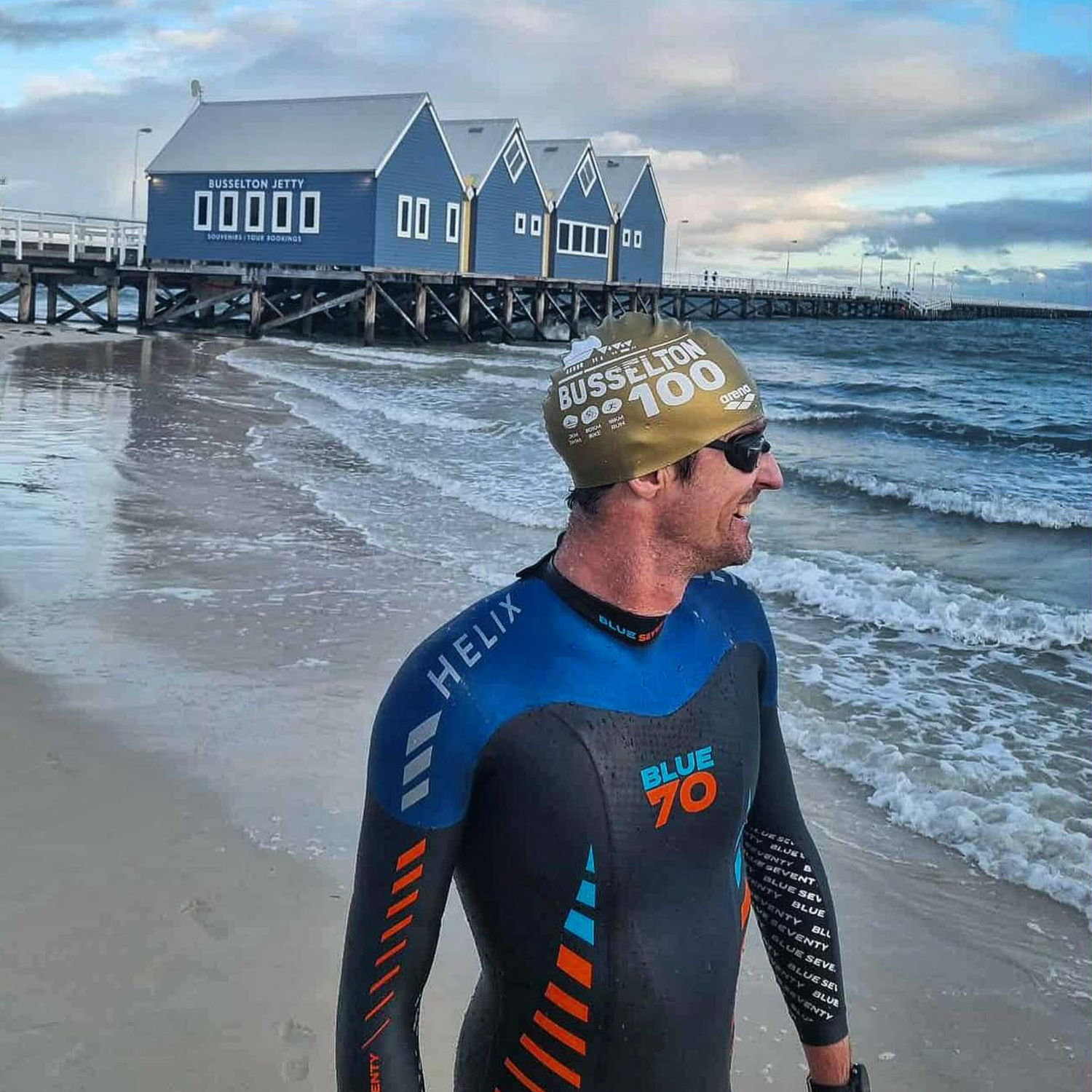
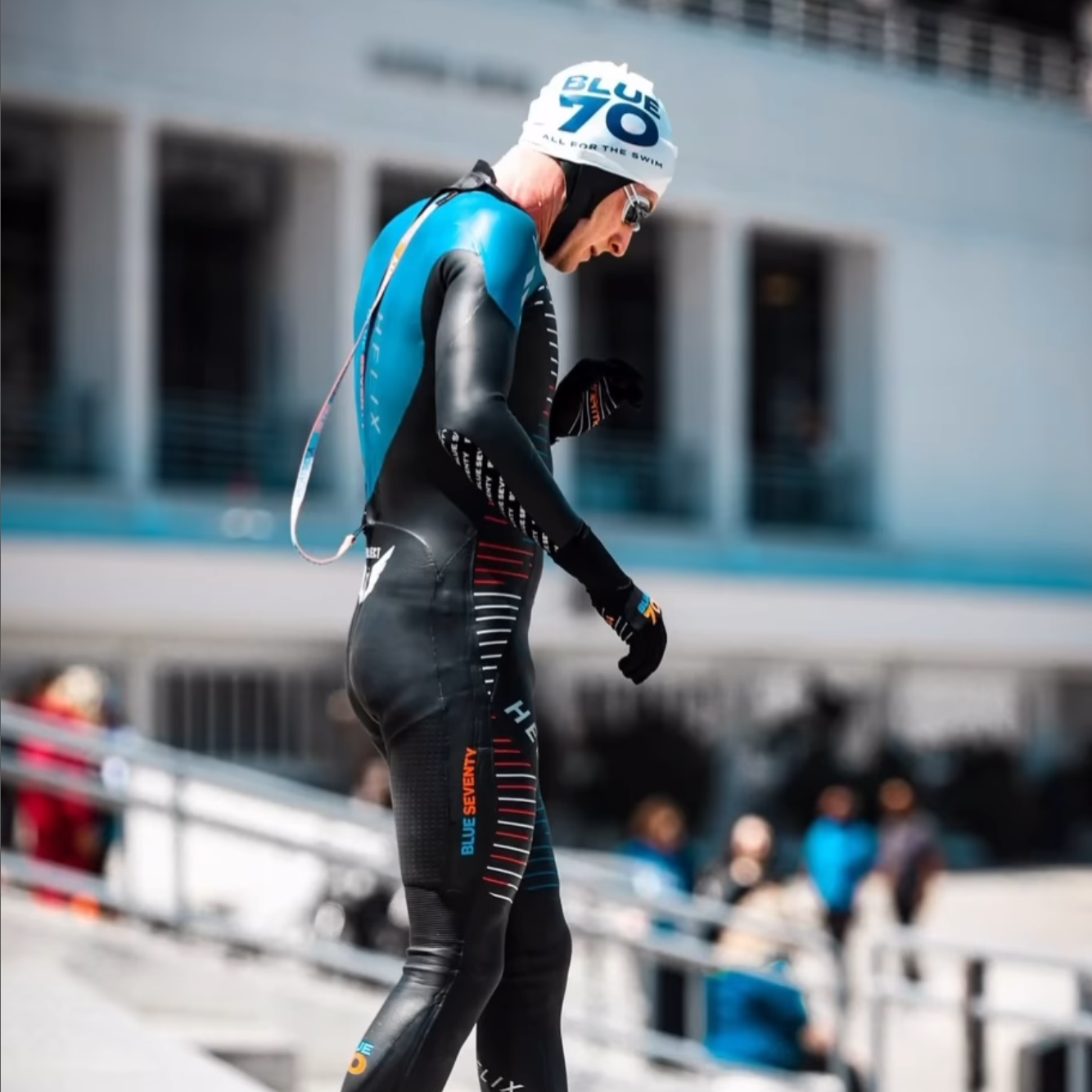
This is exactly what Blue70 designs around using Yamamoto neoprene in 38, 39, and 40-cell grades, with the higher cell counts placed at the arms and shoulders where flexibility counts most. The permeable catch panel, introduced on the Helix in 2010, takes it a step further by letting a swimmer feel the water through the forearm and hand during the catch phase of the stroke. Surf-style neoprene has no reason to allow that kind of feel. It doesn't help you paddle a board. It's everything to a swimmer.
Buoyancy Isn't Just One Thing
Buoyancy in a surf wetsuit mostly helps a rider float while sitting and waiting for a wave. Buoyancy in a swim wetsuit does a more specific job: it lifts the hips and legs toward the surface, correcting the body position most swimmers lose through the back half of a long swim as fatigue sets in.
Blue70's LIFT panels, added to the Helix in 2018 and built into the LIFT buoyancy short launched in 2020 with NBR foam, are placed with exactly that correction in mind. A rash guard contributes nothing here. It has no meaningful buoyancy, so a swimmer wearing one loses the single biggest advantage a wetsuit offers in open water. Buoyancy equals speed. A thermal top just isn't part of that equation.
Two Swimmers, Same Start Line
Picture two swimmers lining up for the same 1.2-mile open-water swim in 62°F water. One wears a thermal rash guard under a tri top, trusting the fleece lining to handle the cold. The other wears a properly fitted swim wetsuit.
The first swimmer loses core heat steadily through the submerged torso and arms. Without buoyancy support at the hips, fatigue sets in earlier, and form starts to slip well before the finish. The second swimmer holds body position longer because the wetsuit does some of the floating work, and stays warmer because the insulation covers the entire body instead of just the chest.
Neither swimmer made an unreasonable choice walking into the water. The mismatch is using gear built for intermittent air exposure on a surfboard to solve a problem defined by constant submersion.
Fit and Care Habits Worth Building
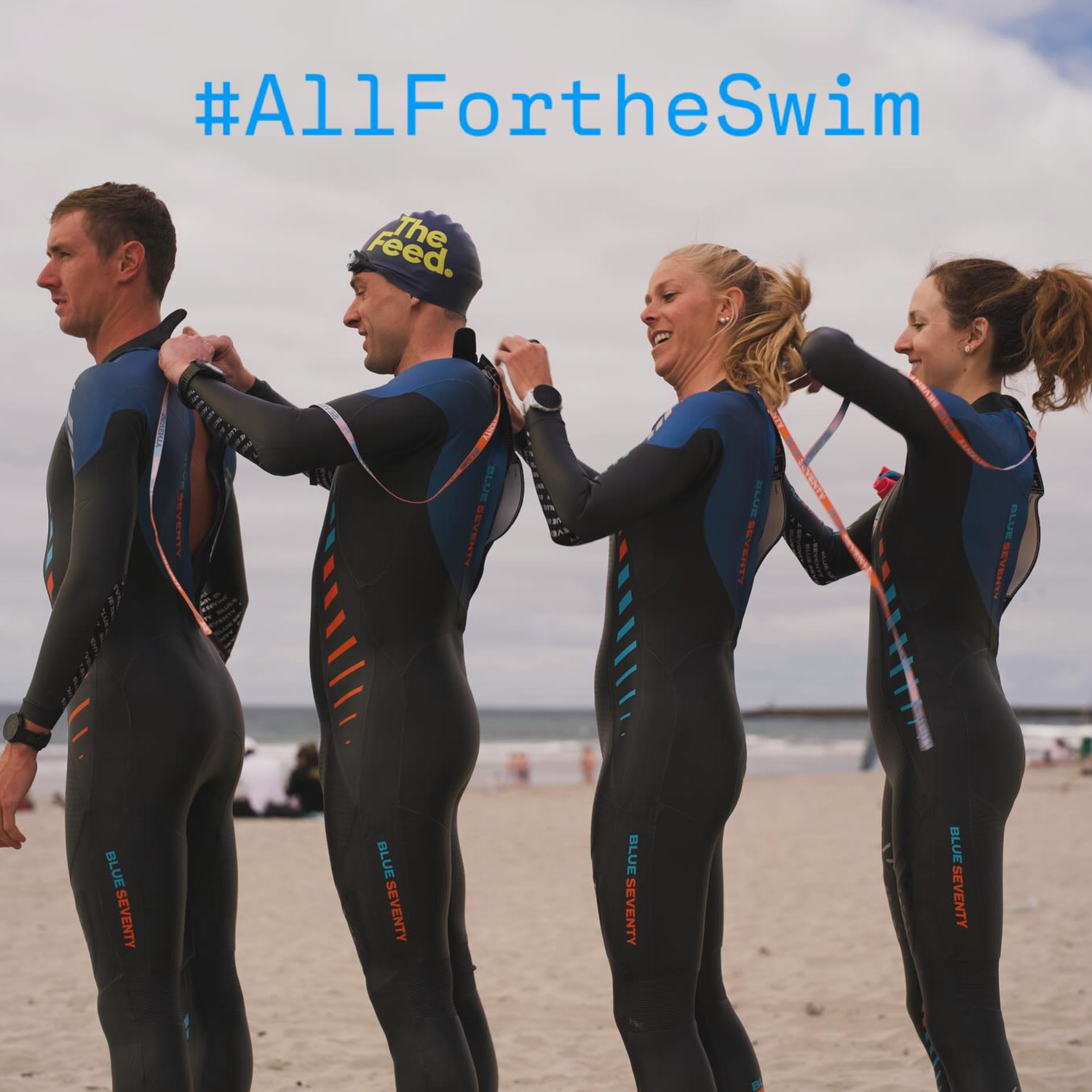
A swim wetsuit flexes through thousands of stroke cycles instead of absorbing board contact, so fit discipline counts for more here than it does with surf gear. A few habits make a real difference over the life of the suit:
- A wetsuit should feel snug, even slightly restrictive, on dry land. It will feel noticeably more comfortable once you're in the water and the suit settles against your body.
- Pay close attention to the shoulders when donning. An improperly fitted suit there creates drag at the seams and speeds up fatigue over a long swim.
- Rinse the suit after every swim and dry it inside-out away from direct sun.
- Watch your fingernails during donning. Small tears almost always start there, not from anything dramatic in the water.
Match the Gear to the Water You're Actually Swimming
If you're training for distance swimming, open water, or triathlon, the real question isn't rash guard versus wetsuit in the abstract. It's whether your gear was built around continuous submersion, shoulder rotation, and hip lift, or around intermittent exposure and board durability.
Training below roughly 56 to 58°F calls for a dedicated thermal swim wetsuit, not a thermal top layered under lighter neoprene. Swimming above 70 to 72°F calls for a sleeveless option rather than assuming full coverage is always the safer bet. Every Blue70 suit, from the Sprint through the Helix, is built around what swimming specifically demands: graduated Yamamoto neoprene, a permeable catch panel for feel, and buoyancy placed where it actually corrects body position.
If you've been making do with surf-shop gear for open-water swims, a Test Swim is the easiest way to feel the difference yourself, and it won't affect your ability to return the suit if it's not the right fit.