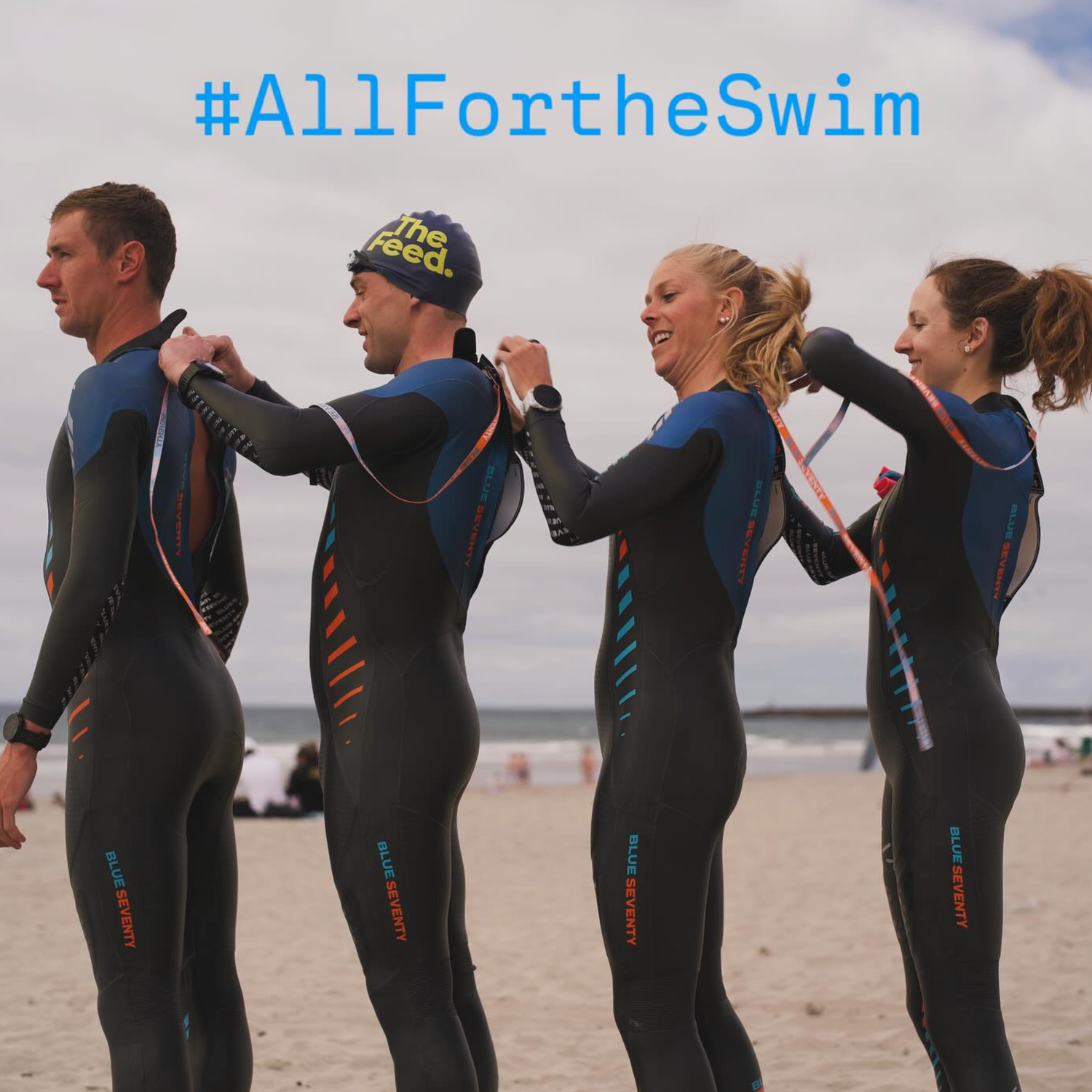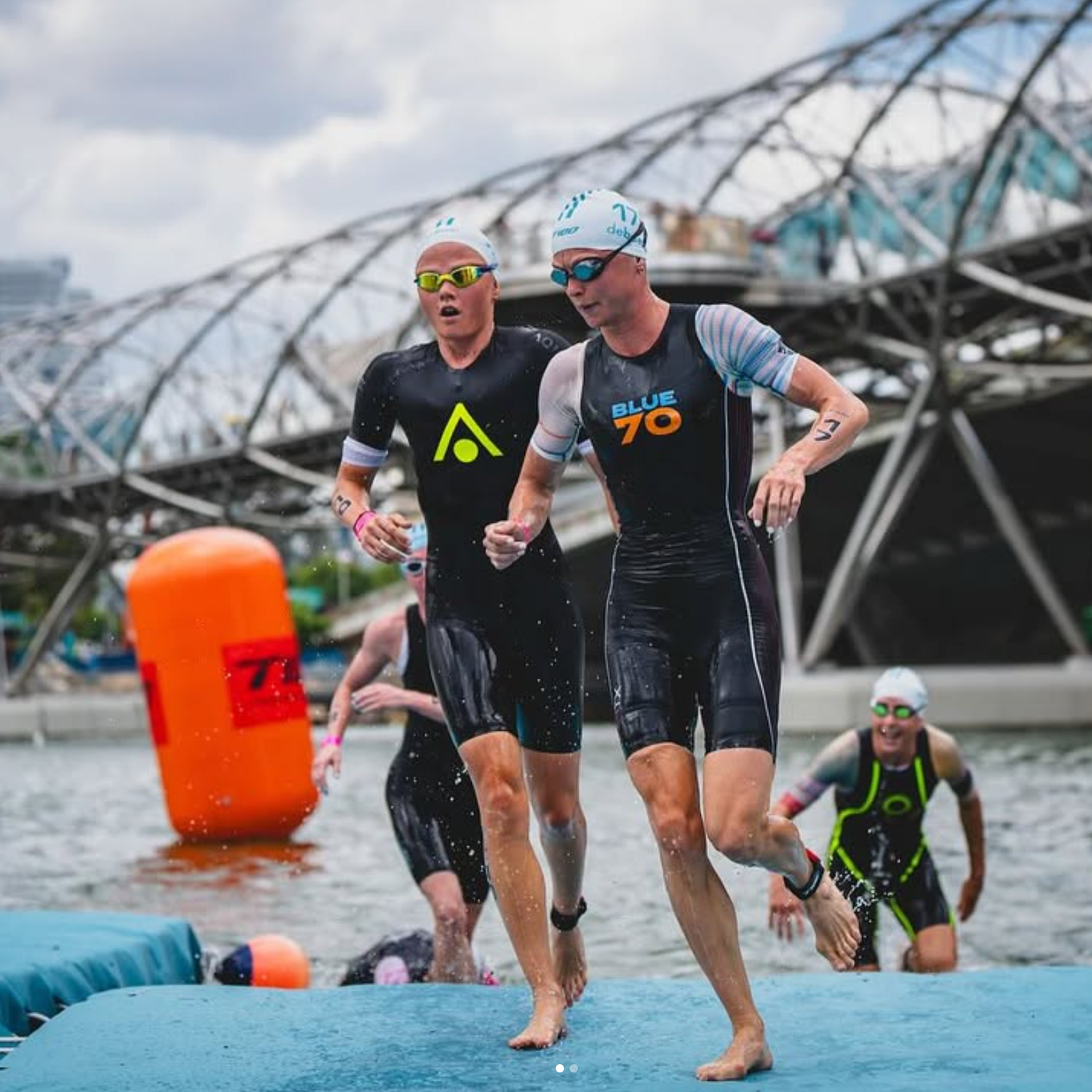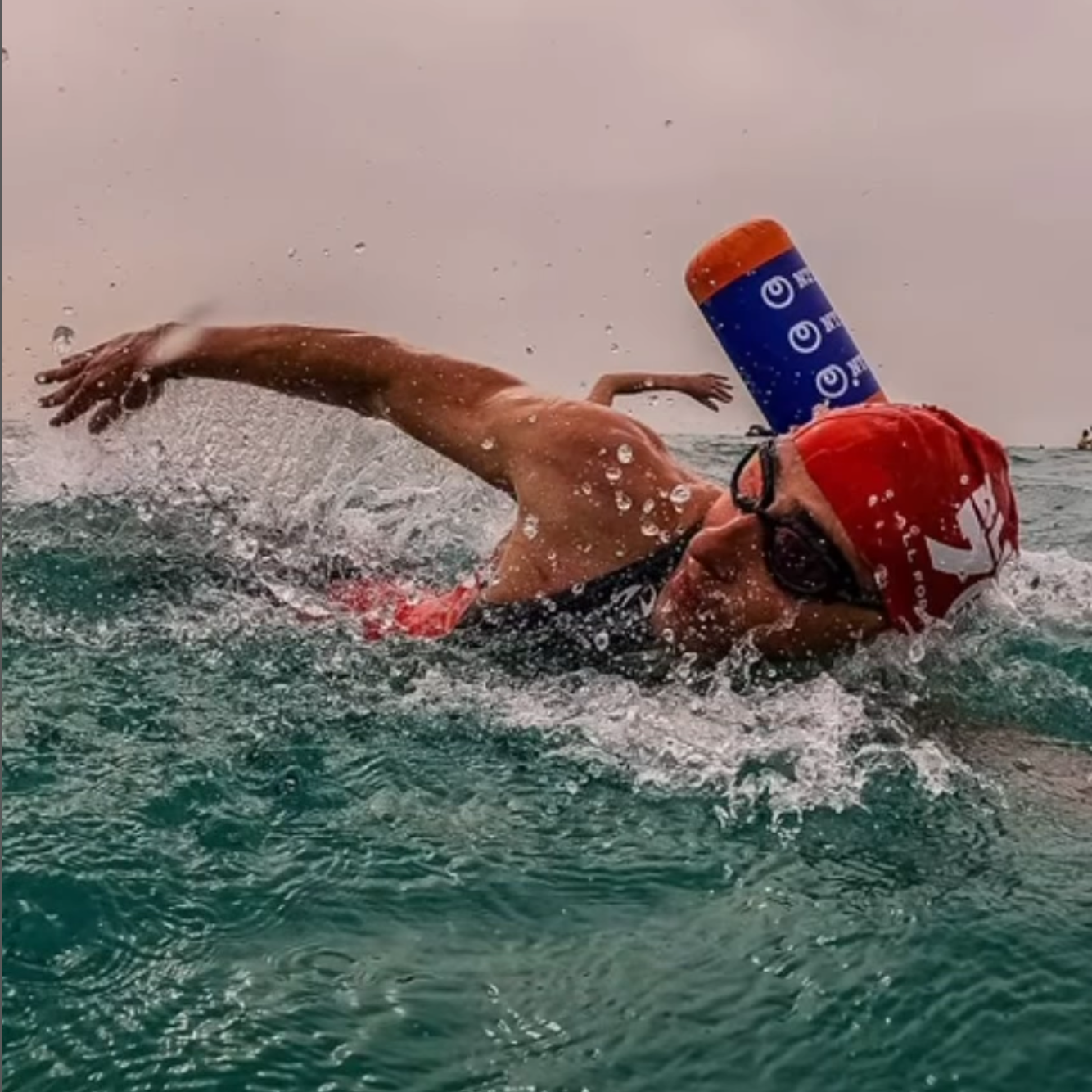



Ask most swimmers what a short john wetsuit is for, and you'll get some version of "it's the cheap one" or "it's for when it's too warm for a full suit." Both answers miss the point. A short john covers your torso and thighs and stops there, leaving your forearms, hands, lower legs, and feet exposed. That's not a stripped-down suit. It's a specific design choice built around a real question: where does neoprene actually help you swim, and where does it just get in the way?
Blue70's Glide Short John sits at $210, an entry-level suit built for warm water. But don't let the price tag fool you into thinking the cut is just a budget shortcut. The sleeveless arms and cropped legs solve two separate problems, and both have a physiological basis worth understanding before you write off a short john as "the basic one."
Short John vs. Long John: A Distinction Worth Knowing
Wetsuit terminology gets muddy fast, so let's clear up one thing first. A long john is sleeveless but runs full-length down the leg to the ankle. A short john is sleeveless and stops above the knee. Blue70 makes both: the Reaction Sleeveless ($395) is a long john cut, and the Glide Short John ($210) is cropped at the thigh.
Both suits remove the arms for the same reason. Only one removes length from the legs. That difference matters more than it looks like on a spec sheet.
What Happens When You Free the Ankle
Ankle mobility drives kick efficiency more than most swimmers give it credit for. A flexible ankle turns your foot into something close to a fin, moving water backward on both the downbeat and the upbeat of the kick. A stiff ankle turns that same foot into a flat paddle, pushing water sideways instead of back. That's drag, not propulsion.
Neoprene at the ankle restricts plantar flexion, even when it's thin. In cold water, that trade-off is worth making. The warmth and buoyancy you get through the calf outweighs the mobility you lose. In warm water, the math flips. You're not fighting to hold body heat, so the restriction stops earning its keep.
Cut the leg off above the knee and that restriction disappears. Swimmers who kick with a strong two-beat or six-beat rhythm, relying on a sharp ankle snap rather than raw leg power, tend to feel this difference the moment they swim in a short john versus a full suit. Triathletes crossing over from running often notice it first, since a whippy ankle is usually their main source of kick propulsion to begin with.
What Happens When You Free the Forearm
Now think about the catch, that instant early in your stroke when your hand and forearm find purchase on the water and you start pulling yourself forward. Good catch technique depends on feel. You sense the water building resistance against your palm and forearm, and you adjust your hand angle in real time to hold onto it.
Neoprene dulls that feedback. It doesn't matter how thin the material is; a covered forearm feels less than a bare one. A short john sidesteps the problem entirely by leaving the entire arm exposed. No panel design required, no trade-off to manage. Just skin on water.
For a swimmer actively drilling catch mechanics, whether that's in a wetsuit-legal race or an open-water training session, that bare forearm is doing real work. You can feel for slippage, correct your elbow position, and build the kind of sensitivity that's much harder to develop through a sleeve.
Why the Torso and Thighs Still Need the Neoprene
None of this means bare skin everywhere would be an upgrade. The torso and thighs are exactly where wetsuit coverage does its most important work, for two distinct reasons.
First: buoyancy. For most swimmers, the hips and legs sit lower in the water than the shoulders, and that's a body position problem. Neoprene through the torso and thighs corrects it by lifting the hips closer to the surface. This is the part of the suit doing the heavy lifting behind the phrase "buoyancy equals speed," and it's concentrated almost entirely in the trunk, not the limbs.
Second: thermoregulation, and here the body's design is genuinely lopsided. Limbs have a higher surface-area-to-volume ratio than the trunk, so per pound of tissue, they lose heat faster. But limbs in motion also generate their own metabolic heat as working muscle, which offsets some of that loss while you're actually swimming, especially in the legs. The torso doesn't get that same benefit. It houses your core organs and needs to stay warm regardless of how hard you're moving, but it doesn't produce nearly as much localized heat from the effort of swimming.
This isn't a new observation. L.G.C.E. Pugh and O.G. Edholm documented it back in 1955 in a study of Channel swimmers published in The Lancet, one of the earliest pieces of research to show how differently the body loses heat during long, cold-water swims, and how much subcutaneous insulation over the trunk matters for holding core temperature over hours in the water. A short john's coverage pattern, heavy over the trunk and thighs, absent everywhere else, lines up with exactly that finding: protect the core, and let the limbs handle more of their own heat production while they work.
Matching the Suit to the Water
Blue70's general temperature guidance applies here just as it does across the rest of the line. Above roughly 70 to 72°F, a full suit tends to run too warm over a longer swim, and something sleeveless or cropped becomes the more comfortable choice. Below that range, you generally want more coverage, not less.
A short john tends to make the most sense in a few specific situations:
- Warm-water swims or races where you still want hip lift and thigh buoyancy, but no restriction at the wrist or ankle
- Technique sessions built around catch feel or kick mechanics, where the whole point is sensory feedback
- Swimmers who run hot and start overheating in full coverage before the swim leg is even finished
- First-time wetsuit wearers who want less material to manage during a wetsuit removal in transition
Once the water gets colder, that calculation reverses, and a fully sleeved thermal suit becomes the better call, trading some of that bare-limb feedback for real thermal protection.
Fit and the Chafe Points Full Suits Don't Have
A short john should fit the way every Blue70 wetsuit fits: snug on dry land, and a bit more comfortable once you're in the water and the suit has had a chance to hydrate slightly. But because the cut is different, it comes with its own chafe points that a full suit simply doesn't have.
Watch two spots in particular: the raw edge at the top of the thigh where the leg panel ends, and the shoulder seam where a sleeve would normally start. Both spots take repeated friction on a longer swim. A thin layer of anti-chafe balm applied before you get in the water goes a long way toward avoiding raw skin that can turn a good training swim into a miserable one.
Keeping It in Good Shape
Care for a short john the same way you'd care for any neoprene suit in the Blue70 line. Rinse it in fresh water after every swim, whether you were in the ocean, a lake, or a chlorinated pool, and let it dry out of direct sunlight. Trim your fingernails before you put it on. Nail punctures at the leg and thigh openings are one of the most common, and most avoidable, ways a new wetsuit gets damaged. And try not to fold the suit at the same crease every time you pack it away; that's where the neoprene will fatigue first.
Finding the Right Coverage for Your Swim
If you're weighing how much arm and leg coverage you actually need, the decision usually comes down to water temperature, how often you're training, and how much you care about tactile feedback during the catch.
- Glide Short John ($210): entry-level, cropped leg, ideal for warm water and swimmers new to wetsuit training
- Reaction Sleeveless ($395): full-length leg, higher-grade neoprene, better suited to swimmers training often in sleeveless conditions
- Sprint ($325): full sleeved suit at an entry-level price, for swimmers who want complete coverage without stepping up to a higher-grade suit
None of these is a lesser version of the others. Each one answers a different question about how much feel you want versus how much buoyancy and warmth you need.
The real value of a short john isn't that it's a smaller wetsuit. It's that the coverage pattern matches where your body actually benefits from neoprene, and where it doesn't. If you're not sure whether that pattern fits your next swim, Blue70's Test Swim policy lets you try the Glide Short John in open water and still return it clean and dry within 30 days if it's not the right fit.