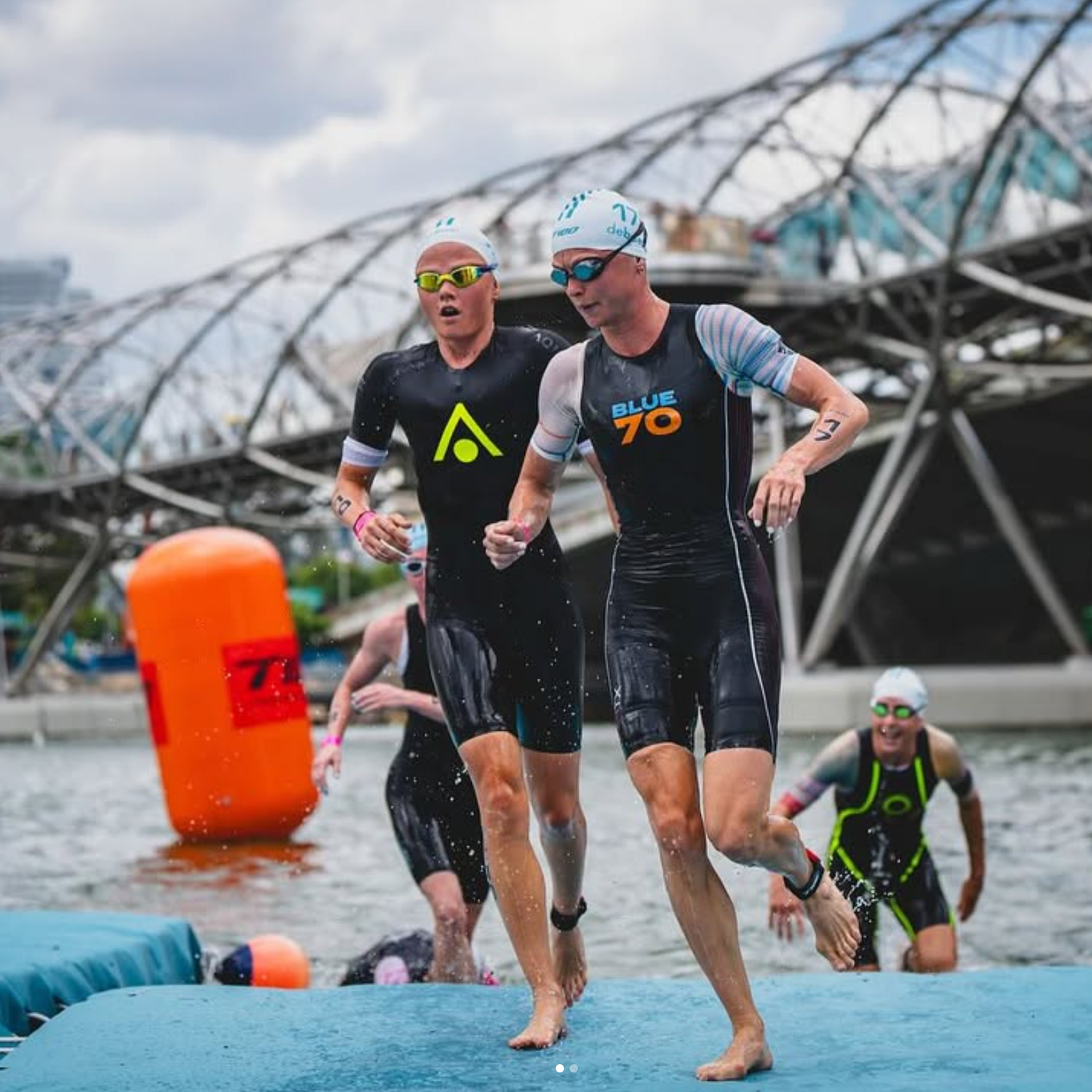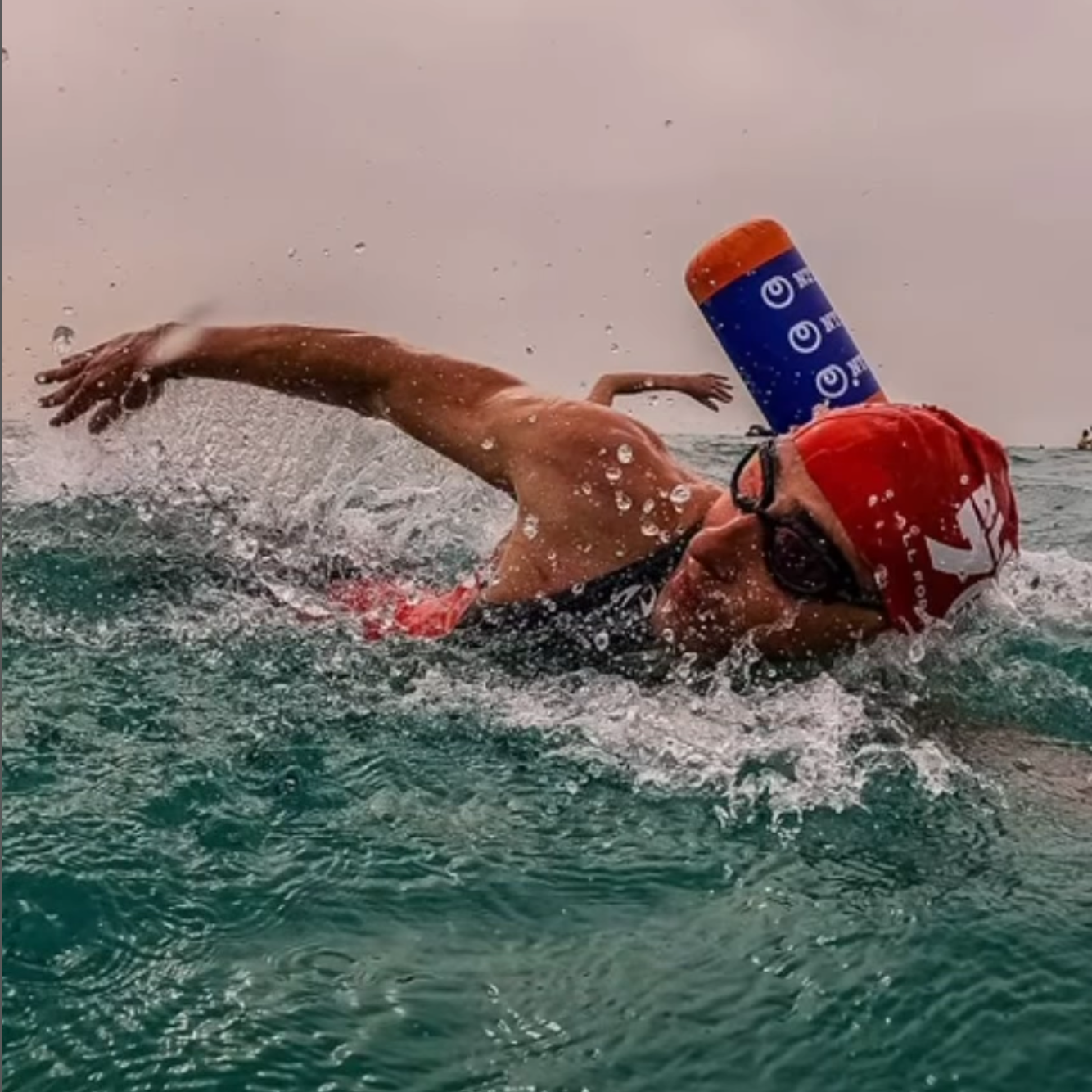



Most swimmers and triathletes don’t spend much time thinking about a changing robe until they’ve had one of those mornings: cold wind off the lake, numb hands, a wetsuit half off, and nowhere comfortable to sort yourself out. That’s usually when the value of good shore-side routine becomes very clear.
A changing robe is often treated like an extra. Something convenient. Something cozy. But from an open-water swimming perspective, it can be much more useful than that. It won’t change your stroke or your body position in the water, and it certainly doesn’t replace a properly fitted swim-specific wetsuit. What it can do is make the entire training process smoother, calmer, and easier to repeat.
And that matters more than many athletes realize.
It’s not about luxury. It’s about reducing friction.
Open-water swimming has a way of exposing weak points in your routine. Not just in your technique, but in everything around the session. The parking lot matters. The dock matters. The few minutes before you zip your wetsuit matter. The ten minutes after you get out matter too.
If those parts of the day feel disorganized, cold, and chaotic, they start to wear on you. You hesitate before getting in. You rush when getting out. You handle your gear carelessly. You put off the next swim because the whole experience feels harder than it needs to be.
That’s where a changing robe earns its place. Not because it does anything dramatic, but because it helps remove small barriers that can chip away at consistency.
The real performance angle is behavior
Swimmers naturally focus on equipment that affects what happens in the water. That makes sense. A wetsuit is designed to improve body position, reduce drag, and provide added thermal protection. At blueseventy, that’s why wetsuit design starts with the swim itself: flexibility where you need freedom from restriction, buoyancy where body position matters, and fit that supports efficient movement rather than fighting it.
But strong open-water habits are built on more than in-water performance. They’re built on repeatable behavior. If your before-and-after routine is solid, you’re more likely to train regularly, make better decisions, and take better care of your gear.
A changing robe can support that by helping you:
- change with less exposure to wind and cool air
- stay calmer before getting into the water
- avoid rushing through wetsuit removal
- get into dry layers more efficiently
- leave the session feeling more in control than depleted
That may sound simple, but simple things often have the biggest effect on whether athletes keep showing up.
Why post-swim moments matter so much
Many athletes put all their thermal thinking into their wetsuit choice. That’s only part of the picture.
A wetsuit is designed for use in the water. Once you’re out, conditions can feel very different very quickly. Wet skin, cool air, and wind can make the shoreline or parking lot feel far colder than the swim itself. That first stretch after exiting the water is when dexterity drops, patience disappears, and mistakes happen.
This is when swimmers tend to:
- force a zipper
- step on their wetsuit
- pull too hard at the ankles
- dig fingernails into neoprene
- throw gear into a bag without thinking
None of that helps your next session.
blueseventy has always been straightforward about performance trade-offs. A high-end suit like the Helix is built for total race-day performance, with extremely flexible neoprene through the shoulders and arms, a permeable catch panel to preserve feel for the water, and LIFT buoyancy panels to support body position. That kind of flexibility is exactly what many competitive swimmers and triathletes want in the water. It also means careful handling matters on land.
When you’re less cold and less rushed, you tend to treat your gear better. That’s one of the most practical arguments for improving your changing setup.
A changing robe is really a training transition tool
Triathletes hear the word “transition” and think immediately of race day. Fair enough. But there’s another kind of transition that happens all season long: the one before and after every open-water session.
The athletes who move smoothly through those moments are almost never winging it. They have a system. Their dry clothes are packed in order. Their towel is accessible. Their goggles are easy to find. Their wetsuit is laid out properly. They know what comes off first and what goes on next.
A changing robe fits neatly into that routine. It doesn’t belong in a standard race transition, but it absolutely belongs in the broader conversation about training efficiency.
That’s the underappreciated point: a smoother training transition usually leads to a better overall swim day.
Where it matters most
A changing robe tends to be most useful when the swim environment is inconvenient enough to affect your routine. That often includes:
- lake or ocean sessions with wind exposure
- cold mornings and shoulder-season training
- venues without indoor changing facilities
- group swims where you’re standing around before or after getting in
- longer drives home where staying in wet gear is a bad idea
If you mostly swim in warm conditions and walk straight into a heated locker room, it may not rank high on your list. But if open-water logistics are what make sessions feel draining, it can be surprisingly useful.
What swimmers should prioritize first
It’s worth keeping the gear hierarchy honest. A changing robe can improve the experience around the swim, but it should not come before the essentials.
For most swimmers and triathletes, priorities should look more like this:
- Choose the right swim-specific wetsuit for your goals, conditions, and frequency of use.
- Make sure the fit is right. A suit should feel snug on land and more comfortable in the water.
- Learn to put it on properly, especially through the hips and shoulders, where poor positioning creates fatigue.
- Practice in open water so the environment feels familiar.
- Refine your pre- and post-swim system, including how you change, re-layer, and care for your gear.
That order matters. The robe supports the system. It does not replace the fundamentals.
How to make your shore-side routine better
You do not need a complicated process. You need a repeatable one.
Before the swim
- Pack dry clothes in the order you plan to put them on.
- Keep socks, hat, and warm layers easy to reach.
- Lay your wetsuit out carefully instead of pulling it from a tangled bag.
- Stay layered as long as possible before donning your suit.
- If conditions are cool, minimize standing around half-changed.
While putting on your wetsuit
- Work the suit fully into position rather than rushing straight to the zipper.
- Make sure the legs, hips, and shoulders are seated correctly.
- Avoid using fingernails to tug neoprene into place.
- Zip carefully and never force closure.
A surprising number of “tight shoulders” complaints come from suits that were never pulled into the right position.
After the swim
- Get covered up quickly once you are safely out of the water.
- Remove the wetsuit methodically, not aggressively.
- Be careful stepping out of the lower legs and ankles.
- Avoid dragging the suit across rough surfaces.
- Change into dry clothes in the order you planned before the session started.
Back at home
- Rinse your wetsuit as needed based on where you swam.
- Let it dry properly before storing it.
- Don’t leave it balled up in a bag.
- Check for small nicks or wear before they become bigger issues.
The cold-water connection
For swimmers training in colder water, all of this becomes even more important. Below about 56-58°F, a purpose-built thermal suit like the Thermal Reaction adds meaningful warmth. That can extend comfort and confidence in cold conditions, provided you approach cold water with proper acclimatization and sound judgment.
But even with the right suit, the session is not over when you leave the water. How quickly you get out of wet gear and into dry layers has a real effect on how manageable the day feels.
That’s another reason experienced cold-water swimmers tend to think in systems rather than individual products. Wetsuit choice matters. Accessories matter. Post-swim routine matters too.
A sensible contrarian view: not everyone needs one
It’s easy to overstate the importance of any piece of gear, so let’s not do that here.
Not every swimmer needs a changing robe. If you swim in consistently warm weather, change indoors, or already have a smooth setup that gets you out of wet gear quickly, it may not be high on your priority list.
In many cases, athletes will benefit more from:
- improving wetsuit fit
- choosing a model better matched to their training frequency
- practicing more in open water
- learning better wetsuit donning technique
That said, if the hardest part of your swim day is everything that happens before and after the water, a changing robe can be a smart addition.
The bigger takeaway
Swimming better is not only about what happens between the start and the finish. It is also about building a routine that makes good training sustainable. The athletes who improve most consistently are usually the ones who reduce unnecessary friction. They make the process easier to repeat.
That is where a changing robe has real value. Not as a miracle item. Not as a shortcut. Just as a practical piece of shore-side equipment that can help you stay organized, protect your gear, and make open-water training feel more manageable.
In a sport where consistency drives confidence, that is more important than it may first appear.
If you’re refining your setup for the season, start with the essentials: the right swim-specific wetsuit, the right fit, and a routine that works when conditions are less than ideal. Then improve the details around the swim that make it easier to keep coming back.
Dive in: If you want to sort out the part of your setup that matters most in the water, explore blueseventy’s fit guide, browse the size charts, or Take a Test Swim to make sure your wetsuit feels right before race day.