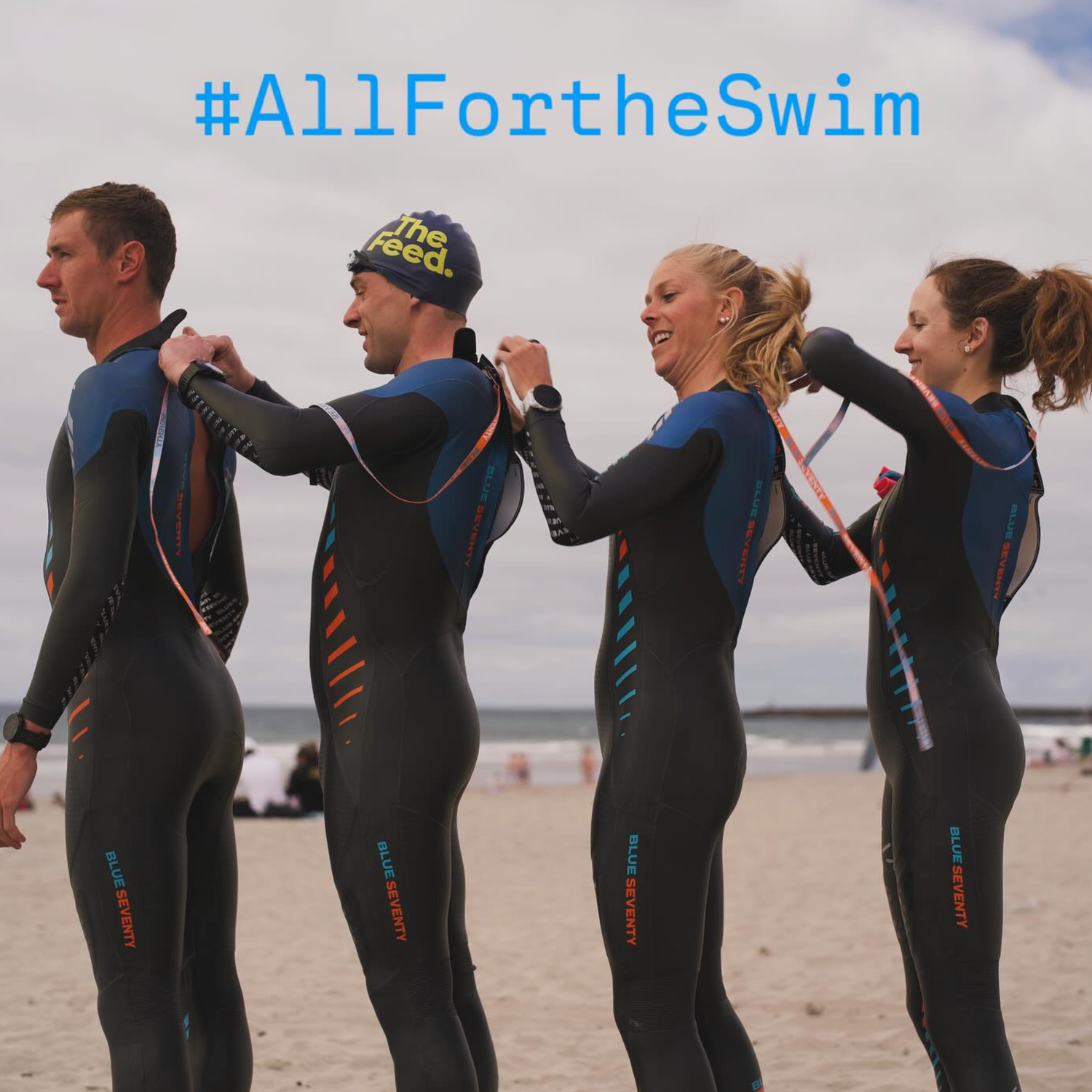



Swimmers ask about 1mm wetsuits as soon as the water climbs past 72 degrees. The logic feels obvious: keep the slick surface, lose the heat. But a full neoprene suit at 1mm solves the wrong part of the problem in tropical water. In most warm conditions, coverage matters more than thickness.
All blueseventy wetsuits use Yamamoto neoprene in 38, 39, and 40 cell grades. Higher cell count means more flexibility. Thickness is a separate variable. It influences heat retention and range of motion more than the cell grade alone.
A wetsuit works by trapping a thin layer of water against your skin. Your body warms that layer, and the neoprene slows the rate at which heat moves into the surrounding water. A 5mm suit holds far more heat. A 1mm suit holds very little. The difference in flexibility is immediate: thinner neoprene bends more easily through the catch and recovery, and over a long tropical swim that shows up as a longer, more relaxed stroke.
Thin neoprene also sacrifices lift. blueseventy's swim-specific design philosophy is direct: buoyancy equals speed in the water. A wetsuit lifts your hips and legs, flattens your body position, and reduces drag. That benefit shrinks as the neoprene gets thinner. In tropical water, the extra lift from a thicker suit is often not worth the heat and stiffness that come with it.
Heat Becomes the Limiter in Tropical Water
blueseventy's published warm-water guidance puts the comfort threshold between 70 and 72 degrees Fahrenheit. Above that range, water does not pull heat away from the body quickly enough to justify a full 5mm suit. You feel it first at the neck, then in your stroke. Shoulders tighten. The suit starts to feel like a layer you are fighting rather than wearing.
Removing material at the arms and shoulders lets your body shed heat where it builds first. Removing material at the legs reduces weight and surface area without locking in warmth around your core.
Coverage Options That Beat a 1mm Full Suit
blueseventy builds warm-water options around the amount of body coverage you want. Thickness is secondary.
- Reaction Sleeveless ($395): removes the arms entirely while keeping the torso and legs covered. Less heat retention, full range of motion through the shoulders.
- Glide Short John ($210): removes the legs as well. The least neoprene of the traditional wetsuit cuts, built for entry-level warm-water swimming.
- LIFT Buoyancy Short ($150): adds targeted lift at the hips with NBR foam, no upper-body coverage, designed for training and body-position work in warm water.
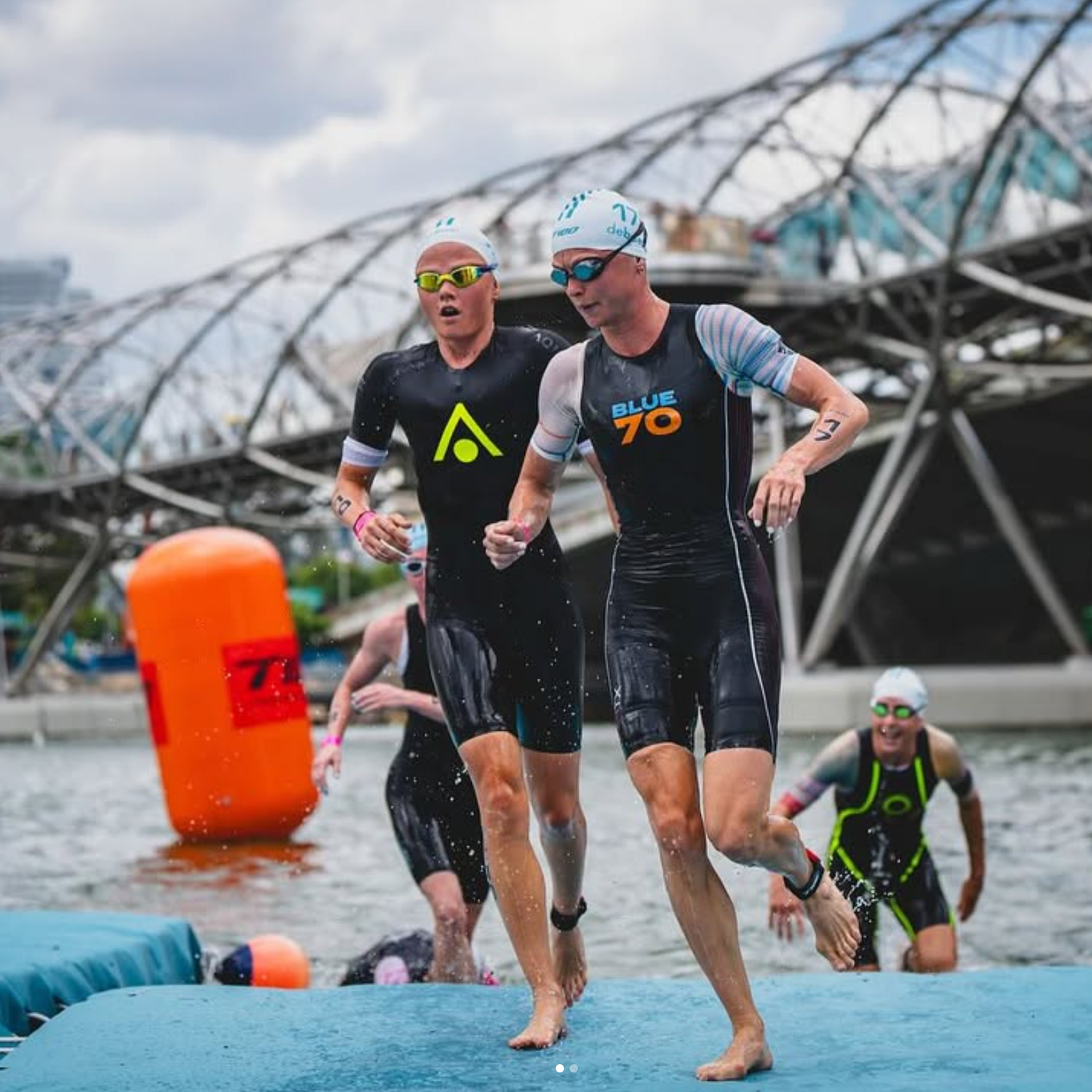
For racing, swimskins take the idea further. blueseventy's swimskin lineage runs from the pointzero3 worn by Kona winners in the mid-2000s to the PZ4TX, introduced in 2016 as a short-sleeved design. A swimskin serves a different purpose than a wetsuit. It provides no real thermal insulation. Its job is to cover the torso with a low-drag textile while keeping the arms and shoulders free. In warm, non-wetsuit-legal conditions, that design reduces surface friction without adding heat.
Fit and Feel When You Go Thin
A thin suit needs close contact with your skin. Without the stiffness of a 5mm suit, loose areas sag and wrinkle, especially around the lower back. Those wrinkles create drag even before you factor in heat. A suit that is too tight across the chest or shoulders shortens the catch, which defeats the reason you wanted less material in the first place.
blueseventy's fit guidance still applies: the suit should feel snug on dry land and more comfortable once you are in the water. Use the size charts and sizing tool before you order. The brand's Test Swim policy lets you swim in the suit and still return or exchange it within 30 days, as long as it is clean, dry, unmodified, and has the tags attached. That is the only way to know if a warm-water cut works for you at 1,000 meters.
Caring for Thin Neoprene
Thin neoprene tears more easily than thick neoprene, and fingernail punctures are the most common damage blueseventy sees. The warranty does not cover them. When you put the suit on, use the pads of your fingers or pinch the material between your thumb and knuckle. Do not grip with your nails. Ease the suit up in small sections instead of yanking from the waist.
- Rinse the suit in fresh water after every swim.
- Turn it inside out to dry first, then back to normal so sunlight does not break down the outer surface.
- Keep it out of direct sunlight and away from heat, including a car trunk on a tropical day.
Making the Warm-Water Call
Before you buy a thin full suit, ask what problem you are solving. If you train in water above 72 degrees and overheat in a full suit, a sleeveless cut or a swimskin will serve you better than a thinner full suit. If you need a race-legal option for warm water, check the current wetsuit and swimskin rules for your specific event. Sanctioning bodies use different cutoffs, and those rules change from season to season.
blueseventy's size charts, fitting guide, and expert support team can help you find the right cut. The test swim is the final check. A suit that feels good in the changing room may not feel good at 1,500 meters, and the only way to know is to swim in it.
Take a Test Swim and find the warm-water cut that works for you.
Happy Swimming!