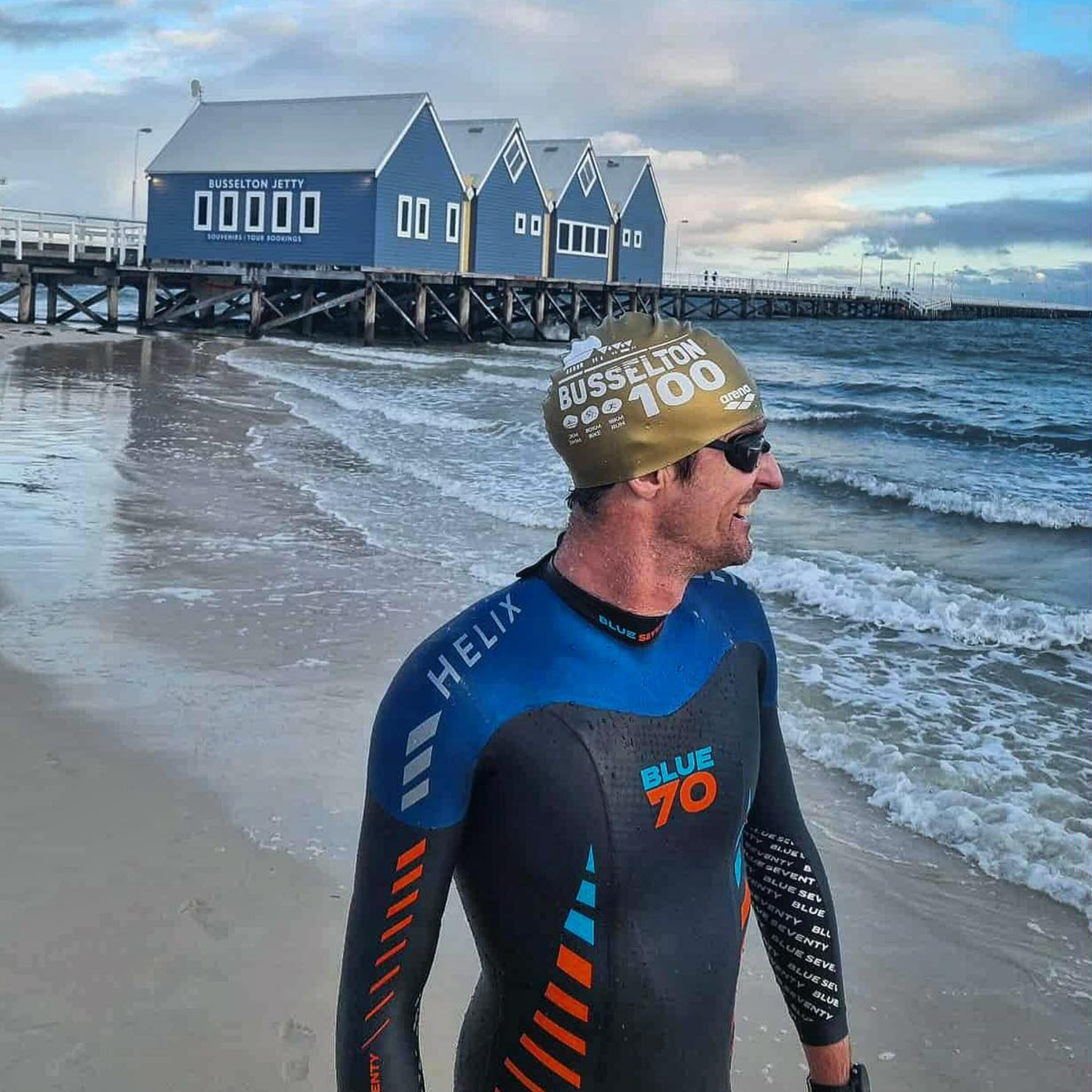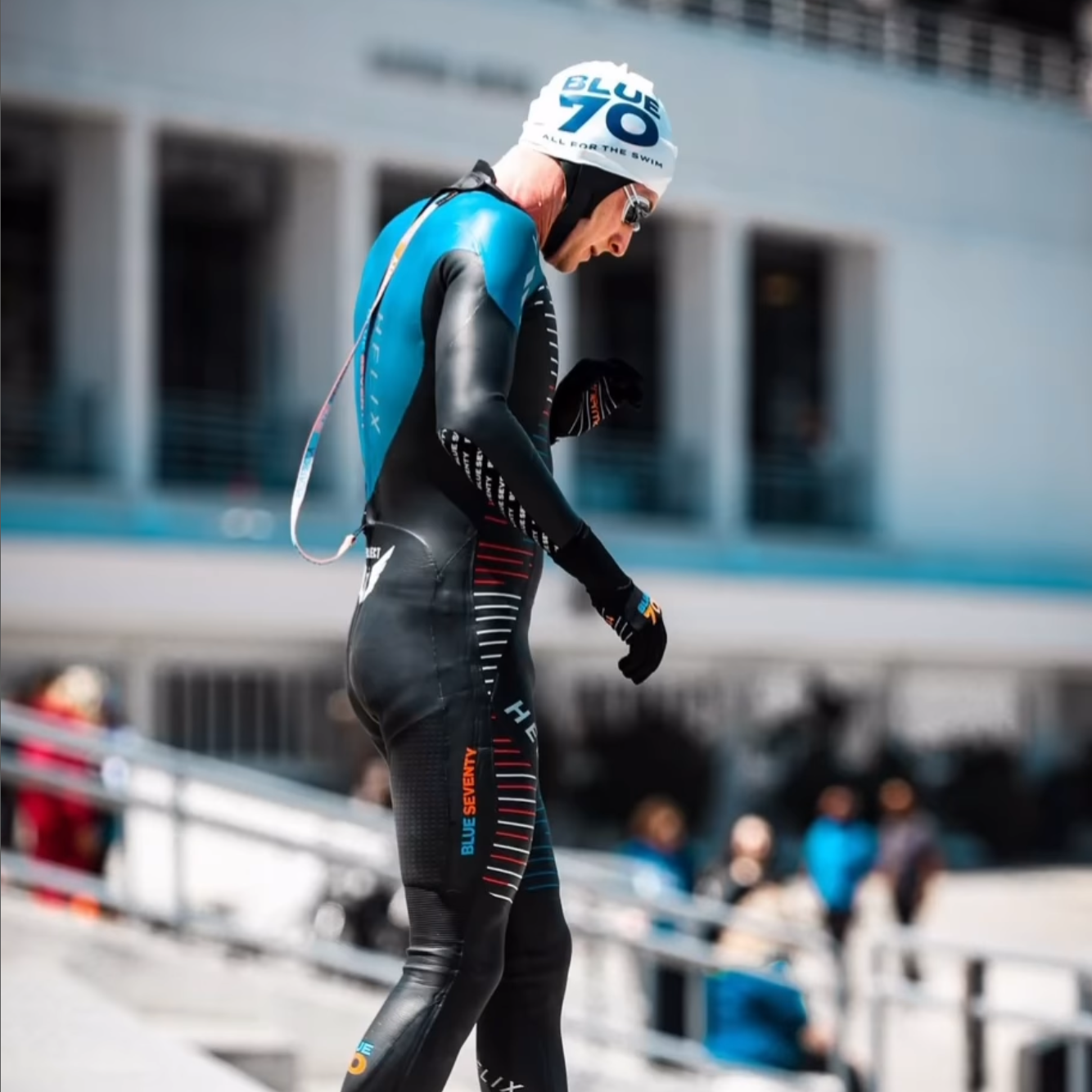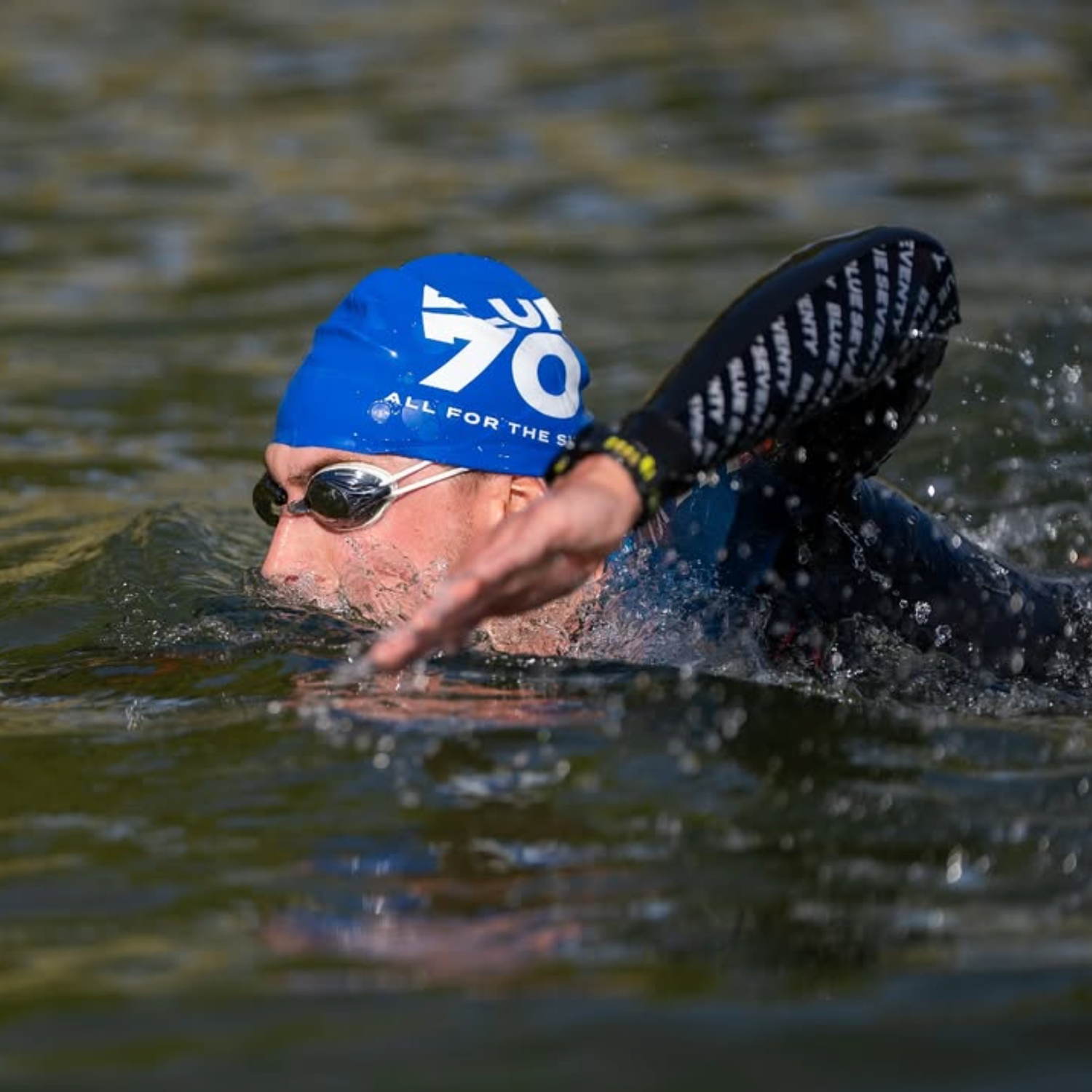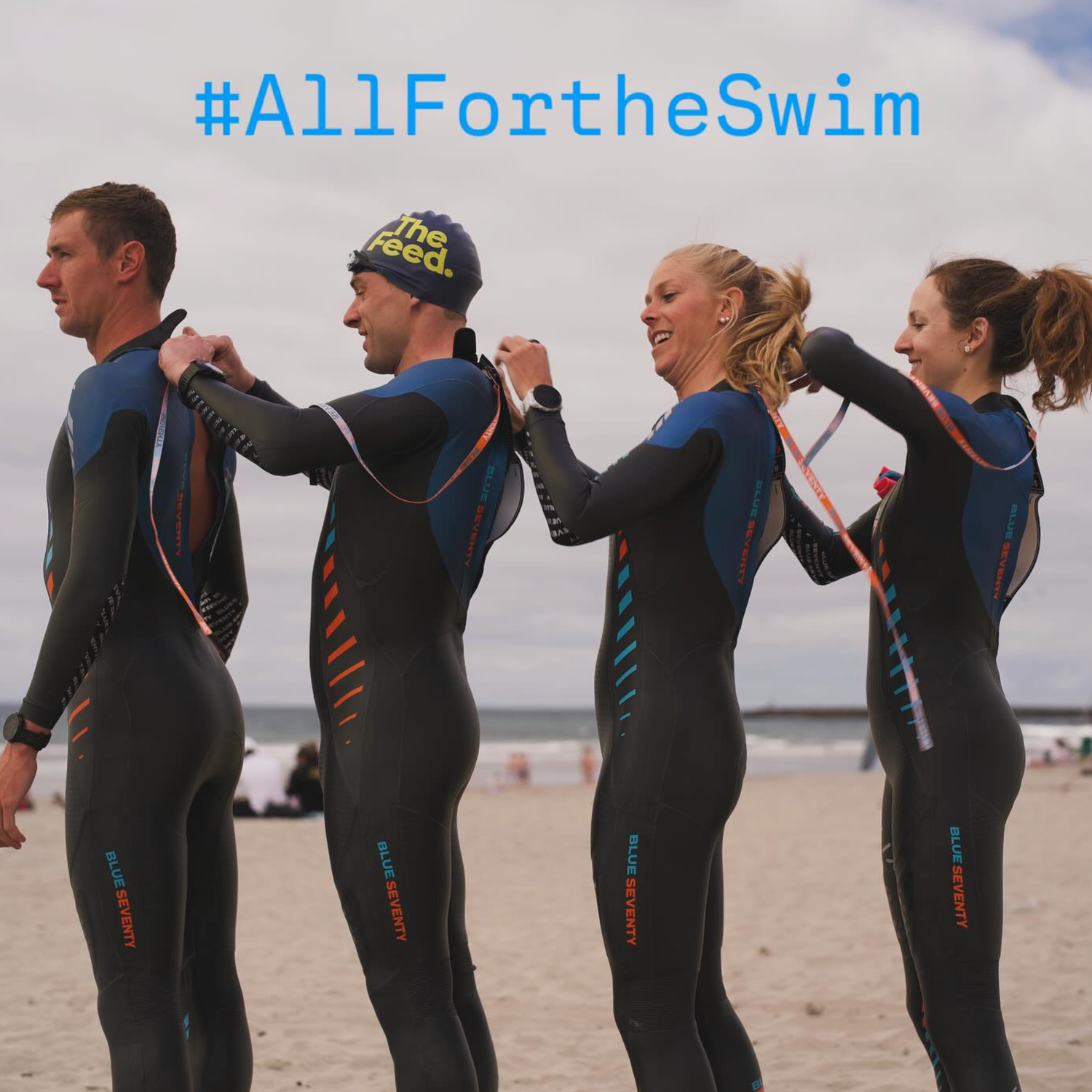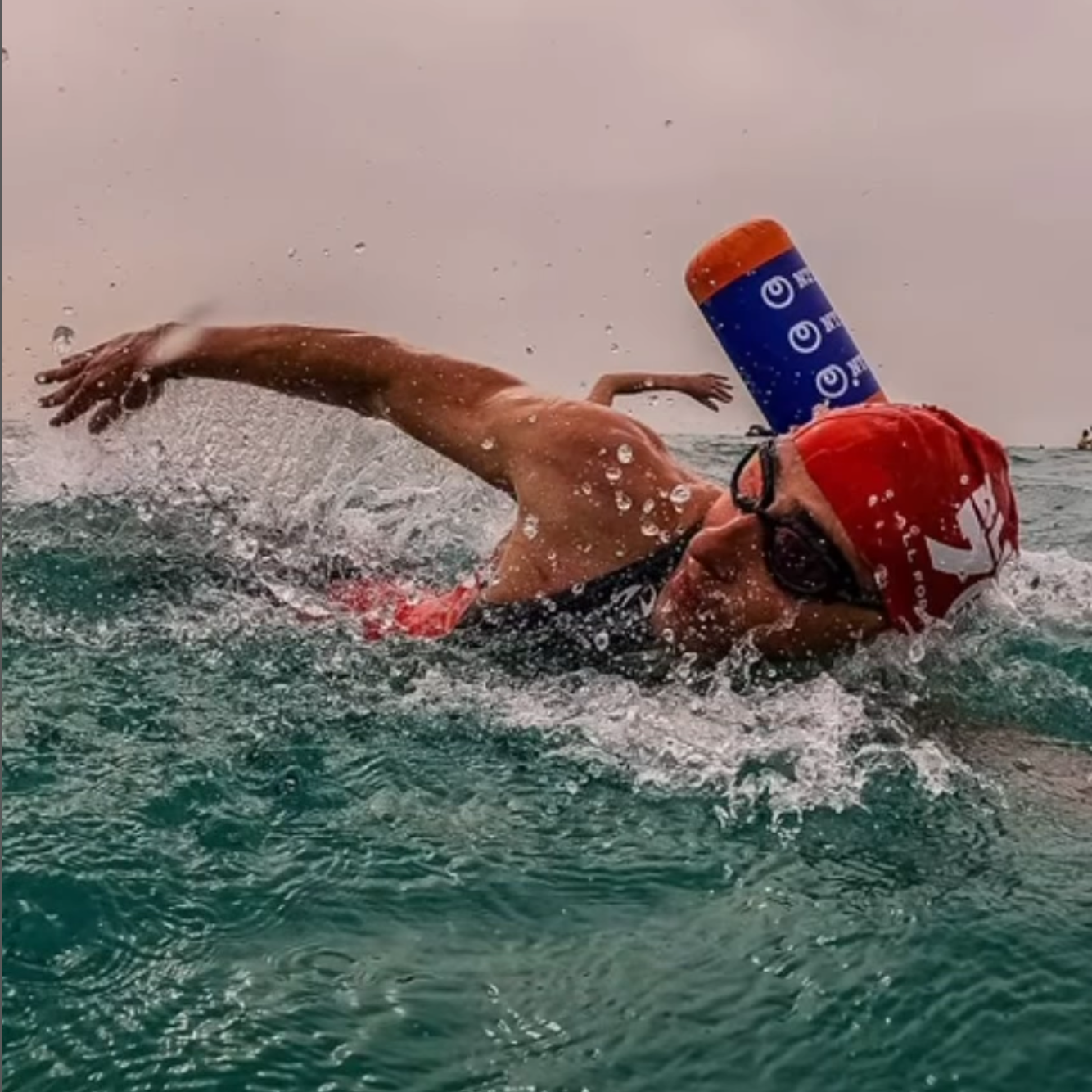



You pull the suit on, zip it up, and your throat immediately sends a distress signal. The neoprene presses in, every swallow feels like a negotiation, and your brain screams wrong size. Your brain might be wrong. A neck seal that feels suffocating on dry land often turns into a barely-there presence once you’re horizontal in the water. The gap between that standing-in-the-living-room panic and the in-water relief is one of the most misunderstood sensations in wetsuit fit. This post explains how to tell the difference between a seal that’s doing its job, a seal that needs a small tweak, and one that genuinely requires a different size or model.
The physics of a neck seal
A swim-specific wetsuit works by letting a thin film of water enter, trapping it against your skin, and letting your body heat warm that water. The neck seal’s job is to stop that warm layer from flushing out with every head turn or breath. No seal, no insulation. The tightness you feel is the material exerting enough circumferential pressure to stay closed against moving water-not against you personally. On a suit built for swimming, the neck sits higher and fits closer than anything built for surfing, because your head twists repeatedly with every stroke. A loose neck leaks. A properly snug seal holds.
Why the first five minutes feel the worst
Dry neoprene grips skin harder and feels mechanically stiffer. Add a raised pulse and the natural throat tension many people carry while standing, and the collar can seem like a hand wrapped around your windpipe. That sensation almost always resolves in the water because:
- Water lubricates the skin-to-neoprene interface, cutting friction and the choking sensation.
- Horizontal body position changes how the suit hangs. The collar that pulled back against your throat upright now floats with you, spreading pressure more evenly.
- Within ten minutes, body heat softens the neoprene. Most swimmers stop noticing the seal entirely.
If you’ve never swum in the suit and you’re only standing in your living room assessing fit, you haven’t assessed anything. Blueseventy’s test swim policy exists for exactly this reason. You can swim in a wetsuit and still return or exchange it, provided it’s clean, dry, unmodified, and within 30 days of the ship date. Immersion changes the suit’s behavior so much that the brand built its return experience around that reality.
The sitting-seal test: a reality check on land
Stand in front of a mirror and gently press one finger between your neck and the seal. If you can slide a finger in without forcing it, and the seal springs back to contact when you remove the finger, the circumference is right. If you can hook two fingers in with zero resistance, the neck is probably too loose and water will flood the suit during sighting and breathing. If you can’t get any gap at all and the skin above the seal is visibly flushed or blanched, you’ve crossed into too-tight territory. The sweet spot is snug enough to stay sealed during a head turn, loose enough that you can swallow without strain.
Reposition before you overthink
Many neck seals that get returned as “too tight” were never seated correctly. The most common mistake is not pulling the suit high enough onto the torso during donning, which leaves the neck seal sitting lower than it’s designed to sit and tilted at an angle that puts uneven pressure on the front of the throat. Try this sequence before assuming the size is wrong:
- Work the suit up your legs and over your hips. Pause before putting your arms in.
- Bend forward at the waist, grab the excess material around your stomach, and inch it upward in small tugs, pulling the torso higher on your body.
- Slide your arms in, pull the shoulders all the way up, and zip the back while standing as straight as you can.
- Reach over each shoulder and gently lift the neck seal from the back, settling it upward by a quarter inch. Then reach inside from the front and smooth it so the seal lies flat against your skin, not folded over onto itself.
That quarter-inch repositioning often shifts pressure from the sensitive front of the throat to the broader surface of the upper chest and back, a change that feels dramatically less constricting. On women’s suits with Femme Fit, the neckline is already cut lower specifically to reduce front-of-throat pressure. Even a high-tension seal distributes force across a less sensitive zone.
Two fixes that work (and one to skip)
If repositioning didn’t quiet the complaint, you have options that don’t involve cutting or permanently altering the suit.
Gradual break-in with wear. Neoprene softens with use, especially the high-cell Yamamoto material found throughout Blueseventy’s lineup-38, 39, and 40-cell grades, where higher numbers mean more flexibility. Wearing the suit in a warm shower for ten minutes, letting it cool while still on, then removing it accelerates the break-in cycle without damaging the material. Repeat this two or three times, and the polymer structure relaxes enough that the opening perimeter expands slightly. That small margin often tips the fit from distracting to dialed.
Localized stretch with a bottle. Find a cylindrical object whose circumference roughly matches your neck plus about half an inch: a 32-ounce Nalgene, a wine bottle, a tightly rolled towel. Slide it inside the neck opening and leave it for six to twelve hours. The goal is a modest, even stretch, not a permanent deformation. Do not use heat, and do not leave the object in for days. The neoprene will recover some shape, and you’re just helping it along.
Skip the internet’s favorite suggestion: cutting the neck seal. Once you cut the glideskin edge or the neoprene, the seal can no longer form a watertight gasket, and the suit won’t insulate correctly. You also void the warranty. Blueseventy’s one-year manufacturing warranty covers material and workmanship defects for the original owner. It explicitly excludes damage from modifications, along with fingernail punctures, heel tears, and zipper damage from force.
When the suit really is too tight
If you’ve repositioned, taken a test swim, and still feel the neck compress your throat to the point of dizziness, lightheadedness, or a persistent urge to cough, stop. That’s a fit problem, not an adjustment problem. Your proportions don’t match the size chart for that model, and the right fix is an exchange. The 30-day window from the ship date gives you time to figure this out without pressure.
A smaller subset of swimmers needs a different model altogether. The Fusion was redesigned in 2021 with a lower-sitting neck specifically to address the discomfort some athletes experience with a high, tight collar during frequent shorter swims. If you’re swimming three times a week in a local lake, not chasing a podium, that lower seal might deliver the watertightness you need without the throat pressure you don’t.
Why comfort translates to speed
Swimmers who can’t stop thinking about their neck seal swim with elevated shoulders, a shortened stroke, and restricted breathing. Shoulder tension wastes energy. Shallow breathing limits oxygen delivery to working muscles. The result is slower splits and a lousy experience. A neck seal you forget about frees up your stroke mechanics and your head position, and that freedom shows up in the clock. Designers spend disproportionate time on the collar and closure because a seal that holds without demanding your attention is one of the quietest performance upgrades in the sport.
Take the suit for a test swim. Let the water do the work. If the seal still feels like a fist after three sessions, or if you can’t swallow without double-checking your airway, reach out. The fix is usually simpler than your brain thinks it is, and once you stop fighting the collar, the rest of the swim gets a lot more enjoyable.
Need a size check? Use the size chart to find your match in thirty seconds, or visit the fit guide for a step-by-step donning video. Already have a suit? Take it for a test swim-clean, dry returns within 30 days remain eligible for refund or exchange.