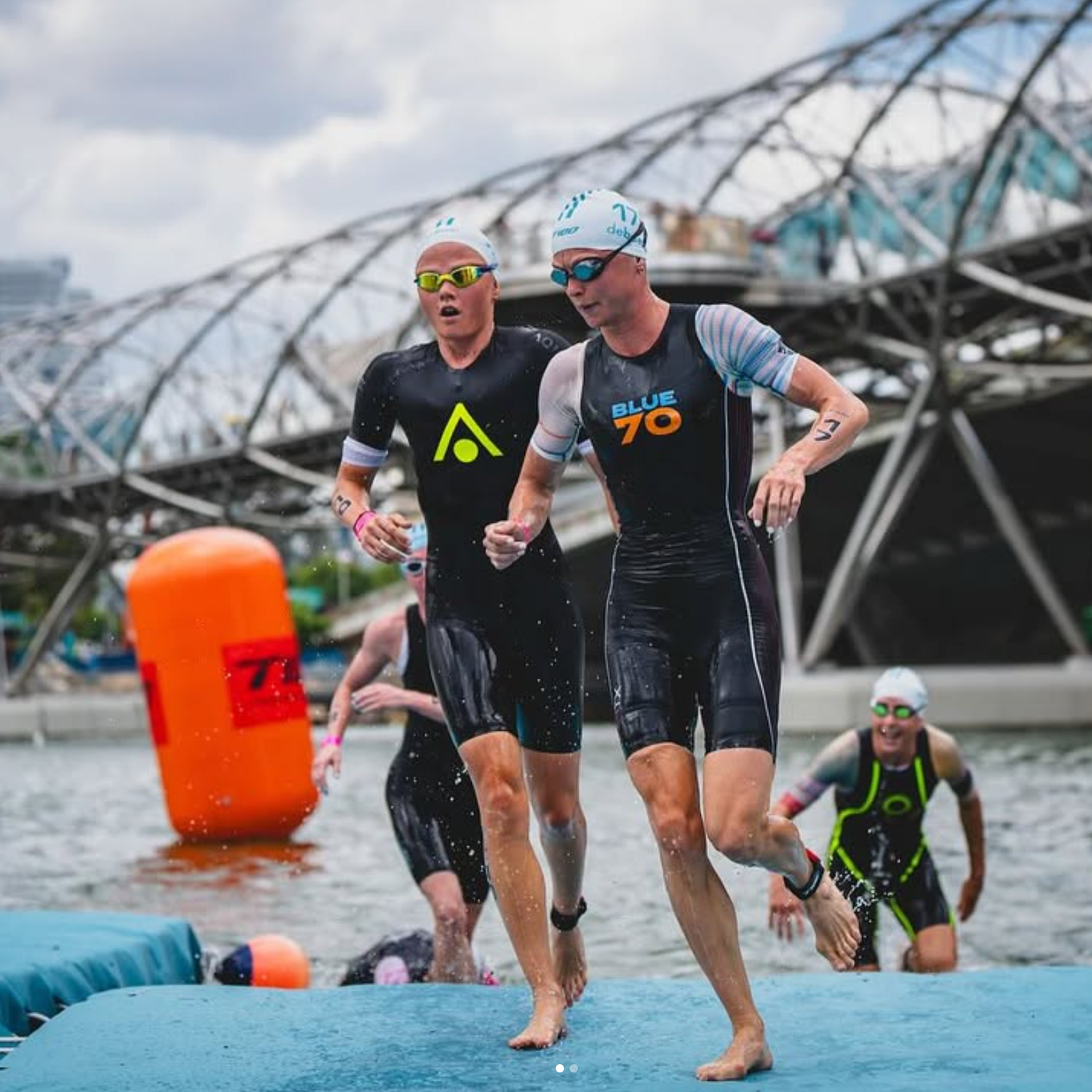



You pull on a wetsuit and the shoulders feel right. The torso feels snug in that way it's supposed to. Then you look down and there's a fold of loose neoprene bunched up above your ankle, like the suit ran out of you before it ran out of material.
This isn't a sizing mistake. It's a proportion mismatch, and it's more common than most swimmers realize.
Why the size chart misses this
Wetsuit size charts, Blue70's included, are built mainly around height and weight. That's not laziness on the manufacturer's part. It's the most practical way to fit a large range of bodies with a limited set of standard sizes, and for most swimmers, height and weight track closely enough with torso length and inseam that the chart works fine.
But torso-to-inseam ratio doesn't show up in that calculation, and it varies more than people expect. A swimmer at 5'8" with a longer torso and shorter legs might size perfectly through the chest and shoulders, then end up with several inches of extra neoprene pooling at the shin. Flip the proportions, longer legs and a shorter torso, and you get the opposite problem: the suit rides up at the crotch and starts pulling at the shoulders before leg length even enters the picture.
Neither shows up on a height-and-weight chart. Both are proportion problems. And they call for a different question than the one most swimmers ask when a suit feels a little off. Not "what size am I," but "where does this suit have too much or too little material for my frame."
What that extra leg material actually costs you
It's tempting to write off ankle bunching as cosmetic. It isn't.
Wetsuit leg panels are cut to let the knee and ankle hinge freely through the kick while keeping the neoprene close enough to avoid unnecessary drag. Extra length at the ankle or shin doesn't just sit there. It folds, and that fold does a few specific things:
- Traps a larger pocket of water inside the suit, which takes longer to warm against your skin and adds a small drag penalty with every kick.
- Shifts the hinge point of your ankle, which can throw off kick rhythm, especially for swimmers using a two-beat or four-beat kick mainly for balance.
- Creates a rolled edge that can catch during transition, and anyone who's fought a wetsuit cuff at the ankle during a T1 strip knows exactly how much time that costs.
None of this hurts the way a too-tight shoulder does. A tight shoulder tells you immediately something's wrong. Loose ankle material just feels vaguely sloppy, so a lot of swimmers ignore it. But the general fit rule for wetsuits is that they should feel snug on land and grow more comfortable once you're submerged. If the legs are loose on land, they're loose in the water too, and that slack has to go somewhere. Usually it goes into extra material working against your kick instead of with it.
Three checkpoints, not one measurement
Before assuming you need a different size, check the actual proportion at three specific points.
Ankle position
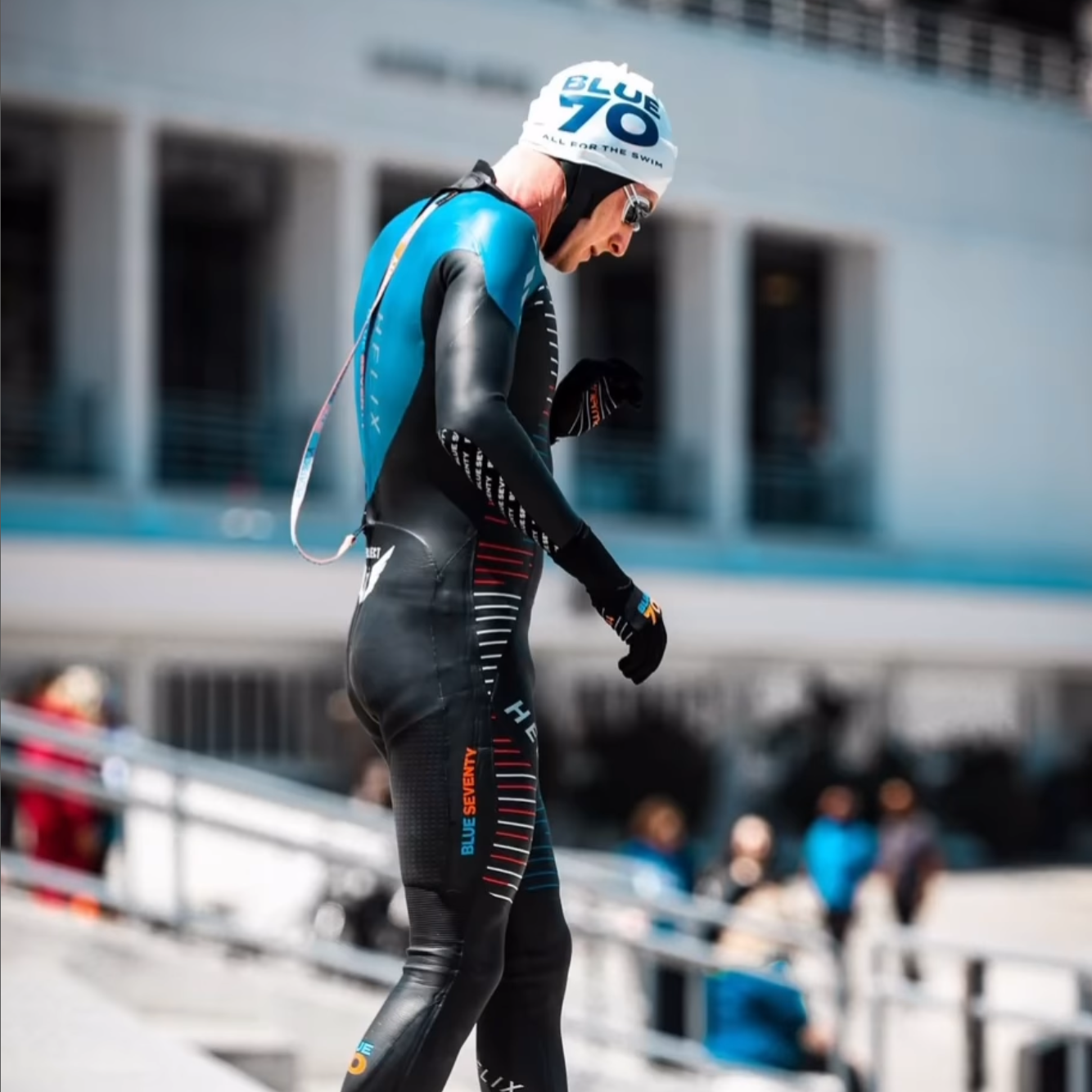
Stand naturally in the suit and look at where the leg ends relative to your ankle bone. It should sit right at or just above it. More than an inch of loose material bunched here is excess length, not something to just live with.
Knee panel alignment
Bend your knee as if mid-kick. If the suit has a knee panel, it should track with your actual knee joint. Sitting two inches high or low is often the clearest single sign that leg length doesn't match your inseam, even when everything above the waist fits.
Crotch seam height
If the seam sits noticeably lower than where your own inseam starts, the suit is cut for a longer leg than yours. The excess gets pushed downward instead of trimmed evenly through the whole leg.
Find a consistent gap of an inch or two across these three points, and you're dealing with a proportion issue that sizing up or down won't fix. A larger size adds bulk everywhere, shoulders and torso included, and the leg mismatch usually sticks around anyway, just at a different scale.
What actually helps
Swim in it before you decide anything. Ankle bunching and knee panel tracking are things you feel in motion, not standing in front of a mirror. Blue70's Test Swim policy lets you swim in a wetsuit and still return or exchange it, as long as it comes back clean, dry, with tags and accessories attached. For a swimmer with atypical proportions, that's the most reliable way to confirm fit before you're stuck with a purchase.
Try a different model, not just a different size. Panel geometry varies between models even at the same size. A suit with a different knee panel shape or ankle cut can solve a mismatch that follows you across every size of another model. If bunching keeps showing up, try a different Blue70 model in your usual size before assuming the fix is going up or down a size.
Consider a trim for a genuinely short inseam. If your torso-to-leg ratio is consistently off, a careful trim of excess ankle material by a wetsuit repair specialist, cut cleanly above any structural seam, can fix chronic bunching without breaking the seal at the leg. This is a repair-shop job, not a scissors-and-good-luck project, and it's worth doing only after a test swim confirms the mismatch is real.
Don't size up just to buy length. It's tempting. You gain an inch at the ankle and lose the snug fit through the torso and shoulders that keeps the suit from riding up mid-stroke. A loose shoulder costs you more over a long swim than an imperfect ankle ever will.
Who actually needs to worry about this
Most swimmers don't. If your torso-to-leg ratio is close to average, a standard chart gets you most of the way there, and a little ankle slack is a non-issue. But if you've ever described a wetsuit as fitting everywhere except the legs, or fitting the legs but riding up on top, that's the tell. It's not a mistake you made. It's a proportion your height and weight alone don't capture.
The fix isn't a bigger or smaller suit. It's three specific checkpoints instead of one number, and a real swim before you commit. Snug on land, free through the kick in the water, a knee panel that tracks your actual knee: trust those over a chart every time.
Not sure where you stand? Take a Test Swim in your next Blue70 wetsuit. It won't affect your ability to exchange it, and it's the clearest way to find out if the fit is right before race day.