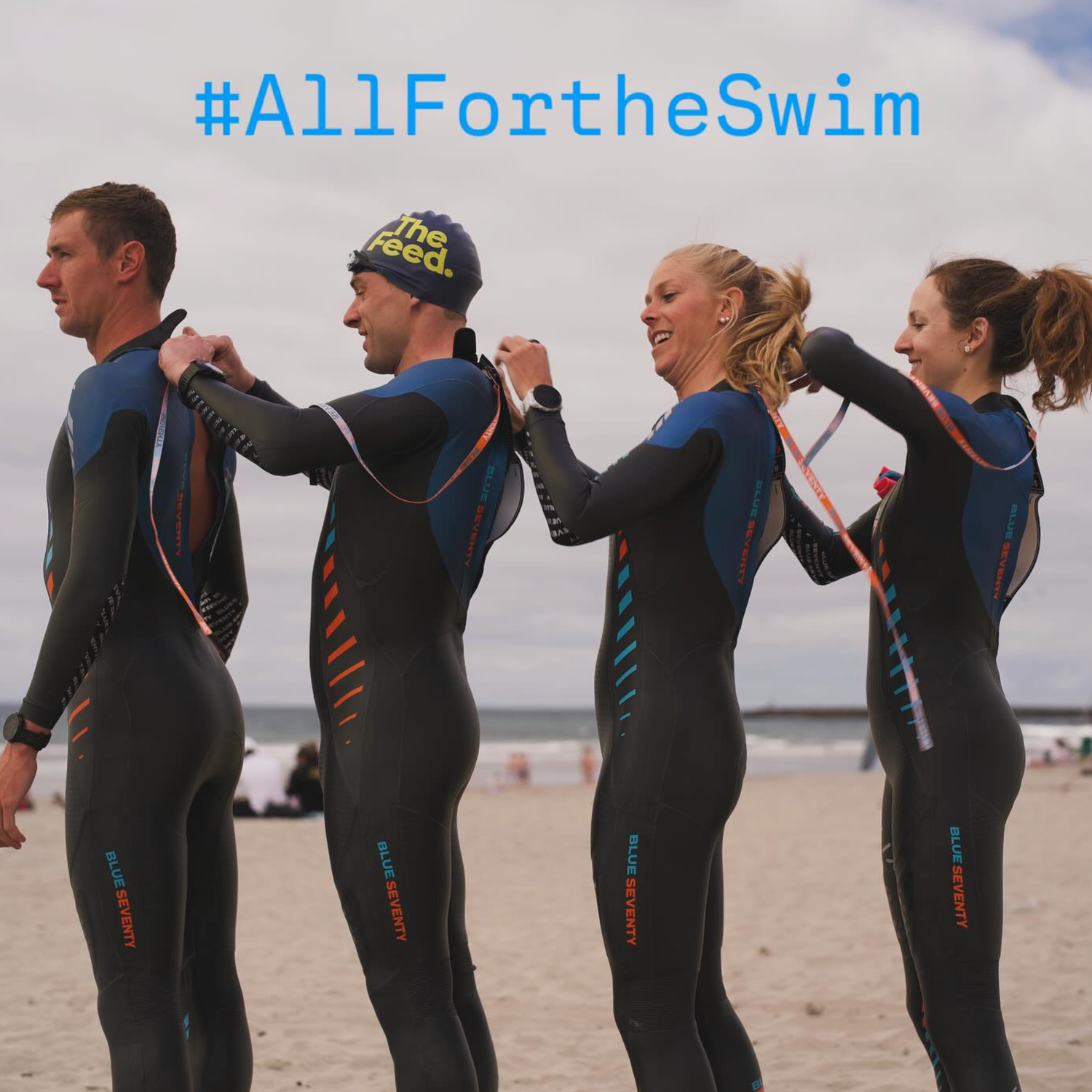



Most triathletes replace a wetsuit for one of two reasons: it tore somewhere the repair kit can't fix, or it stopped fitting the way it used to. Neither reason tells the whole story. A wetsuit breaks down long before it rips, and the first signs show up in your stroke, not in a hole you can point to at a swim shop counter.
That distinction matters more than most swimmers realize. A tired suit doesn't just wear out. It changes how your shoulders move, how much water floods past your neckline, and how much energy you burn holding a pace that used to feel automatic. Knowing when to retire a suit, and how to replace it without guessing on fit, is worth building into your routine the same way you'd plan a taper or a race-week checklist.
Why Neoprene Breaks Down Before It Breaks
Wetsuit neoprene is closed-cell foam. Every Blue70 wetsuit uses Yamamoto neoprene graded at 38, 39, or 40 cell, and the cell count determines how much the material stretches. A higher cell number means thinner cell walls holding in more nitrogen gas, which is why a 40-cell shoulder panel feels dramatically looser than a 38-cell torso panel on the same suit.
That same structure is what fails first. Every stretch cycle, every fold in a gear bag, every minute under pressure in open water stresses those cell walls. Eventually, some cells stop springing back fully. The neoprene doesn't tear. It loses recovery speed instead, and that shows up exactly where a swimmer needs it most: the shoulders, on the recovery phase of every stroke cycle.
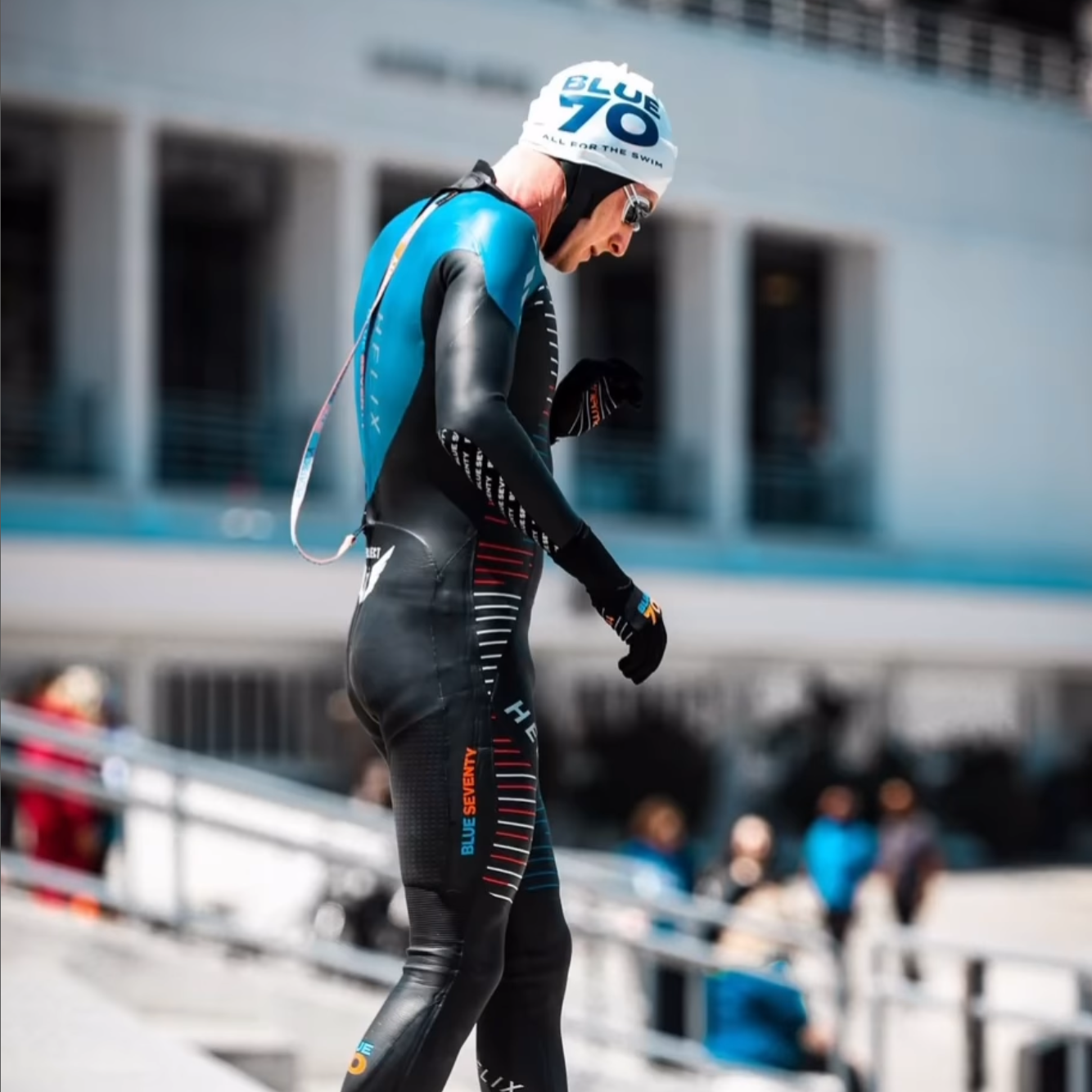
The catch panel wears on a different clock entirely. That permeable fabric panel, standard on Blue70's performance suits since 2010, lets a swimmer feel the water through the forearm instead of paddling through a rigid neoprene sleeve. Sun, salt, and chlorine break down that woven fabric faster than the surrounding neoprene. A suit can feel fine through the shoulders and sloppy at the catch, and most swimmers never think to check the two separately.
Five Minutes That Tell You More Than a Visual Scan
Checking for tears takes one look. Checking for actual wear takes a little more attention, and it's worth doing before every season rather than after a suit starts feeling wrong mid-swim.
- Pinch a shoulder panel between two fingers, stretch it, and let go. If it takes a visible beat to snap back instead of recovering instantly, the cell structure is already breaking down.
- Run the same test on the neckline and cuffs. Slow recovery there means more water is flushing in and out with every stroke, which adds drag and washes away the thin layer of warmed water your body worked to build against your skin.
- Hold the seams up to bright light and look for a chalky texture or fine cracking along the glue line, not just outright separation. That's usually UV and heat damage, often from a suit folded and left in a hot trunk instead of hung or laid flat to dry.
Then compare the whole suit to how it used to feel. A wetsuit should feel snug and slightly restrictive out of the water, then settle into something more comfortable once it's hydrated and you're swimming. If a suit that used to do that now feels loose everywhere, including spots you never noticed before, the compression that gave you buoyancy and body position is gone. The suit might still look fine hanging in your gear closet. It isn't doing its job anymore.
What a Worn Suit Actually Costs You in the Water
Buoyancy equals speed, and that's a body-position problem, not a slogan. A wetsuit lifts your hips and legs toward the surface, which flattens your body line and cuts frontal drag. When neoprene loses its recovery and compression, that lift softens along with it. Your hips ride lower, your legs work harder to stay up, and you're spending energy fighting drag instead of moving forward.
Beginners tend to feel this loss first and hardest, since they gain proportionally more from a wetsuit's body-position assist than advanced swimmers who already hold a strong line on their own. If you're coaching a first-timer through their first open-water season and their times stall for no obvious reason, a worn-out suit is one of the easiest things to rule out.
What the Warranty Covers, and What It Doesn't
Blue70 backs manufacturing and materials defects for one year from the original owner, with repair as the remedy. Technical race swimwear carries a shorter six-week window, given how thin and performance-focused that material is by design.
The warranty doesn't cover the everyday wear that actually retires most suits: fingernail punctures, heel tears from a rushed transition, zipper damage from forcing a stuck pull, and general wear from heat or chlorine exposure. None of that is a manufacturing flaw. It's the ordinary cost of using a wetsuit the way it's meant to be used. Non-swimming use, anything from surfing to kayaking, voids the warranty entirely, and swimrun use is only covered on the Alliance SwimRun suit specifically.
Knowing this distinction saves a frustrating conversation later. A worn shoulder panel or a softened neckline isn't a defect claim. It's a sign the suit did its job for as long as it reasonably could, and it's time to plan for what comes next.
Doing the Cost-Per-Swim Math Before You Buy Again
Sticker price tells you almost nothing on its own. Cost per swim tells you a lot more.
Take a Reaction at $680, built for swimmers training in open water once a week or more. If that suit gets you through two full seasons of weekly swims, somewhere around 80 to 100 sessions, the cost works out to roughly $7 to $8.50 per swim. Now take a Fusion at $420, positioned for shorter, less frequent sessions. If it holds up for one season at the same frequency, the per-swim number lands in a similar range despite the much lower price tag.
Run this math against your own training log instead of a guess. Pull actual open-water and wetsuit-legal pool sessions from last season, divide the suit's price by that number, and you'll have a figure you can compare against a replacement. It's a far more useful question than whether $680 feels expensive, because it accounts for how hard you actually use the suit.
Removing the Risk From Buying the Replacement
Most swimmers hang onto a worn suit past its useful life for one reason: fear of buying a replacement that doesn't fit right, especially with race season already on the calendar and no time left to sort it out.
This is where Blue70's Test Swim policy matters. You can swim in a new wetsuit and still return or exchange it within 30 days, as long as it comes back clean, dry, unmodified, and with tags and accessories attached. That removes the biggest obstacle to upgrading: you don't have to guess whether a suit works for your body and your stroke before committing to it. Pair the Test Swim with the online sizing tool and fitting guide before you buy, and the risk of ending up with a bad fit drops close to zero.
What to Do With the Old Suit
A retired suit doesn't have to go straight in the trash. Minor damage, a small seam separation or a puncture that hasn't spread, can often be addressed with neoprene cement like Aquaseal, buying another season out of a suit that's otherwise sound. That's a reasonable stopgap for a training suit. It won't restore a suit that's lost its cell recovery or its shape; cement holds a seam together, it doesn't bring back compression.
For a suit that's genuinely finished, reach out to Blue70's support team directly at us@blueseventy.com and ask what current options exist for retiring or upgrading old gear. Programs like this shift from season to season, and a direct email gets you a faster, more accurate answer than guessing based on last year's policy.
Whatever you decide, don't wait for a suit to fail mid-race to make the call. The signs show up well before that: in the shoulders, at the catch, in how the suit feels compared to the day you bought it. Reading them early protects your race day. The suit itself never will.