


Type "tropical wetsuit" into a search bar and you'll wade through a lot of marketing shorthand - 1mm here, 0.5mm there - as if a single number could explain how a suit will actually feel in 82°F water. It won't. Thickness is one piece of the puzzle, but the more interesting story is about heat physiology, how neoprene behaves against skin, and how much coverage your body genuinely needs to get the speed benefits of a wetsuit without paying for them in overheating.
Nobody talks about this much, because "warm water" doesn't sound like a problem the way "cold water" does. But ask any triathlete who's raced a mid-summer Olympic-distance event in warm coastal water and they'll tell you a different story. Swimming when it's too warm for a full wetsuit is its own technical challenge - with its own physiology, its own gear logic, and its own mistakes waiting to happen.
Why "Too Warm for Neoprene" Is an Actual Threshold
Neoprene does its job by trapping a thin layer of water against your skin, which your body then warms. That's the whole insulating trick, and it works beautifully in water in the mid-60s Fahrenheit and below. But flip the temperature the other direction, and that same mechanism starts working against you. Once water climbs into the low-to-mid 70s and beyond, your body is either close to thermal equilibrium already or actively generating extra heat from the effort of swimming - and a full sleeve of neoprene shuts down one of your best heat-dissipation surfaces right when you need it most.
As a rough guide, once water passes roughly 70-72°F, a full-sleeve wetsuit can start costing you more than it gives back over a longer swim. That's not a hard line - your own heat tolerance, swim duration, and pacing all shift it - but it's a useful mental marker for when to start thinking about less coverage instead of more.
That heavy, overheated, can't-quite-get-a-full-breath feeling swimmers describe in these conditions isn't in your head. When evaporative and convective heat loss from the skin gets restricted, effort feels harder for the same pace. Your arms - moving the most, generating the most local heat - are wrapped in insulating rubber at exactly the moment your body wants them free.
It's Not Really About Thickness - It's About Coverage
This is where "just buy the thinnest wetsuit you can find" starts to miss the point. What actually determines a wetsuit's warmth and restriction is a mix of things:
- Neoprene cell structure. Blue70 wetsuits use Yamamoto neoprene across a 38-40 cell range. The rule of thumb: higher cell count means more flexible material. Flexibility and warmth aren't the same thing, but they're connected - denser neoprene tends to trap more heat and move less freely.
- Panel thickness distribution. Swim-specific wetsuits already vary in thickness by design - thinner through the shoulders for stroke mechanics, thicker through the torso and legs for buoyancy. That's true across the whole range, which is why even a cold-water race suit doesn't feel like a uniform slab of rubber.
- How much of your body is actually covered. This is the one that matters most once you're picking between a full suit, a sleeveless suit, or a swimskin. Losing the sleeves isn't just about saving a bit of material - it opens up your arms, your busiest heat-dissipating limbs, to normal water contact and cooling.
So the real question isn't how many millimeters a suit measures. It's how much coverage you need to get the body-position and buoyancy benefit - without paying for it in heat stress and stiff shoulders.
Matching Coverage to Conditions
Rather than treating warm-water gear as one single category, it helps to think of it as a spectrum. Blue70 builds a suit for each point along it.
Full Sleeve, Lighter Build
The Sprint wetsuit and the Glide Short John live here - full or near-full coverage for swimmers who still want the lift and body-position benefit of a wetsuit without the warmth engineering built into a cold-water suit. These make sense for newer swimmers who aren't ready to give up sleeve coverage yet, or for races sitting at the milder end of the warm-water range.
Sleeveless
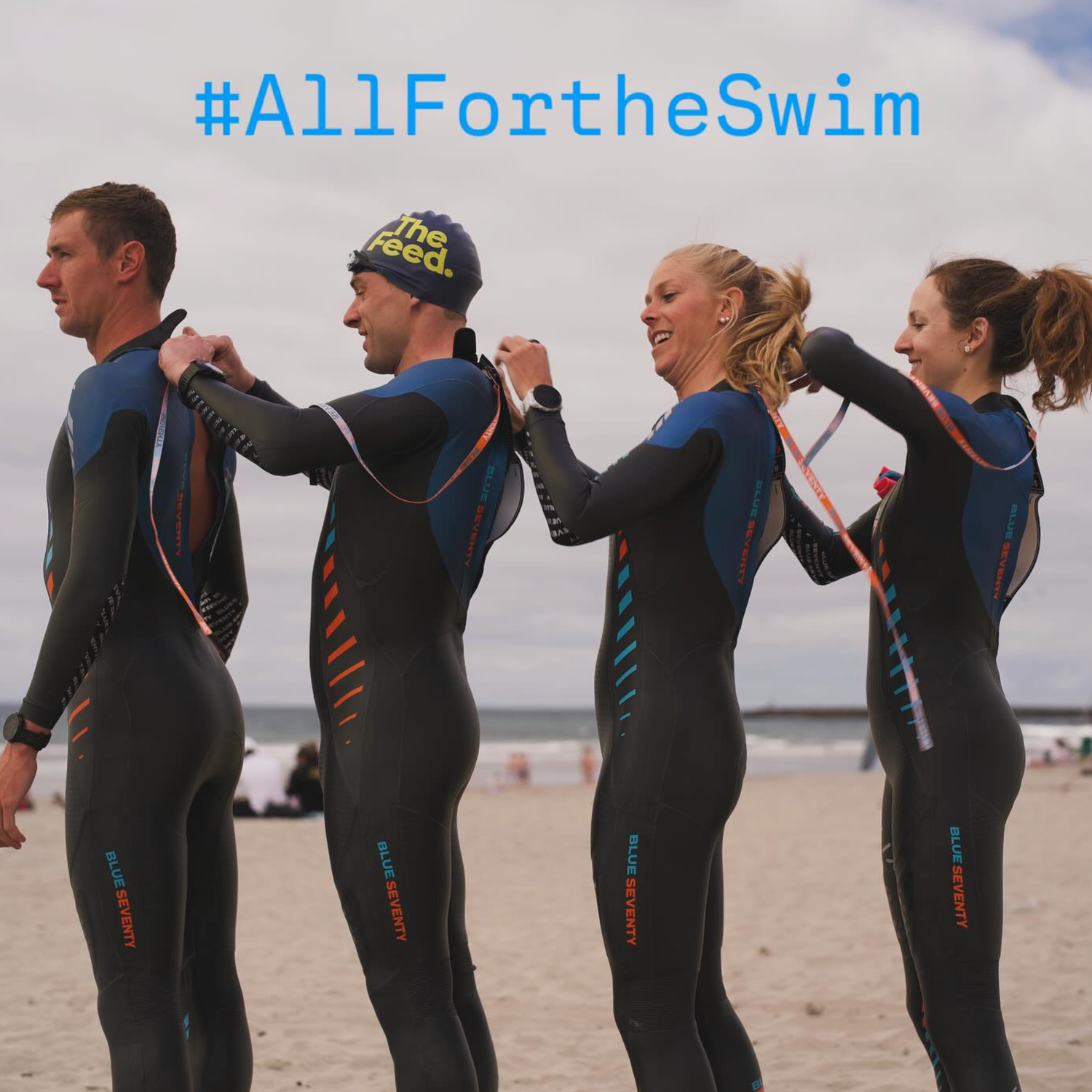
The Reaction Sleeveless is the clearest example of coverage-first thinking. Drop the sleeves entirely, and you keep the torso and leg buoyancy - where a wetsuit does most of its actual work lifting your hips and legs into a flatter, faster position - while freeing up your shoulders and exposing your arms to the cooling effect of the water. If you've ever felt a full suit's shoulders go from "fine" to "restrictive and hot" somewhere past the first buoy, this is often the more comfortable call, even if it means giving up a little upper-body lift.
No Neoprene at All
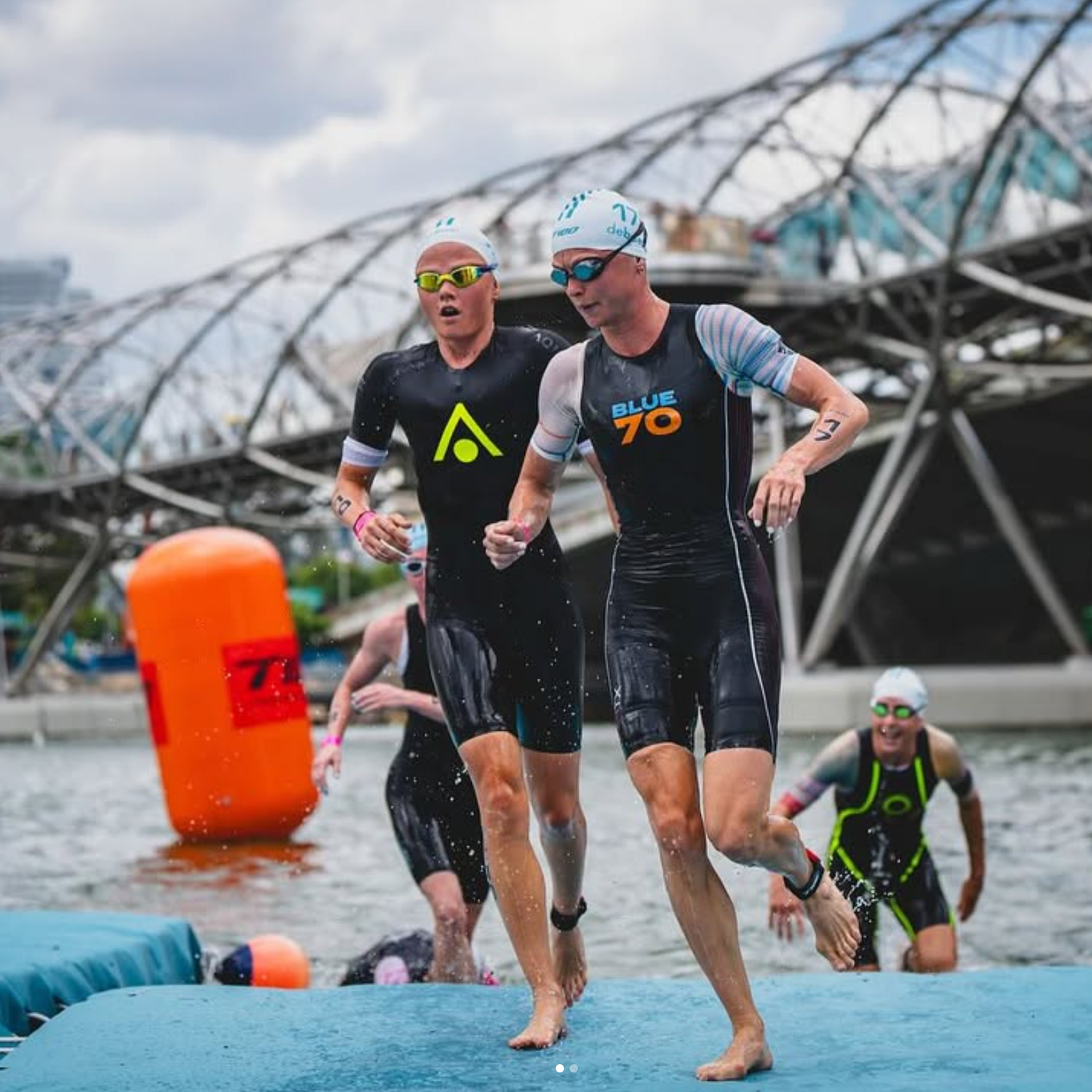
For genuinely hot water - low 70s and climbing - the answer isn't a thinner wetsuit, it's no wetsuit. That's what a swimskin is for: a garment built to reduce drag through fabric and fit rather than buoyancy, with no insulation to manage at all. This isn't new territory for Blue70. A pointzero3 swimskin was worn by Kona winners back in the mid-2000s, when the whole category was still finding its footing in long-course triathlon. It's a good reminder that "what do I wear when it's too warm for rubber" has been a solved problem in swim-specific design for close to twenty years. If a swimskin sounds like the right fit for your race, check the current lineup for today's models and sizing.
A Quick Scenario Worth Picturing
Imagine two age-groupers lining up for the same warm-water Olympic-distance race, water sitting around 76°F. One pulls on a full wetsuit out of habit, figuring "wetsuit always means faster." The other has spent the past month training in a sleeveless suit and already knows exactly how their body position feels without sleeve coverage.
By the final turn buoy, the first swimmer is fighting a climbing heart rate and a tightness through the shoulders that has nothing to do with fitness - it's heat load and drag from coverage they didn't need. The second swimmer, already calibrated to their buoyancy and pace, holds a steadier effort and comes out of the water ready to run instead of needing half a minute in transition just to cool down and reset.
That's not a stretch scenario. It's a predictable result of the physiology at play, and it's exactly why coverage deserves the same deliberate planning as your race pacing or nutrition strategy.
Fit Changes When Coverage Changes
A sleeveless suit or swimskin doesn't fit like a full wetsuit, and it's worth understanding the differences before race morning rather than during it.
- Armholes become a real chafe point. Without a sleeve to taper the transition, the armhole seam sits right against skin that's cycling through a full stroke thousands of times over a swim leg. A snug, well-built armhole - not so tight it restricts the shoulder, not so loose it rubs - matters more here than it does on a full suit.
- Your sense of buoyancy will shift. With bare arms, you'll feel less lift up top and lean more on torso and leg buoyancy to hold your position. Swimmers moving to sleeveless for the first time often need a swim or two to recalibrate - better to work that out during a taper-week open-water session than to discover it for the first time on race day.
- Swimskins fit like technical apparel, not neoprene. Think snug and compression-like rather than the "tight on land, better in the water" rule that applies to wetsuits. There's no water-warming layer to account for, so the goal is purely reduced drag and full range of motion.
If you're not sure which category suits your build and your race's water temperature, work through it against the size charts - and ideally, take a Test Swim first. You can try a suit in open water and still exchange it later if the fit or coverage isn't quite right.
Train in What You Plan to Race In
Here's a strategy that gets overlooked: treat your warm-water suit choice as part of training, not just a last-minute race-day decision. If your goal event sits in warm water, get some open-water sessions in beforehand wearing the same coverage you plan to race in, instead of defaulting to whatever you usually train in. Body position, sighting rhythm, and pacing all shift slightly with less buoyancy support, and it's much better to work through that adjustment in a low-stakes training swim than in the opening 500 meters of a race.
It's also worth building some basic heat awareness into your warm-water swims generally. Hydrate well ahead of time, and know the warning signs of overheating - lightheadedness, a heart rate that feels too high for your effort, sweating that suddenly stops when you'd expect it to continue. A warm-water swim isn't automatically the "easy" leg of the day just because the water isn't cold.
Looking After Lighter Wetsuit Gear
Thinner neoprene and swimskin fabric reward a bit of extra care:
- Rinse in fresh water after every swim. Salt and chlorine both speed up the breakdown of neoprene and technical fabric, and warm-water gear with thinner panels has less material to spare.
- Dry away from direct sun. UV exposure breaks down neoprene and fabric faster than most swimmers realize. A suit left drying on a hot dock or a car roof takes more damage than one dried inside-out in the shade.
- Watch your fingernails and zippers going in and out. Thinner panels puncture and tear just as easily as thicker ones - these remain the two most common, and most avoidable, causes of wetsuit damage no matter the thickness.
The Bottom Line
Reaching for "the thinnest suit you can find" for a warm-water race isn't a bad instinct - it's just an incomplete one. The better question is how much coverage your body actually needs at your event's water temperature and your own heat tolerance, and which category - sleeveless wetsuit, short john, or swimskin - gets you there without over-insulating arms and shoulders that would rather be moving freely and shedding heat.
If your next race sits in that warm, in-between zone where a full suit feels like overkill, take a look at the Reaction Sleeveless and our short john options against the size charts. And if you're still on the fence, a Test Swim is the lowest-risk way to find out how a lighter suit actually feels once you're moving through open water.
Happy swimming!