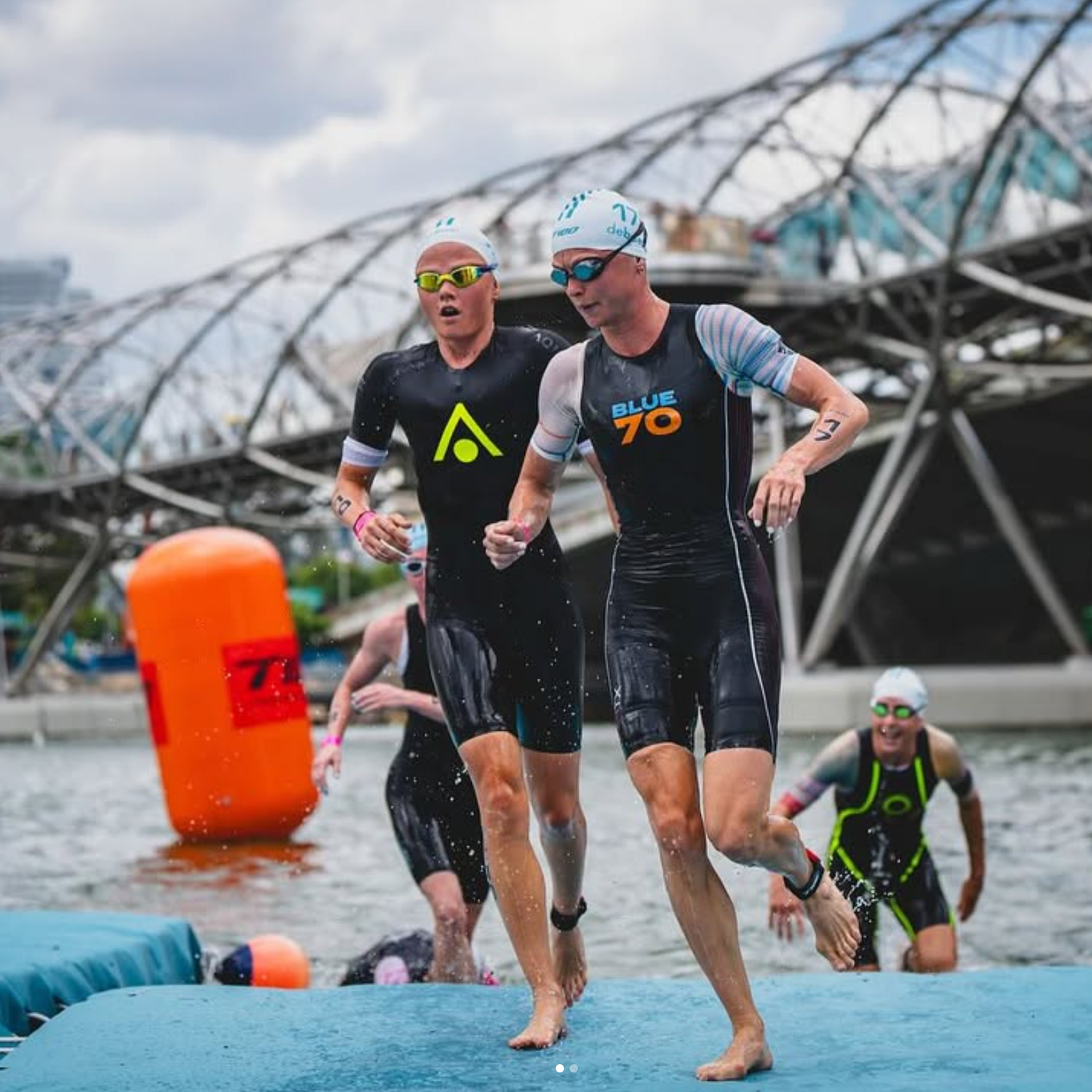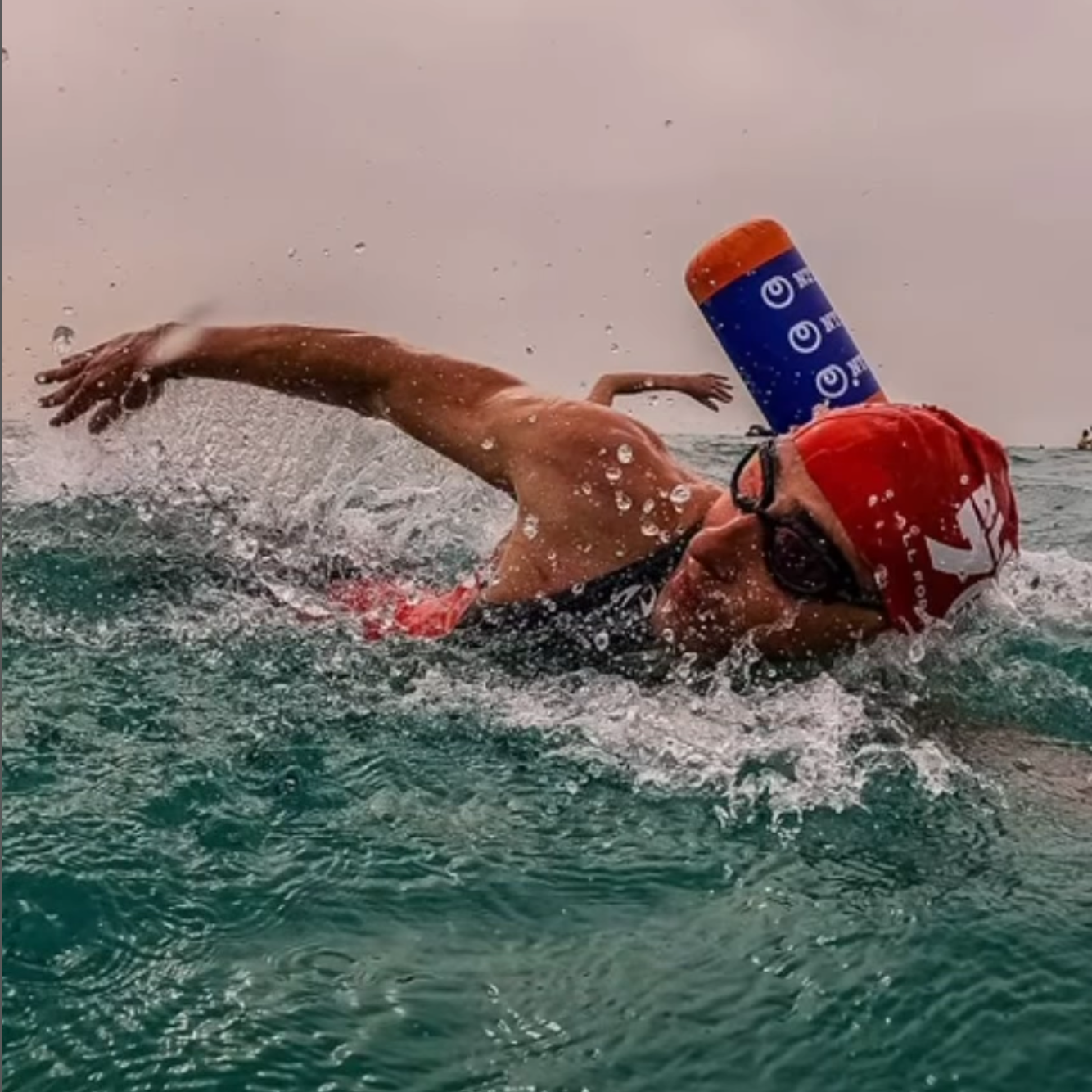



Ask a swimmer to describe their wetsuit and you'll get a rundown of neoprene thickness, panel placement, maybe a mention of the catch panel across the forearms. Ask that same swimmer what actually joins those panels together, and most people go quiet. It's stitching, right? Something like that?
That knowledge gap is worth closing. The seams are doing more work than almost any other part of the suit, and when they fail, everything else you paid for stops mattering.
The Real Job of a Seam
A wetsuit isn't a single piece of rubber. It's a collection of panels, each cut for a specific part of your body, joined at the seams. Every one of those seams is a potential doorway for water. It's also a potential weak point under the mechanical stress of a swim stroke, which repeats somewhere between 60 and 90 times a minute depending on how fast you're moving.
Neoprene is a closed-cell rubber. Water doesn't soak through it in any meaningful way. It gets in through the openings: the zipper, the neck, the cuffs at your wrists and ankles, and the seams. Wetsuits are built to let in a thin layer of water near these points, and your body warms that layer for insulation. That's the design. But there's a big difference between the small, controlled flush at a properly sealed cuff and the steady leak of a seam that's failing. One keeps you warm. The other just lets cold water move freely through your suit while you wonder why your legs feel numb at the halfway buoy.
Three Ways to Join a Panel
Not all seams are built the same way, and the method matters a lot.
- Stitched seams. A needle passes all the way through both panels, and every needle hole is a tiny puncture in the neoprene. Each one is a permanent little water channel. Stitching alone has no real place in a swim-specific wetsuit for exactly this reason.
- Glued and blindstitched seams. The panels get glued edge to edge first, then blindstitched, meaning the needle only goes partway through the neoprene instead of all the way to the inside. Better than stitching alone. Still not fully sealed.
- Taped seams. A strip of material, usually a TPU polymer, gets heat-pressed over the seam, sometimes on both the inside and outside. Done properly, this is about as close as a wetsuit gets to a continuous, watertight seal at the panel joins. Any stitching left in the seam at that point is there for structure, not for sealing.
The Trade-Off Nobody Mentions
Here's what gets left out of most explanations of seam tape: adding tape adds thickness, and it adds that thickness exactly where a seam already reduces flexibility. A seam with no tape is thin and moves freely, but it leaks. A heavily taped seam seals beautifully and turns stiff right where the suit needs to bend the most: across the shoulders, under the arms, everywhere your arm recovers and re-enters the water thousands of times over the course of a swim.
Solving this isn't optional. It's a design decision that has to happen at the same time as panel placement, not after it. A shoulder seam that runs directly through your arm's rotation axis needs a narrower tape, a softer tape compound, or a seam line that's been rerouted away from the zone where your shoulder moves the most. Skip that step and you end up with a suit that seals perfectly and swims like a straightjacket.
This is exactly the tension Blue70 wetsuits are built to manage. Seams are positioned away from high-flex zones wherever possible, and internal taping is paired with panel construction so the seal doesn't come at the expense of shoulder mobility. It's also why higher cell-count Yamamoto neoprene, in the 38, 39, and 40 cell range, shows up specifically in the shoulder and arm panels. More flexible base material means the tape has less fighting to do.
How This Shows Up in Your Stroke
A stiff seam doesn't just feel restrictive standing on the beach before your swim. It changes what your stroke actually looks like once you're in the water. Swimmers who feel resistance at full extension, or during the high-elbow catch, often shorten their stroke a little to avoid fighting the suit. Most don't even notice they're doing it.
Over a 1.5-kilometer swim, or a 3.8-kilometer one, that small compensation repeats well over a thousand times. It adds up to real fatigue and less distance covered per stroke, even though nothing about your fitness changed.
So when you try on a wetsuit, don't just check the mirror for how it looks. Reach both arms overhead. Rotate through a full freestyle circle. Bring your palms together behind your back, the way your arms move during recovery. If a seam pulls or resists anywhere in that motion, that resistance will be there on every single stroke of your swim, not just the first one.
Where Seams Actually Fail
Seam failure isn't random. It happens in predictable spots, for predictable reasons.
- Underarm and shoulder seams take on the most repetitive stress from your stroke cycle, so check these first for any peeling or lifting.
- Heat exposure breaks down TPU tape adhesion over time. A wetsuit left in a hot car, or dried in direct sunlight on pavement, will show lifted tape long before the neoprene itself shows any wear.
- Improper drying makes it worse. Dry your suit inside-out first, away from direct heat, so the taped seams aren't held folded or compressed while the adhesive settles.
- Sharp fingernails during donning cause small tears in the neoprene itself, but a tear that starts near a seam edge can travel faster along that edge than through a solid panel. The tape edge is a natural stress point.
Taking Care of Seams, Specifically
Most wetsuit care advice focuses on rinsing after ocean or chlorine exposure, and that's important for the neoprene and any metal zipper parts. Seams need their own short routine.
- Rinse the seams just as thoroughly as the panels. Salt crystals sitting at a seam edge can work their way into the tape-to-neoprene bond over repeated swims.
- Dry away from heat and direct sun. Nothing shortens tape adhesion life faster than UV and heat exposure.
- Check seams, not just panels, at the start and end of every open-water season. Catch a lifting edge early and treat it with neoprene cement, like Aquaseal, before it becomes a full separation.
- Store the suit flat, or on a wide hanger, rather than folded tightly along the same seam lines for months. A sharp fold held long-term can work-harden the tape right at the crease.
How to Actually Evaluate Seams When You're Shopping
Most people compare neoprene thickness and price first, and look at seams last, if at all. If you're swimming regularly rather than racing once a season, it's worth reversing that order.
Lay the suit flat and trace the seam lines against your own arm path. Look for tape that runs continuously through the high-stress zones instead of stopping short right where you need it most. Check whether the neoprene grade at that seam matches the flex demand there; higher cell-count neoprene paired with solid taping in the arms beats expensive neoprene undercut by a stiff seam every time.
It's also worth checking what the warranty says about seam separation. That tells you how much confidence the manufacturer has in its own construction under normal swimming conditions. Blue70's one-year warranty against manufacturing and material defects for the original owner is a good reference point here, with the usual understanding that damage from non-swimming use, or ordinary wear over time, isn't covered.
Small Detail, Big Difference
Seam tape rarely gets mentioned in wetsuit marketing next to neoprene grade or buoyancy panels, mostly because you can't see it once the suit is zipped up. But it's doing the unglamorous work of keeping everything else in the suit functioning the way it's supposed to, stroke after stroke, swim after swim. Premium neoprene with a failing seam is still, in practical terms, a leaking suit. Well-placed, well-executed seam tape is what lets the rest of the suit's design actually do its job.
Next time you're trying on a wetsuit, run your fingers along the shoulder and underarm seams before you even get in the water. Feel for a smooth, continuous line instead of a hard ridge. That fifteen-second check tells you more about how the suit will feel on stroke five hundred of your next open-water swim than anything printed on the tag.
Fit and feel are personal, and the only real way to know is to swim in it. Take a Test Swim in a Blue70 wetsuit and pay attention to how the shoulder and underarm seams move under real conditions, not just in a fitting room mirror. If it's not right, it's returnable clean and dry within 30 days of your ship date.