


Ask most triathletes what a wetsuit does and you'll get the same answer: it adds buoyancy and cuts drag. True enough. But that answer skips the part that happens the second neoprene wraps your shoulders. Your stroke mechanics shift. Not in some vague, general way, but in specific, felt-immediately ways: your catch changes shape, your rotation timing moves, and your kick suddenly has less to do.
Here's the problem. Most swimmers train their stroke in a pool, bare-skinned, then strap on a wetsuit for the first time on race morning and expect the same stroke to work unchanged. It doesn't, not exactly. The swim split comes in off from training pace, and the wetsuit takes the blame for something that's really just an unrehearsed set of mechanics.
Your kick has less work to do
In a wetsuit, your hips and legs sit higher than they do without one. Neoprene lifts the lower body specifically, because that's usually where an unsuited swimmer sits lowest in the water. So the job your kick normally does, stabilizing position and keeping the hips from sagging, is largely handled by the suit before your legs even move.
A kick that's still firing at full pool intensity is now burning energy on a problem that's already solved. For most triathletes, the right move in a wetsuit is to kick less, not the same amount as in training. A quieter kick used mainly for rotation and balance costs less oxygen, and that's oxygen you want available for the bike and run.
Try this in your next open water session. Count kicks per hundred meters at a set effort. Then cut that frequency by roughly a third and watch what happens to your pace. Most swimmers find little or no drop, because the extra kicking wasn't adding speed. It was compensating for legs that don't sink the same way once neoprene is involved.
The catch feels different, and that's a design problem worth solving
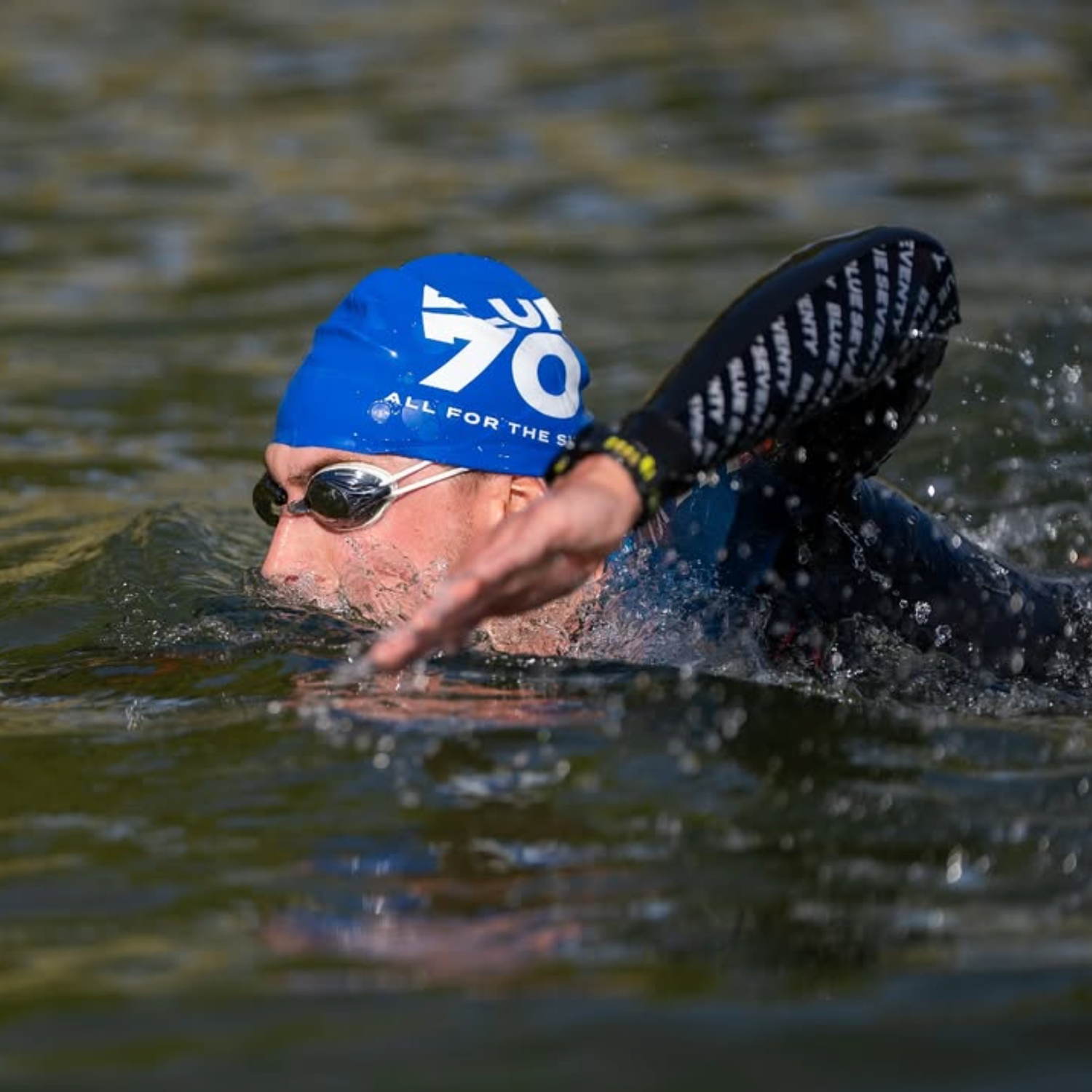
The catch is that first moment your hand and forearm grip the water before the pull starts. It depends on feel, on fine sensitivity in the hand and forearm. Thick neoprene across the shoulder and arm can dull that feel, and a dulled catch tends to happen late, not because your technique broke down but because the signal telling you to grip arrived slower than usual.
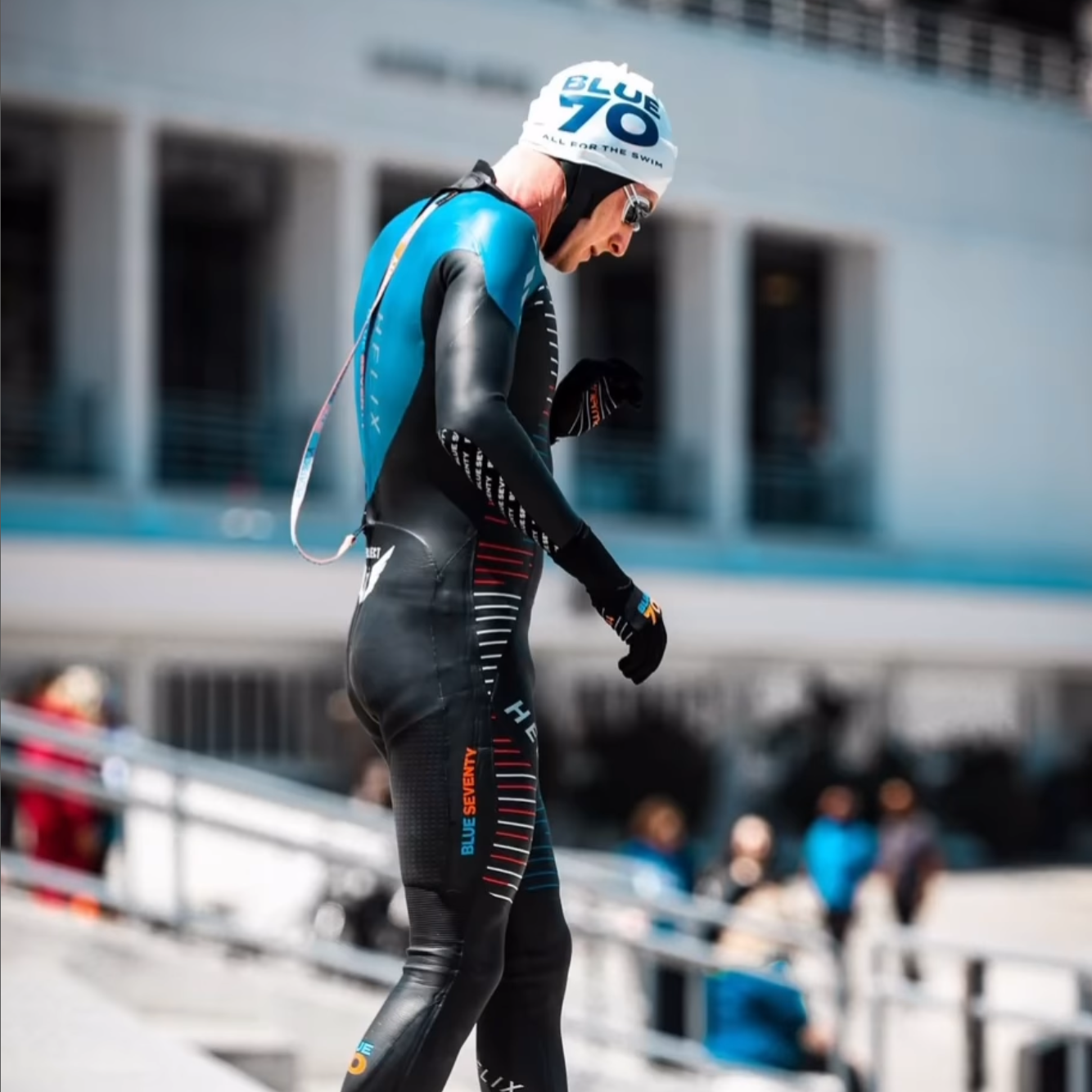
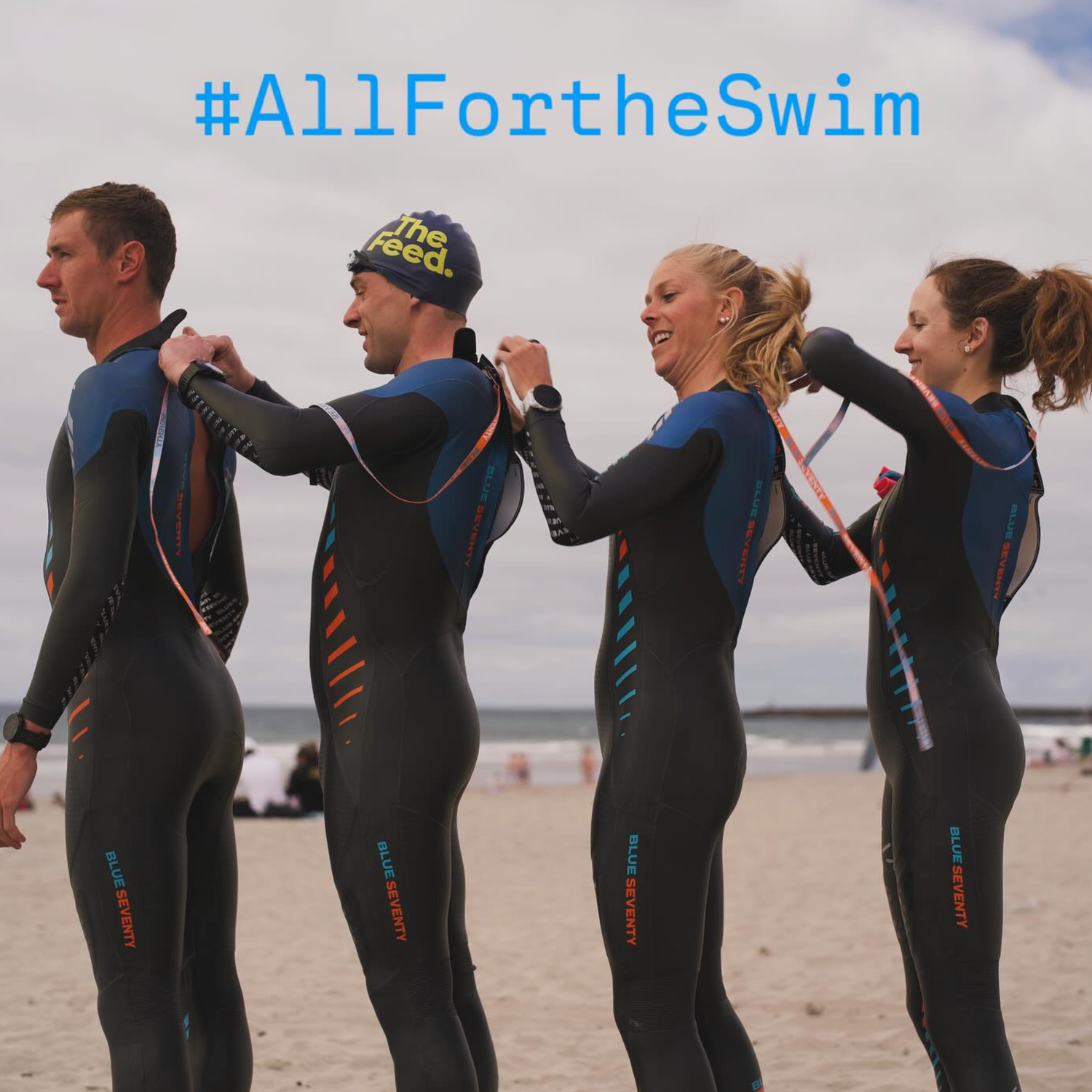
Blue70 built the Helix around this exact issue. Since 2010, the suit has used a permeable catch panel in the forearm, designed to preserve feel for the water in the one spot where feel matters most, while the rest of the suit does its job on buoyancy and coverage. It's not a marketing flourish. It answers a real complaint from swimmers who felt disconnected from the water the moment they zipped up.
If you're swimming a suit without that kind of forearm-specific design, don't fight it. Trust the catch position you've built through training and start it on time, even if the feedback feels muted. This is also the argument for a proper warm-up before the start. A few hundred meters in the wetsuit lets your nervous system recalibrate that timing before the gun goes off.
Rotation is where a poor-fitting suit costs you the most
Rotation, the roll of your body from side to side, lets your recovering arm swing forward using body roll instead of raw shoulder strength. It needs real range of motion at the shoulder joint. A wetsuit that's too thick or too tight through the shoulders cuts that range immediately, and a flattened stroke is the result.
A flatter stroke costs more than it looks like it should. Without rotation doing its share of the work, swimmers start muscling the recovery with the deltoid and upper trapezius, the same muscles they'll want fresh for 90 kilometers of biking and a run to follow.
This is why the Helix uses thinner, more flexible neoprene specifically at the arms and shoulders, thinner than the panels across the torso, even though thinner neoprene there means less buoyancy and less durability in that zone. The trade-off is intentional. A swimmer who rotates freely swims longer and more efficiently per stroke, and that shows up at T1 as legs with more left in them. Blue70 says plainly that this delicate shoulder neoprene wears faster with frequent training use, which is exactly why the Helix is built for race day, and swimmers training multiple times a week are steered toward the more durable Reaction or Fusion instead.
A dry-land fit check is really a stroke check
Fit advice usually focuses on comfort and watertightness: snug on land, no gaping at the neck, nothing ballooning through the chest. All correct, but there's a second layer to it. A suit too tight through the shoulders restricts the same rotation your stroke depends on. A suit too loose lets water flush through the torso, adding drag and shifting your buoyancy in ways that can tip your body position forward or back.
Before blaming a stroke problem on fitness or technique, rule out fit. Try this before you ever get in the water:
- Raise both arms overhead and rotate through a full stroke motion while wearing the suit dry.
- Note any real resistance at the top of that rotation, not just tightness, but actual restriction.
- Repeat the motion slowly a few times, since some suits loosen slightly as the neoprene warms to body temperature.
If you feel meaningful resistance at the top of that reach, expect a shortened, muscled stroke in the water rather than a smooth one. This is part of why Blue70 offers a Test Swim. You can swim in the suit and still exchange it, as long as it comes back clean, dry, unmodified, and with tags attached. You don't have to guess about fit and stroke feel from standing in your living room.
Rehearse the stroke, not just the swim
Most triathletes wear their wetsuit only a handful of times before race day. Maybe one open water session, maybe a short warm-up on the morning of the race. That's not enough repetition to recalibrate kick frequency, catch timing, and rotation range for a body position that genuinely differs from pool swimming.
Treat your wetsuit swims as rehearsals for these specific mechanics, not just conditioning sessions. Notice whether your kick is doing real work or compensating for a problem the suit already solved. Notice whether your catch lands on the same timing it does bare-skinned, or drifts late. Notice whether your rotation reaches its usual range, or gets cut short at the shoulder.
Answer those questions in training. That's the difference between a wetsuit that's just floating you higher and one that's actually working with the stroke you've spent months building. Buoyancy equals speed, but only for the stroke that's ready to use it.
Happy swimming.