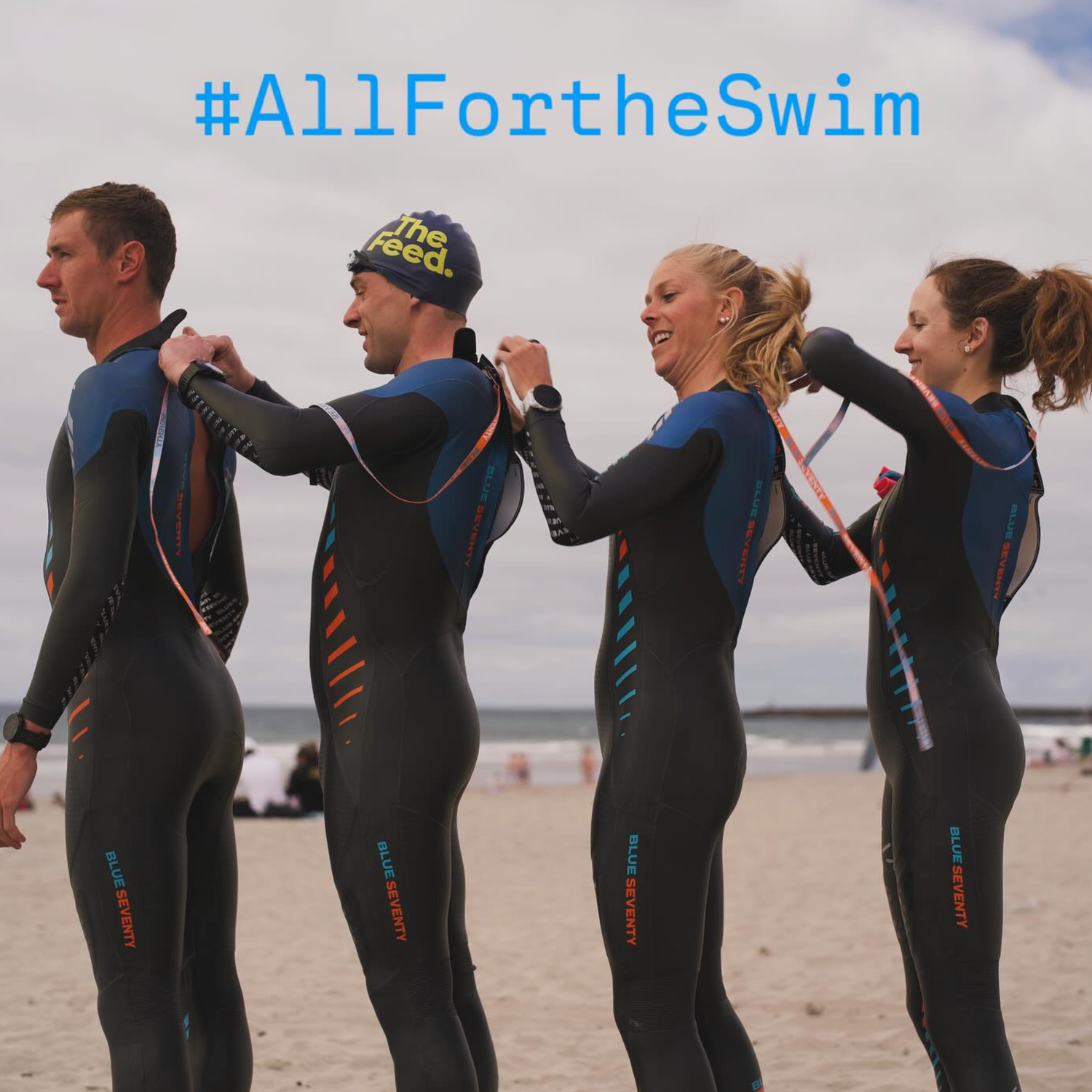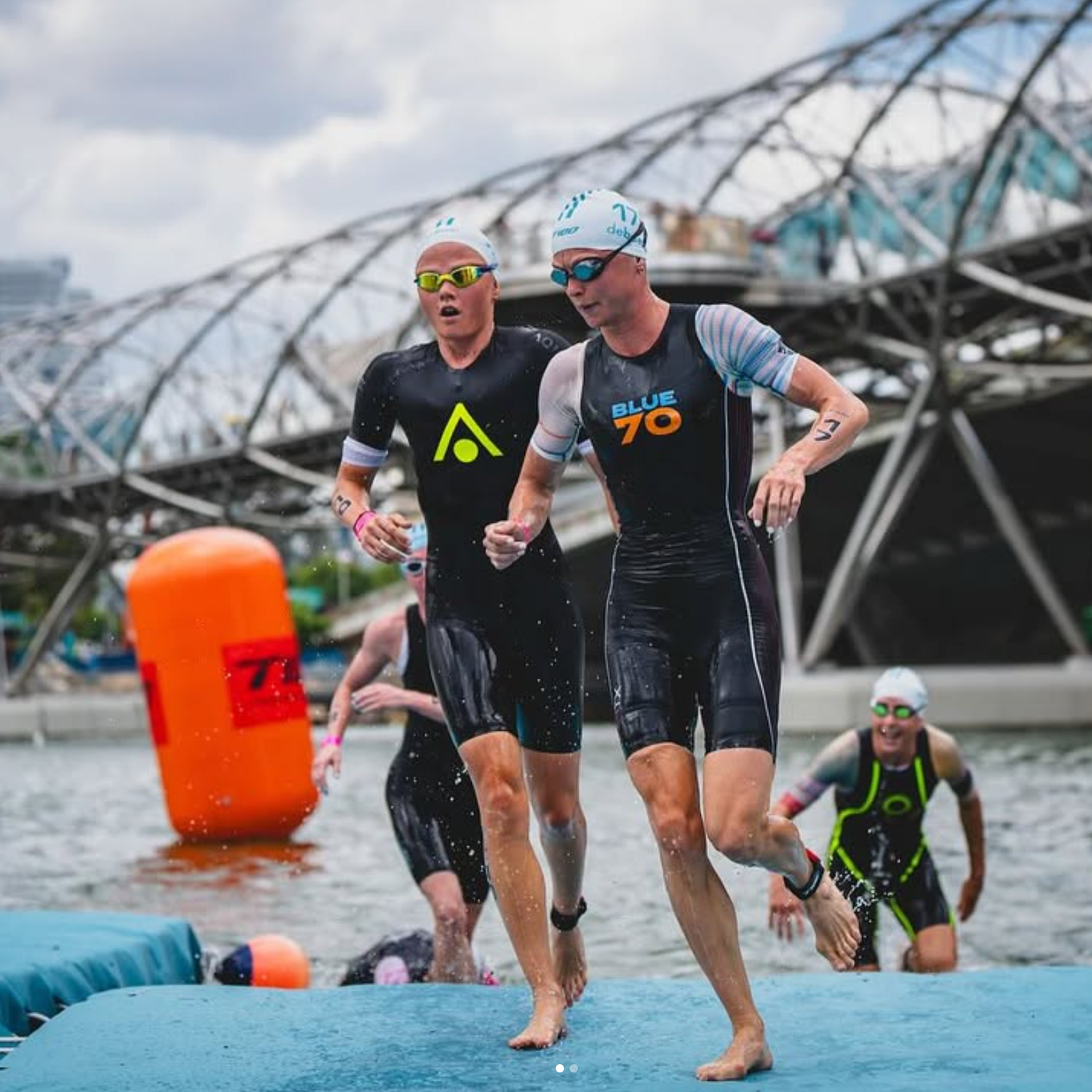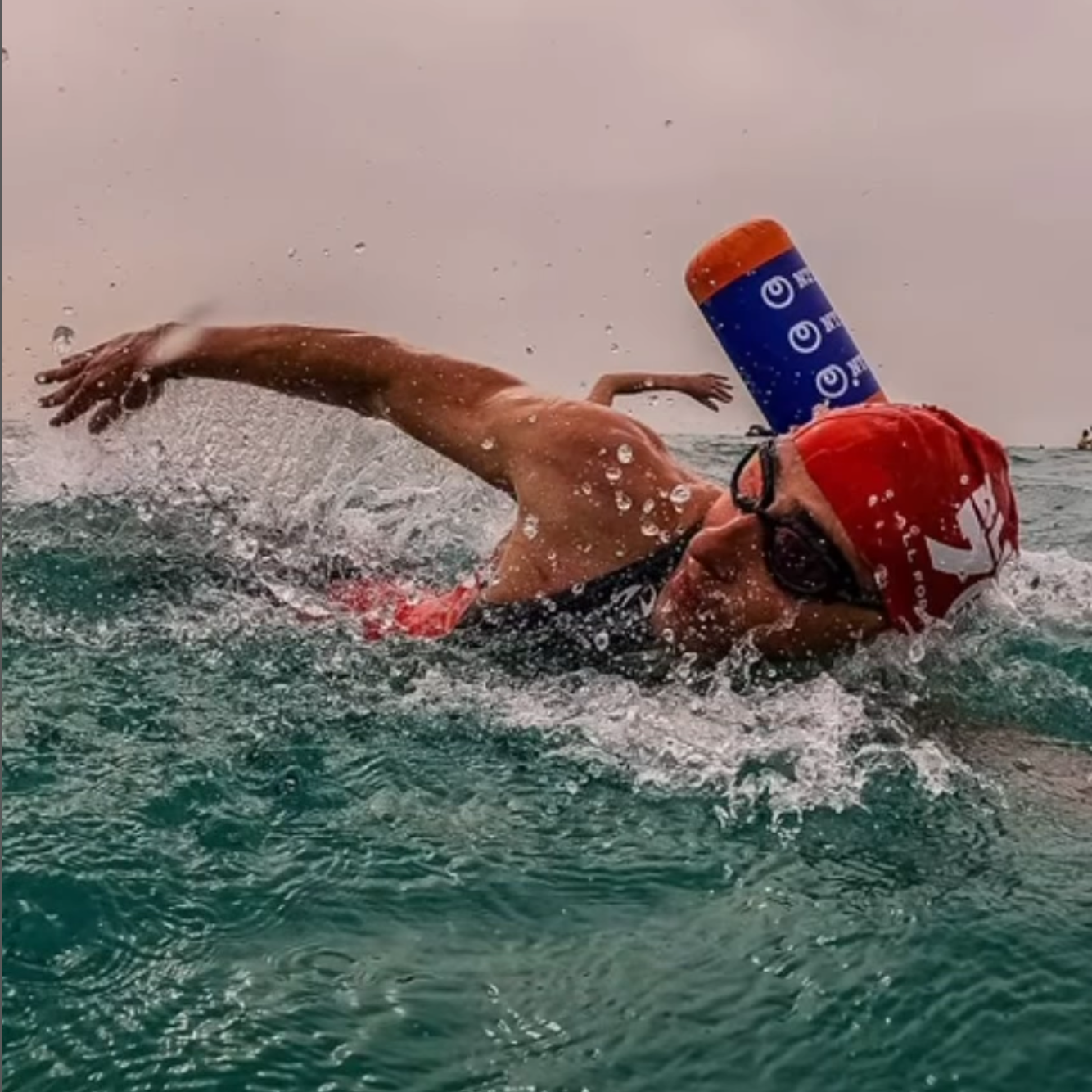



The water temperature climbs past 72 degrees, and the race director posts the non-wetsuit legal call. You will start without neoprene. That shifts the gear decision away from warmth and buoyancy and straight onto surface drag and fit. A swimskin earns its place in your bag on exactly this morning.
A swimskin adds no flotation and traps no heat. Do not treat it as a safety device or a thermal layer. What it does is smooth your torso and legs so water moves across the suit with less resistance. That job matters more on a non-wetsuit legal morning because your body position has to come from your kick and core, not from neoprene.
What the Warm Water Changes
Above roughly 70 to 72 degrees Fahrenheit, a full neoprene suit starts to trap heat over longer swims. Many race organizers set their non-wetsuit legal threshold somewhere in that range, but each event publishes its own current rule and construction limits. Check yours before race week. Do not rely on a blog post for a cutoff that may have changed in the current rulebook.
Remove the wetsuit and you still face drag. A training jammer absorbs water and bunches under movement. A swimskin uses tightly woven panels and a race cut to stay flat as your stroke cycles. The difference shows up most at the legs and lower back, where loose fabric folds and holds water.
Fit and Coverage You Can Test in the Store
Fit comes first. You want a compressive feel through the torso without a restriction on shoulder rotation. No fabric should sag behind the knees or at the lower back. A suit that is loose on dry land will hold water and drag when you swim.
Check the seams and closure before you buy. Flatlock or bonded seams sit closer to the skin than raised stitching. A zipper should lie flat and not press into your spine during rotation. Try the suit with your race cap and goggles so you catch neck irritation before race week.
- Full-leg skins smooth the largest surface area and suit open water racing where every advantage in the water counts.
- Sleeveless skins free the shoulders and come off faster in transition.
- Short-sleeved skins split the difference and work for athletes who want arm coverage without a full shoulder panel.
Choose coverage for how your stroke feels inside the suit, not how the suit looks on the rack.
Training the Details Before Race Morning
Do not save the suit for race day. Wear it in at least two open water sessions at race pace. Compression changes your turnover slightly, and you want that adaptation banked before the start horn. Practicing in the suit also tells you where it pulls and how it behaves when wet.
Plan the exit. A wet swimskin can stick to wet skin and cost seconds in transition. Rehearse taking it off in transition conditions. For shorter events, some swimmers finish in the suit and change later. For longer events, practice the full change to run gear.
Keep the swimskin out of daily pool workouts. Chlorine exposure shortens the life of race-oriented fabrics and treatments. Reserve it for open water race rehearsal and race day.
A Short History of the Warm-Water Suit
Non-wetsuit legal racing once meant racing in a standard training suit or brief. That changed as textile engineering improved. Kona winners wore Blue70's pointzero3 swimskin from 2006 to 2008, during a stretch when hot, non-wetsuit legal swims demanded surface control without warmth. In 2016, Blue70 introduced a short-sleeved swimskin, a first in the industry according to the brand's own published history.
That progression from neoprene-based warmth to textile surface management explains why swimskins now sit in a separate kit category. Remove buoyancy, and fit, fabric, and water management decide whether the suit works.
Packing List for a Non-Wetsuit Legal Start
- Confirm the race's current swimskin construction rules and temperature cutoff from the race guide, not a forum post.
- Fit the suit with enough compression to avoid water pooling and enough arm freedom to keep your stroke long.
- Test it at race pace in open water at least twice.
- Inspect the zipper, seams, and bonded panels two days before you leave.
- Pack a backup race suit if the event allows a change in transition.
Still deciding between a wetsuit and a swimskin for warm-water racing? Email us at us@blueseventy.com and we will help you sort fit and conditions. Happy racing.