


Most athletes ask what to wear under a triathlon wetsuit because they want a quick gear answer. The better answer starts with race execution. The layer under your wetsuit affects comfort in the water, freedom through the shoulders, friction at the neck and underarms, heat build-up, and how cleanly you get through T1. It also shapes how the wetsuit sits on your body from the first stroke to the moment you peel it off at your rack.
That is why this choice works better as a race-strategy decision than a clothing decision. For most triathletes, the best race-day option is a tri suit worn under the wetsuit. It keeps the system simple, reduces bulk, and lets you move from swim to bike without changing clothes. Training changes the answer sometimes, and cold water changes it too, but the guiding principle stays the same: wear the least amount of clothing you need to swim comfortably and start the next leg ready to race.
The layer under your wetsuit affects more than comfort
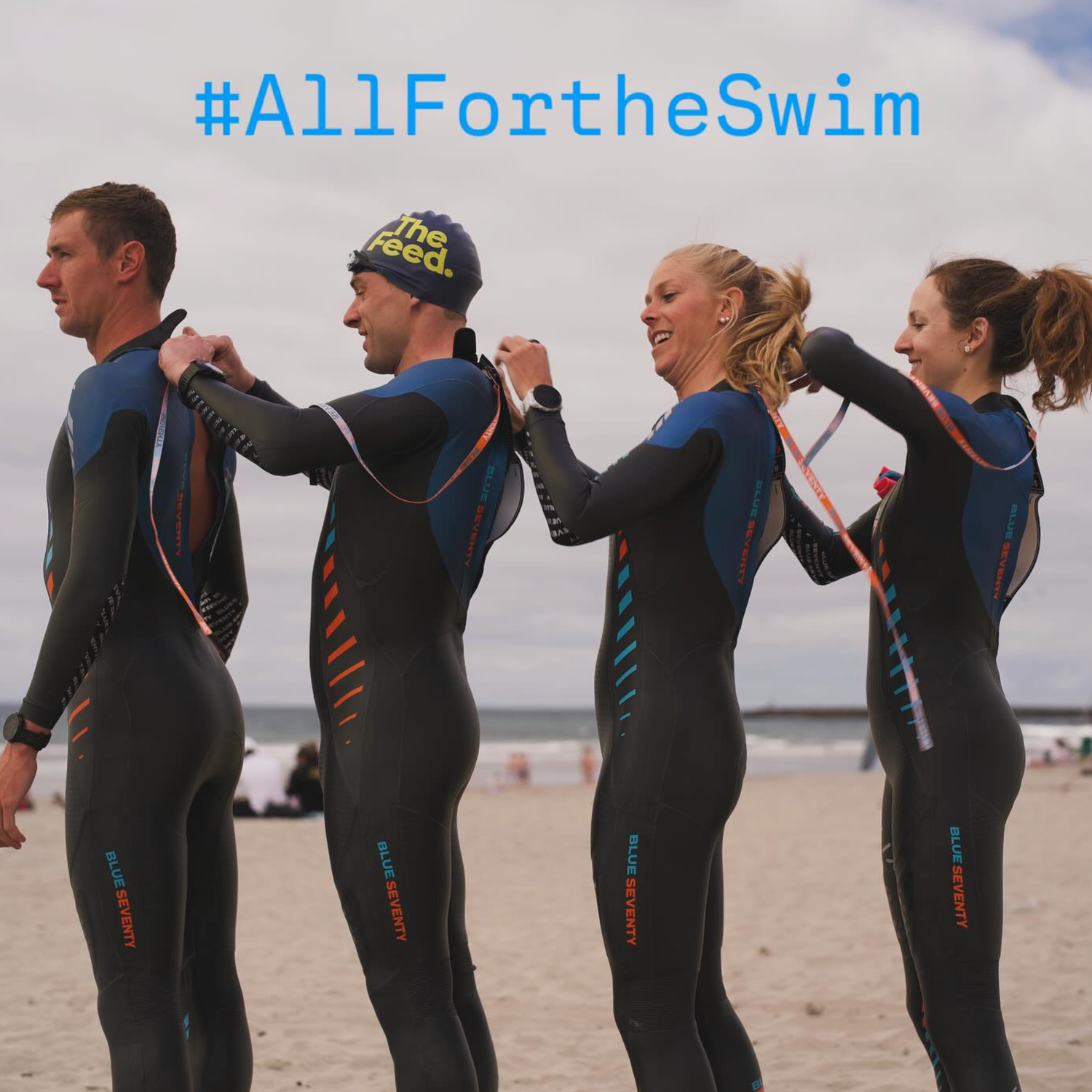
A swim-specific wetsuit is designed to sit close to the body. That close fit matters because neoprene works best when it lies smoothly through the hips, torso, shoulders, and neckline. If the layer underneath bunches, holds water, or creates pressure lines, the wetsuit cannot sit where it was designed to sit. You feel that problem during harder swimming, especially once your stroke rate rises and your torso rotation becomes more aggressive.
Many athletes assume a wetsuit feels restrictive because the wetsuit is too small or too stiff. Sometimes that is true. Often, the problem starts underneath. A rolled waistband, thick seam, raised strap, or bulky pad can create the exact pressure point you notice in the shoulders or chest. The suit gets blamed because it is the outer layer. The friction often starts lower down in the system.
T1 is where those small mistakes become visible. A base layer that shifts, catches, or folds under the wetsuit can slow the suit coming off over the hips and calves. Those lost seconds feel longer when your heart rate is high and your hands are clumsy from the swim.
Why tri suits became the default race-day answer
The usual advice to wear a tri suit under a wetsuit came from the structure of the sport. Triathlon rewards continuity. You do not dress for a swim in isolation. You dress for a swim that ends with a fast transition to the bike and a run after that. The less you need to change in transition, the fewer opportunities you create for delay or error.
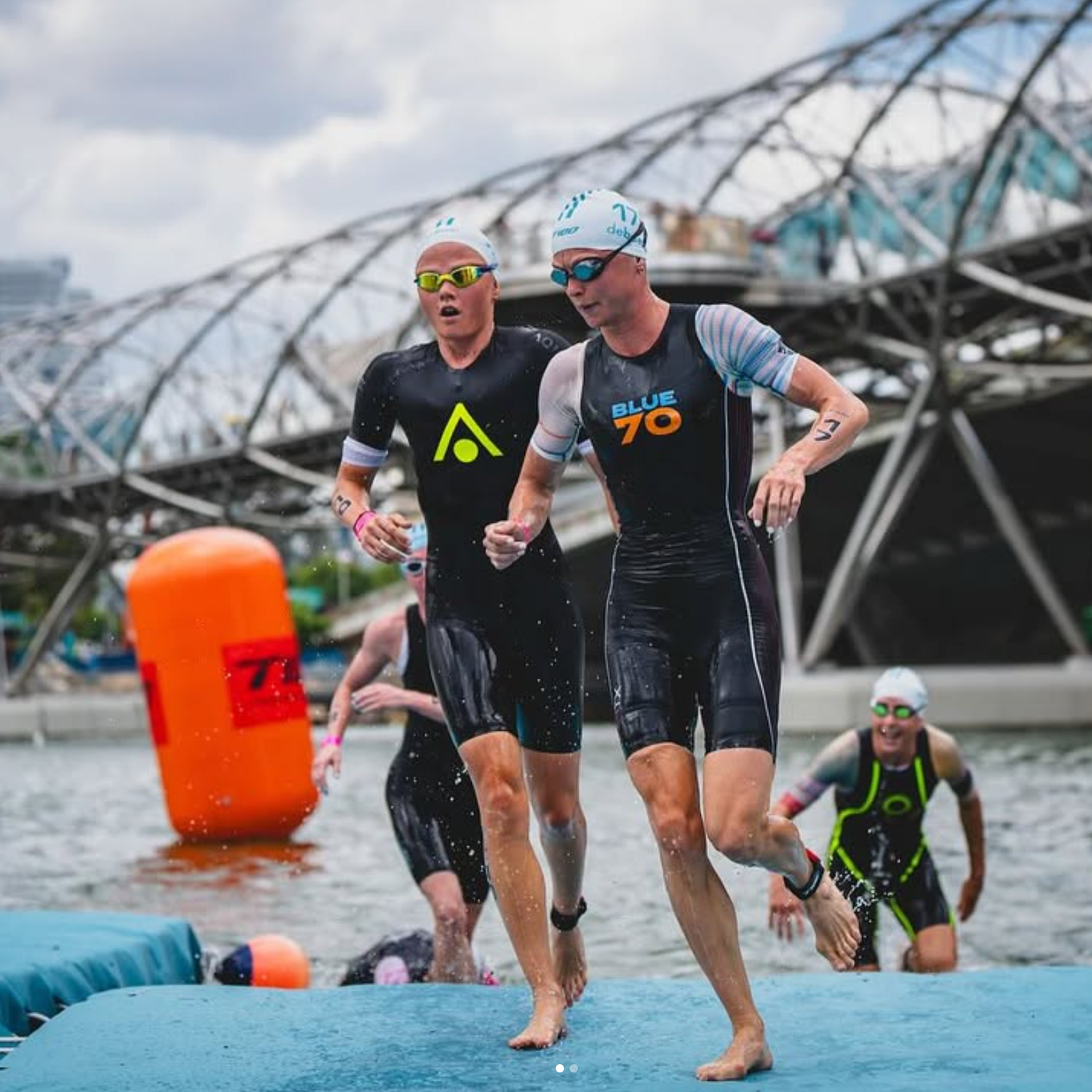
A tri suit solves that well because it gives you one layer that works across all three disciplines. It stays close to the body in the water, then carries straight onto the bike and run. That matters in short races, and it matters even more in longer events where extra transition steps can cost both time and rhythm.
Race morning works best when it feels familiar. If you know what is under the wetsuit, how the suit feels over it, and how it comes off in transition, you remove one more variable before the gun goes off.
For most races, wear a tri suit under the wetsuit
For sprint, Olympic-distance, 70.3, and full-distance racing, a tri suit is the best starting point for most athletes. It usually gives the cleanest mix of low bulk, good mobility, and transition efficiency. A one-piece or two-piece race kit can both work. The deciding factor is not style. It is whether the fabric lies flat and stays flat once the wetsuit is fully on.
Check the details before race day. Waistbands should not roll. Top hems should not bunch when you raise your arms. Straps should not sit so high near the neck that they create friction once the wetsuit compresses them. If you race long course, check pad thickness too. A tri-specific pad can work well, but too much material under the hips changes how the wetsuit feels in the water and how easily it strips off in T1.
The goal is simple: the layer underneath should almost disappear once the wetsuit is on.
Training changes the answer
Training and racing do not always require the same setup. If you are doing open-water practice, testing a new wetsuit, or working on technique, a simpler underlayer often makes more sense. Many athletes prefer a swim brief, a low-profile jammer, or a swimsuit for wetsuit training because it removes extra seams and gives clearer feedback on the fit of the wetsuit itself.
That is useful when you are trying to answer practical questions about the suit:
- Are the shoulders free enough through the catch?
- Did you pull enough material up through the legs and hips?
- Is the neckline sitting comfortably?
- Is the pressure coming from the wetsuit, or from the layer underneath?
A cleaner base layer gives you a cleaner read on all of that. It also makes it easier to spot one of the most common fit mistakes in triathlon: a wetsuit that has not been pulled high enough before the shoulders are settled into place.
Bulk is the problem
The easiest way to choose what to wear under a wetsuit is to think in terms of bulk. Thin, flat, low-absorption layers tend to work. Loose, raised, padded, or wrinkled layers tend not to.
Good options usually include:
- tri suits
- swim briefs
- low-profile jammers
- one-piece swimsuits for training
- low-bulk sports bras when the fit is right
Less effective options usually include:
- loose swim trunks
- boardshorts
- cotton underwear
- thick sports bras with raised seams
- bike shorts with larger pads
Wrinkles matter. Raised seams matter. Waistbands matter. Once the wetsuit compresses those details against your skin, they stop feeling minor.
Women’s fit deserves a closer look
Women often have more moving parts in this decision because the underlayer can include a swimsuit, a sports bra, a one-piece tri suit, or a two-piece kit. The same rule still applies: keep it smooth, stable, and low in bulk. If the underlayer creates pressure at the neckline, underarms, or shoulders on land, that pressure usually gets more obvious in the water.
For racing, a tri suit is still the cleanest option for many women because it creates one continuous system from swim start to finish line. For training, a swimsuit or sports bra under the wetsuit can work well if the seams sit in low-friction areas and the fit stays flat when the wetsuit is zipped.
This is where wetsuit patterning matters. Blueseventy’s Femme Fit design refines fit in the bust, torso, wrists, and ankles, and uses a lowered neckline for comfort and reduced chafing. That helps the wetsuit sit more naturally on the body, but the base layer still needs to cooperate with the suit rather than fight it.
Cold water is not a reason to pile on random layers
Cold water makes athletes want more clothing. Most of the time, extra clothing under a standard wetsuit is not the cleanest answer. Wetsuits are designed to allow a thin layer of water in, which your body warms to provide insulation. Adding more garments underneath often brings more restriction and more bunching without solving the real temperature problem.
If the water is below about 56 to 58°F, a purpose-built thermal suit is the better tool. Blueseventy’s Thermal Reaction is fully lined with Zirconium jersey for added thermal protection in cold-water swimming. That approach keeps the warmth solution in the suit construction rather than in a stack of underlayers.
Cold-water planning also needs acclimatization, realistic exposure time, and support on the day. Gear helps. It does not remove the demands of cold water.
Warm conditions matter too
Extra fabric under a wetsuit also becomes more noticeable when the water is warmer. Above about 70 to 72°F, many athletes find a full suit too warm for longer swims. In those conditions, keeping the layer underneath light becomes even more important. If the day calls for a different setup, match your choice to the event rules and the expected swim duration. [VERIFY: current sanctioning-body rule]
Heat management is easy to overlook when you are standing on shore feeling cool. It becomes harder to ignore once the effort rises and the swim settles into race pace.
Chafing usually starts with a detail you can fix before the race
Neck rub gets most of the attention, but many friction problems start elsewhere. The usual culprits are easy to miss when you are getting dressed in a hurry:
- straps that sit too close to the neckline
- shoulder seams that bunch
- rolled waistbands
- wrinkled torso panels
- hems that sit in a high-friction zone
Salt water and longer swim times make those issues more obvious. So does poor wetsuit setup.
Use a short pre-race fit check with your full race kit on:
- Put on the exact layer you plan to wear under the wetsuit.
- Put the wetsuit on fully.
- Raise both arms overhead.
- Simulate several freestyle strokes.
- Rotate through the torso.
- Check the neckline, underarms, chest, and hip creases for bunching or pressure.
If you feel a pressure point on land, it usually gets worse once the swim starts.
T1 is where many clothing mistakes finally show themselves
Some athletes judge this decision only by how it affects the swim. For many age-groupers, the bigger consequence comes in transition. A clean base layer lets the wetsuit slide off without catching at the hips or hanging at the calves. A poor layer turns that process into a fight.
The best race-day system is one you have already rehearsed. Wear the exact outfit you plan to bike and run in under the wetsuit if it sits flat and has already passed a swim test. Then practice taking the wetsuit off over that setup. Race execution improves when nothing about the sequence feels new.
What to wear under a triathlon wetsuit by situation
Sprint and Olympic-distance racing
A tri suit is the default answer. It reduces transition steps and keeps the setup simple.
70.3 and full-distance racing
A tri suit is still the best option for most athletes. Test it under the wetsuit before race week, especially if the pad, chest panel, or straps feel more substantial than your short-course kit.
Open-water wetsuit training
A swim brief, low-profile jammer, or swimsuit often gives the cleanest feedback on wetsuit fit and shoulder freedom.
Cold-water swimming
Use a thermal suit designed for swimming when the water is below about 56 to 58°F. Avoid trying to solve cold water with extra bulk underneath a standard suit.
Warmer-water sessions
Keep the underlayer as light and flat as possible. If a full suit feels too warm for the conditions or duration, reassess the suit choice for that day. [VERIFY: current sanctioning-body rule]
Common mistakes to avoid
- Wearing underwear under a tri suit
- Wearing bike shorts under a wetsuit
- Using loose swimwear that folds under neoprene tension
- Trying a new sports bra on race morning
- Skipping a full dress rehearsal before the event
None of those mistakes are complicated. All of them show up fast once the swim gets underway.
The practical answer
For racing, wear your tri suit under the wetsuit unless you have a tested reason to choose something else. For training, wear the thinnest swim layer that lets you assess fit and swim comfortably. For cold water, use a suit built for added thermal protection rather than trying to create that warmth with extra clothing underneath.
That approach matches how a swim-specific wetsuit is designed to work: snug fit, free shoulders, better body position, and quick removal when the swim ends. If you want to test your setup before race day, use the blueseventy fit guide or Take a Test Swim in the exact layer you plan to wear underneath. A good setup should feel secure on land, then settle naturally in the water.