


A wetsuit rarely wears out. It gets outgrown, outpaced, or replaced long before the neoprene actually fails. A junior triathlete grows two inches over a winter and a suit that fit fine in September binds across the shoulders by March. An age-grouper drops eight pounds during a hard training block and the torso that used to hug the body now sags at the waist. A racer buys a new model. The old one goes into a bag in the garage, still doing its job, just no longer wanted by the person who bought it.
That distinction is worth sitting with for a second. A suit that no longer fits isn't a suit that has failed. Most of the time it still has real training life left in it, and handing it to someone else deserves more thought than a quick drop-off at a donation bin.
Fit Changes Faster Than Neoprene Does
Body changes almost always outrun material fatigue. A youth swimmer can need a new size every twelve to eighteen months. An adult who adds shoulder muscle or shifts weight during a training cycle can need a different cut through the torso even when the number on the scale barely moves.
Women have historically dealt with sizing built around a male template stretched into smaller proportions rather than designed from scratch for a woman's shape. Blue70 built its Femme Fit line to fix that directly: refined patterns through the bust, torso, wrists, and ankles, a lower neckline, and a longer zipper for faster, easier entry. The line expanded to 15 sizing options in 2014. That kind of detail exists because a couple of centimeters in the wrong place changes everything about how a suit performs on race morning. It also means a lot of suits get retired for fit reasons long before their materials have anything wrong with them.
What Actually Breaks Down, and What Doesn't
Neoprene is a closed-cell foam. Blue70 wetsuits use Yamamoto neoprene rated in 38, 39, and 40 cell density, with higher cell counts trading some durability for more flexibility through the shoulders and arms. Every stroke compresses those cells. Every recovery lets them expand back out. Do that across enough seasons and the cells lose some of their bounce, which shows up as reduced flex and a small drop in buoyancy over years, not months.
The zipper usually goes first. So does the seam glue, and sometimes the catch panel. Blue70 says plainly that the Helix, built with thinner neoprene for race-day speed, breaks down faster under heavy training use than a suit like Reaction or Fusion, which use thicker neoprene specifically because they're expected to see more hours in the pool and open water. A suit bought for training and used for training usually has plenty left in it, even after its original owner has moved on to something new.
Five Things to Check Before Handing a Suit Over
Run through this list before giving a wetsuit to anyone else.
- Zipper glide: does it move smoothly in both directions without snagging or separating the teeth?
- Seams: check the underarm, crotch, and panel joins for separation, especially anywhere the suit sat folded in storage.
- Buoyancy panels: press firmly on the chest and hip panels. They should spring back right away, not stay dented.
- Odor and mildew: a suit stored damp after a season usually needs a real clean before anyone wants to wear it.
- Repairs: small tears near the wrist or ankle are common, and they're simple to fix with a neoprene cement like Aquaseal.
Handle repairs before you pass a suit along, not after. A suit that arrives already fixed gets worn the following weekend. A suit that arrives with an unexplained tear sits in a bag while the new owner tries to figure out what they're dealing with.
One more thing worth saying clearly: a manufacturer's warranty against defects covers the original owner and doesn't transfer with the suit. Whoever receives it should know its repair history rather than assume any factory coverage still applies.
Where a Used Suit Helps Most
Cost keeps plenty of people out of open water and triathlon before they ever get in the water. A used wetsuit removes that barrier for one swimmer at a time. Learn-to-swim programs and youth club teams are constant candidates for donations. Masters swim groups and open water clubs often keep a small stack of loaner suits on hand so newcomers can try a session in open water before committing several hundred dollars to their own gear.
Cold water swim groups are another strong fit, especially for a thermal suit built with a Zirconium jersey lining for added warmth. A donated thermal suit gives a new cold water swimmer added thermal protection as they extend their season into colder months. It's not a substitute for gradual acclimatization, a swim partner, checking water temperature and conditions before getting in, or knowing when to get out. No wetsuit should ever be handed over described as a flotation device or a guarantee against the risks of cold water.
Building a Local Swap Instead of Waiting for Something Bigger
No large national program exists to collect and redistribute used wetsuits. Nearly all of it happens locally, through triathlon clubs, masters teams, and swim shops that already know which swimmers in their community need a hand getting started.
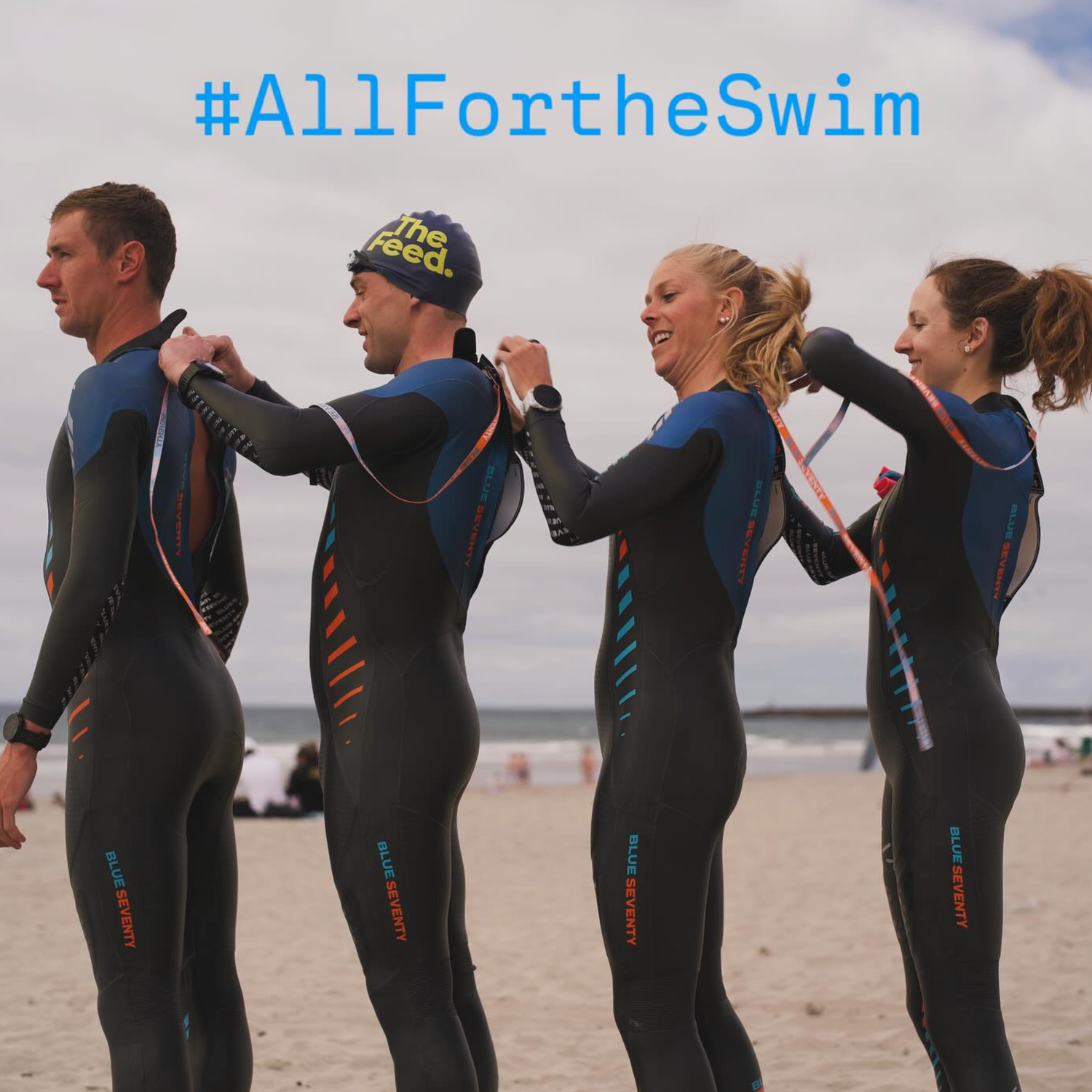
An end-of-season swap night is the simplest version of this. Set up a sizing station with a standard size chart, run every donated suit through the checklist above, and pair the event with a short fitting demonstration so new owners understand correct donning technique from day one. That last part matters more than it sounds. An improperly donned suit, especially around the shoulders, causes fatigue in the water no matter how well the suit itself actually fits. A five-minute walkthrough at a swap night solves a problem that would otherwise show up mid-swim weeks later, far from anyone who could explain what went wrong.
Getting the Fit Right the First Time
The best way to extend a wetsuit's total useful life across however many owners it eventually has is simple: get the size right on the first purchase. Blue70's Test Swim policy lets a swimmer wear a suit in open water and still exchange or return it within 30 days, as long as it comes back clean and dry. That single policy keeps a fair number of suits from being bought, worn once, and forgotten in a closet because the fit was never right to begin with.
A wetsuit that no longer fits you might be exactly what someone else needs to get into open water for the first time. Check it carefully, fix what needs fixing, and hand it to a club or program that will put it straight back to work.