


Every triathlete has stood on a beach before sunrise, squinting at a chalkboard that reads something like "Water Temp: 76°F, Wetsuits Optional." The number feels arbitrary until you understand what it's tracking: how fast open water pulls heat out of a swimming body, and what happens once it does.
Most conversations about wetsuit rules stop at the chalkboard. Check the number, grab your suit or leave it on the towel, move on. This post goes a layer deeper: the physiology behind those cutoffs, why the same water temperature means different things for different swimmers, and how to use that knowledge once race morning arrives.
What the Wetsuit Cutoff Measures
Wetsuit rules exist because of one physiological concern: core temperature drop during sustained swimming. Water pulls heat from skin far faster than air at the same temperature. Swimming makes it worse. Exertion sends more blood to your arms and legs, and that blood loses heat exactly when your body needs to hold onto it.
Stand in 68°F water and you'll feel fine. Swim continuously in that same water for 25 minutes and your core temperature may be dropping faster than your body can replace the lost heat. That gap, between how water feels on contact and what it does to you over time, is what regulations try to manage.
Temperature thresholds vary by sanctioning body and shift year to year. Don't rely on a number you remember from a past race. Pull the current athlete guide before every event. What matters here isn't the exact figure printed in any particular rulebook. It's the pattern behind the numbers.
Distance Changes the Math, Even at the Same Temperature
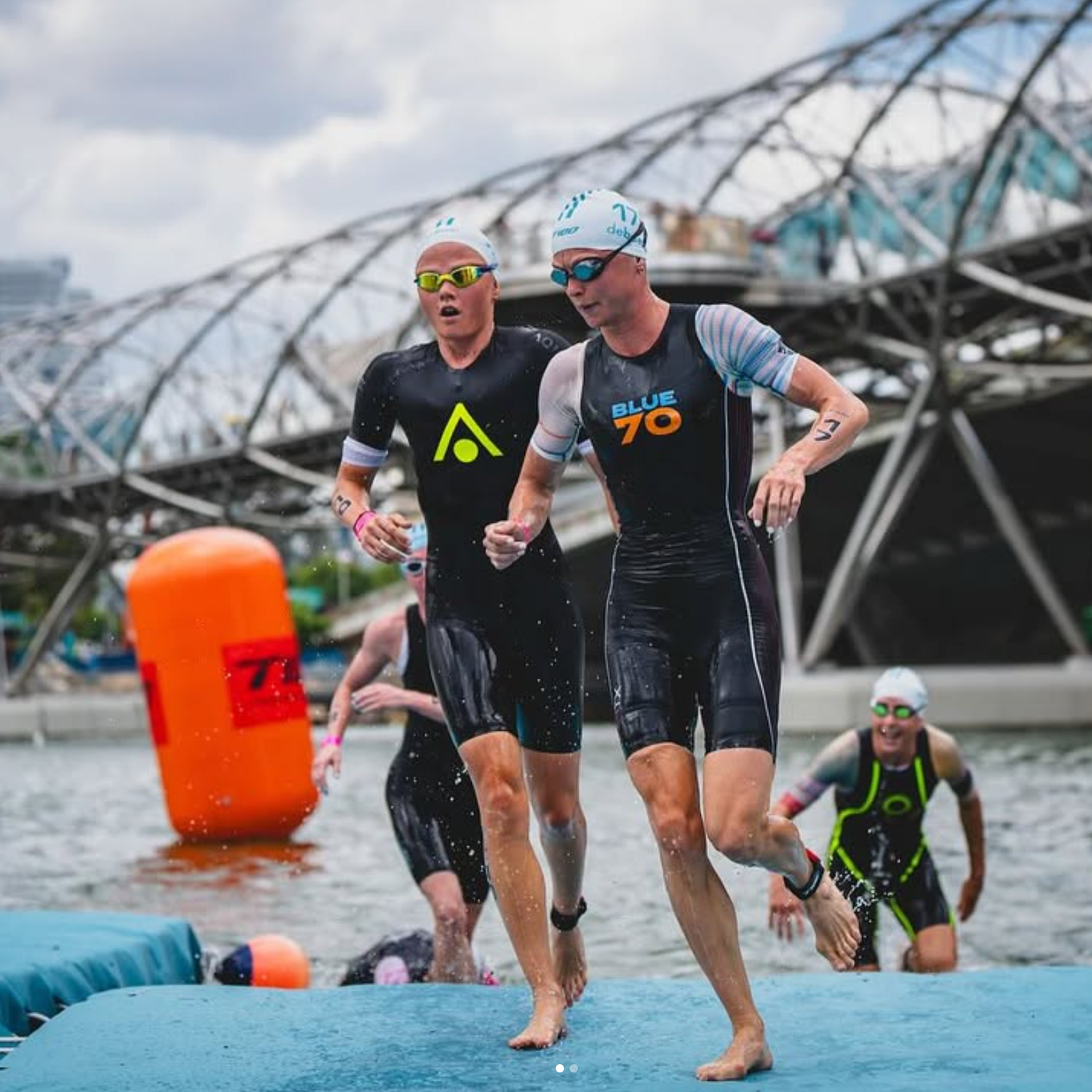
Look at how wetsuit rules are structured across different race distances and a pattern shows up: cutoffs tend to loosen as distance shortens. A sprint triathlon often allows wetsuits at warmer water temperatures than a half-iron or full-iron event does. That comes from total time in the water: sprint distances mean less cumulative cold exposure than iron-distance swims.
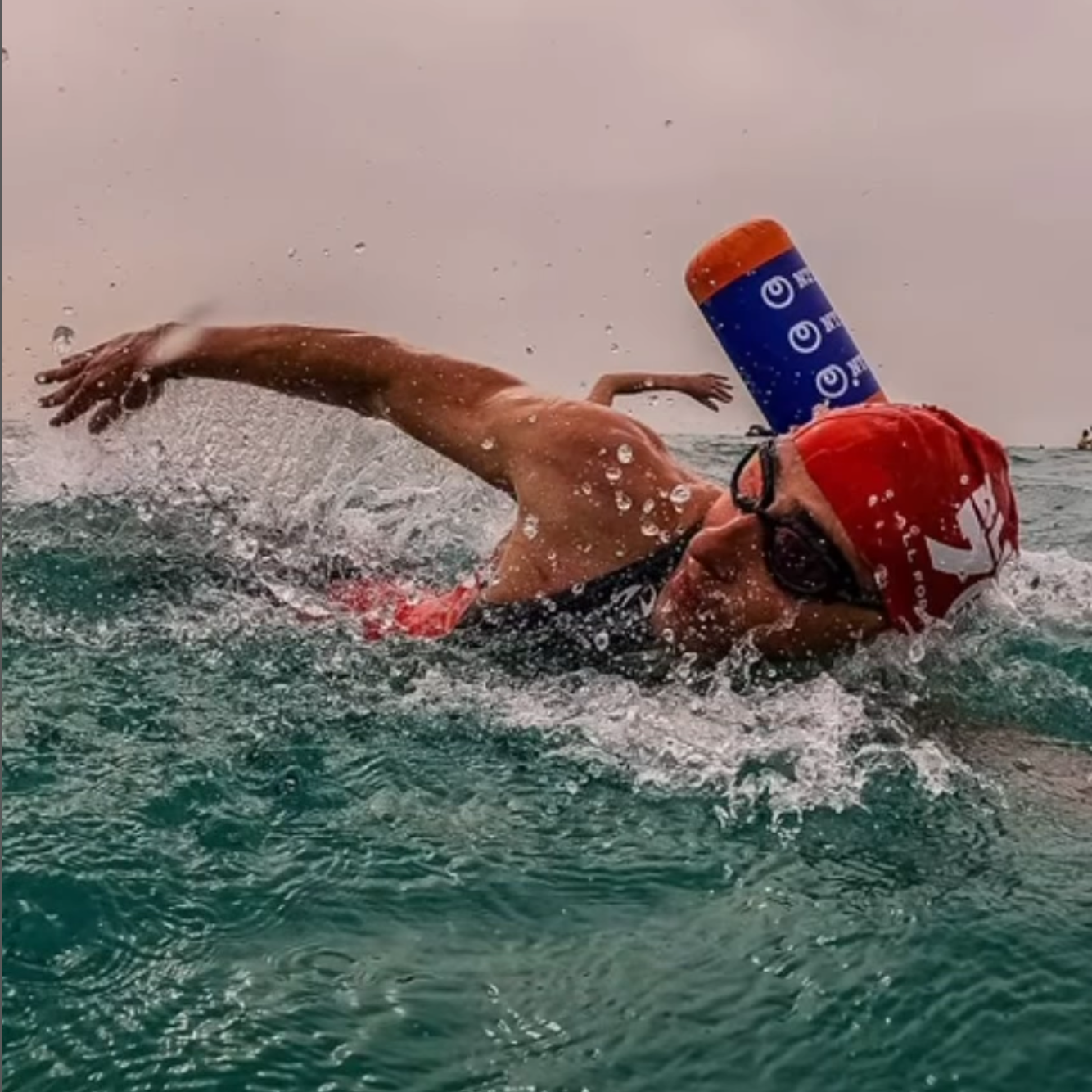
A 20-minute swim at 65°F and a 90-minute swim at 65°F are not the same event for your body, even though the water is identical. Regulations get written around temperature because it's the one variable a race director can measure with a thermometer on race morning. The actual driver of risk is temperature combined with time.
Here's what most swimmers miss. A rulebook cutoff gets calibrated for a range of finish times across an entire field. If you're a slower open water swimmer, your personal time in that water might push well past what the rule assumed for an average competitor.
So don't just check whether wetsuits are legal at your race. Check the water temperature against your expected swim time, not the field average. A 45-minute open water mile at 66°F is a different thermal event than a 30-minute mile at that same temperature, even under identical rules.
Why Different Organizations Draw the Line in Different Places
Triathlon and open water rules didn't come from one governing body sitting down and reasoning through physiology from scratch. USAT, World Triathlon, Ironman, and various open water marathon swimming federations each built their rules independently. Each has its own history, its own past incidents, its own tolerance for risk.
Separate institutions, shaped by their own histories, drew the line in different places. A water temperature that makes a wetsuit optional at one event can make it mandatory, or even prohibited, at another organization's race at a similar distance.
Read the current athlete guide for your specific race, every time, no matter how many times you've swum that distance elsewhere.
Wetsuit Rules Regulate the Category, Not the Construction
Most wetsuit-legality conversations stop at whether a wetsuit is permitted at all. They rarely touch what kind of wetsuit is on your back. Two athletes can stand at the same start line in suits that are both technically legal and have different thermal protection and buoyancy, because neoprene grade and construction usually aren't part of the legality framework.
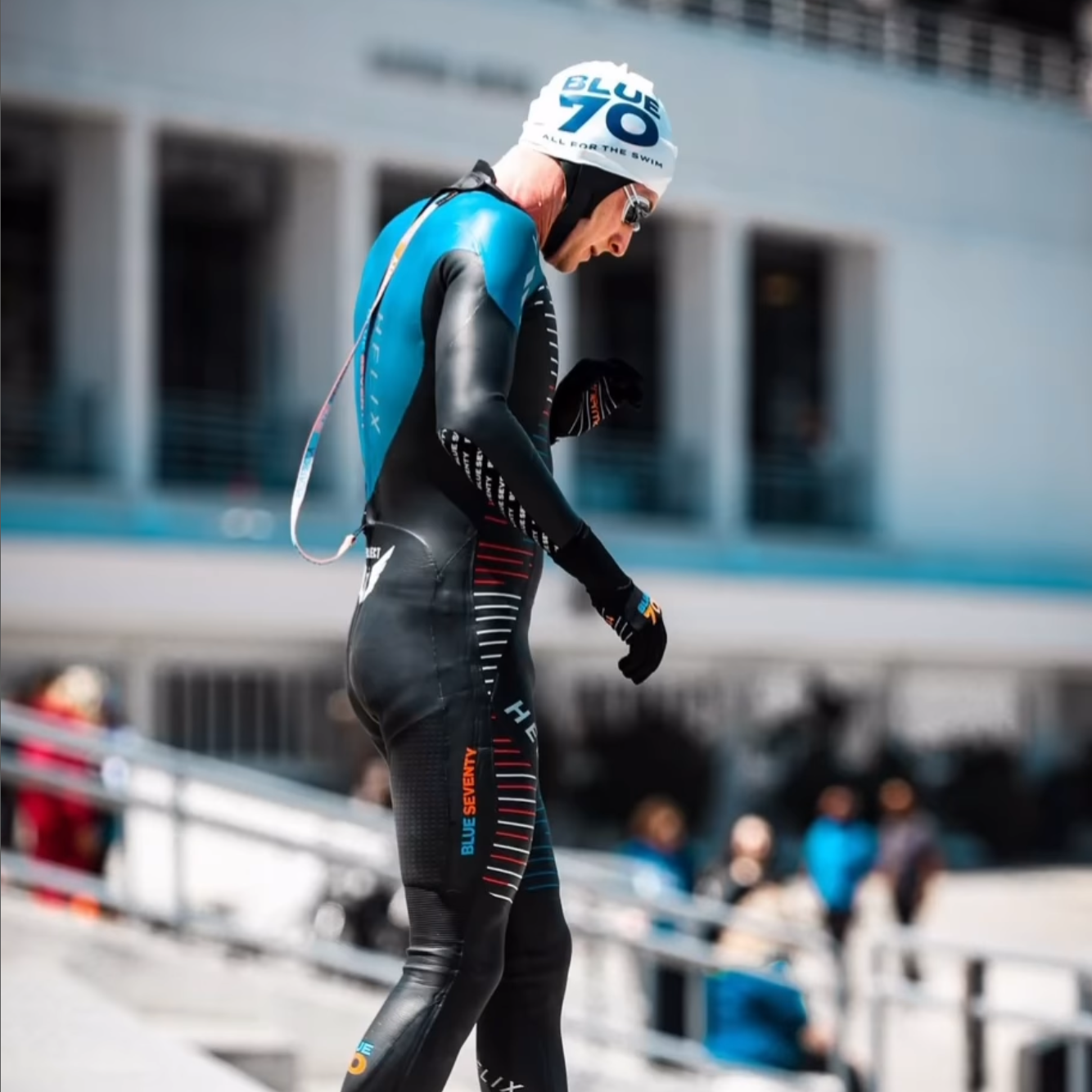
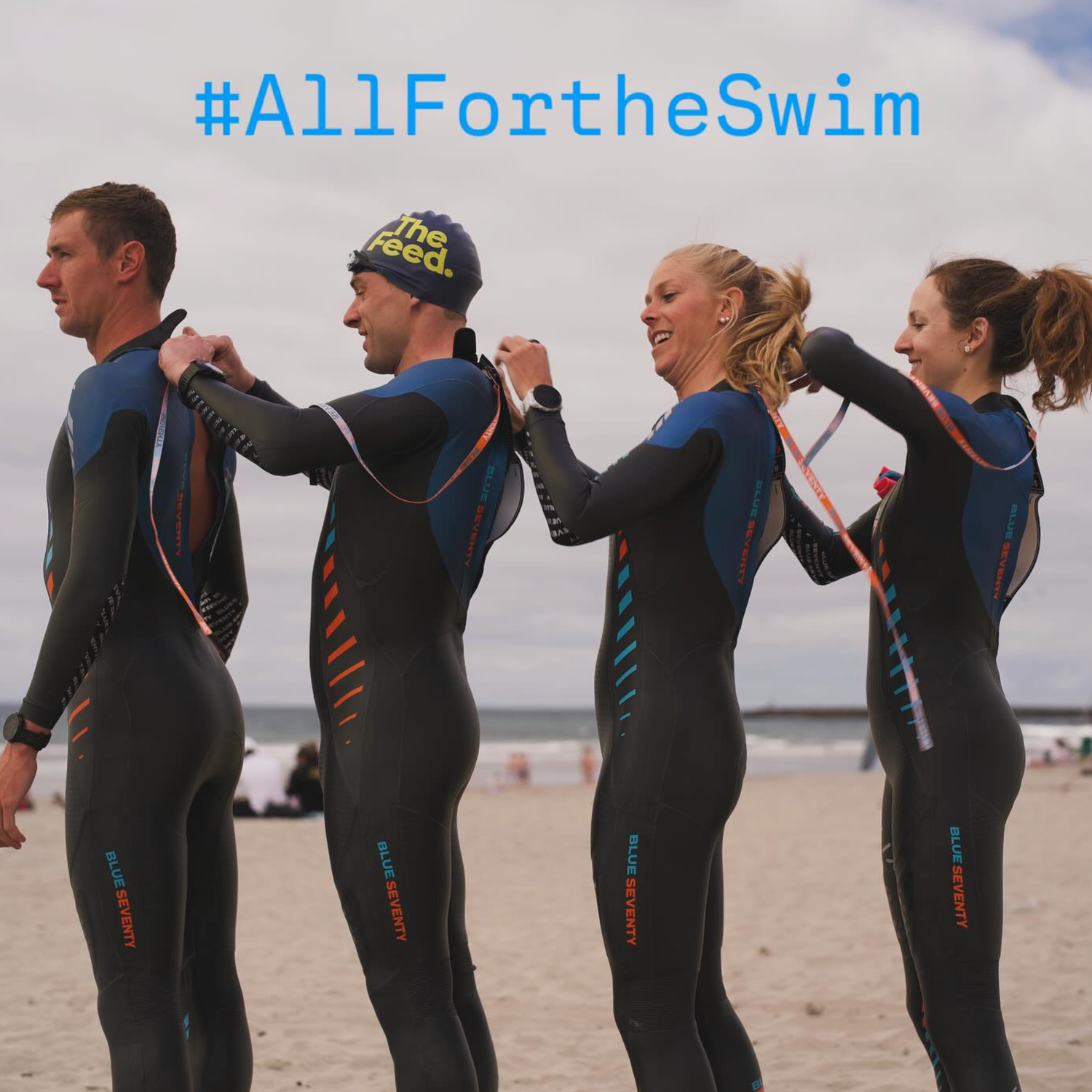
This is where knowing your own suit matters more than knowing the rulebook. Blue70 wetsuits use Yamamoto neoprene across 38, 39, and 40 cell grades. Higher cell numbers mean more flexibility through the stroke. A suit built for warm-water racing and a suit built for cold water can both clear the same legality bar at a given event and perform differently once you're 40 minutes into the swim. The Thermal Reaction, for instance, is fully lined with Zirconium jersey fabric specifically to add warmth in colder water, a different design goal than a suit like the Fusion or Sprint, built around flexibility and value for shorter, warmer swims.
Compliance answers one question: are you allowed to wear this suit today. It doesn't answer a more important one: is this suit right for the duration and temperature you're about to swim in. Treating those as the same decision is a common mistake, and it usually happens because an athlete reads the chalkboard once and stops thinking about thermal protection for the rest of the morning.
What This Looks Like on Race Morning
A few practical shifts, based on everything above.
- Check your personal exposure time, not the field average. If you're typically slower than the published expected swim split, factor that into your own risk assessment, even if the water clears the wetsuit-optional threshold for the field.
- Re-verify the rules before every race. Cutoffs change between seasons, and different organizations use different numbers even at similar distances. Pull the current guide before you pack your bag.
- Match your suit to conditions, not just legality. A wetsuit-legal swim at 65°F and one at 74°F are different days for your body. Choose thermal protection based on your actual time in the water, not just whether a suit is permitted.
- Acclimatize if your race sits near a threshold. Swimmers who train in water close to expected race-day temperature handle their breathing and pacing better than those who feel that water for the first time on race morning.
Beyond the Rulebook: Building Your Own Race-Day Plan
Regulations set a legal minimum for a field of athletes with a wide range of paces, body compositions, and cold tolerances. They weren't written for you specifically. Understanding the physiology behind the numbers, how time compounds with temperature, and the distance between "legal" and "right for these conditions" puts you in a better spot than reading the chalkboard and walking away.
If you're figuring out how your suit matches your expected race conditions, Blue70's fitting and wear guide and size charts are a good place to start. And if you want to know how a suit actually feels in open water rather than standing on the beach, take a Test Swim before race day. It's one of the better ways to close the gap between what the rulebook allows and what your body actually needs.