


Picture race morning. Officials huddle around a thermometer at the swim start, and word spreads through the crowd about whether wetsuits are legal today. Most athletes treat this as a coin flip they have no control over. It's worth more attention than that. The number on that thermometer reflects decades of argument among governing bodies about fairness, safety, and what counts as swimming when equipment enters the picture.
That argument hasn't settled. Knowing why it's still unresolved can change how you train and how you race, no matter which side of the cutoff you land on.
The Rulebooks Don't Match, and That's Not an Accident
World Triathlon sets wetsuit rules for Olympic-distance and international elite racing. USA Triathlon runs a separate rulebook for domestic age-group events. Ironman has its own policy for Ironman-branded races. These organizations use different temperature thresholds, different thickness limits, and different approaches to prize-money eligibility when suits become optional.
That's not sloppiness. Each body manages a different population with a different cold tolerance. An elite field of 50 athletes who train in open water year-round handles cold differently than an age-group field of 2,000, where finish times for the swim leg might span 20 minutes to 45. A rule built for one group can be wrong for the other.
Check the specific rulebook for your event's sanctioning body while you're planning your race week. Don't wait until you're standing on the beach. [VERIFY: current sanctioning-body temperature thresholds, which are reviewed and sometimes adjusted season to season]
Thickness Limits Solve a Buoyancy Problem First
Ask most triathletes why wetsuit rules exist and they'll say it's about stopping an unfair speed advantage. That's part of it. The deeper issue is buoyancy distribution.
A thicker wetsuit doesn't just add speed. It changes body position in ways that can hide weak technique. A swimmer with limited hip stability, who would normally sit low in the water, gets lifted by extra neoprene volume around the legs and torso. Thickness caps in elite rulebooks limit how much raw buoyancy a suit can add, so the race still rewards swimming skill rather than equipment. [VERIFY: current maximum thickness specification under applicable sanctioning body rules]
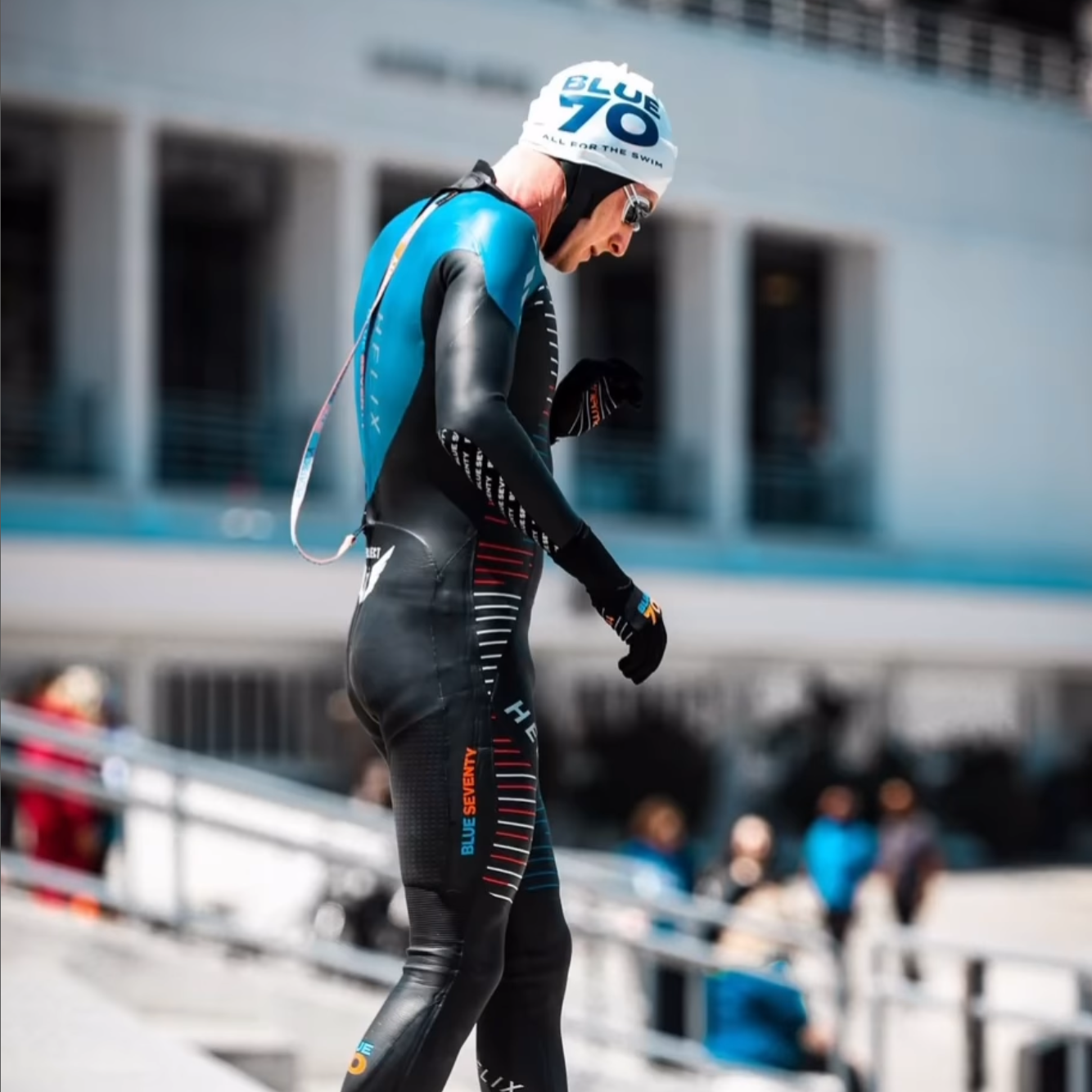
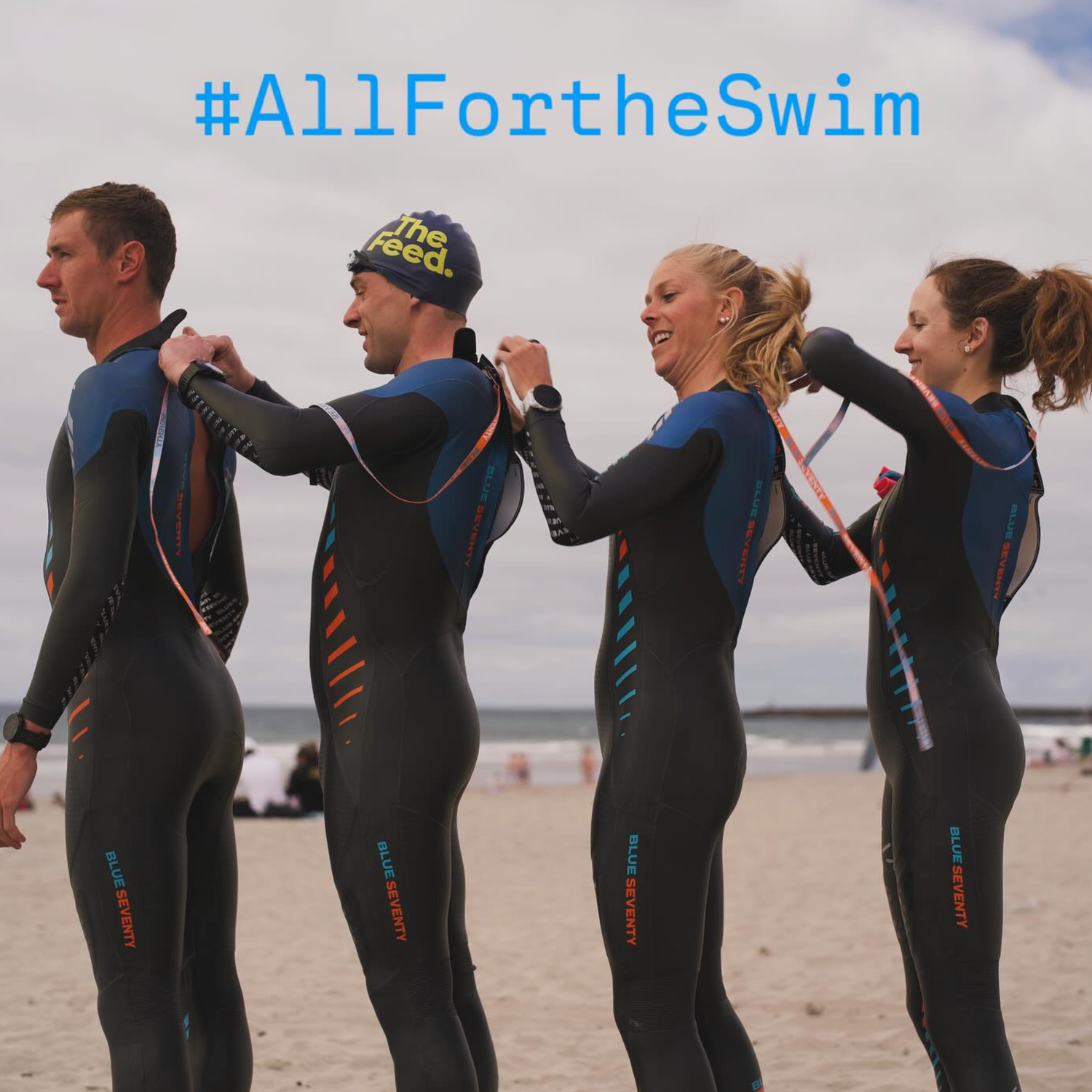
This is why panel construction matters as much as total thickness. A wetsuit built with graduated thickness, thinner through the shoulders for shoulder roll and reach, more supportive through the hips and legs for alignment, delivers buoyancy benefit within the legal envelope instead of relying on uniform bulk everywhere. Blue70 builds around that idea: fix body position first, inside whatever thickness limit the race allows.
The Skin Swim Is a Skill Most Training Plans Skip
Here's a gap worth closing. Most triathletes swim every open-water session of their lives in a wetsuit. Then a warm-water race bans suits entirely, and the stroke falls apart.
Without neoprene's buoyancy assist, hip and leg position depends entirely on kick technique and core engagement. A swimmer who has leaned on wetsuit buoyancy to cover for a dropping kick feels the legs sink the moment the suit comes off. Sighting changes too. A wetsuit's chest buoyancy makes head-up sighting cheaper in terms of drag. A skin swim punishes a lifted head harder.
If there's any real chance your race could go non-wetsuit, build two or three open-water sessions a month without one. Treat it as its own skill, not a weaker version of wetsuit swimming. Pool swimmers who race triathlon only occasionally often adapt to this better than committed open-water athletes who've never practiced the no-suit version of their own race.
Sleeveless Suits Fill the Gap Between Legal and Optimal
Sleeveless wetsuits, sometimes called Long John styles, are still full wetsuits under most rule definitions. Continuous torso and leg coverage satisfies the requirement. But removing the sleeves removes shoulder restriction completely.
In borderline-temperature conditions, a sleeveless suit can beat a full suit even when the full suit is legal. Shoulder mobility affects stroke mechanics more than most athletes expect. A restricted shoulder roll shortens your reach at the front of the stroke and can force your elbow to drop during the catch. In water around 72 to 75°F, where a full suit risks overheating across a swim of 1,500 meters or more, a sleeveless option like the Blue70 Reaction Sleeveless keeps you legal, keeps you cooler, and keeps your shoulders moving through their full range.
Legal and optimal aren't always the same question. Racers who only ask the first one leave speed on the table.
What Wetsuit History Says About Where the Rules Go Next
These rules weren't always this detailed. In the 1980s and 1990s, triathlon wetsuit use was largely unregulated. Athletes wore whatever surf or dive neoprene they could find, because swim-specific wetsuits barely existed yet as a category. Blue70's own history traces back to 1993, when the company built one of the first wetsuits designed specifically for triathlon swimming instead of adapting gear made for something else.
As swim-specific design matured, the rulebooks followed. Governing bodies had to catch up to a product category built around hydrodynamics and buoyancy rather than wave protection. The thickness caps, panel restrictions, and temperature cutoffs in place today exist because the equipment got good enough to make them necessary.
That pattern suggests where the rules go next. If catch-panel permeability, buoyancy placement, or material flexibility shift in meaningful ways, expect governing bodies to revisit their frameworks again. The rules move because the equipment moves first.
Race Inside the Rules, Not Around Them
None of this is an argument for finding loopholes. It's an argument for understanding why the rules exist in the first place.
- Know your race's specific temperature cutoff before race week, not on race morning.
- Train without a wetsuit occasionally, even if you plan to race in one, so your stroke doesn't depend on buoyancy you might not have on the day.
- Consider sleeveless options in borderline-warm conditions for the mobility benefit, not only the compliance angle.
A well-built wetsuit's job, within whatever thickness limit applies, is correcting body position. Swimmers who understand why the rules exist tend to make better equipment decisions than those who only memorize the cutoff number. Over a full season of racing, that understanding adds up to a real edge in open water.
Check your race's official rulebook and current temperature thresholds before event day. Cutoffs are set by sanctioning bodies and can change from one season to the next.